

Watch the Journey Unfold:
📸 Instagram | 🎥 TikTok | 🎬 YouTube
Before this journey really begins, we need to start with the basics. U.S. tea consumption is higher than you might think (on any given day, more than 50% of the population drinks some), but when it comes from Lipton or Arizona it’s easy to miss the bigger picture. That’s like learning about wine by drinking Franzia after 30 seconds in the microwave.
Part of the confusion stems from the word itself. In English, tea is a polysemy, or a word with multiple distinct but related meanings. Those meanings form a chain, from crop to cup and beyond:
A plant (Camellia sinensis)
Leaves (dried, before brewing)
A drink (after steeping)
A ritual (Gongfu tea)
A social event (afternoon tea)
Broader infusions (chamomile, rooibos, mate)
Social exchange (“give me the tea”)
This is the root of one of tea’s greatest misconceptions: at what point on that chain is something no longer tea? If you ask an American what their favorite tea is, often they’ll answer chamomile, jasmine, or peppermint. Except, those aren’t actually tea, at least not in the stricter sense defined above. Instead, those are tisanes, or herbal infusions, that the Western lexicon has lumped in with tea itself.
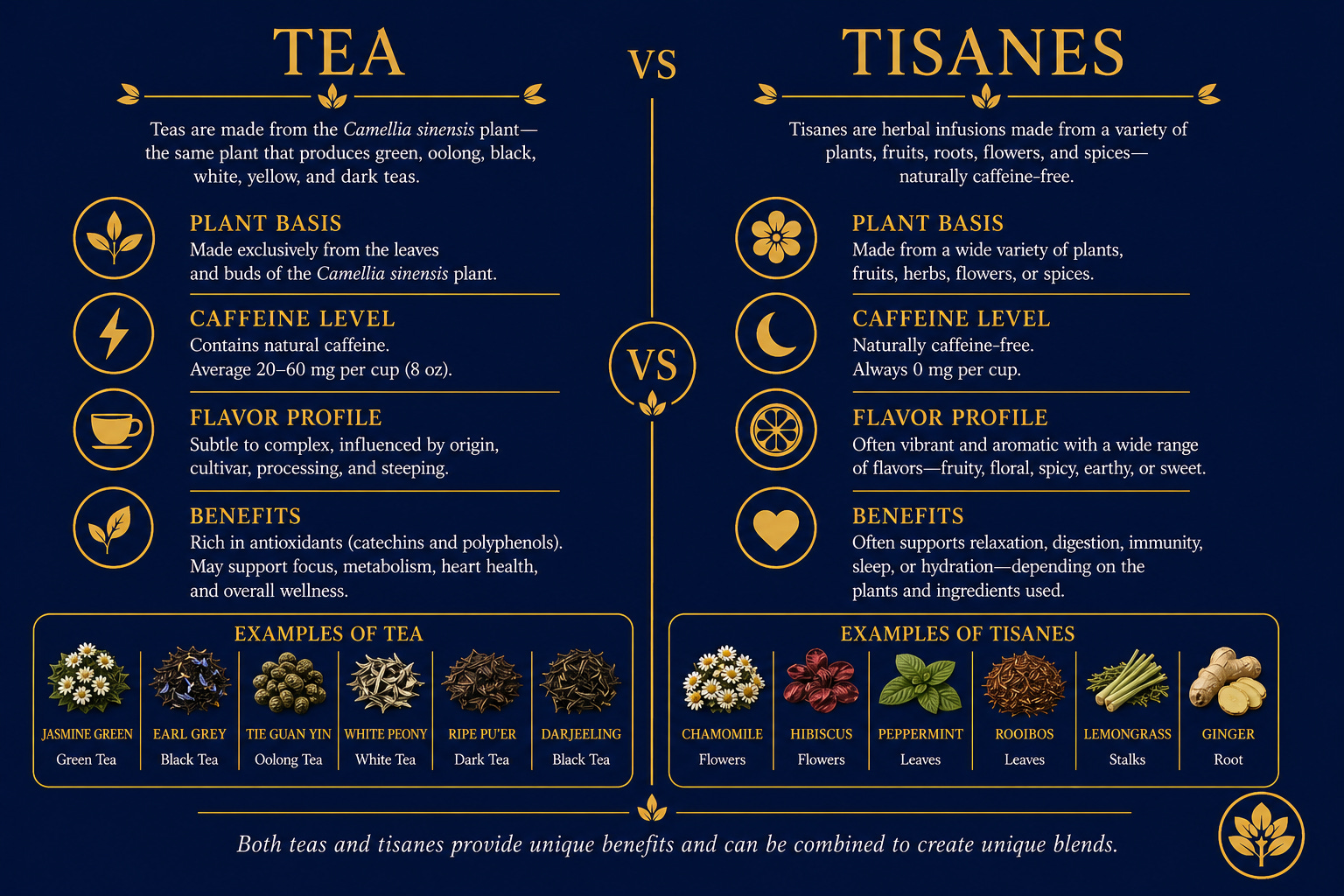
That leads us to misconception number two: that tea comes from many different plants—when in reality, it all comes from one. Yes, you read that correctly. From earl grey to oolong to matcha to whatever’s in that Arizona can, all tea comes from the same tree. It’s processing that turns it into the drink we know and love.
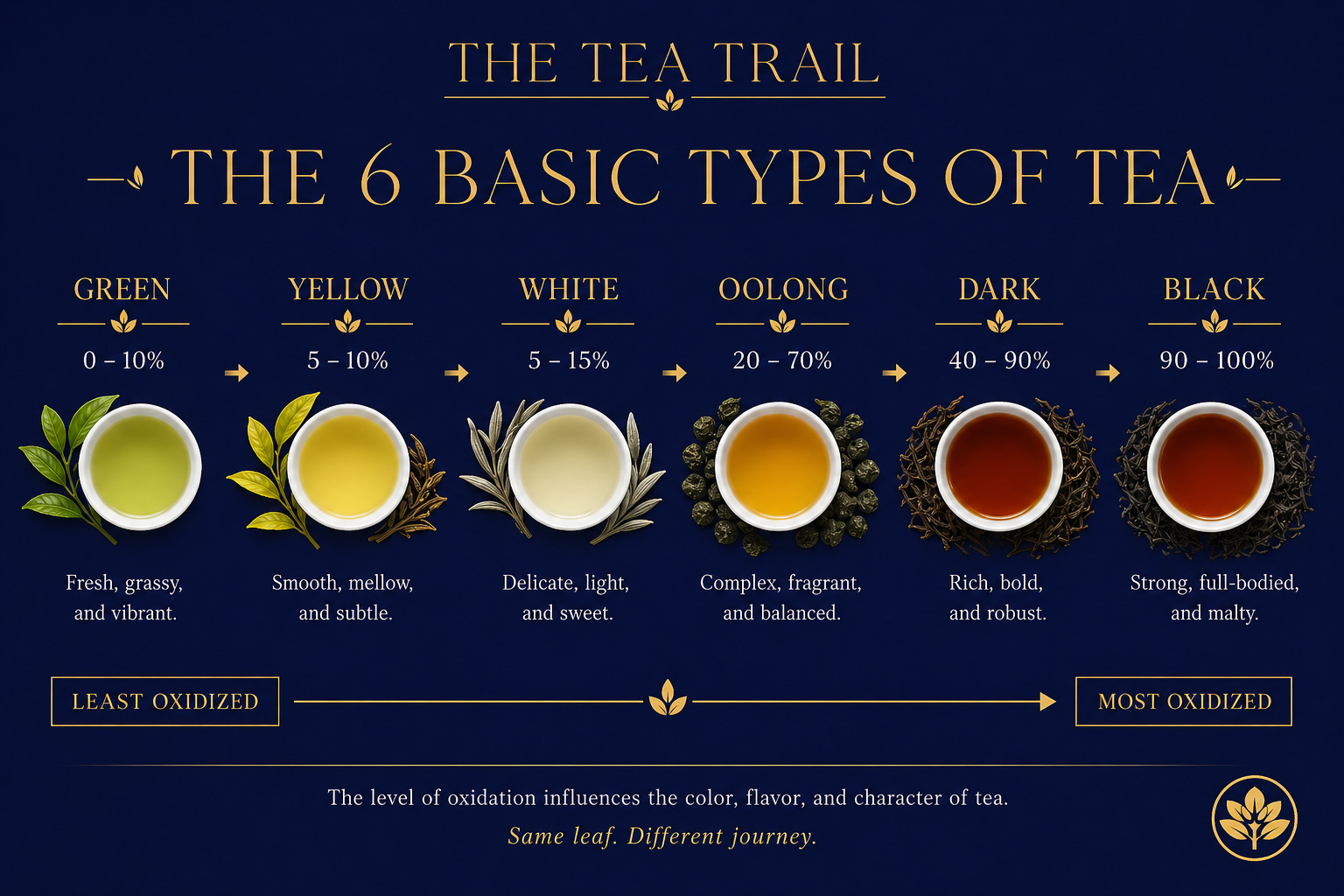
So how is tea processed? The answer is also how it’s differentiated. If you boil it down to one factor, it’s oxidation: an enzyme-driven reaction with oxygen that only occurs while the leaves retain sufficient moisture, typically expressed on a scale from 0 to 100 percent.
Think about the last time you sliced up an apple. Right after slicing it, the golden-white flesh is perfect, unblemished. Leave it out for a few hours, and that flesh would start turning brown. But with a dried apple? There would be no visible difference.
That’s oxidation at work and the same thing happens to tea, creating the difference between lighter teas like green and white, and darker teas like oolong and black.
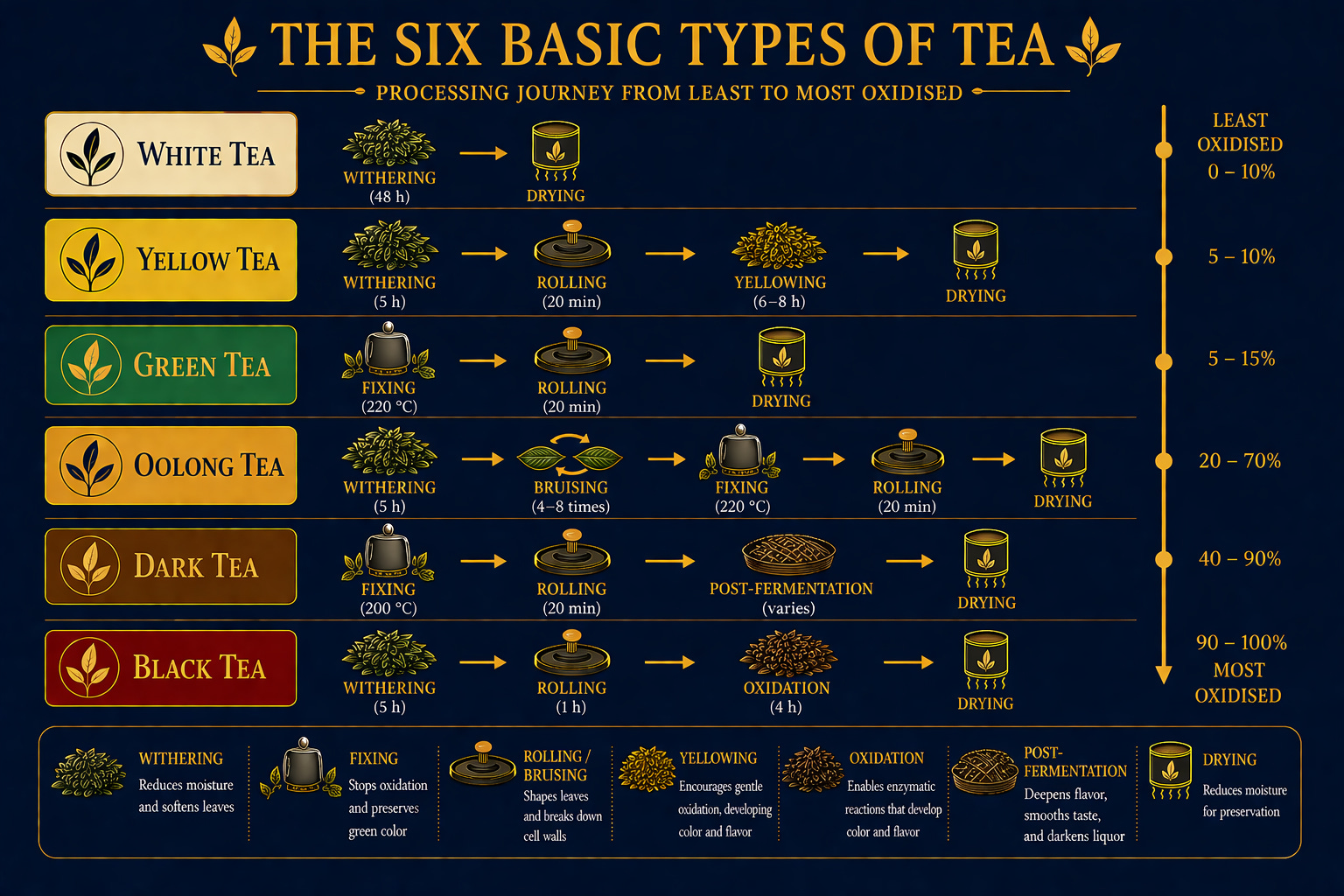
The second major difference is fermentation: the microbial transformation behind things like beer and kimchi, applied to tea. This is most common in dark teas, though producers are now experimenting with other bases.
Oxidation and fermentation are often conflated—but the distinction drives major changes in composition, aging, flavor, and price. As good as a fresh spring tea may be, few things carry the economic mystique of an agricultural product aged for decades.
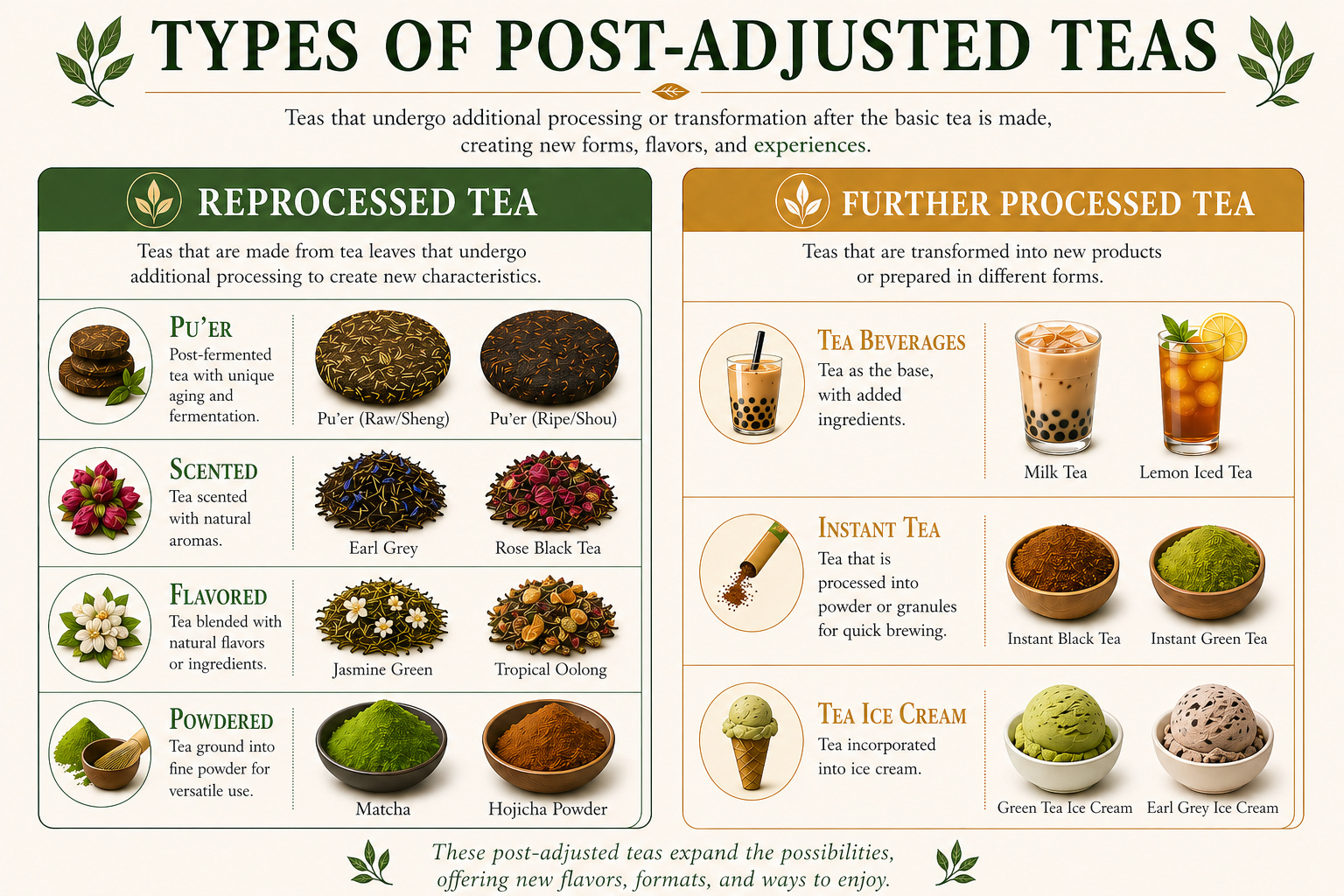
Once tea falls into one of six basic categories, it can be impacted further, or “reprocessed,” through additional fermentation, scenting, flavoring, or grinding. It can change form entirely, or barely at all. Just look at Burmese tea leaf salad. Once the leaves are brewed? There’s room for those too. See: tea leaf eggs.
But underneath all of it, what seems like a simple leaf is actually a complex chemical system that has been shaped by society for thousands of years to meet its needs. One that continues to evolve into the modern day.
After all of that, we’re back to the original question: what is tea? It’s somewhat in the eye of the beholder, and to reduce it after everything it has become would be a disservice to the craft. For this project, we can think of it as a plant that grew into something larger than itself. One that evolved alongside humanity, not apart from it.
But the answer to why tea matters isn’t hidden in the nuances above. If you rely solely on chemistry, you’re only seeing part of the picture.
Because none of this is how tea is actually experienced.
A few nights ago, we were hosted by Mr. Shaohong Zheng, the da lao ban, or “big boss,” who founded Sui Yue Zhi Wei Tea Company. He is among those credited with helping re-popularize Yiwu, one of the original regions associated with so-called “tribute teas,” or teas prepared for China’s emperors.
He pulled out a 1986 sheng Pu’er from his personal collection. It had started aging in Hong Kong just 3 years after my mom attended high school there, while it was still under British control. If only tea could talk…
After a lively conversation about the nuances of terroir and blending strategies, I asked Mr. Zheng how he would suggest introducing higher end teas to my own community back home, where a gaiwan isn’t something you’d expect to find in your hotel room.
He started tactically.
“Introduce them to the 5 major elements of tea tasting: aroma, sweetness, umami, bitterness, and astringency.”
It was a useful framework, and one we will lean on. But as I jotted down notes and began to prepare my next question, he kept going.
“Once they begin to drink you must teach them to feel the tea’s impact on their body. Then they can appreciate it.”
Interesting. I quickly wrote that down.
But he wasn’t finished.
“Finally, they must feel how tea impacts their spirit. Only then can they truly understand it.”
That is the real question of this journey: not just what tea is, but what it does to the people who drink it.
Sources
For All the Tea in China: How England Stole the World’s Favorite Drink and Changed History — Sarah Rose
Tea Sommelier Coursework — International Academy of Chinese Tea
Tea Processing Explained in Full — Wu Mountain Tea
The Story of Tea — Mary Lou Heiss, Robert J. Heiss
Tea Fact Sheet — Tea Association of the USA
https://www.teausa.org/tea-fact-sheet
This is so very similar to wine in the process however the effect on the body is very different indeed!
Very interesting read Connor. I like the substance behind the research but I really like how it relates to what matters today and going forward; that people are continuing to look for experiences, not just existence.
I’m enjoying the journey, and every time I read your posts or journal, I think about how much more I’m going to enjoy tea (especially when you’re around) from now on.