
Watch the Journey Unfold:
📸 Instagram | 🎥 TikTok | 🎬 YouTube
Days here generally begin the same way. A bit dazed after another night spent editing later than I would have liked, I roll over to my phone to see what happened overnight. A few scores go final. Texts are exchanged. Someone says something outrageous. It goes viral. Not much has changed and now everyone back home is getting ready to go to bed.
Eventually I get myself out into the world, but don’t really integrate into it. Moving from place to place as anonymously as a white guy a head taller than the crowd can possibly do.
I’ve learned a bit of Japanese, but not nearly enough to sustain a conversation. English fluency has improved dramatically in recent years, but communication still rarely comes easily. Even those who are proficient, I’ve found, are often hesitant to use it.
After enough days without really talking to anyone, I began to notice how little human interaction everyday life actually required. A few coins dropped into a vending machine deliver my morning tea. A touchscreen takes my ramen order and I plant myself at the counter. Maps guide me effortlessly between cities, going door to door without a second wasted. I scan my passport at the check-in station and my hotel key drops into a tray, sending me up the elevator to my newest accommodations.
My life here is easy, efficient, and consistent. Things that can’t be said for travel in much of the world. But those moments are frankly forgettable. It’s three others that stand out.
Tomopy was introduced to me through Chef Ryan’s publicist. She held no formal title other than the unofficial cheerleader of her small city of Sukagawa, yet she was willing to drop everything to show me around. She picked me up in the light pink Suzuki Kei she’d inherited from her mother, then took me to her favorite breakfast spot overlooking the bamboo forest. A wall of doors stood open, letting the cool morning breeze drift inside. We sat down and got to know each other over boiled eggs, toast, and some hojicha from last autumn’s harvest.
She took me from place to place, proudly showing off the home of Ultraman and the Haiku trail that brought fame to her little corner of the world. She introduced me to family and friends. Her radio studio, her son’s school for afternoon pickup, the man who has acted like a father to her since her own had passed away. Each a window into the life that she was so proud of.
As she prepared to drop me off at the train station that evening she turned and said:
“I can’t believe we just met this morning.”
We began the day as strangers and ended it as old friends.
A week or so later I stumbled upon Ken in a sunken log cabin in the mountains of Shizuoka. He was sprawled out on the floor, enjoying the mountain mist floating in through the open windows, peacefully stroking the cat that had jumped onto his thigh. It took a few moments to get his attention but as soon as I did he sprang into action to shepherd me inside.
He explained that it was actually his home that doubled as a Yakiniku, or barbecue restaurant, open by reservation only. He made me some first flush sencha from the farm down the road and showed me photos of neighbors jamming on the various string and reed instruments that were nestled into every corner of the room.
We talked about where I was from, I asked him about the area, and he became fixated on the price of McDonald’s in the States (he was thrilled to learn about the Big Mac Index). But somehow the conversation drifted back to the nights when the place was filled, each seat occupied with neighbors from the village.
I could picture it immediately. Drinks flowing. Wood coals crackling beneath wagyu and vegetables from his garden. Amateur musicians pouring themselves into every riff. The rousing applause from the dozen or so gathered there, as heartfelt as if the musicians had been performing for thousands.
He spoke with genuine affection. He insisted the place wasn’t much—dark, cramped, and falling apart. Yet every story he told returned to the people inside it. You could tell he knew the building meant far less than the community that congregated there.
Eventually it was time to move on. I attempted to pay him for the tea, but he refused.
“You can pay me by coming to visit again”
Then there’s Kayo. I was standing on the sidewalk in the Kiso valley, in the foothills of the Japanese Alps, when I heard footsteps.
“Picture?” she asked.
“Yes.” I replied, smiling just as broadly as the great-grandmother now standing in front of me. She was beautifully dressed from head to toe, a sparkling necklace serving as the outfit’s centerpiece.
“Of what?” She inquired.
That exchange set into motion more than I could have imagined.
Then, without another word, she started walking. Assuming but uncertain that she intended me to follow, I lagged behind a little way until she stopped to see why it was taking me so long.
She took me to the town’s main temple, slowly making our way through the central gate to take in the maples, cherry blossoms, and dogwoods that had grown over the pathway. She paused at the temple’s entrance, explaining that her father was one of the main carpenters on the project over a hundred years ago. She gently placed her belongings at the base of the stairs and pressed her hands in front of her chest before taking a long bow at its altar. I quietly mirrored her movements in a moment of reflection.
From there we made our way to the gravesites. To pay our respects to her father and husband who were buried near one another. We repeated the same quiet ritual.
She stopped and asked me, “House five minutes. Okay?”
I told her, of course, and she led me down a steep path to the place where she raised her family, being sure to point out her summer annuals in bloom.
She gave me a tour, constantly emphasizing how small it was. The space was filled with life. She introduced me to her parakeet and beta fish. She pointed out family photos and trophies from placing in dancing competitions all over the prefecture. She led us back to the living room to pay our respects a third time at the shrine she keeps, dedicated to the departed.
She disappeared into the kitchen in search of something for an unexpected guest. I tried my best to encourage her to sit and relax but she insisted. She returned with a handful of snacks and two glasses of sobacha before finally settling in.
We sat there for hours as the rain began to come down, creating movement in an otherwise peaceful view of the hillside. She told me about each of her children. Who they’d married, what they did for a living, the lives they went on to build for themselves. She told me about her travels to New York City and Prince Edward Island. About the time her whole family went to cheer on her son Itaru at the 2006 Olympics in Turin. Describing the mania of excitement and pride as he dropped in, in pursuit of his dream.
There were plenty of small breaks in our conversation, often brought on by language fatigue or a loss in context. Each was filled by a sip of tea or a bite of fruit before a new thought popped up.
For the rest of the week, she stopped at my hotel each time she passed by. A few days later we met for matcha and egg sandwiches at her daughter-in-law’s café. Our final meeting back in the lobby was to exchange letters and gifts. I left her the best gyokuro I'd tasted in Japan. She slipped me an envelope with a few origami cranes, a drawing, and a letter.
I opened it after returning to my room, my heart already full.
Thank you for the wonderful days.
They became one of the best memories of my life. You are very kind and generous.
I hope you enjoy the rest of your time in Japan.
Take care and stay healthy. I hope to see you again someday.
Best regards,
Kayo
I did not come to Japan in search of a lesson in loneliness. I came here to understand tea.
Instead, I found myself thinking about the people who insisted on sharing it.
Every meaningful interaction shared one thing: time. Time to stumble through a conversation that neither of us fully understood. Time for conversations to wander. Time for strangers to become something more familiar.
Human connection needs more than proximity. It needs permission. A reason to stay seated. To put your phone away. To stop worrying about what comes next.
That’s so much of what tea has always done.
Long before it was bottled, branded, or sold for convenience, tea gave people permission to slow down together—to accept hospitality, to linger. The drink was never the point. The space it created was.
Three months into this journey, the thousand cups of tea have started to blend together. The people I shared them with never will.
The Tea Trail — Japan is supported by
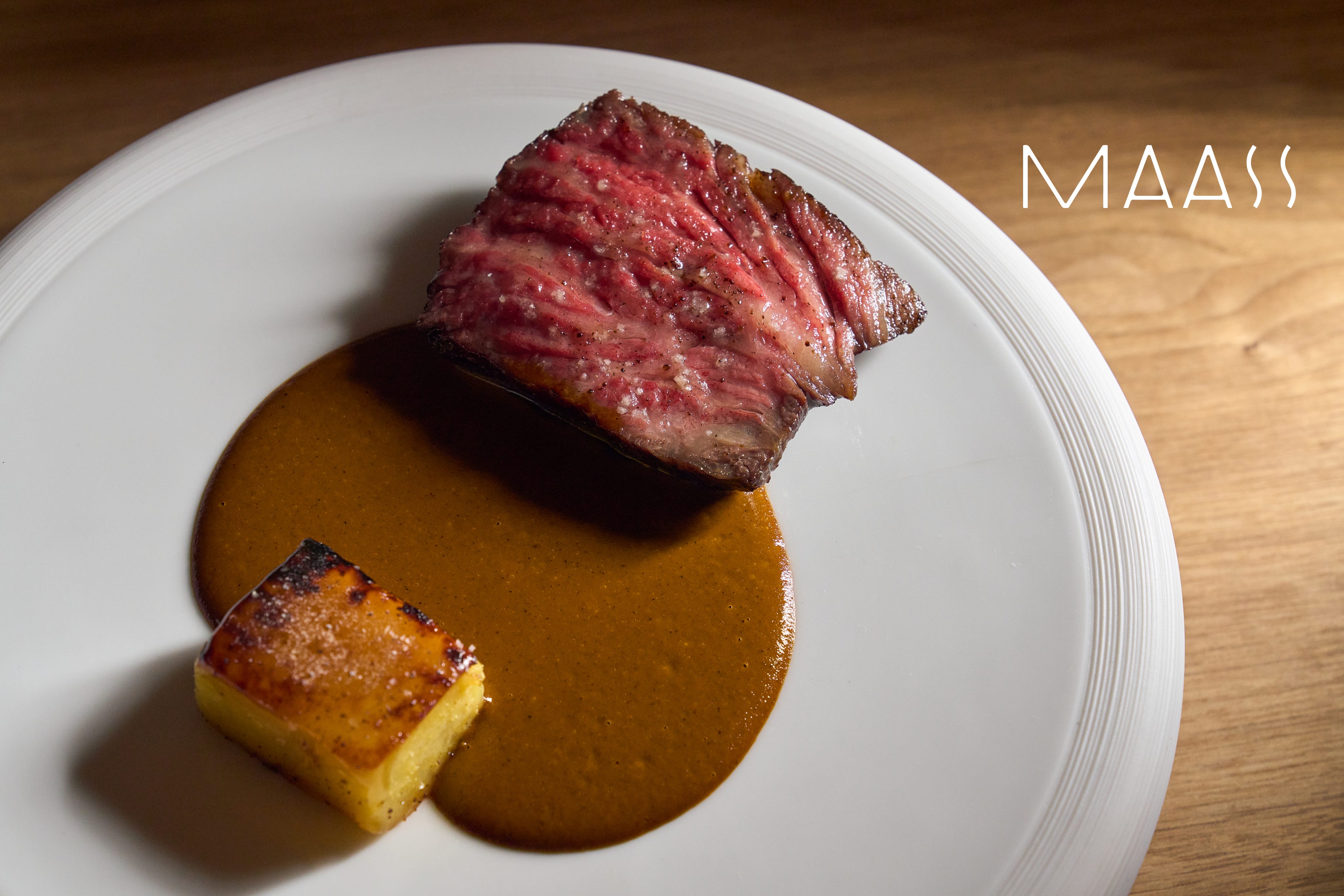
MAASS — Fort Lauderdale, FL
Supporting storytelling about craftsmanship, hospitality, and culture.
This is such a beautiful chapter. I love every interaction you have encountered. Priceless
Connor, I agree with your dad. It is so great to see the people can just be people being kind to each other. Thanks so much for sharing.