

Watch the Journey Unfold:
📸 Instagram | 🎥 TikTok | 🎬 YouTube
The chajin lifts their right arm, enveloped in an oversized sleeve, bringing a silk cloth carefully to chest level. They begin a sequence of four major folding motions. Each crease is calculated as it cleans the rim of an intricately designed bowl. Below, every utensil waits in its assigned place. The water slowly backs off its boil, first into a string of pearls, then fish eyes, before settling into the desired state.
Every facet of Japanese tea ceremony is deliberate, even before a single gram of powder touches water.
For centuries, chajin, or tea practitioners, have been preparing matcha this way. The practice of whisking powdered tea leaves originated in Song China, but was later preserved in Japanese monasteries centuries after it faded in its birthplace.
In the last 25 years that has fundamentally changed.
Today, more than half of Japan’s matcha is sent overseas, much of it ending up in trendy cafés where it’s appreciated for very different reasons than those that shaped it. The final product often more closely resembling a mocha frappuccino than a meditative aid.
How does that impact those who cherish it most?
I came here to find out.
Before the turn of the century, matcha remained largely confined to Japan and its diaspora communities abroad.
Then it started to go global.
First it was a niche wellness drink favored by yogis, health bloggers, and the macrobiotically obsessed. Steeped green tea is often lauded for the health benefits brought on by minimal oxidation. Matcha goes a step further: the entire leaf is stone-ground into a fine powder, allowing drinkers to consume the plant itself rather than an infusion of it.
As the world slowly discovered matcha, its next phase of growth was already taking shape.
In 2001, Starbucks Japan introduced the Matcha Cream Frappuccino. Five years later, Starbucks added it to its U.S. menu as a ‘Green Tea Latte.’ For the first time, matcha had a global café chain capable of introducing it to millions of customers. Arguably more importantly, in the U.S., matcha wasn’t being introduced through tea culture at all. It was being normalized by the coffee industry that dominated daily routines.
That was only the beginning. Its greatest accelerator turned out to be algorithmic.
By 2020 TikTok and Instagram discovered the same thing that 16th century Uji farmers did when they started shading their tea trees before harvest. Matcha was visually irresistible. Shades of jade, emerald, and wheatgrass with shimmering translucent pearls settling in a foam on its surface.
It’s vibrant, yet minimalist. Aesthetic while also healthy.
Matcha became more than a drink, it became an identity statement.
But matcha, at its core, is an acquired taste. Certainly for a typical American palate, where bitterness, grassiness, and umami aren’t exactly sought after. So in order to make it more familiar, much of the matcha consumed abroad was combined with milk, ice, sweeteners, and fruit syrups.
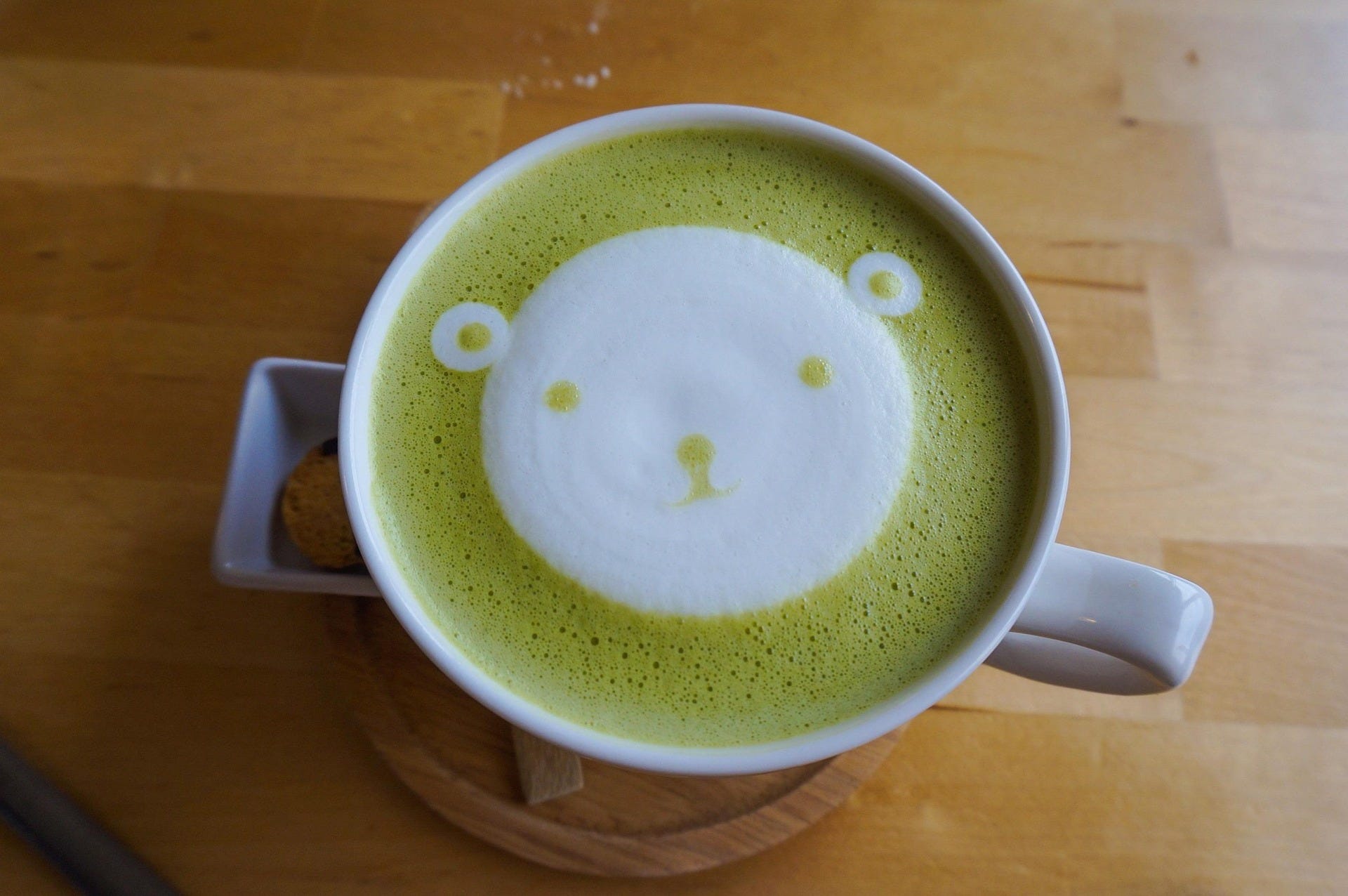
I had my own preconceptions about all of this. But before deciding what I thought, I wanted to hear from the people who had inherited the tradition. To families who had spent decades farming, blending, and preparing matcha, was this a welcome evolution—or the beginning of something they’d come to regret?
I asked Tetsuya, the sixth generation to run his family’s tea business and the president of the Shizuoka Tea Association. He started with the farmer’s perspective. International demand, he explained, gives tea farmers a future at a time when many are struggling to survive.
That much made sense. But he went a step further.
Foreign consumers, he argued, are often willing to pay for higher-quality matcha. That demand rewards traditional cultivation and processing methods that might otherwise disappear. That directly counters the domestic trend toward bottled teas, where lower-quality leaves can be blended and processed into inexpensive drinks. Outsiders weren’t just buying tea, they were helping save it as well.
But Tetsuya spoke as a businessman. What about the tea masters? The ones who’d spent decades apprenticing just to make a single cup.
I asked Naoko, a chajin from Tokyo, about her thoughts on rising overseas interest. She said that, in a way, it drove her toward matcha. After spending her middle school years in Connecticut, she wanted a way to interact with foreigners back home.
“So I studied tea ceremony.”
It isn’t her primary job. Her days are spent behind a desk in a Shibuya high-rise. But now nights and weekends are dedicated to sharing her culture with the world. Impeccably dressed in an inherited kimono she practically glides through the choreographed steps. Five years on, Naoko feels she’s found the passion and purpose she’d lacked as a young adult.
I posed the same question to Akira, a Kyoto-born chajin. Ironically, it was foreigners who led him back to Japanese tea as well.
“It was not until I moved to the U.S. that I realized how little I knew.”
Friends would ask him basic questions about his own culture that he couldn’t answer. Embarrassed, he eventually chose to move back to Kyoto to take over his family’s kimono shop. At the same time he reconnected with a local monk, a childhood idol, to study tea ceremony under her. It’s a practice he carries on in her memory for visitors from all over the world.
By now, I’d heard some version of this story several times on The Tea Trail. The MBA student in Seoul, the math teacher from Beijing, and the executive assistant in Tokyo. All of them grew up with an affinity for Western culture only to realize they’d become enamored at the expense of understanding their own.
Nor was it limited to tea. I found the same pattern in calligraphy, ceramics, textiles, and countless other crafts. Again and again, I found globalization pushing young people back toward the very traditions many feared it would erase. Adoption by those outside their culture didn’t dilute their interest; it emboldened it.
Not everyone I spoke to, though, was quite so elated.
“I’m glad that matcha is really popular, because Japanese culture has become famous around the world,” said a third chajin, pausing for a moment, her eyes drifting down to the floor.
“But on the other hand, the most attractive part of the tea ceremony is the heart, showing service to guests, about creating peace.”
She shook her head and met my eyes once again.
“I just want people to know more about the original matcha too.”
This wasn’t the first time I’d come across a tradition wrestling with what happens when outsiders fall in love with it. In certain ways, it reminded me of the early 2000s, when newly wealthy Chinese buyers began to fancy Swiss watches, Scottish whisky, and French wine.
At first this was a welcome change for producers, delighted to find an entirely new group of customers. But that elation quickly turned into unease as hushed stories started to circulate in wine circles: “those billionaires are taking Chateau Lafite Rothschild, and mixing it with… Coca-Cola.”
Those rumors ended up being mostly debunked, but it was true that lesser, yet still artfully crafted wines were being combined with soda. Faced with unfamiliar flavors, many consumers reached for something they already knew.
I found one of the most poignant voices in the Chinese-born, British-based wine scholar Janet Wang, who wrote:
“It is a great pity to waste something fine on the uninterested, when it could have brought much joy to a discerning drinker, or someone eager to learn. If a wine is made with a great deal of skill and love, intended to be enjoyed in its glorious unadulterated form, it deserves to be treated so, not least to appreciate the people who worked hard to give it life and art.”
She then adds a more centering perspective.
“This knowledge will also come with learning and experimenting… It is my opinion that a two way exchange of culture, to draw on common feelings and finding cultural parallels, would be infinitely more potent in communicating ideas than any unilateral preaching programme.”
Her point wasn’t that people shouldn’t experiment. It was that appreciation takes time—and that culture rarely moves in only one direction.
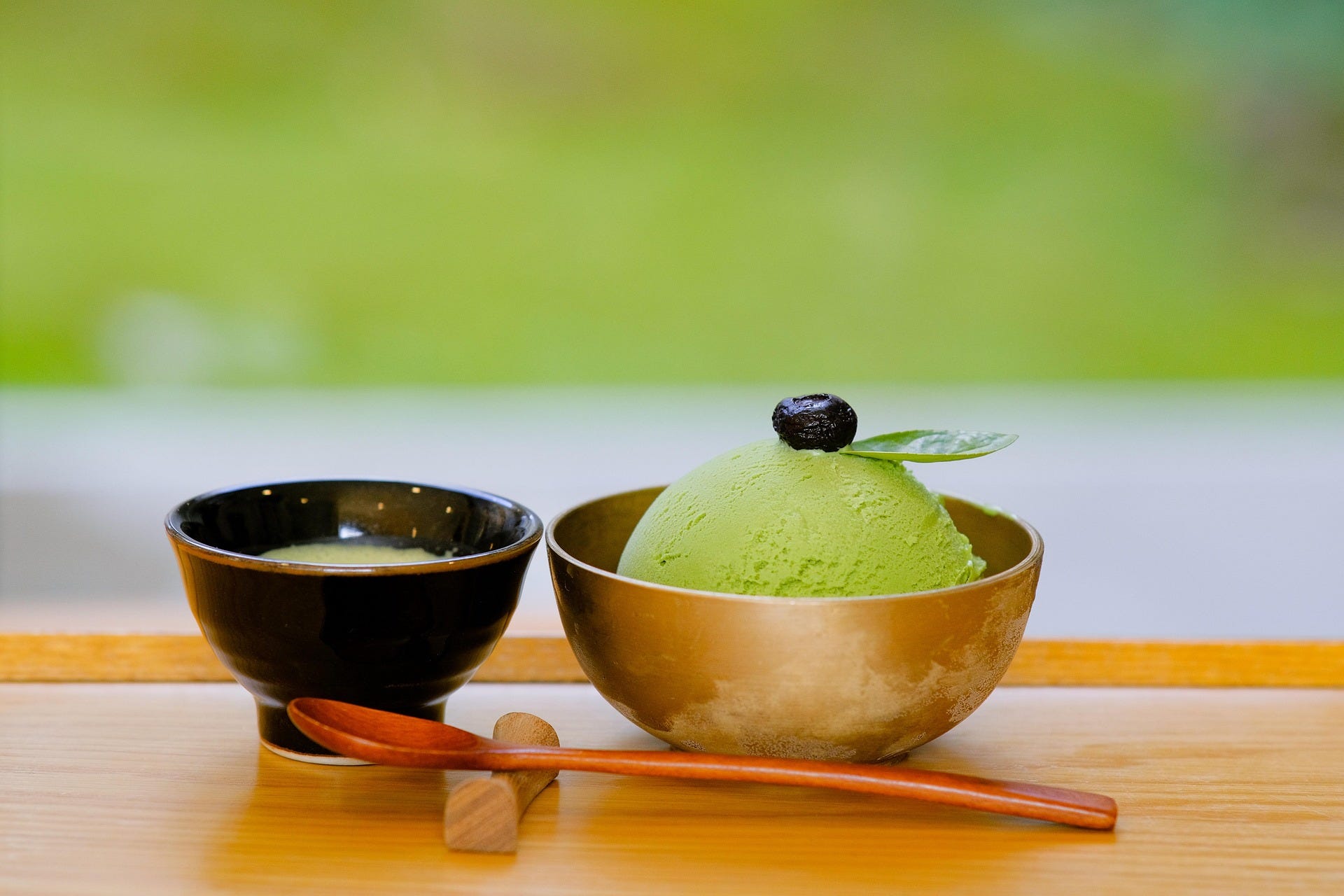
Back in Tokyo, I walked into another café, and a couple of tourists ahead of me ordered a first flush Ogurayama matcha, one of Uji’s finest. Then they asked for it with oat milk and blueberry syrup.
My instinct was to cringe.
I had just visited those tea fields, spent weeks learning about the painstaking effort required in its production, and watched experts spend hours of focus on just four cups of it.
But I thought back to every conversation I’d had over that time.
Maybe I’d been asking the wrong question.
Was it fair to expect an entirely new demographic to be both willing and able to inherit someone else’s practice at face value? To forgo something that makes them happy because they have not “earned” the right to enjoy it?
I’d spent weeks wondering whether outsiders were appreciating tea correctly. Maybe the more important question was whether appreciation had ever begun with perfect understanding in the first place.
I don’t know whether the millions of people ordering vanilla matcha lattes with whipped cream will ever sit on a tatami mat across from someone with generations of heritage. Honestly, most probably won’t.
But some will.
And those lattes will become their first bowl. That curiosity will grow into study. And study will eventually lead to stewardship.
In a world of dying art forms, maybe we can’t afford to be so picky about how they are sustained. Because traditions endure not by remaining untouched, but by allowing each generation to find its own way to value them.
Sources
The Japan Times. “Matcha shortage: Global demand forces Japan to rethink production.” February 23, 2025.
Wine Peek. “So What’s Wrong with Mixing Château Lafite and Coca-Cola Anyway?” November 25, 2013.
The Economic Times. “Why Matcha Is Trending Everywhere: From Boosting Heart Health to Weight Loss, This Over-800-Year-Old Tea Surprisingly Beats Coffee & Chai in Many Ways.” June 19, 2025.
Queens Gazette. “Green Tea Joins Starbucks Menu.” April 19, 2006.
Japan Today. “Starbucks Matcha Marches into VIA Lineup with New Japan-Exclusive Green Tea Drink Mix.” July 2025.
The Tea Trail — Japan is supported by
MAASS — Fort Lauderdale, FL
Supporting storytelling about craftsmanship, hospitality, and culture.
Very interesting, Connor. I wonder how long the trend will last and how it will evolve going into the future. Do you think it makes a full circle and goes back to the center of tea ceremonies, or does it fade out completely?