

Watch the Journey Unfold:
📸 Instagram | 🎥 TikTok | 🎬 YouTube
The rain started all at once. Without an umbrella, I took off down the narrow streets of Shizuoka, looking for cover. I ducked beneath a small canvas awning to catch my breath, letting the water run down my glasses.
But just as I stepped back into the rain, I heard clattering from the other side of the wall.
Intrigued, I peered through a sliding glass door that had been left slightly ajar, cool air leaking through the opening. The interior looked well-worn, with papers strewn on the desk and boxes scattered along the walls. Large wooden drawers lined the walkway, their sides labeled in white marker, ‘¥/KG’ the only part I could decipher.
By then, I had learned that the best tea often passed through places like this. So, half intrigued and half soaked, I stuck my head through the door.
A grey-haired woman in a pink plastic apron was bent over behind the glass counter. She sprang upright when she noticed me, visibly puzzled by my presence.
“Ocha?” I asked, pointing to one of the open boxes.
She looked at the box, then back at me. Her eyes widened. “Sō, sō, sō,” bowing her head with each response. Without meaning to, I had sent her into a flurry. I tried to make it clear that I did not mean to cause any trouble, but before I knew it, the kettle was on, the teapot had been wiped clean, and eight grams of sencha sat balanced on a lightly rusted scale.
Amid the commotion, a burly man emerged through a narrow doorway leading to a series of small rooms.
“Hello, you need?” he asked, almost incredulously.
“No, I just passed by and wanted to have a look inside. Is that alright?” I said, trying to reassure him.
“Yes. Sit. Sit.”
I took off my shoes and knelt on the weathered tatami, my weight pressing into my shins.
“How long has this shop been open?” I asked to break the silence.
“Fifty years. My father opened.”
“That’s amazing. When did you start working here?”
“Thirty years. After I went to college in San Francisco.” He paused, seemingly lost in the memory.
“I’m 76 now. Too old,” he added.
Soon, there was tea in my cup, and his English slowly returned along with stories of life in the U.S.
I asked whether any of his children would take over the family business. He shook his head emphatically.
“But we do have a daughter. Oh yes, she’s very successful. She studied in New York. Lived in London. Her English is very good.”
He brought her up several more times, both of them gushing over their daughter’s accomplishments.
“So what happens to the shop when you stop working here?” I eventually asked.
He smiled, then let the silence answer for him.
Eventually, I changed the subject.
Once it was time to leave, I asked for their daughter’s contact information. I told him I was writing a story about Japanese tea and thought it would be good to interview her about the family business.
The warmth in his voice disappeared.
“Oh no, you cannot do that,” he said. “She is very busy, she will not be able to—”
“We do not see her. Only every couple of years.”
As I walked back, I couldn’t shake that final exchange. They had spent the better part of an hour talking proudly about a daughter they seldom saw.
There could have been any number of reasons, and I did not know them well enough to pass judgment. But the shape of the story had become familiar.
Rural houses sitting empty. Schools with more desks than students. Villages where nearly every face seemed old. Later I learned that Japan now has roughly 3.9 million vacant homes with no intended use, more than double the number in the late 1990s, while rural communities continue to lose residents much faster than major metropolitan areas.
Those scenes weren’t isolated. They reflected broader demographic shifts that have reshaped modern Japan.
Across the country, otherwise healthy family businesses are closing simply because there is no one left to take them over. The owners are aging while their children build lives elsewhere. The businesses themselves aren’t failing. The line of inheritance is.
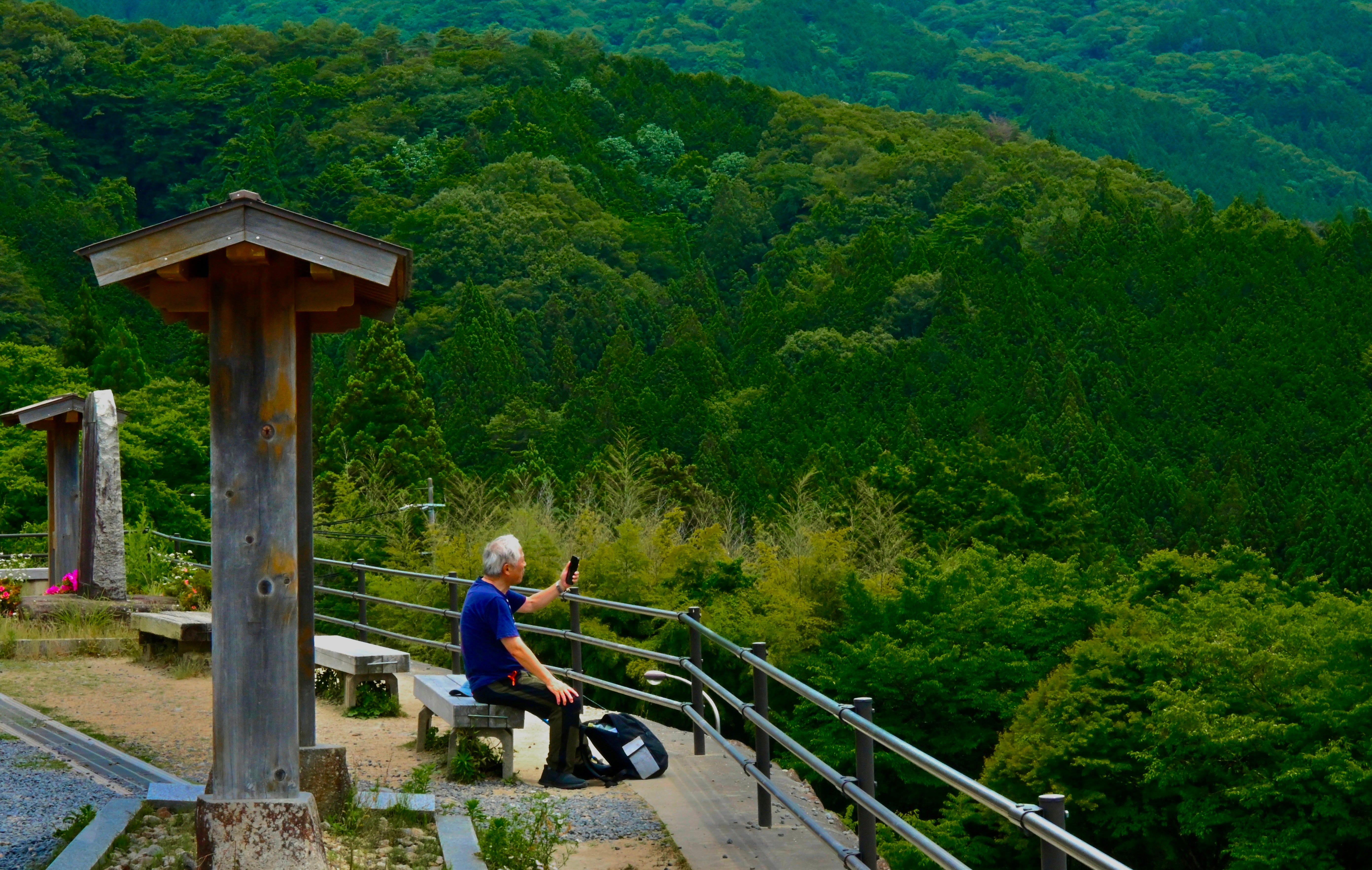
I have little doubt that global interest in Japanese tea will continue to grow. The world’s appetite for it is unlikely to fade any time soon.
But what tea does for Japanese people is not quite as clear.
While exports have surged and bottled tea has become increasingly common, the quieter ritual of brewing loose-leaf tea at home has steadily declined since the 1970s. The tea remains. The habit surrounding it is changing.
Within that tension, I can see the scene vividly. A tired office worker returns to a small urban apartment, searching for some way to come down from the day.
This time, they reach into an old wooden cabinet and pull out a side-handled teapot that once belonged to their grandparents, brushing the dust from its lid. They set a kettle on the stove and wait until steam begins to rise. They pour the hot water slowly, noting the changing sounds as the pot fills and the leaves loosen and unfurl.
They sit and wait, counting the seconds in their head.
Finally, it’s time to pour. A pale green liquor streams from the spout into a pair of cups, their rims chipped with age.
Their thoughts still wander, but their breathing begins to slow. For a moment, they have peace. It does not erase their stress or make the world’s worries disappear. The apartment is still small, the salary unchanged, the future uncertain. But for those few minutes, the day no longer has complete control of them.
In The Book of Tea, 19th-century Japanese scholar Kakuzō Okakura outlines two extremes. He begins by describing a man with “too much tea in him,” who “runs riot in the springtide of emancipated emotions.”
But he feared the opposite even more.
“If a man has no tea in him, he is incapable of understanding truth and beauty.”
That is where I believe Japan’s tea tradition may have its greatest future value. Not in export figures, tourism records, or global press. But in reconnecting people with forms of focus and care that modern life has made harder to practice.
Patience. Slowness. Awareness. Humility. Calm. Care.
In a world built around speed, each becomes a form of resistance.
Tea preserves virtues that remain valuable even after the society that produced them has changed.
Sources & Further Reading
Cabinet Office of Japan. *2024 White Paper on the Ageing Society*
International Monetary Fund. *Japan: Demographic Shift Opens Door to Reforms*
Japan Small and Medium Enterprise Agency (METI). *2025 White Paper on Small and Medium Enterprises*
Okakura, Kakuzō. The Book of Tea. Originally published 1906.
The Tea Trail — Japan is supported by

MAASS — Fort Lauderdale, FL
Supporting storytelling about craftsmanship, hospitality, and culture.
Great story. I love the it unfolds and what a great way to spend an afternoon.