

Watch the Journey Unfold:
📸 Instagram | 🎥 TikTok | 🎬 YouTube
China is a country of more than 1.4 billion people. Over 90% of them trace their roots back to the Han ethnic group. In most of the country, that breeds cohesion: overlaps in food, language, culture, and value systems.
And then, there’s Yunnan.
If Han-dominant Confucian culture is the rule, Yunnan is the exception.
Around one-third of the province is made up of ethnic minorities, and 26 of China’s 56 recognized groups have a foothold here. Its geography reflects that same break. The province runs from Himalayan peaks towering over 6,000 meters high (nearly 20,000 feet) to tropical rainforest along the borders of Laos and Myanmar.
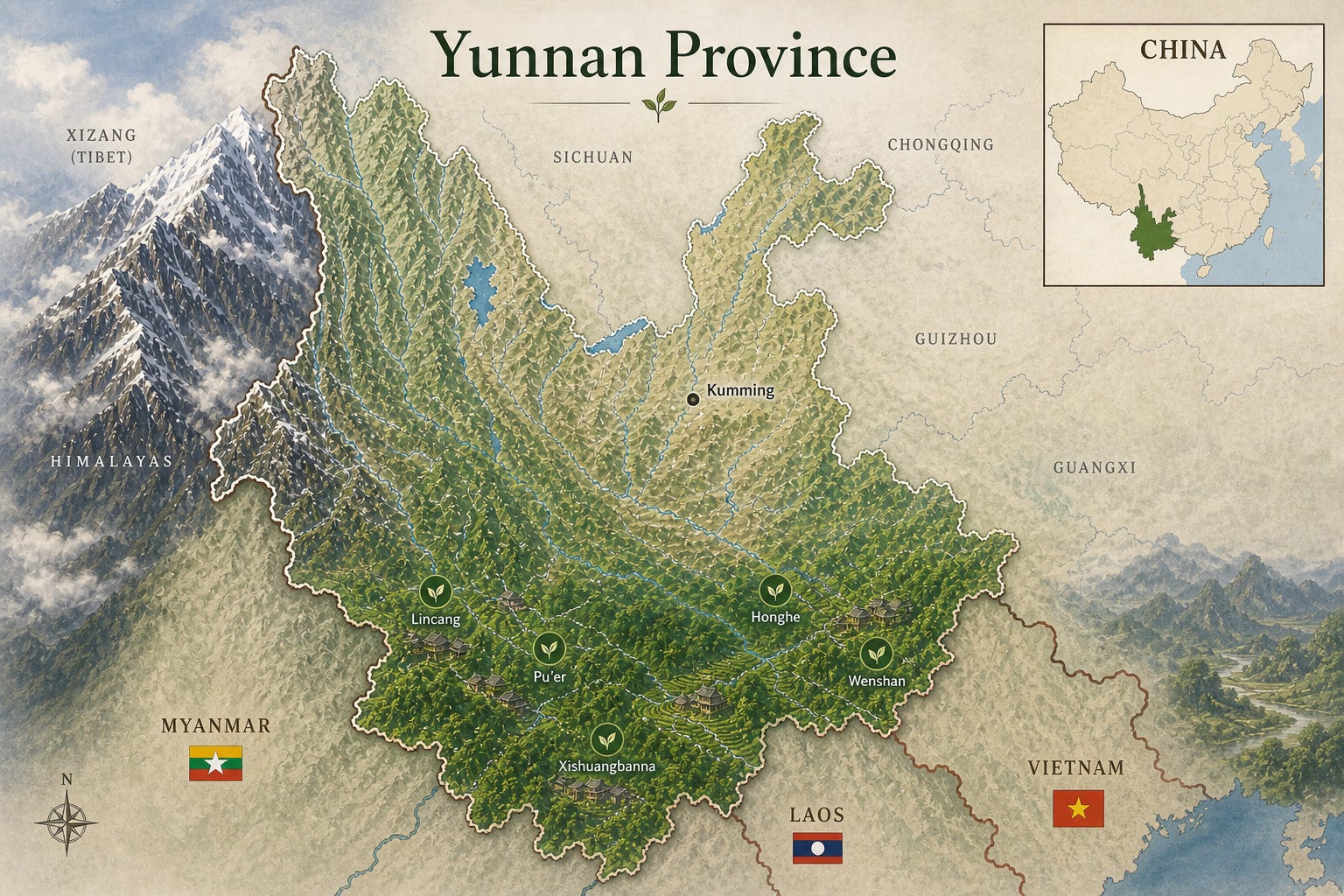
And it’s here, almost improbably, that tea survived.
Tea trees are believed to have spanned much of the globe in the Tertiary period, but an ice age around 2 million years ago nearly wiped them out entirely. Along the Lancang River, a combination of climate, elevation, and biodiversity provided refuge for the resilient plant that would come to be known as Camellia sinensis.
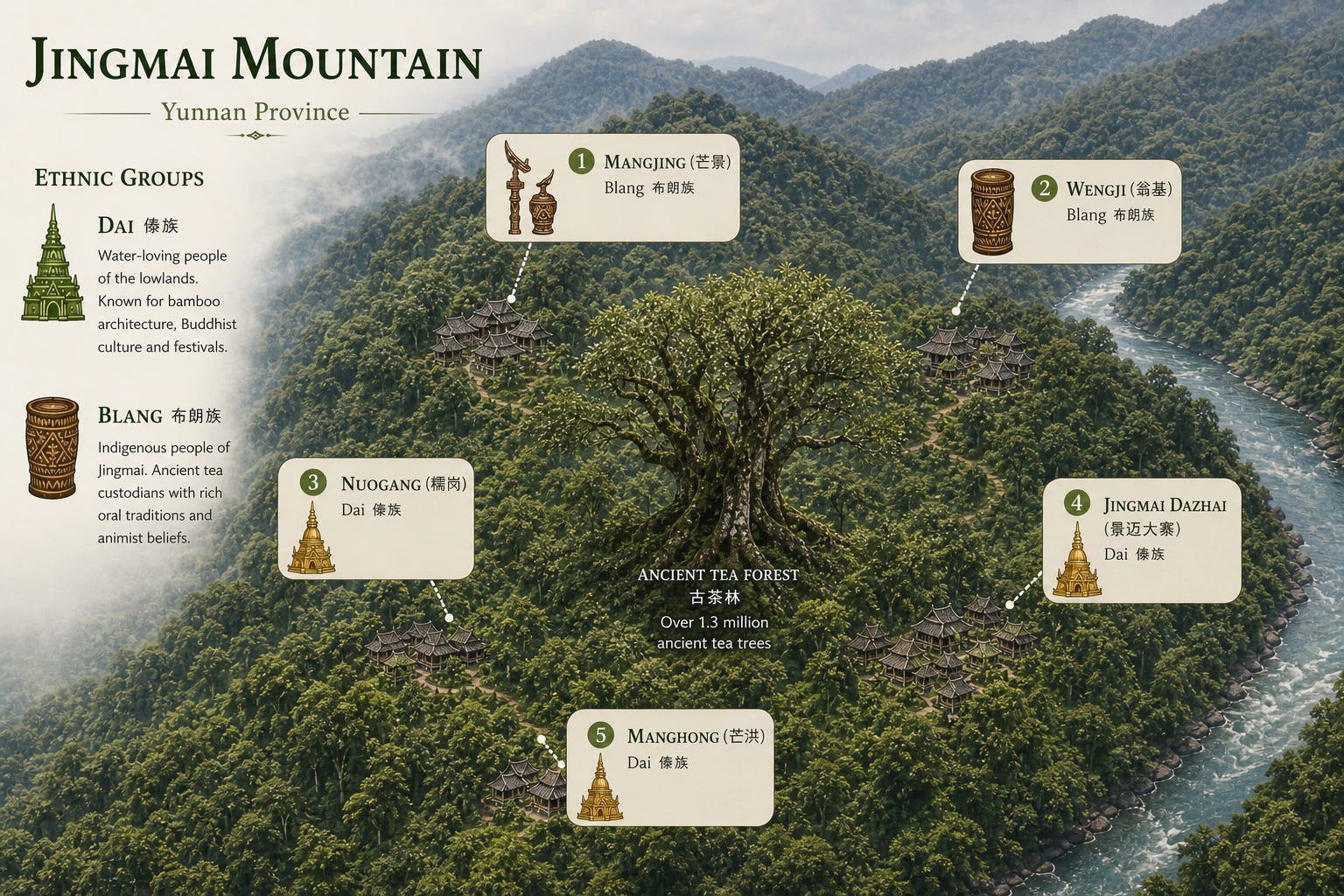
Jingmai Mountain is the heartbeat of this zone. So I spent two weeks between its many villages, coming to appreciate how each has its distinct character and history.
Life here revolves around tea. Jingmai has the world’s largest ancient tea forest at over 1,000 hectares. But unlike the aesthetically lined tea bushes in India, Japan, or Taiwan, these trees were planted almost at random, in a biodynamic forest, or one that includes a variety of plant species.
It’s objectively less productive than their perfectly manicured counterparts, but locals claim the leaves they bear are richer. In fact, they attempted to plant trees en masse in the 1980s, but the experiment failed. Without biodynamism and room to grow, the trees just didn’t produce the same quality tea. They went back to the wild forests.
As you make your way along the winding roads that shift between dirt and cobblestone, you’re immediately drawn to the roof ornamentation. Jingmai traces its origins back to two ethnic groups, the Dai and Blang (pronounced dye and boo-long). Each has its own architecture, creating visual distinctions from the moment you arrive.
We were welcomed into the homes, dining rooms, and holiday celebrations of each group at their most important time of year. Sharing food, dance, and baijiu—experiences beyond anything I could have imagined.
But of all of the experiences I had, one stands out.
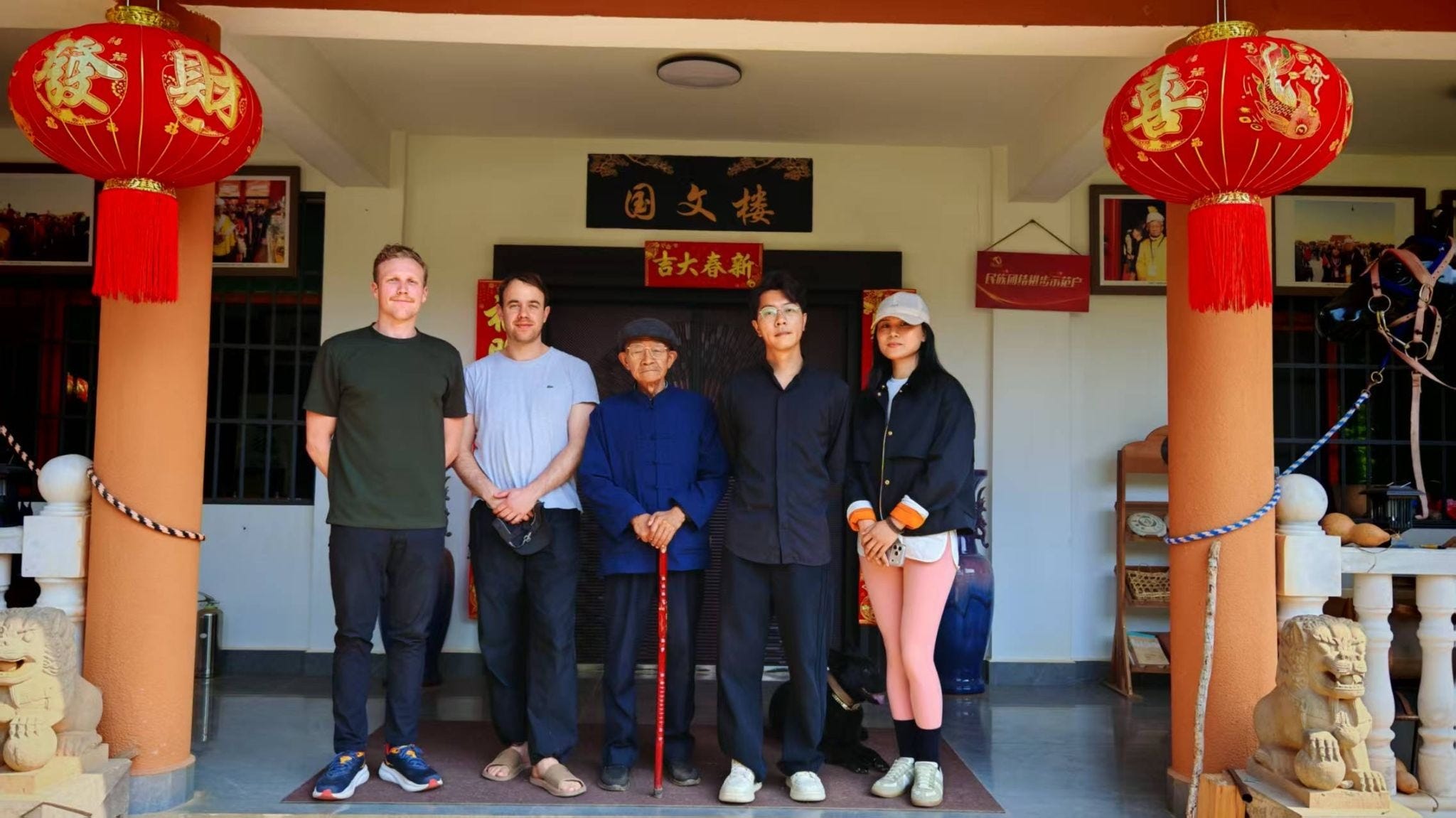
Mr. Su Guowen is the 42nd generational leader of the Blang people on Jingmai Mountain, where they have lived peacefully since the early Han dynasty.
We joined him alone for tea a week before the Blang New Year and again throughout the festivities.
To understand its importance, you have to see what they give up to observe it. The tea industry, the economy’s driving force, relies on a prime plucking and processing window in a six-week period between late March and early May. Yet for this three-day festival, it shuts down entirely.
In its place are prayer, speech, dance, and chanting, interrupted only by spontaneous water fights that give the holiday its name: the Water Splashing Festival.
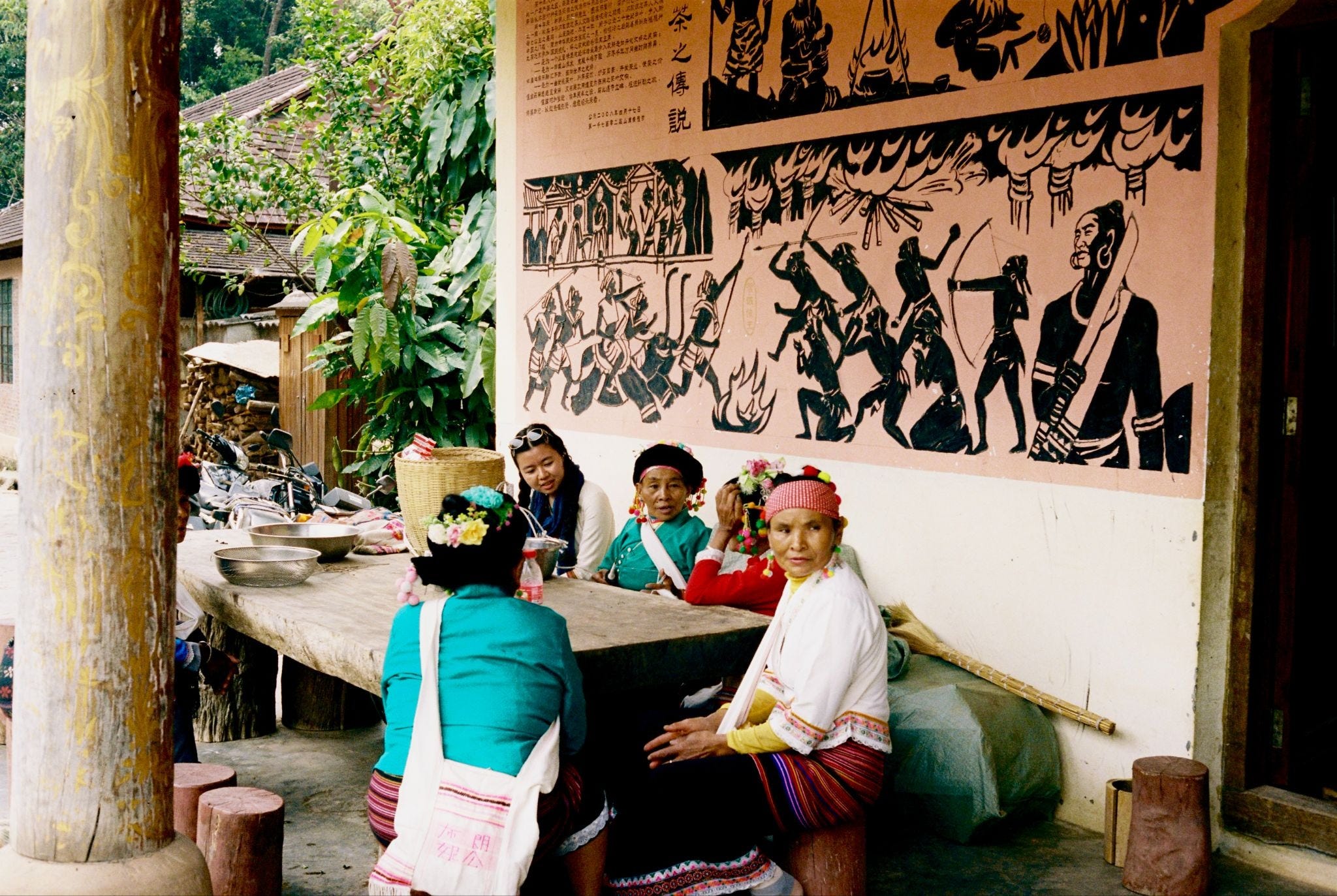
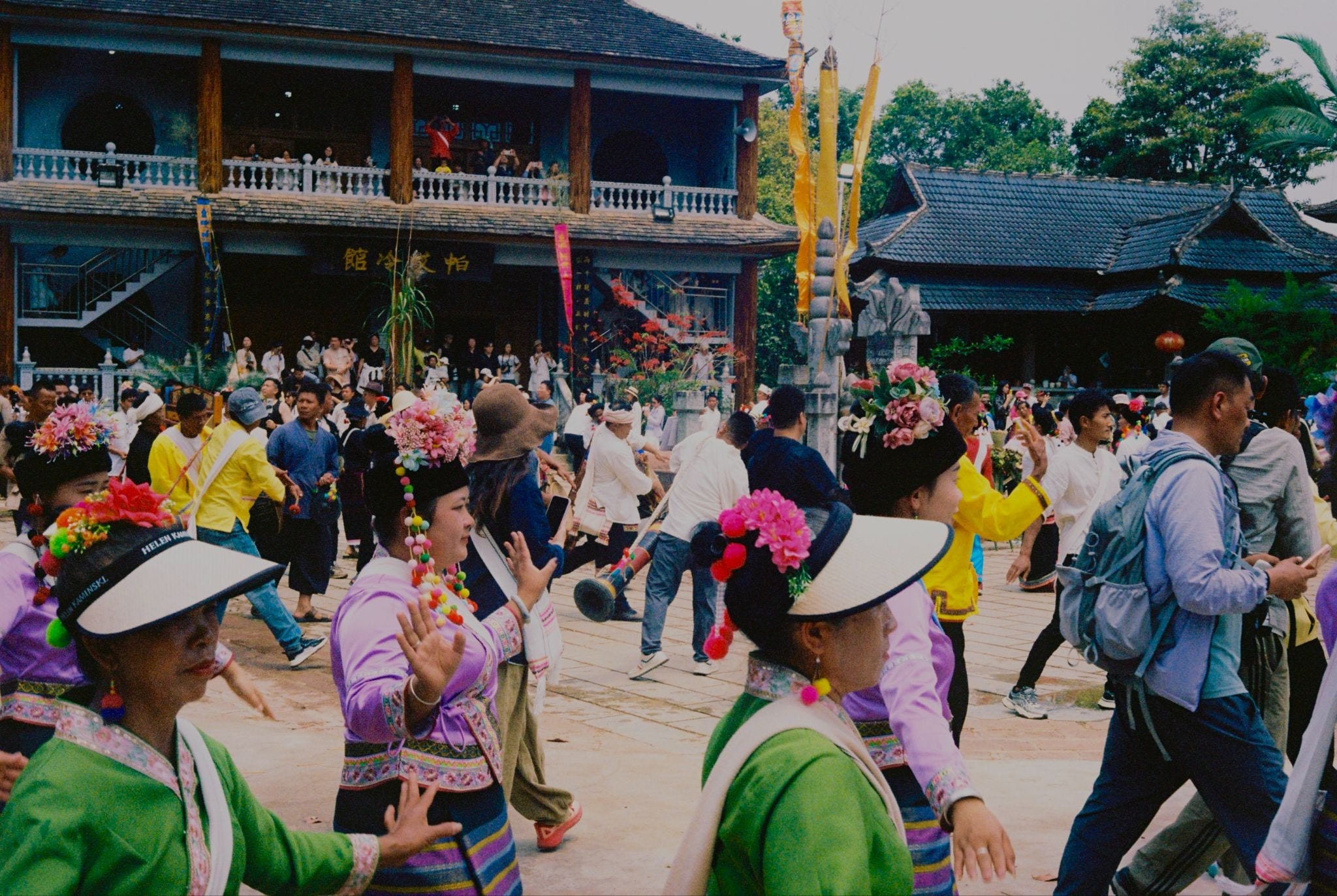
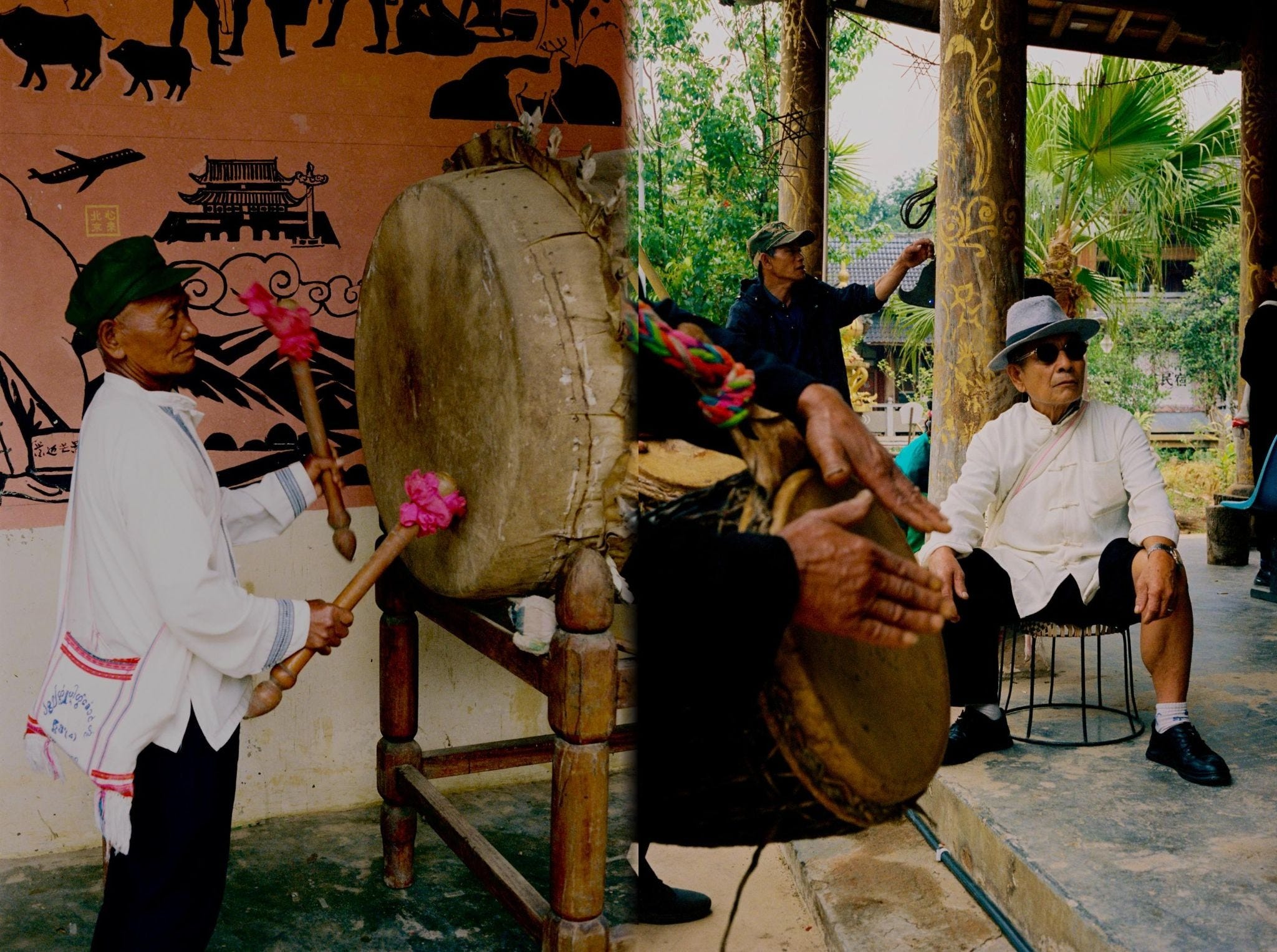
When you leave the drum circles for the quiet of the temples, you feel a duality—where Buddhist deities are intertwined with something even older.
That’s because the Blang follow two religions simultaneously: animism, as their ancestors did, and Theravada Buddhism. The latter arrived with the Dai around 1,700 years ago.
In one of the main temples, seven giant figures line the back wall, three on each side of a central diety. The surrounding six represent the spirits of land, insects, trees, water, animals, and tea.
The main figure is an amalgamation of the ancestors. He sits upright but not tense. In his right hand, he grips the trunk of an ancient tea tree, a young sapling rests gently in the palm of his left.
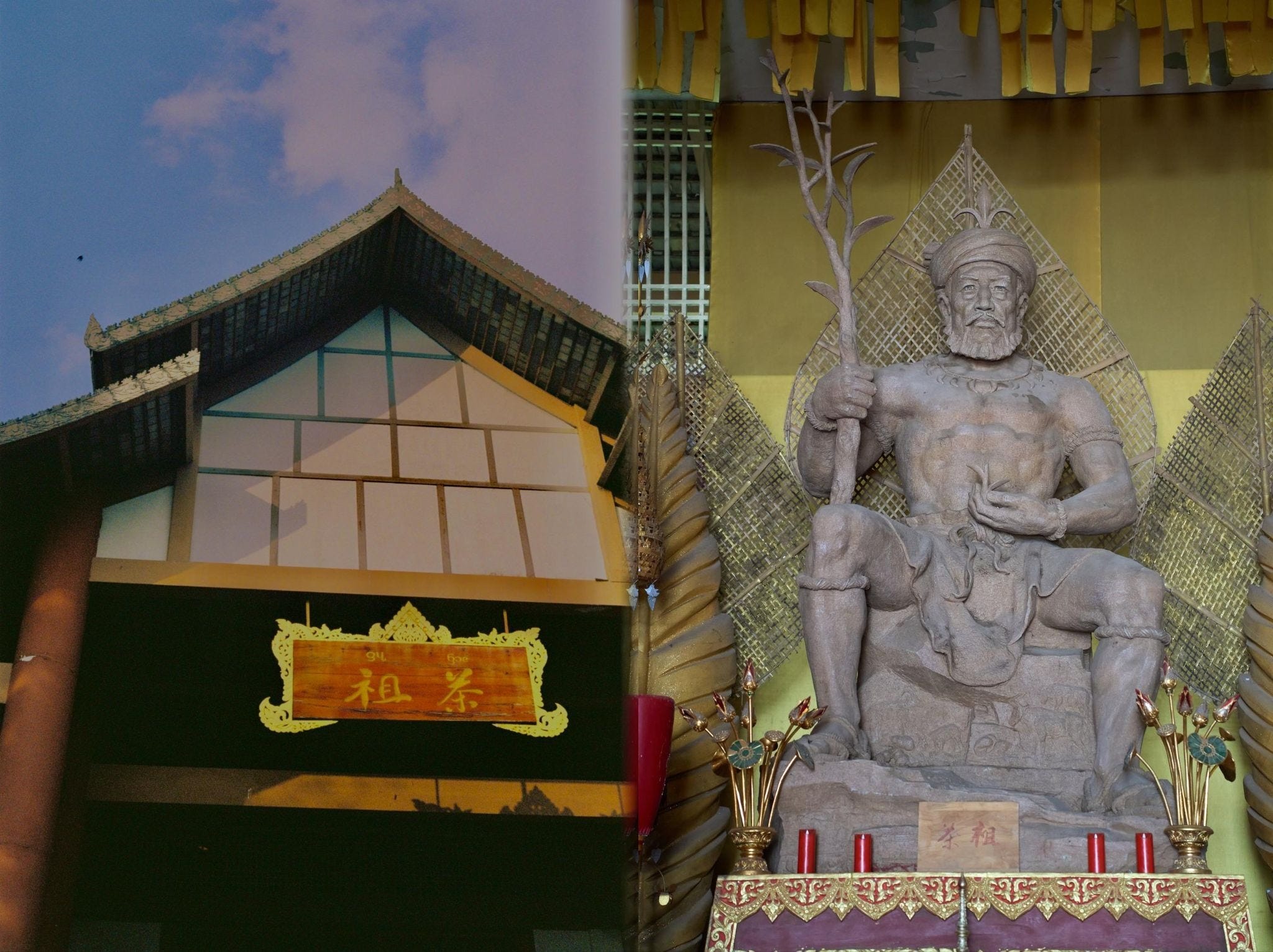
These ancestors are represented in each “tea spirit tree,” the first tree planted in every Blang garden. Many that still stand today are over 1,000 years old. Only the ancestral leader is allowed to pick leaves from them. Mr. Su shared some tea from one that day. I was able to take a cake home—one of his many ways of carrying the tradition forward in a form that can survive.
It was his work, and that of so many around him, that made UNESCO take notice. The organization designated Jingmai Mountain as a World Heritage Site in 2023.
Long overdue.
It is the first (and remains the only) World Heritage Site dedicated to tea, lagging well behind wine (Rhine Valley (1979), Saint-Émilion (1999)) and coffee (Southeast Cuba (2000), Colombia (2011)), among others.
But the initial sugar rush of money and attention may be short-sighted.
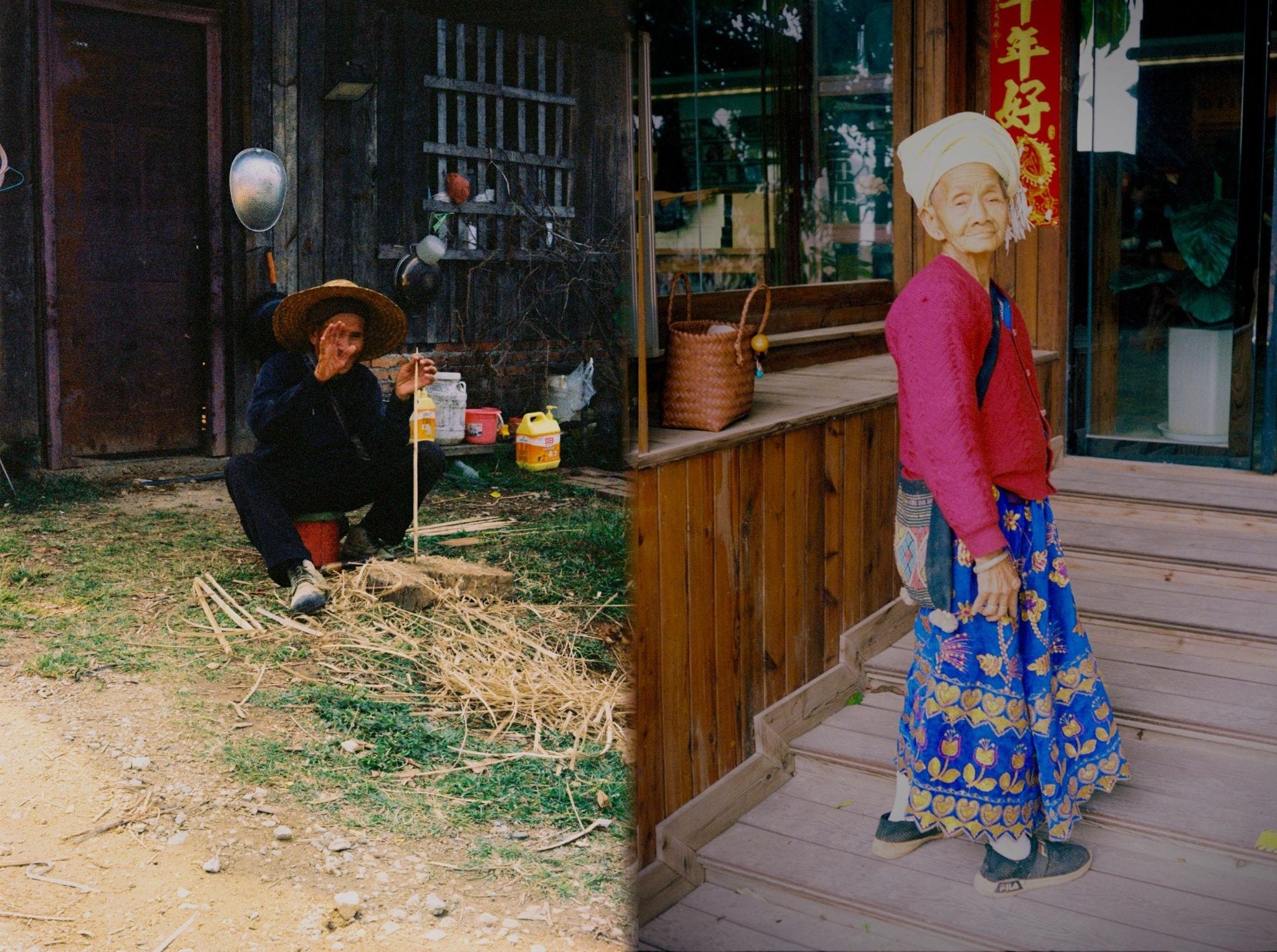
No country has seen as much change as China in the 21st century. As you peek down alleyways and stroll past the homes off the main street, you’re afforded brief glimpses into a world that goes back 2,000 years.
You can see the faces of the elders, still dressed in their traditional garb, speaking exclusively their native tongue, who remember when there were no outsiders, and really, no government intervention here. Locals say that most visitors aren’t here for the tea, but rather the views, the prestige of visiting a World Heritage Site, and, of course, the perfect selfie.
Today, the road is a treacherous three hours from the nearest airport, in a few months a new super-highway will cut that to under 60 minutes. What exactly Jingmai will look like in a few years, let alone a few decades, is an open question.
On our final visit, Mr. Su showed us two large horses that flank each side of the main doors to his home. The first belonged to his father, the other to his grandfather. Each a gift from a Qing dynasty emperor, alongside a sword, in recognition of their authority to rule over this area. Mr. Su doesn’t have a horse, the tradition was abandoned with the rise of the PRC.
A testament to the history of his lineage and how quickly it can be taken away.
As we prepared to leave, Mr. Su offered a proverb that is widely shared among the Blang people:
Our ancestors did not leave us gold or silver,
for they feared we would waste it.
Instead, they left us tea trees,
so that, generation after generation,
we would always have something to depend on.
That belief remains true even as the way it manifests begins to change.
Sources
For All the Tea in China: How England Stole the World’s Favorite Drink and Changed History — Sarah Rose
UNESCO World Heritage Centre — Jingmai Mountain Ancient Tea Forest Cultural Landscape (2023)
Tea: History, Terroirs, Varieties — Kevin Gascoyne et al.
Encyclopaedia Britannica — Tea (Camellia sinensis, origin and history)
National Bureau of Statistics of China — Ethnic Composition of China
We have so much to learn from these ancient cultures. The importance of pride, lineage and carrying on traditions and craft. It is beautiful.
What a great perspective on the area and its people. Even if we are only looking through a “key hole,” it’s meaningful and brings a richness to the act of drinking a cup of tea.