

Watch the Journey Unfold:
📸 Instagram | 🎥 TikTok | 🎬 YouTube
I hadn’t been right for a few days. I couldn’t put my finger on it, but my body was rejecting something I’d done to it, and I couldn’t deny it anymore. I hadn’t let anyone in my traveling party in on the secret, but when I arrived at our next destination I saw some medicine on the table, a freshly brewed batch of Chinese medicinal herbs next to them.
“This will help you,” said the note placed by its side. The benefactor remained anonymous.
For most Americans, China exists more as a geopolitical rival than a nation filled with ordinary people. And even less as one of the world’s oldest and most consequential civilizations.
The Communist Revolution, the Korean War, and modern economic rivalry all helped shape how recent generations of Americans have come to view the country. After 75 years of disagreement, we have largely shut ourselves off from nearly 5,000 years of lived experience and cultural development.
Because what I experienced was not a nation stuck in the past, but rather one that was firmly living in the future, while maintaining a deep respect for its longstanding customs.
Most that make the trip are taken by the extraordinary infrastructural and technological progress China has made. Nearly everything is paid for digitally. Anything you could ever want is at your door in under an hour. The streets are silent with electric vehicles, and you can cross the country on a network that accounts for 75% of the world’s high-speed rail.
I too was struck by the modern. But it was the way it lived alongside traditions that really captured my attention.
In just a short time, I was able to visit with the Dai people of Manzhao Village who have been making rice paper the same way for 800 years. Every yard, street corner, and stall is dedicated to preserving the ancient art form, while incorporating new techniques (like laser engraving) to continue serving the world around them.
Then spending weeks with Blang leaders who have lived harmoniously with nature for more than 2,000 years on Jingmai mountain. Using the tea tree as the foundation of their social, economic, and spiritual worlds. Ensuring that each generation will live sustainably in order to pass what they view as their greatest resource on to the next.
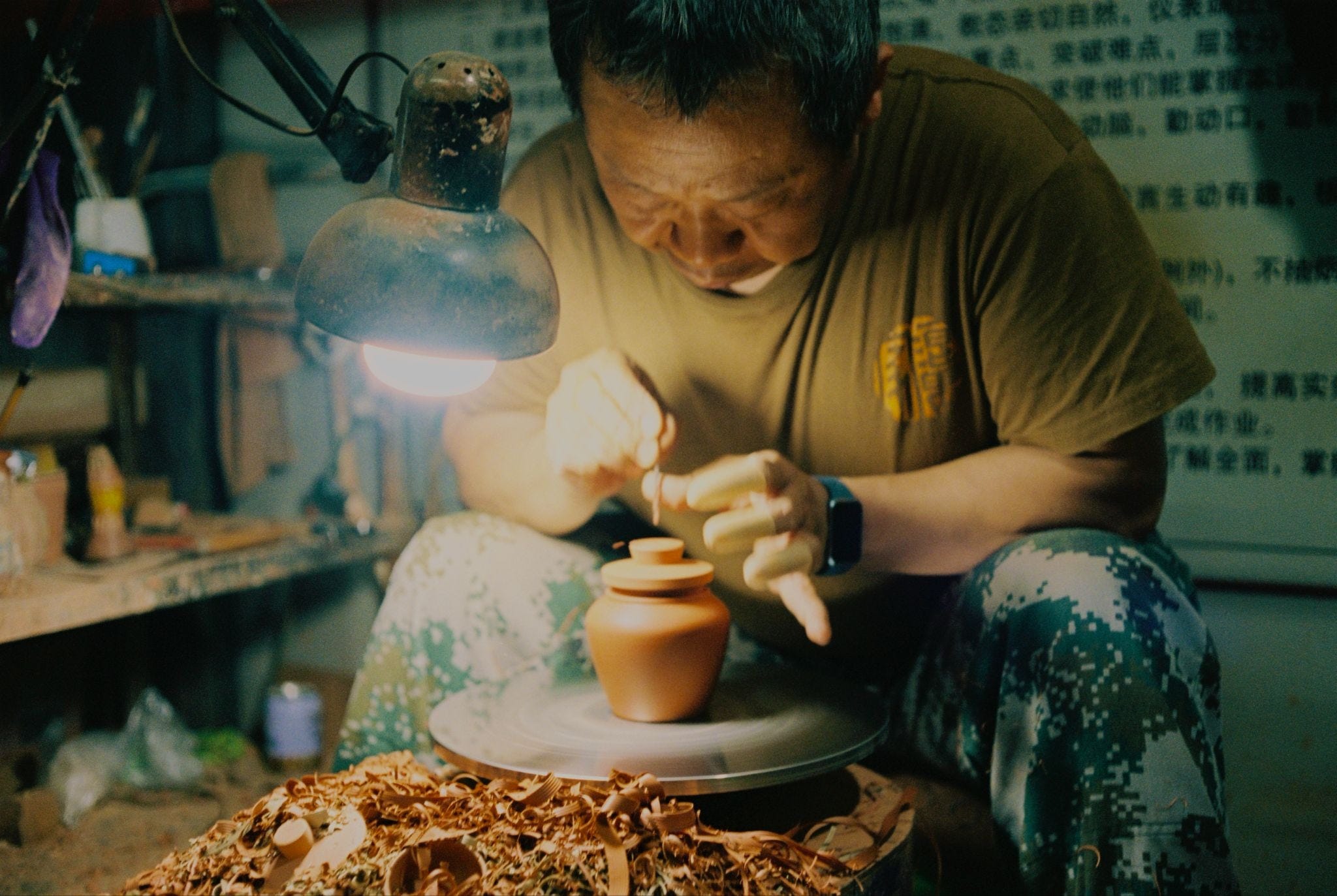
Seeing the potters of Jianshui, whose intricate handmade practice of creating incised reliefs could never be replicated by a machine. The process is so meticulous that many masters have resigned themselves to a nocturnal life in order to retain focus.
To end with the monks of Wuyi, who have overseen tea making since they helped pioneer rock tea during the early Qing dynasty. Their temple, perched high among the cliffs, has promoted peace and mindfulness through nature for centuries.
Yet, it wasn’t just the artists and artisans who cared for craft. Instead, it seemed to extend to the way everyone thought about their possessions. I often saw people on the side of the road tinkering, restoring, and repairing instead of rushing to replace. Understanding that the value of what they possess outweighs anything that could be bought. Because while you can make a clay teapot or cast iron pan in a day, it takes years of use to reach their true potential.
These values extended beyond craftsmanship alone, beginning with community. Where it isn’t theoretical, but embedded into daily life.
Meals were eaten at a round table, a rotating centerpiece showcasing the food. Whether there were two people or twenty-five, it didn’t matter. Each dish was shared, the plates in constant movement to ensure that all were served.
Every time I went to take a sip of my drink, someone would stand up across from me, their hand placed beneath their cup, in a sign of deference and respect. I would meet them in the center, embarrassed at having forgotten once again.
Tea sessions carried the same spirit. All participants had a seat at the table. The host remained constantly aware of everyone’s cups, quietly refilling them while keeping tabs on the leaves to ensure the tea never lost its peak flavor. Merchants were eager to share their finest without any expectation of purchase in exchange.
Hospitality wasn’t a business model, it was a way of life.
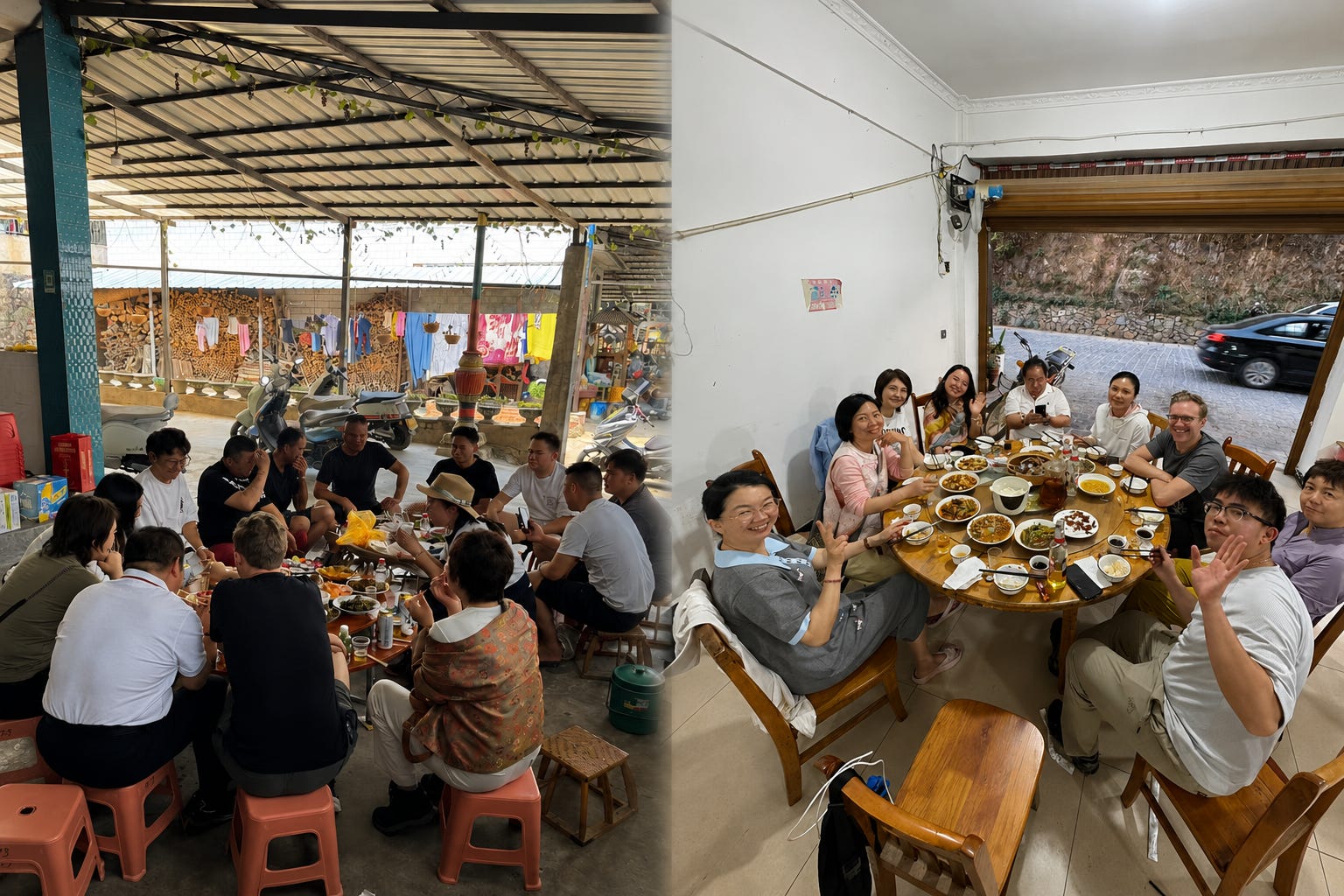
Meetings started with the offer of a cigarette, and with almost every departure, a parting gift. Not something generic, but deeply personal: a bit of the tea I liked most, wrapping up the cup I had admired, sending me along with the tea pet that made me laugh.
It’s something I have seen all over the world. Even places that have nothing will insist on giving you everything. Because when you have a depth of pride in what you can provide, where you come from, and what you make, seeing the appreciation of an outsider is the greatest privilege. Creating something and passing it forward provides a fulfillment that no purchase could ever replace.
And it went beyond the people I knew, but to strangers as well.
I spent days in the park, joining a group playing mahjong or Chinese chess. Dropping in on qigong or a learned dance. Happening upon an artisan who was willing to stop their practice to give me a lesson in their craft.
Life is lived in public and everyone is welcome to play a part.
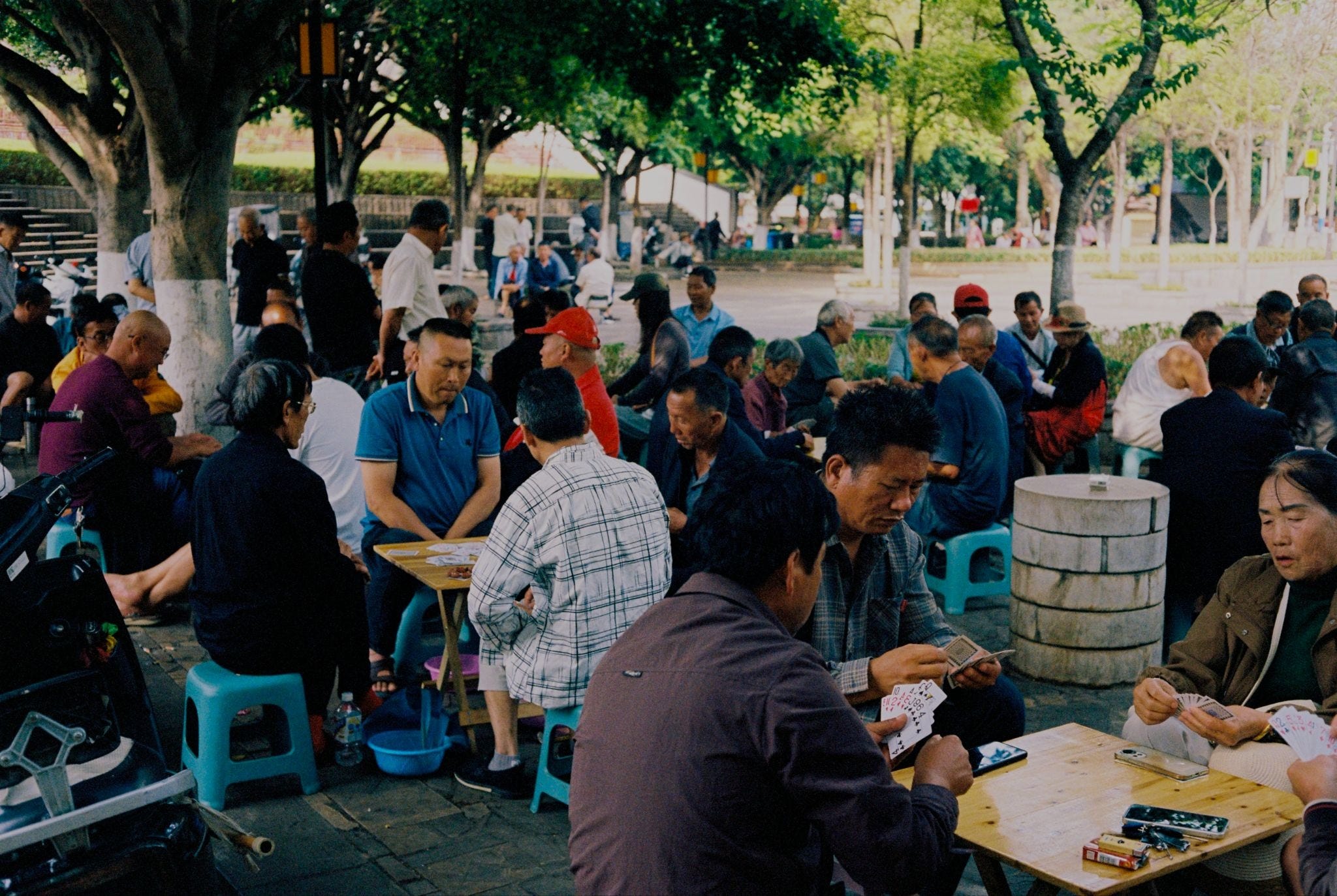
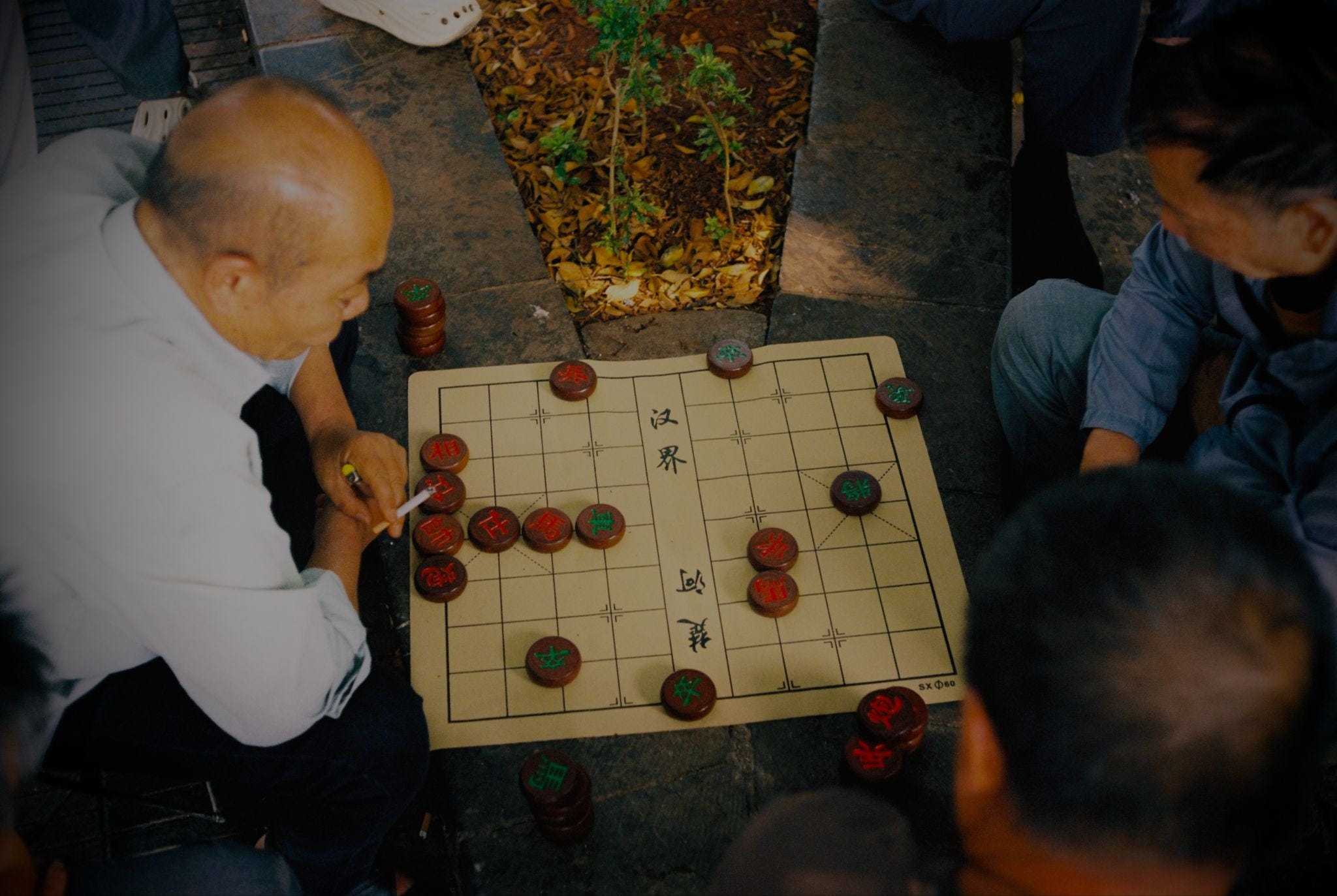
It showed me how conscious the world was around me. In an age that can feel like people are operating on autopilot, self-absorbed, deep in their digital worlds, I felt seen by complete strangers day after day. People who had never met an American took the time to pick up on the nuances of my actions, my demeanor, and my facial expressions. Even though we had no common language, they still found a way to understand who I was.
But over my last few days in Shanghai, it became abundantly clear that these values are at great risk. Because back in the transactional world, placeless luxury had become its own form of commodified culture. Trendy neighborhoods looked the same as those of Brooklyn, London, and Buenos Aires.
Because cultural homogenization is real, and the threats it poses to the heritage it washes over cannot be understated.
There is no replacing an impromptu lesson on the potters wheel, the mesmerizing sight of handspun silk, or the gravity of sharing the same space as a spiritual leader.
For those who cherish the bespoke, the handmade, and genuine human connection — for those who believe globalization should connect communities without eroding them — there is a path forward.
Understanding Chinese culture is a great place to start. Spending your free time in a local park, watching brushstrokes flow across paper, or feeling the steam as it rises out of your teacup.
The values of intention and attention are not a given, but when we bestow them upon one another, we create a world that feels far more human.
Sources
UNESCO World Heritage Centre — Cultural Landscape of Old Tea Forests of the Jingmai Mountain in Pu’er
International Energy Agency — Global EV Outlook 2026
ChinaData — China High-Speed Rail Statistics
Interviews and firsthand observations collected throughout China, Spring 2026.
It will be a great day, indeed, when Americans learn these traits. It would lift our spirits to participate in the kindness of sharing. It would also improve our moral fiber, thanks so much for starting this conversation in such an elegant way.
It gives me hope to hear that both the modern world can coexist with the traditions of handcrafted goods, communal meals and the focus on keeping their traditions and practices alive. You have opened my eyes to a China far from the one that is painted here. I wholeheartedly believe that this world has many countries just like this that value tradition, community, craft and well being over anything else.
Can’t wait for the next chapter. Bravo Connor.
I am so proud to see you being a voice for customs and cultures around the world and representing America the way that you do.