

OR Sections F & G + WA Sections H & I
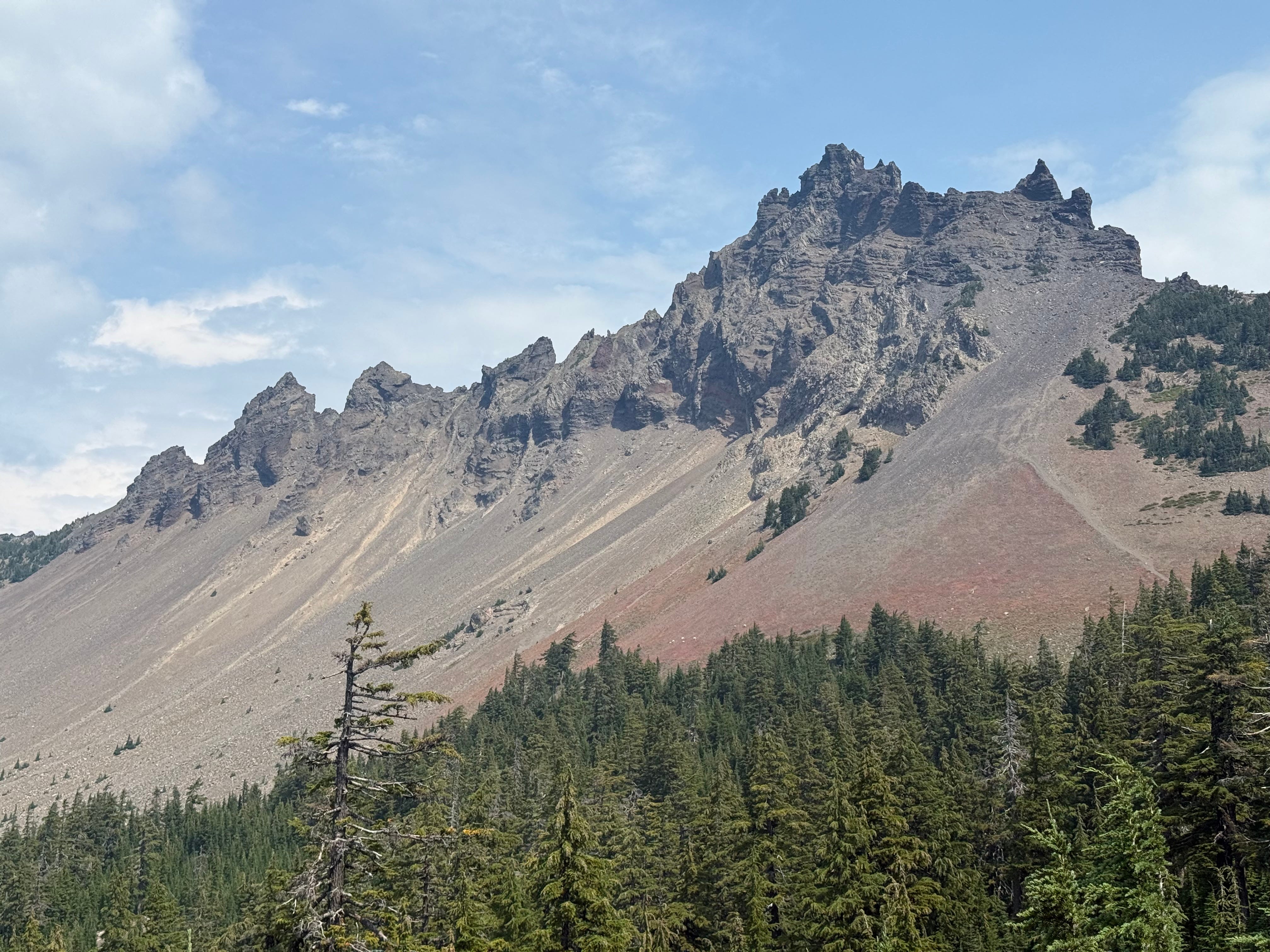
Our trip began out of Bend with a couple of highlight rock formations. First, we passed by the Three Fingered Jack which fittingly juts above the lava rock as a trio of craggy digits. Along its base were half a dozen mountain goats, which you can barely make out as white blobs in the photo below. The second were the ever intensifying views of Mt. Jefferson which we eventually climbed to and hiked around as streams of snow melt gushed down throughout the afternoon.
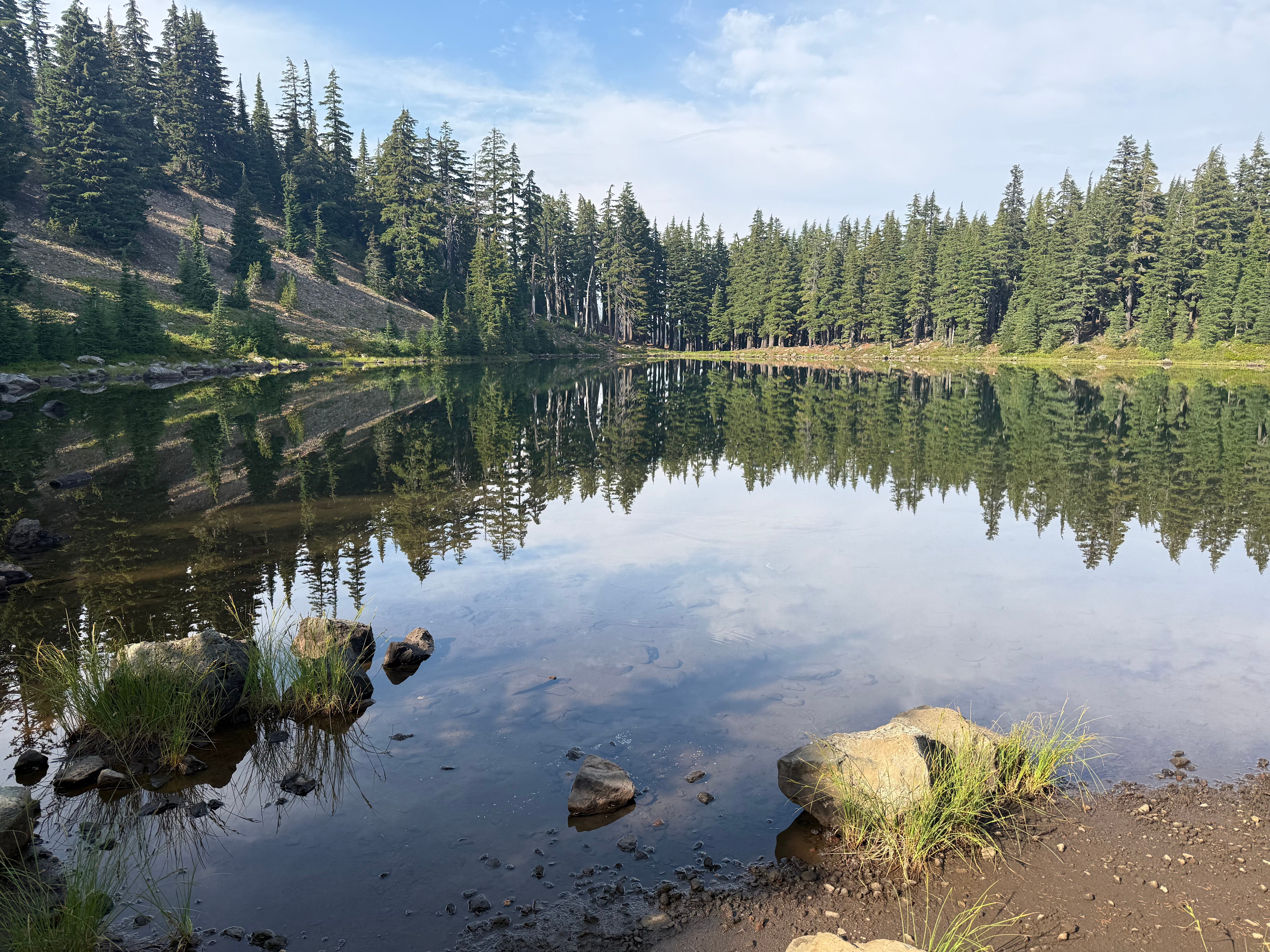
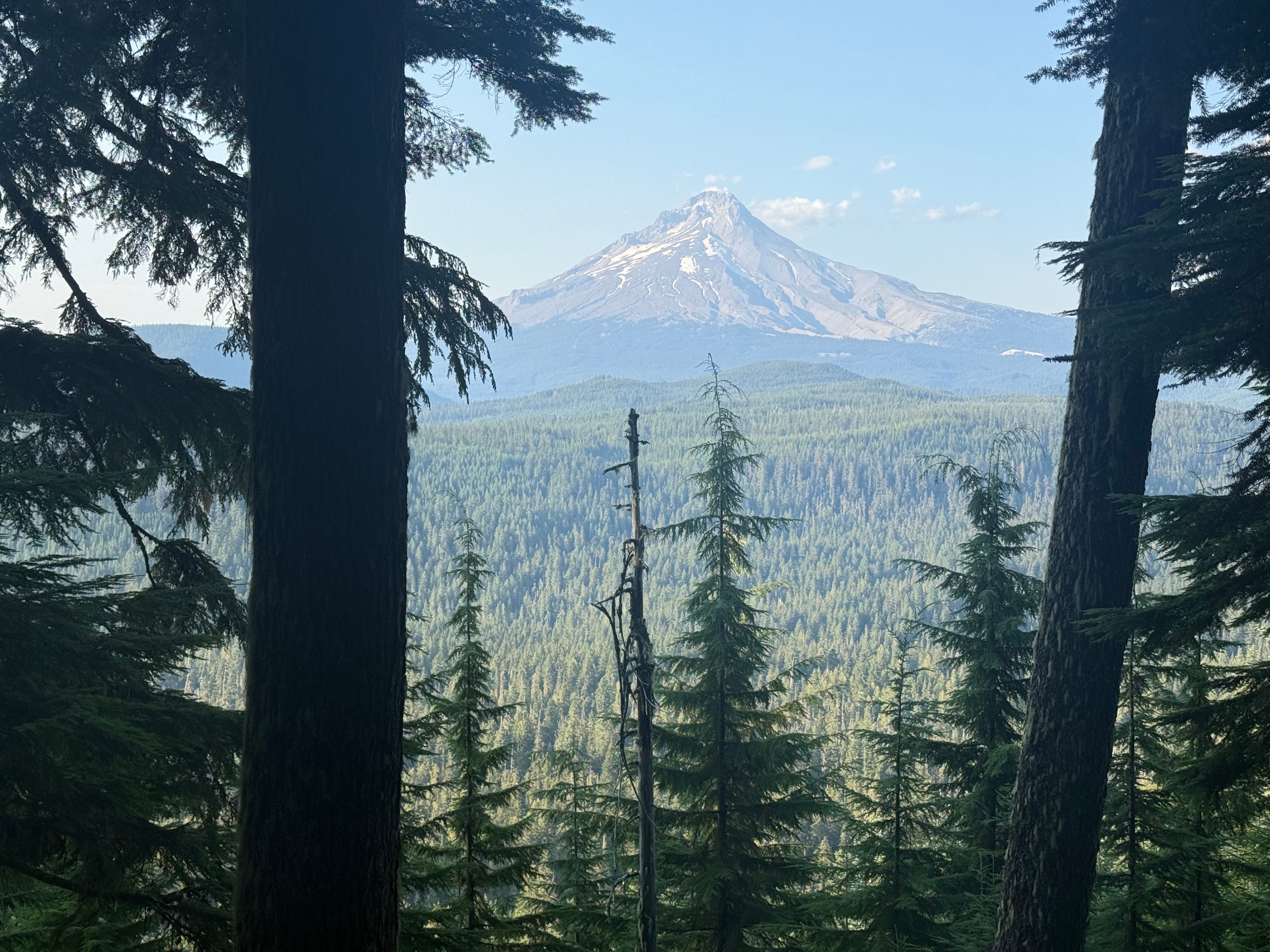
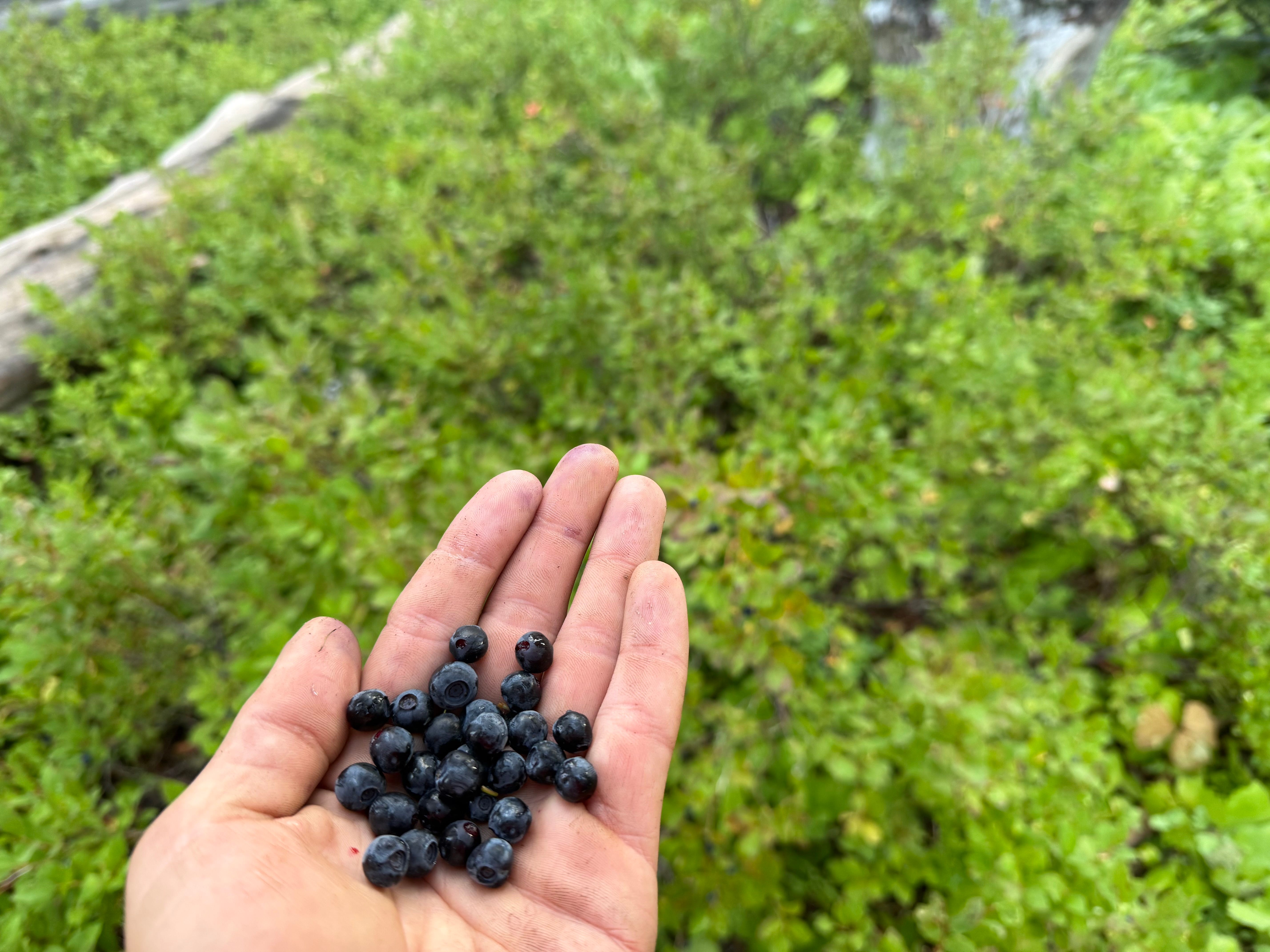
The following day we entered the Mt. Hood National Forest and got our first glimpse of its namesake, the tallest mountain in Oregon, at over 11,000 feet. Determined to get to the famous Timberline Lodge in time for the all you can eat breakfast buffet we pushed through the next two days. Thankfully this stretch was loaded with wild blueberries, blackberries, huckleberries, and thimble berries which we could pick in motion, growing over into our path.
Another two days of hiking led us into the Columbia Gorge, through the most popular section of the PCT for day hikers & weekend warriors alike (and for good reason). Waterfalls were seemingly everywhere, with freefalls of over 100 feet commonplace. We also ran into what I consider the coolest animal we’ve seen thus far, a Pacific Giant Salamander positioned just off the trail in absolute stillness.
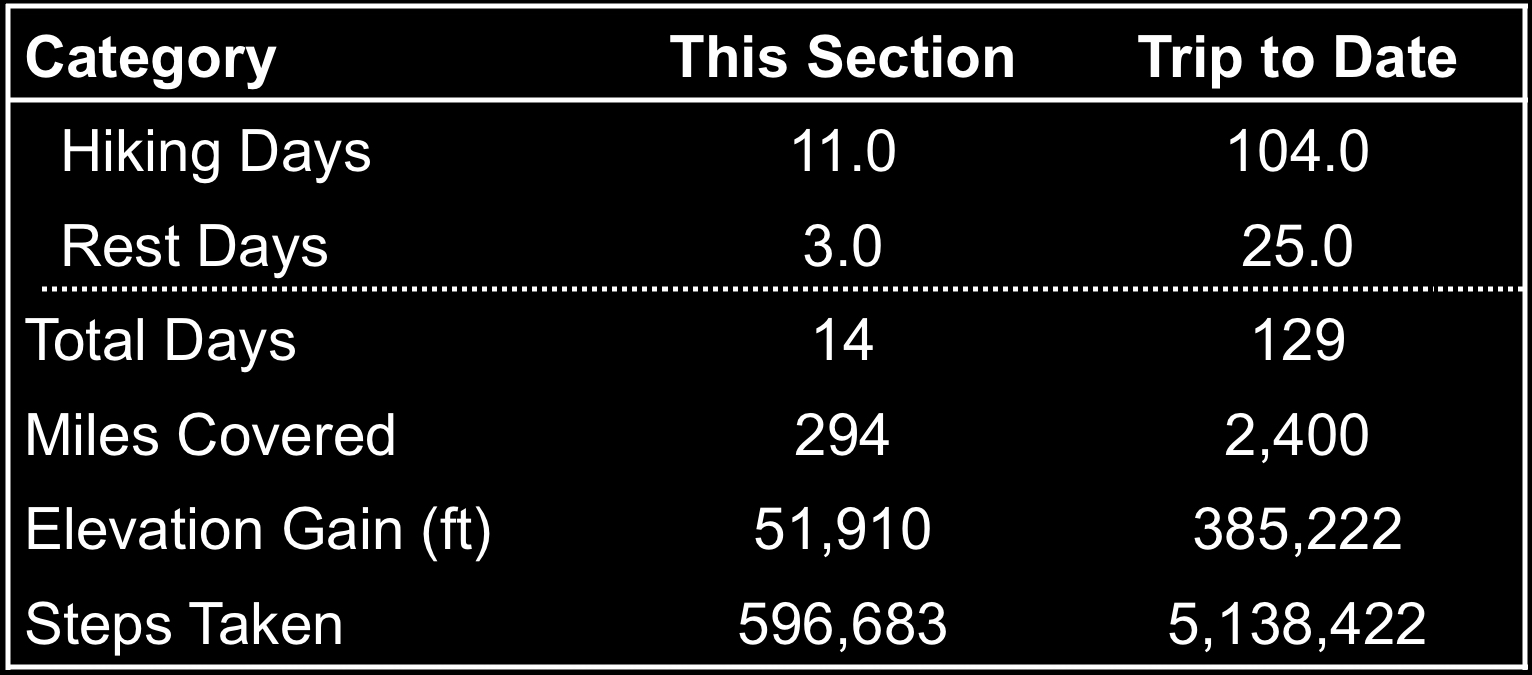
After finishing 440 of the 450 miles in Oregon in just 14 hiking days our bodies were really feeling the toll, so we decided to take a couple days off in Portland, staying with our new friend Eli. The prospect of entering Washington proved more emotional than expected and we all independently suggested taking things easier over the last section, having earned the cushion built throughout Oregon and Northern California.
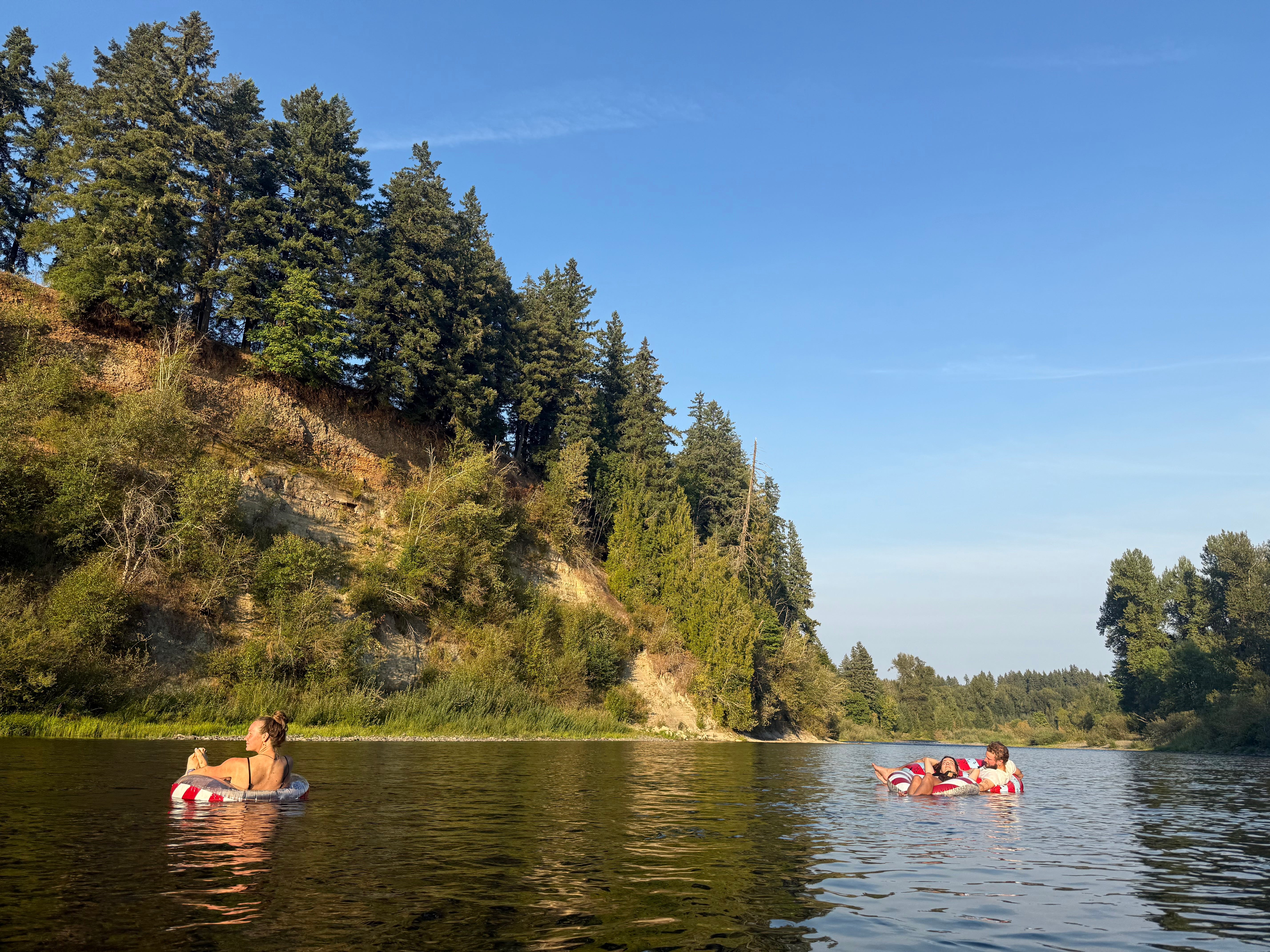
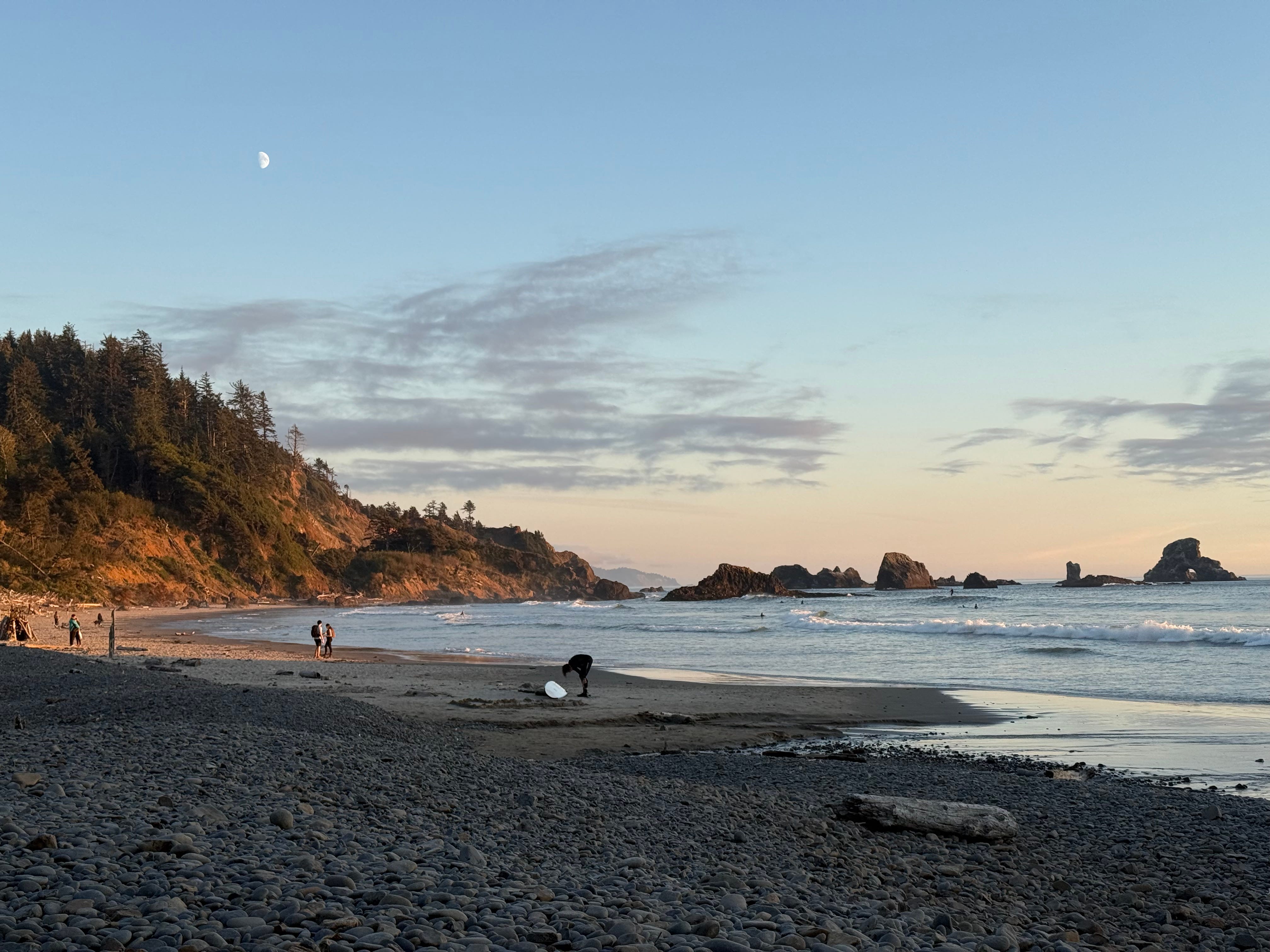
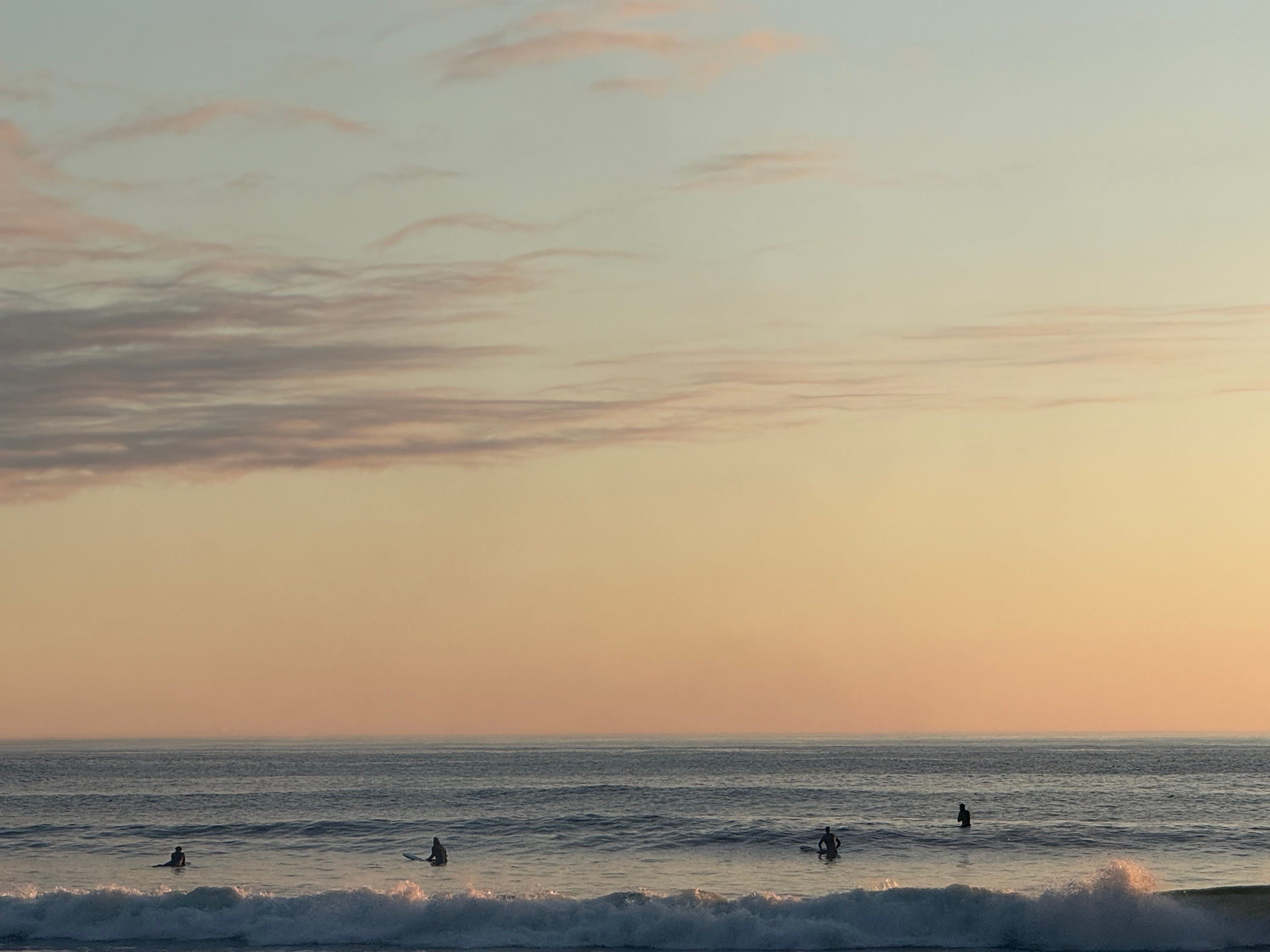
The decision was made easier by the fact that Eli was the most gracious and generous host, showing us some of the best of the PNW. Night one was a block party and DJ set with another friend, Drew, we’d met a few weeks earlier, the next day an evening float trip down the river, and then finally a sunset surf session along the Oregon coast. It was both relaxing and rejuvenating, filled with new friends and countless memories.
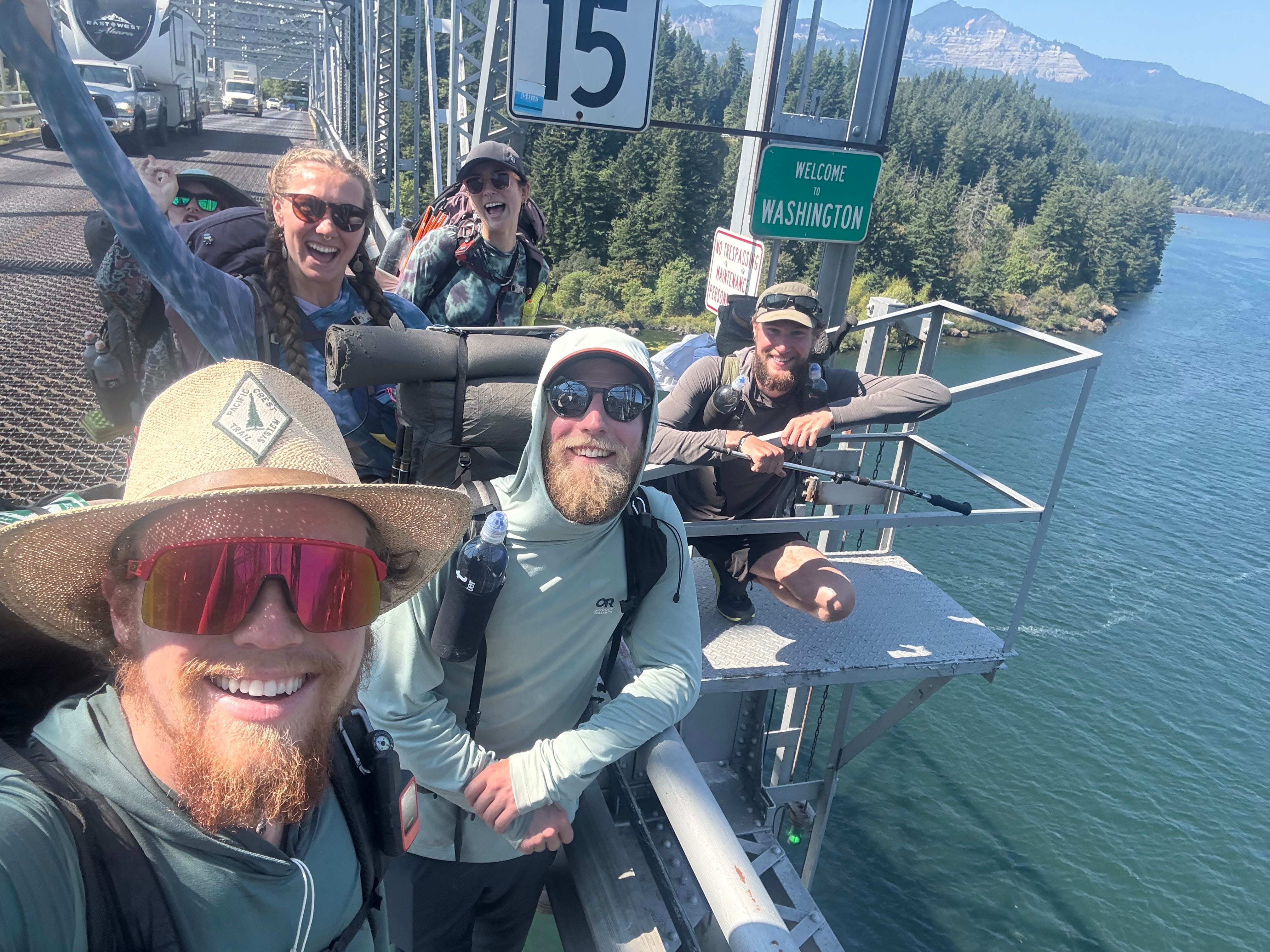
We finally tore ourselves away from the vortex of Portland and walked across the Bridge of the Gods, officially entering the third and final state of Washington. We were immediately reminded of how easy we’d had it in Oregon and were greeted with a 4,000 foot climb. Even so, we were treated to panoramic views of towering volcanos in every direction; Hood, Adams, St. Helens, and Rainer were all glowing in front of the fading sun.
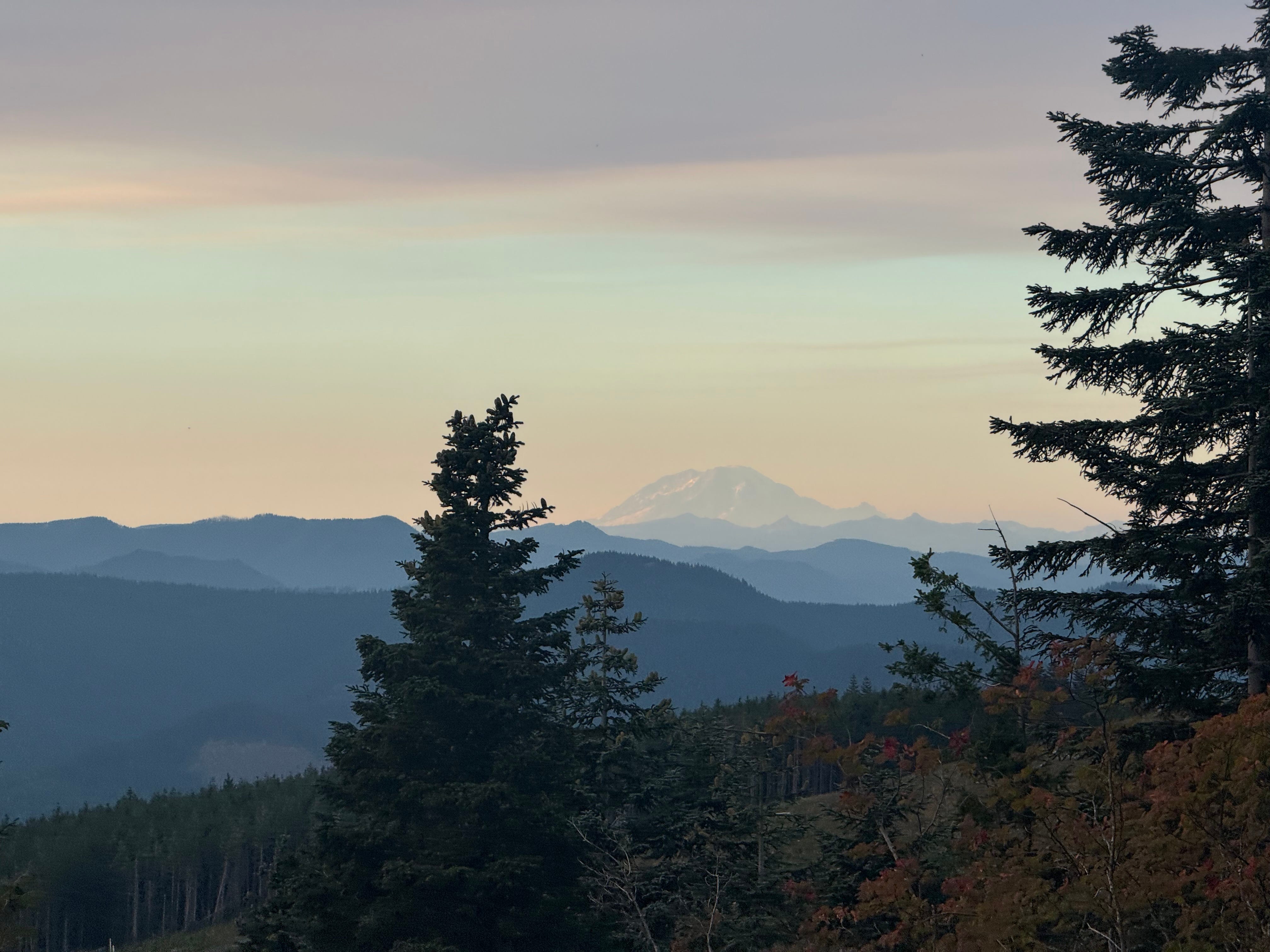
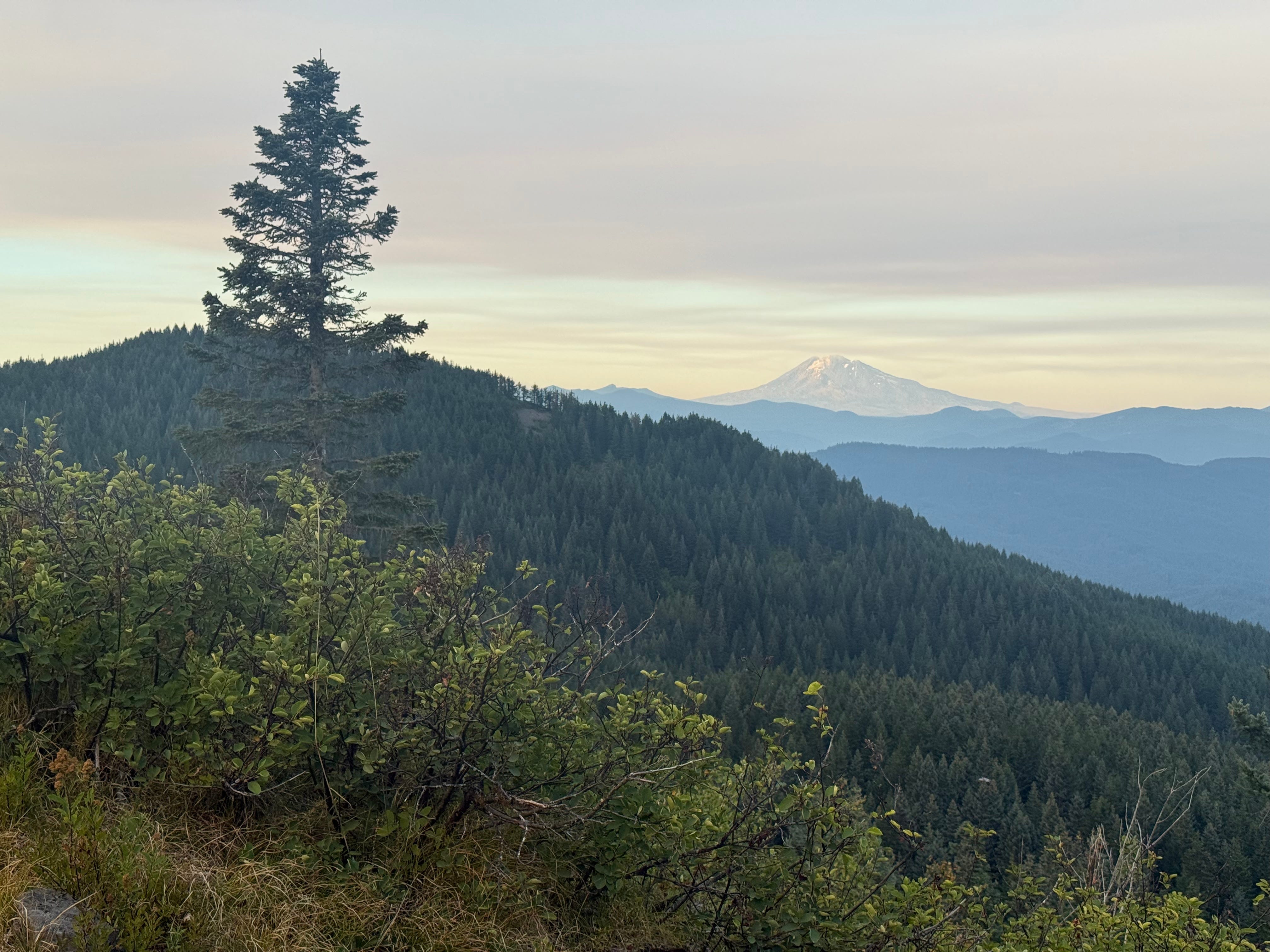
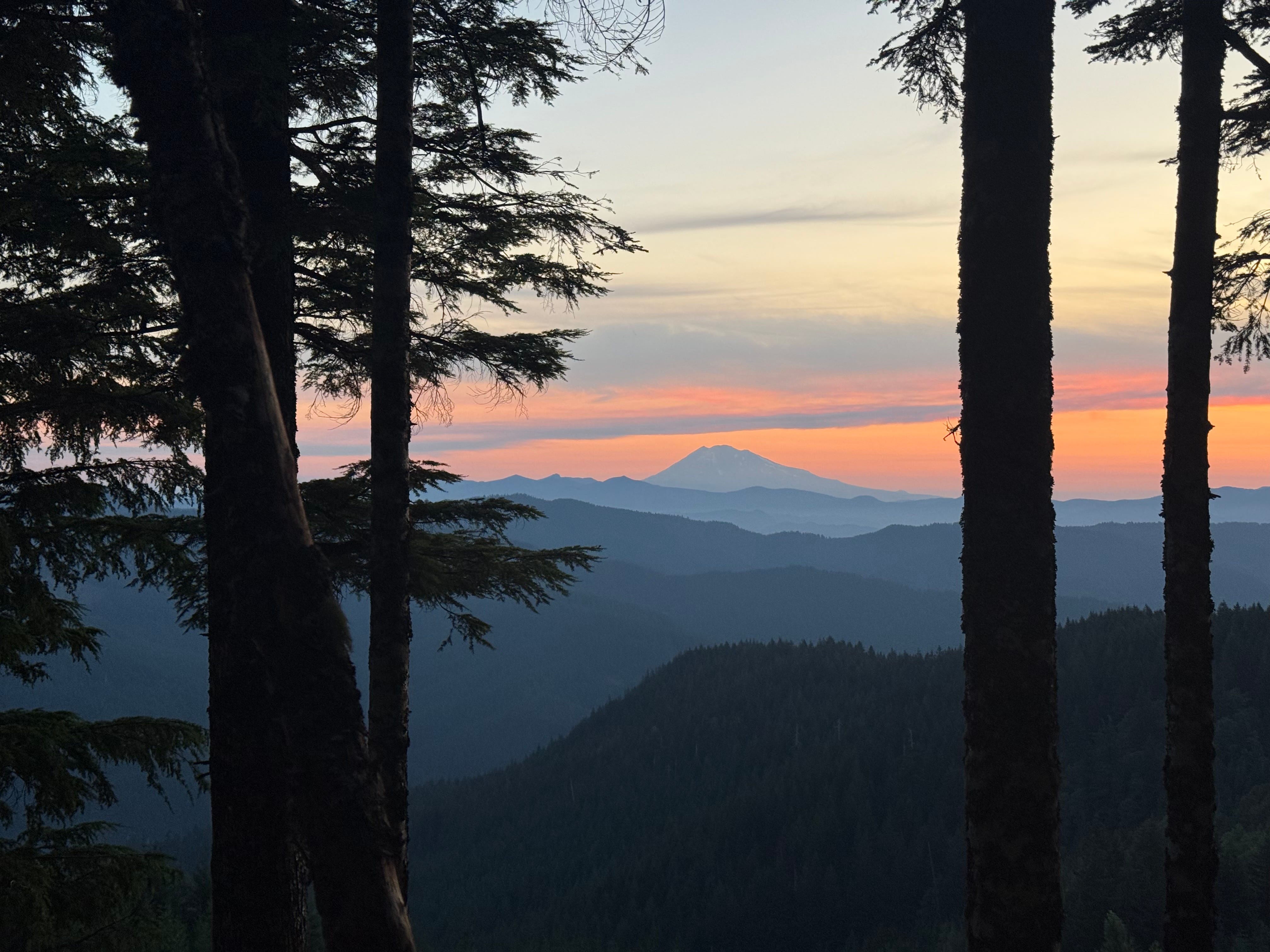
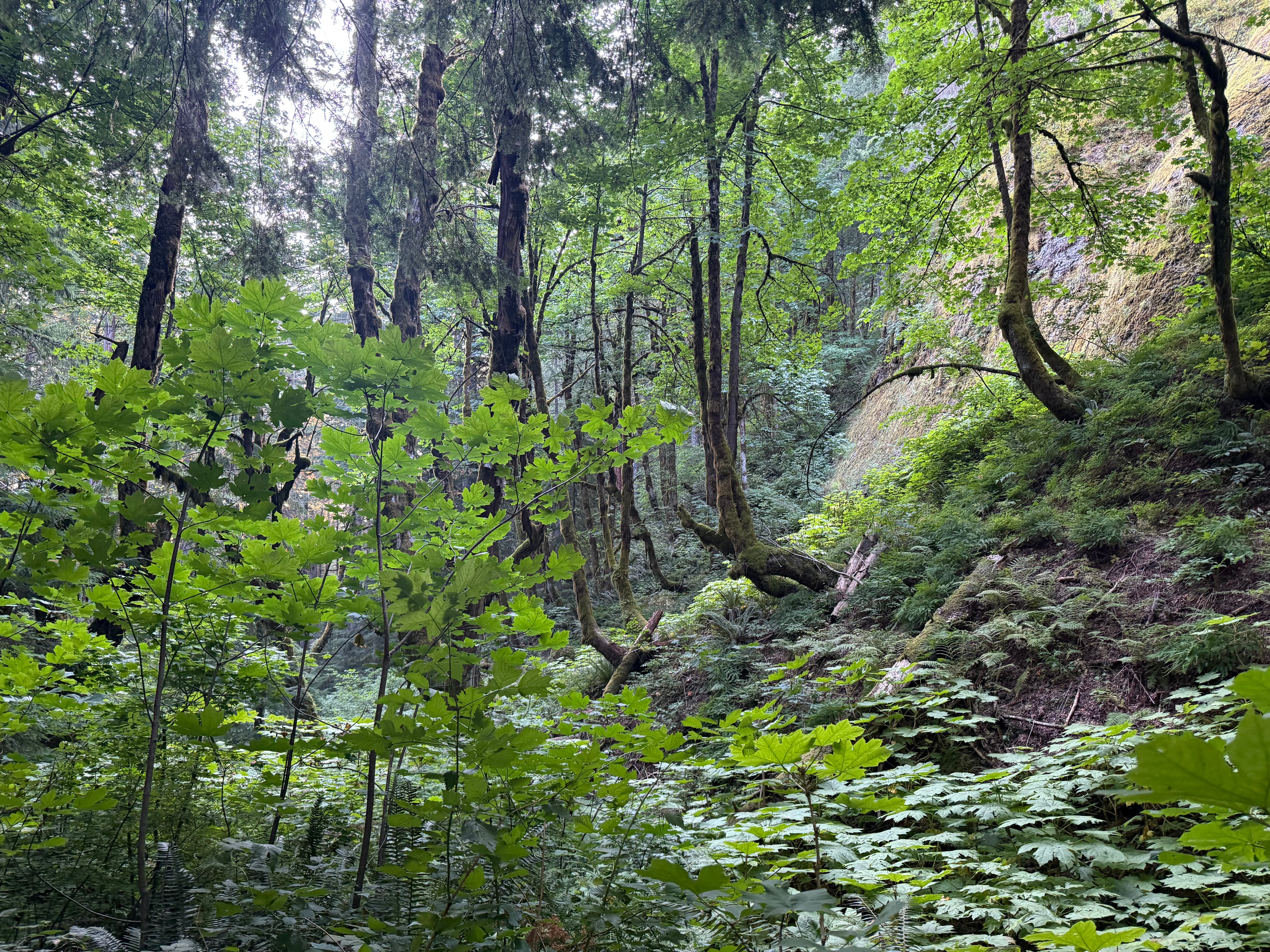
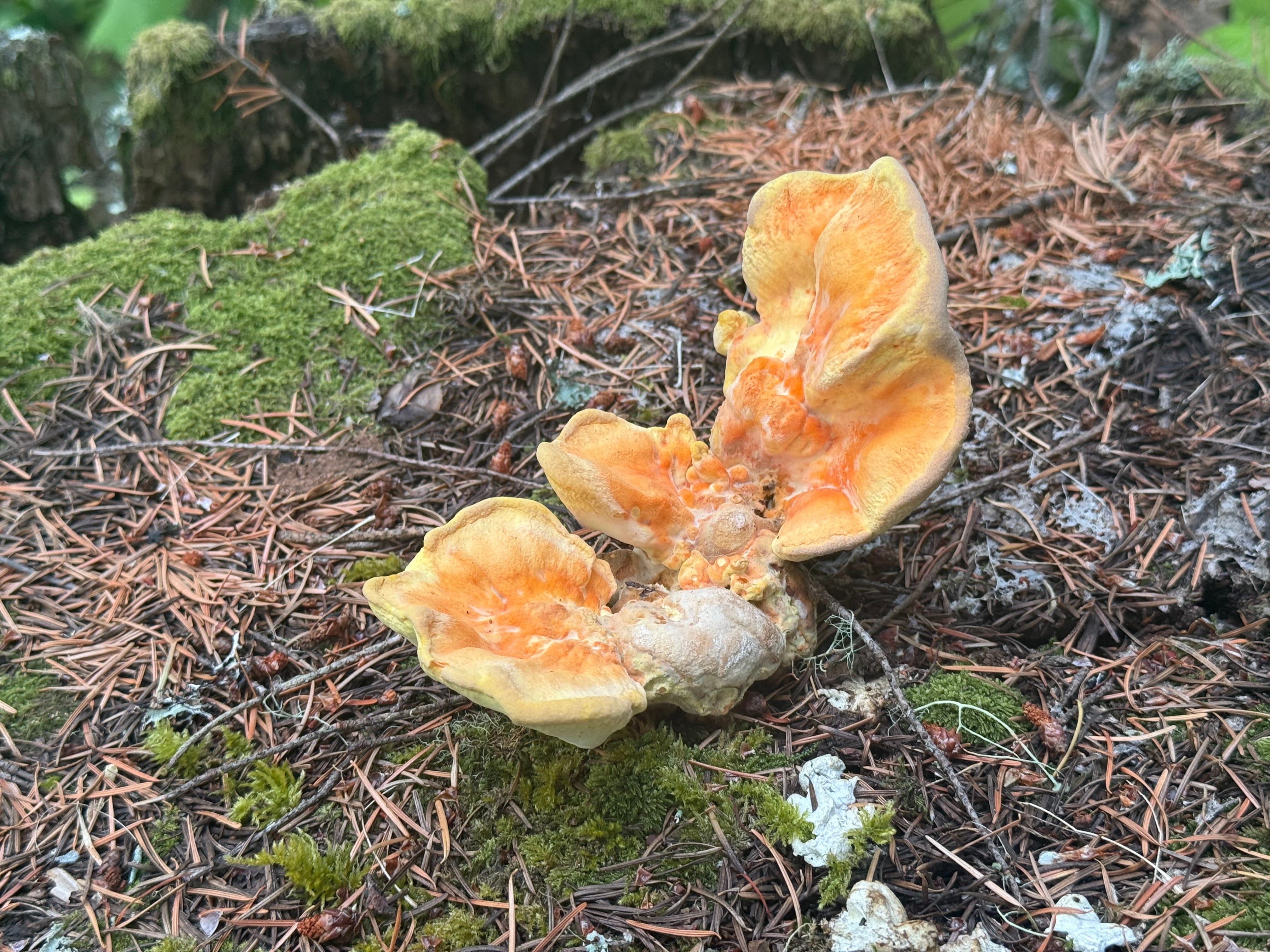
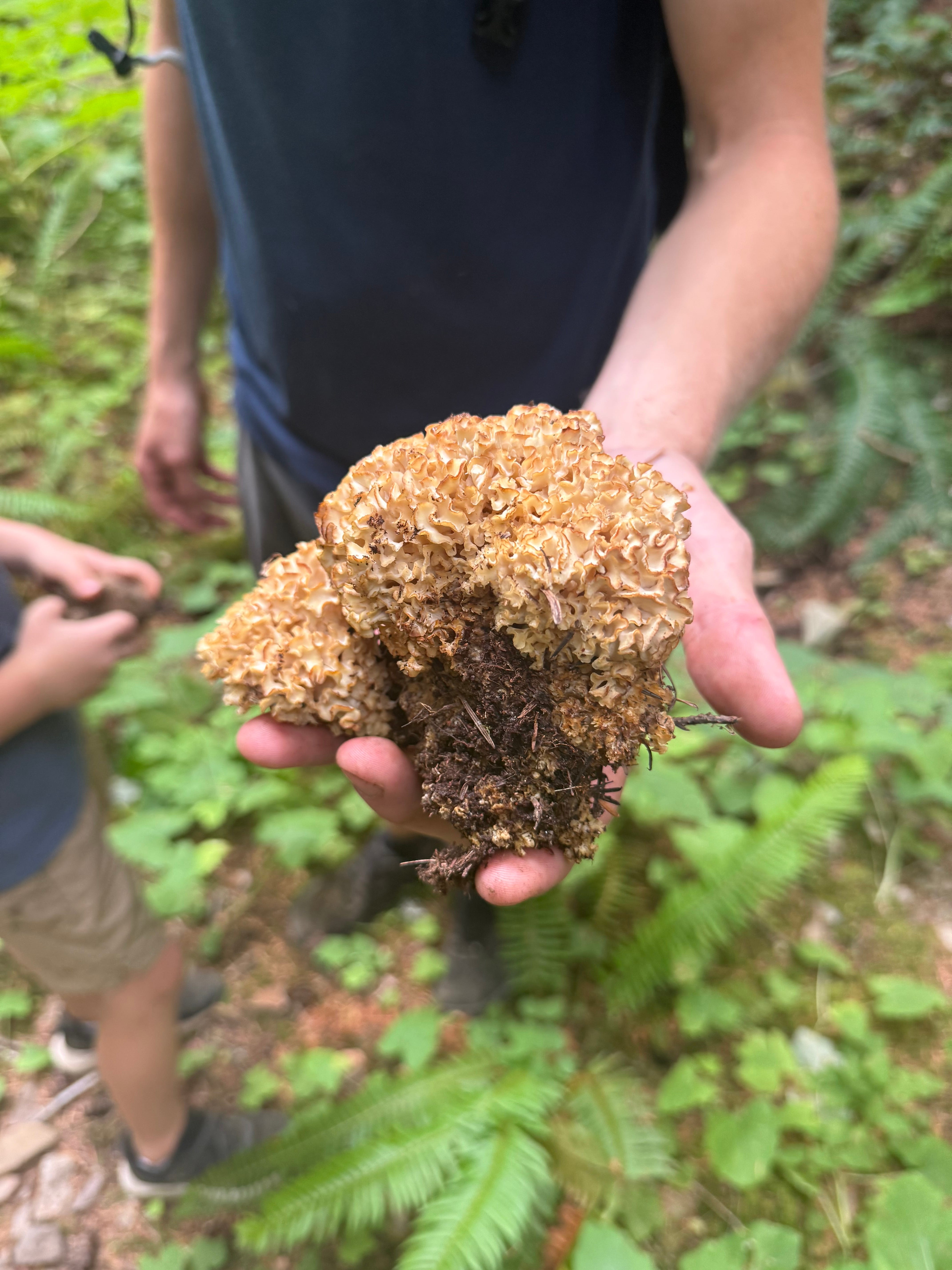
Once over the first ridge we found ourselves in the most lush of forests we’ve walked through to date. Each canyon was filled with bright green pine, fern, and a plethora of ground plants. The damp, dank forest floor is an ideal spot for fungi and I’ve gotten lessons from local foragers on how to spot the famous chanterelle, porchini, matsutake, oyster, and lobster mushrooms as well as lesser known favorites like the cauliflower, coral, and chicken of the woods.
We were reminded of both the toll of the trail with the fragility of our own constitutions as Mo developed a sudden and debilitating lower back injury. After a couple of days limping through the pain at about half speed we decided to take an unplanned half day in the town of Trout Lake. We reserved to carrying part of the load from his pack and setting up mobile spa clinics along the trail to loosen his muscles. We are at the point where our collective determination will be enough to get everyone across the border together.
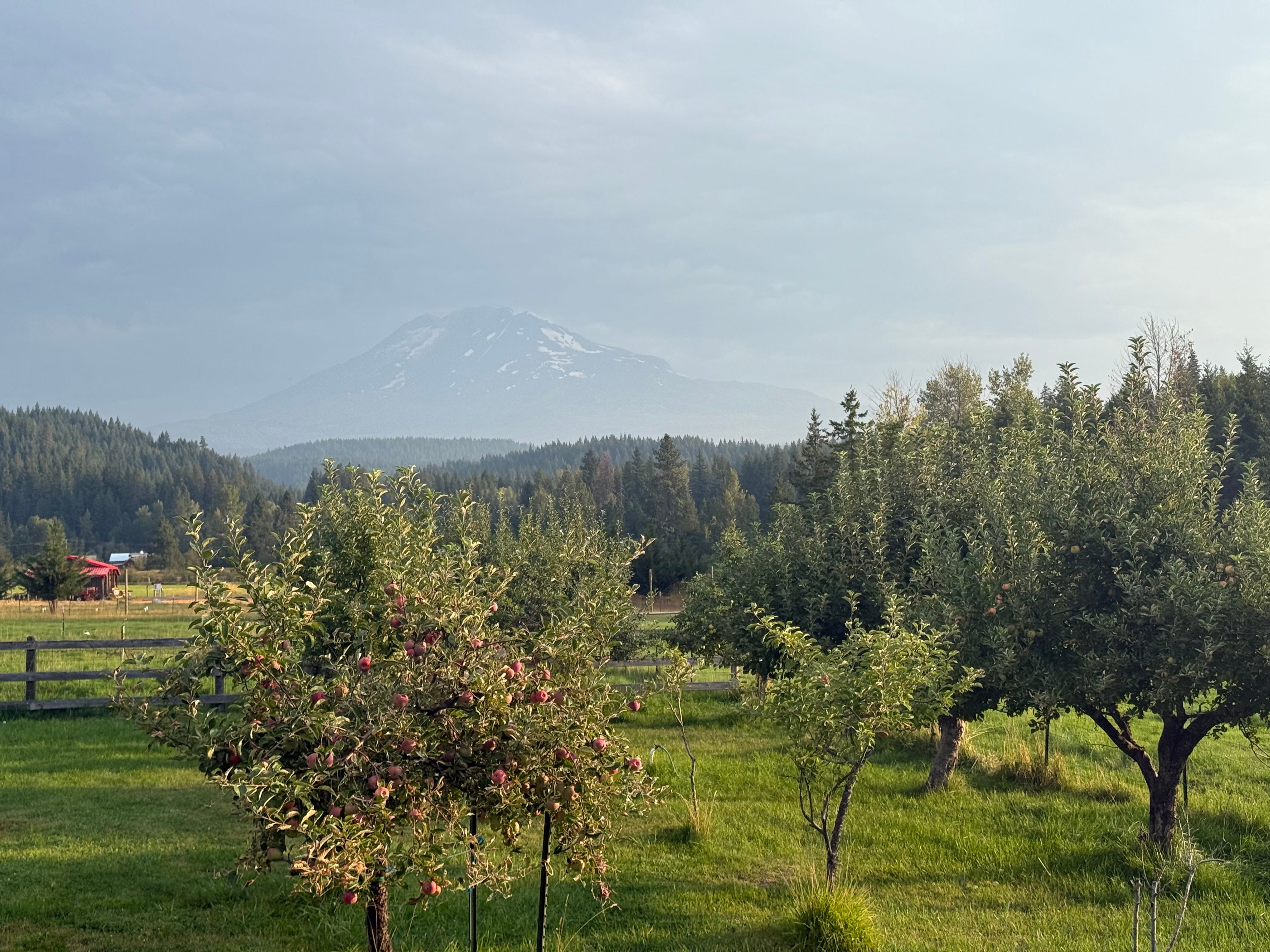
In Trout Lake we were hosted by a lovely woman, Steph, who opened the farmhouse where she raised her family in an attempt to give Mo a chance to heal in a real bed. We picked apples from her orchard with an unobstructed view of Mt. Adams in the background and got to interact with the (sometimes nefarious) animals on the property.
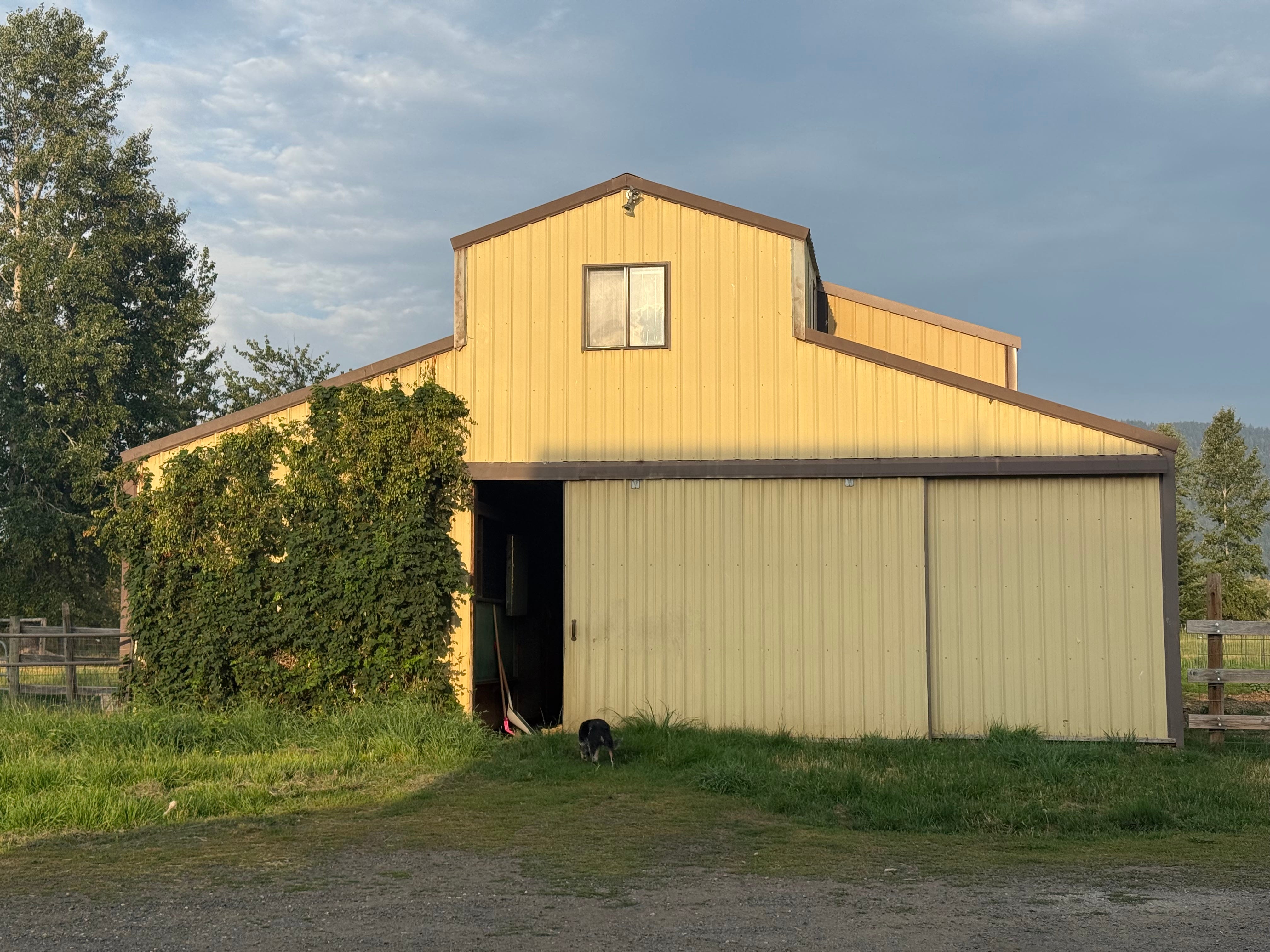
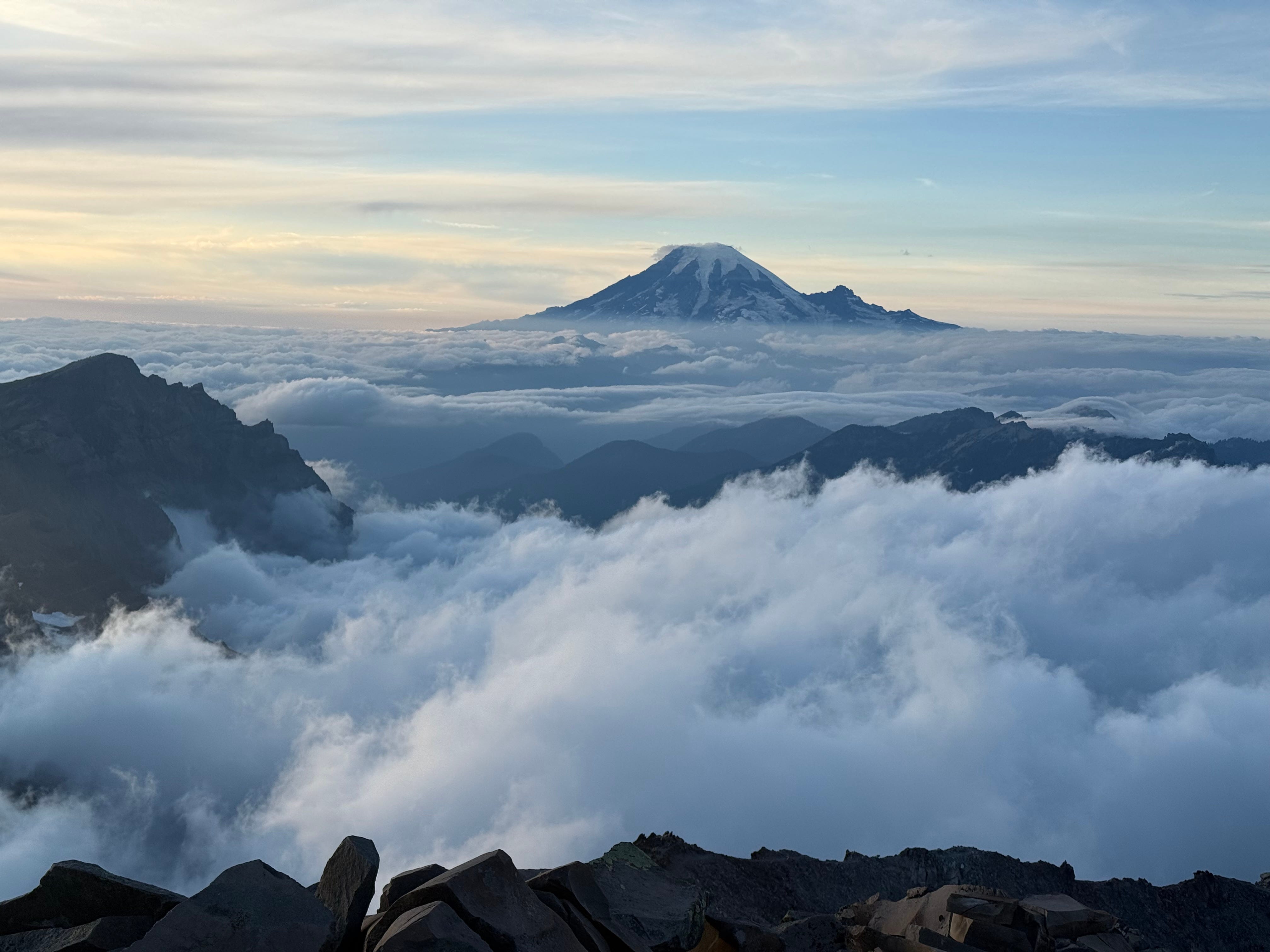
The ensuing stretch from Trout Lake to White Pass took us through the Goat Rocks Wilderness, which we all agreed produced a top three day on the PCT. First, we came upon the sheer wall of rock jutting up from the fog for which the area is named. Rolling green hills descended from their base into valleys that extended as far as we could see. A couple dozen mountain goats grazed lazily on the wild grasses. Up close, the landscape was dotted with Western Pasqueflowers, whose tips are wispy, villous hairs that look like mini Truffula trees, adding to the majesty of the environment. As we climbed, we got more unblemished views of Mt. Adams, this time from the other side after traversing it the day before.
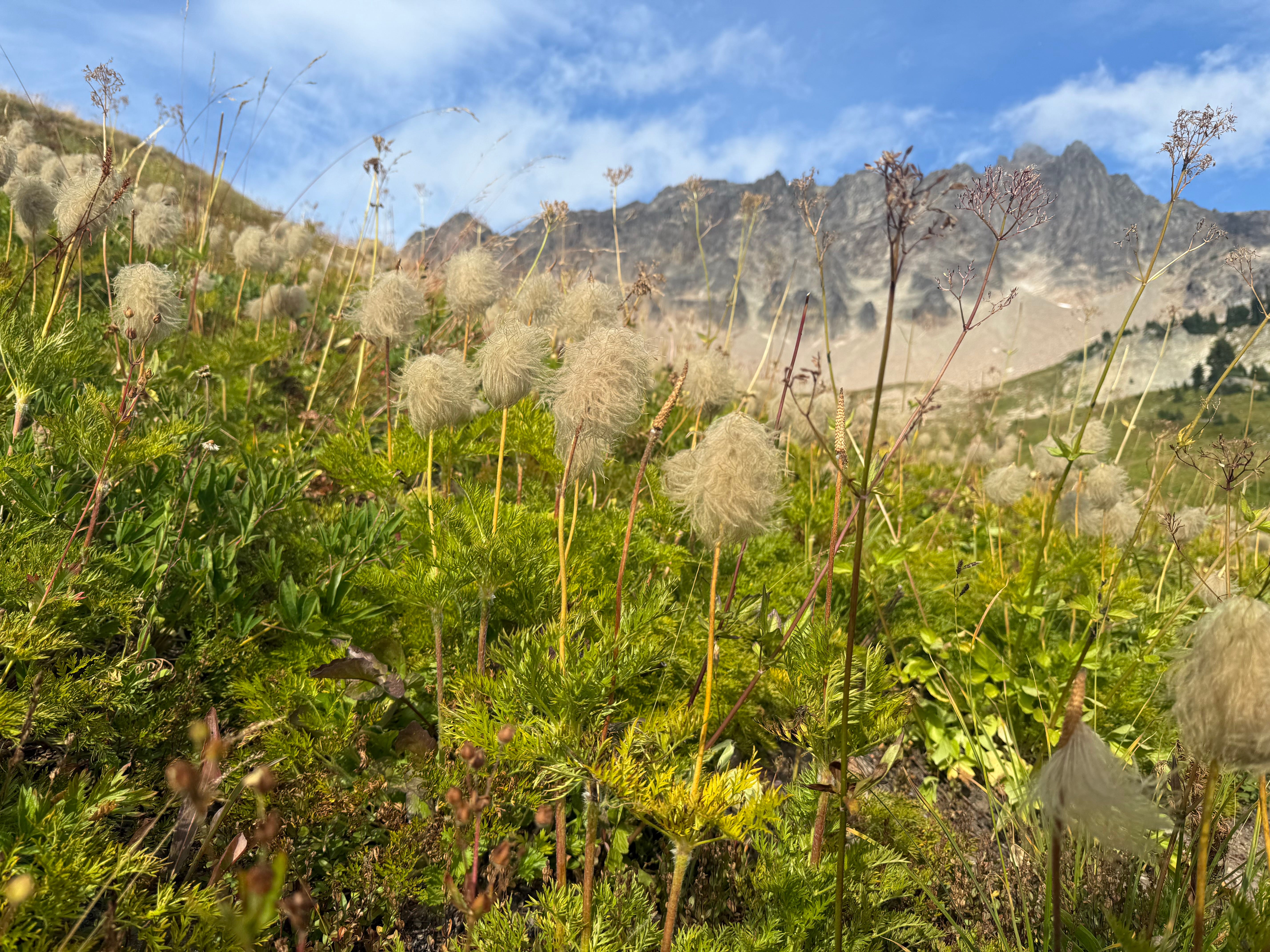
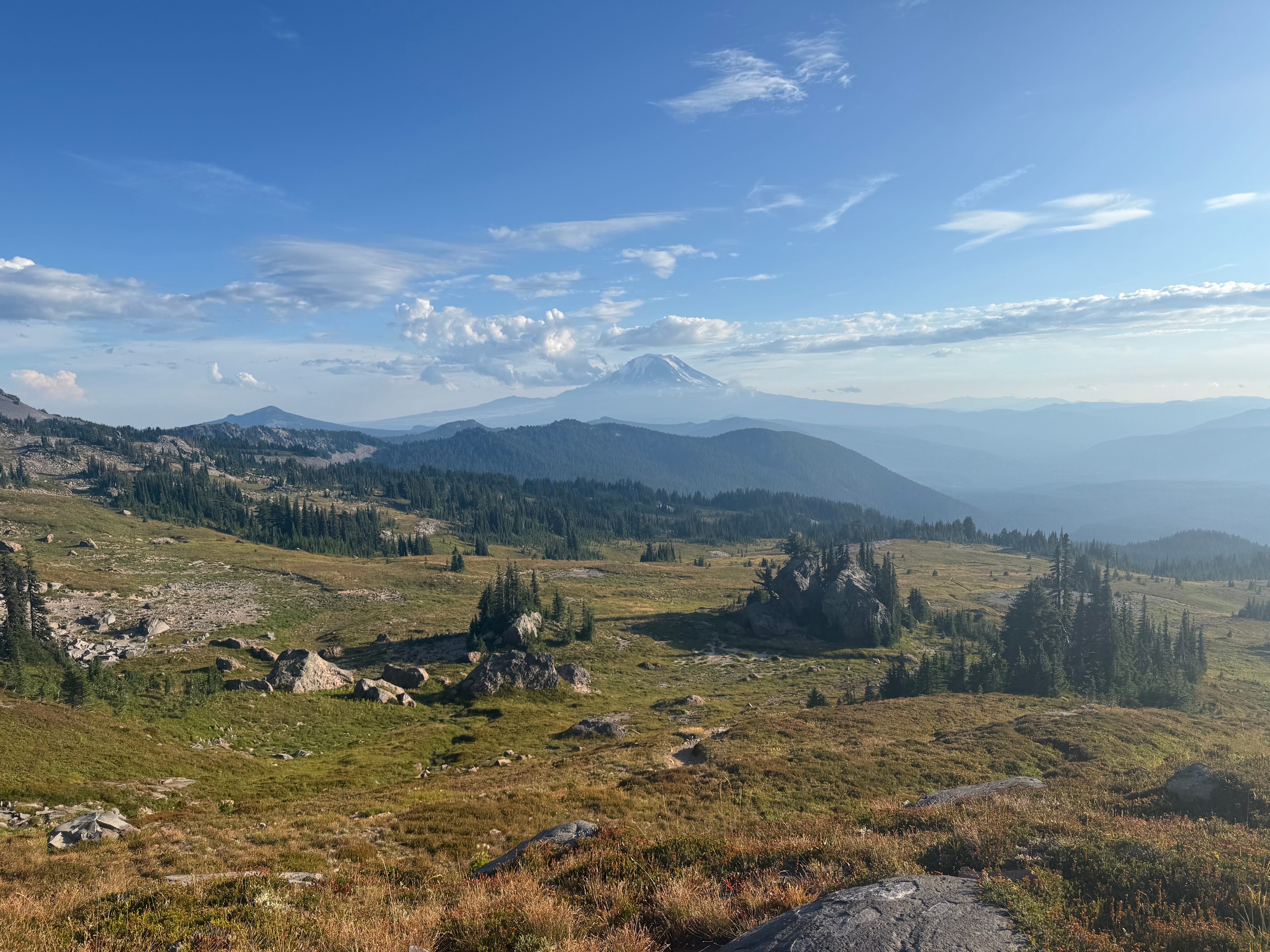
After a brief rock scramble, we summited Old Snowy (7,880’) just as the sun began to lower in the sky. From there we saw the Goat Rocks, Mt. Adams (12,281’), Mt. St. Helens (8,366’), and Mt. Rainier (14,441’) all within a 360 degree panorama. As we took in the stunning view, the clouds continued to saunter in below and shortly thereafter only the four peaks mentioned were visible above the clouds. It made it feel like we were 30,000 feet in the air and it might as well have been the top of the world.
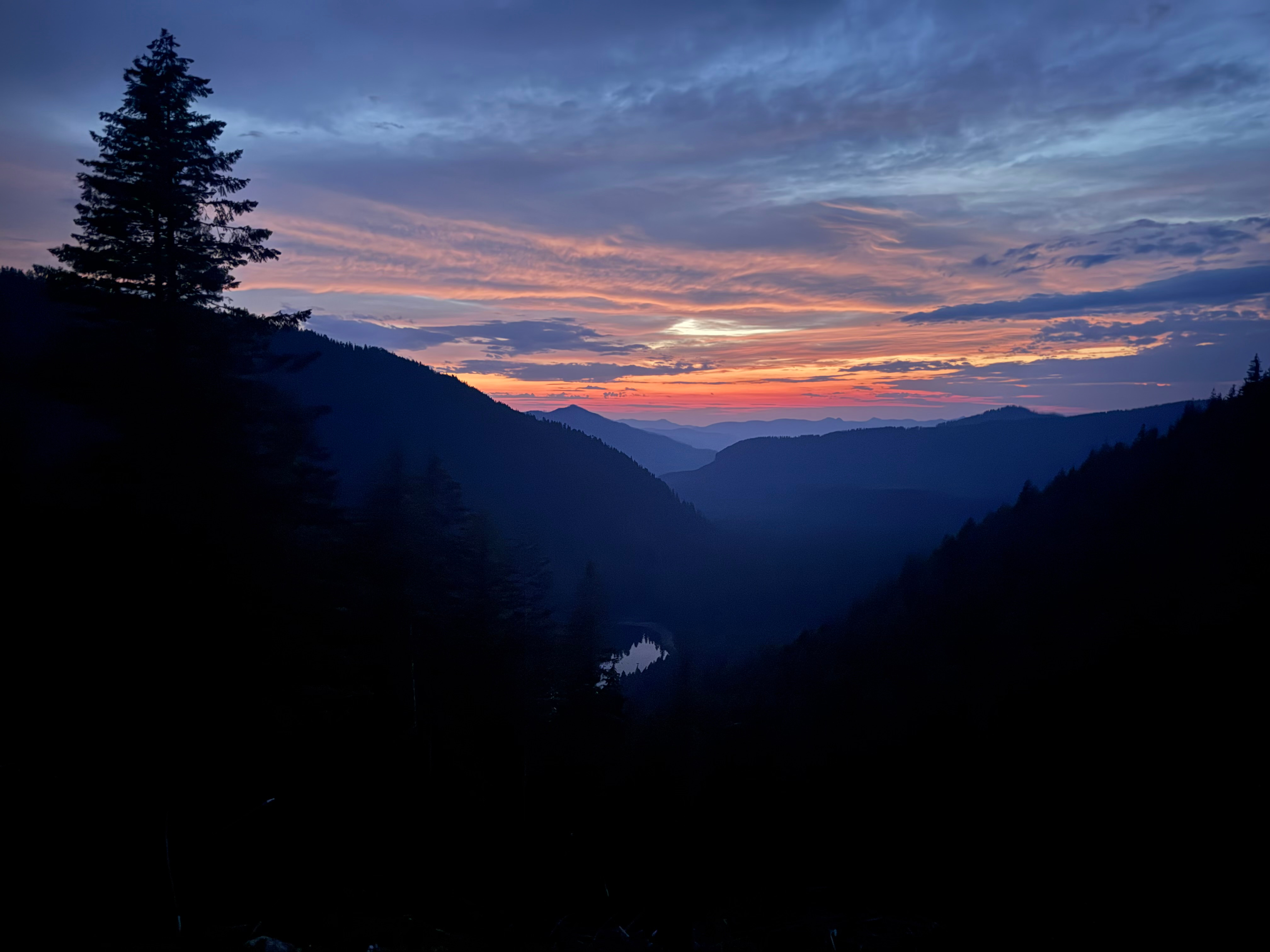
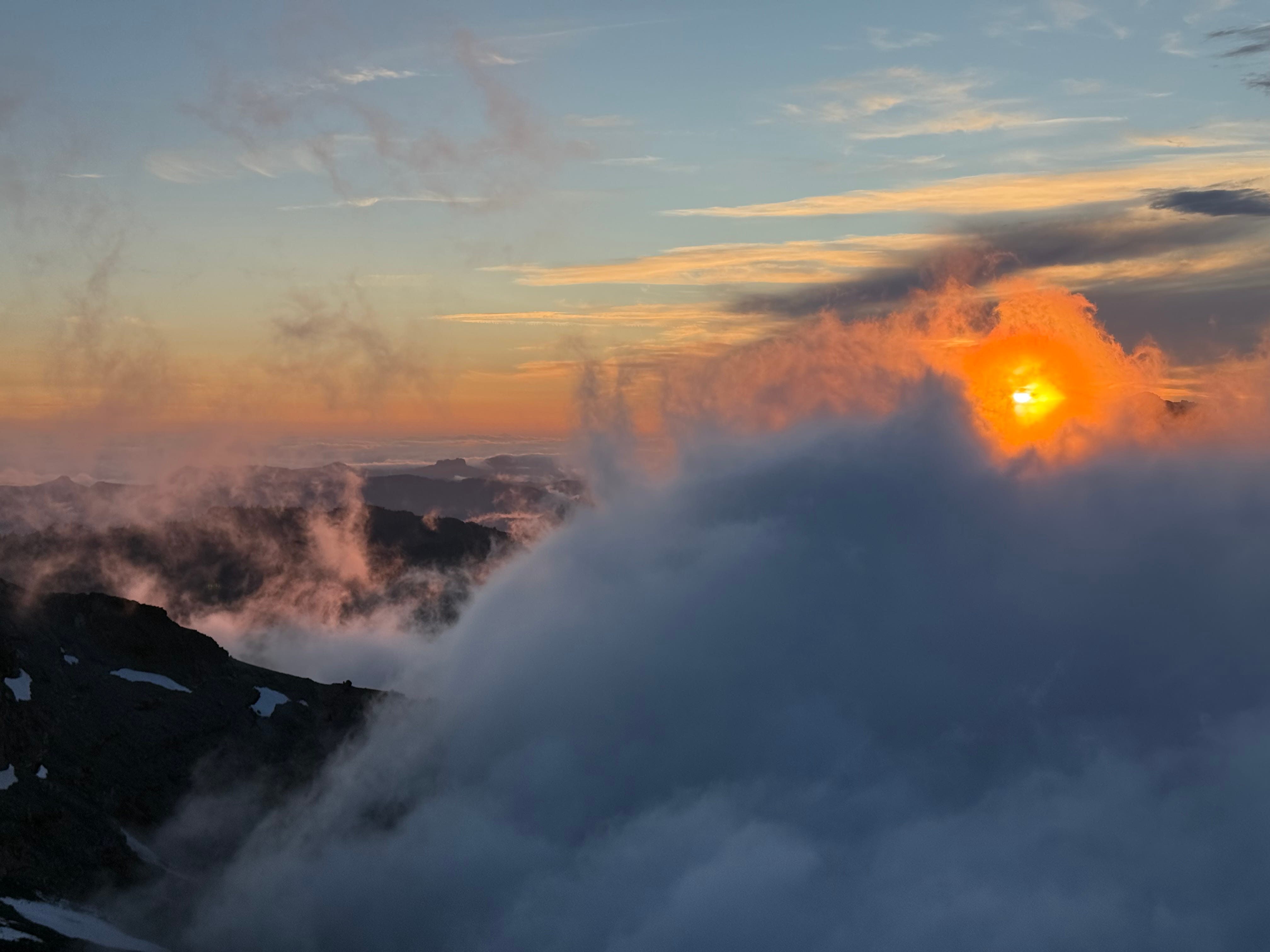
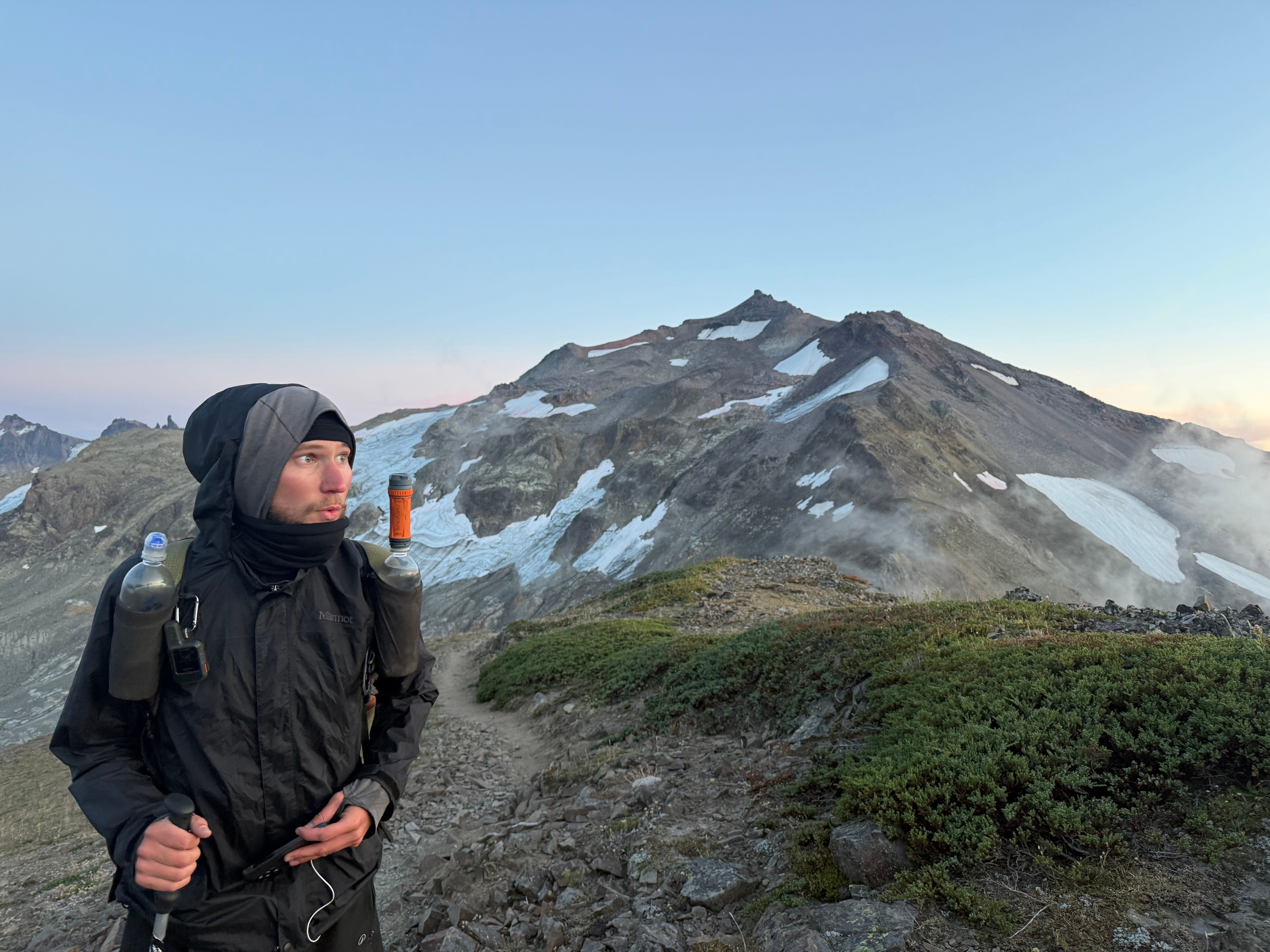
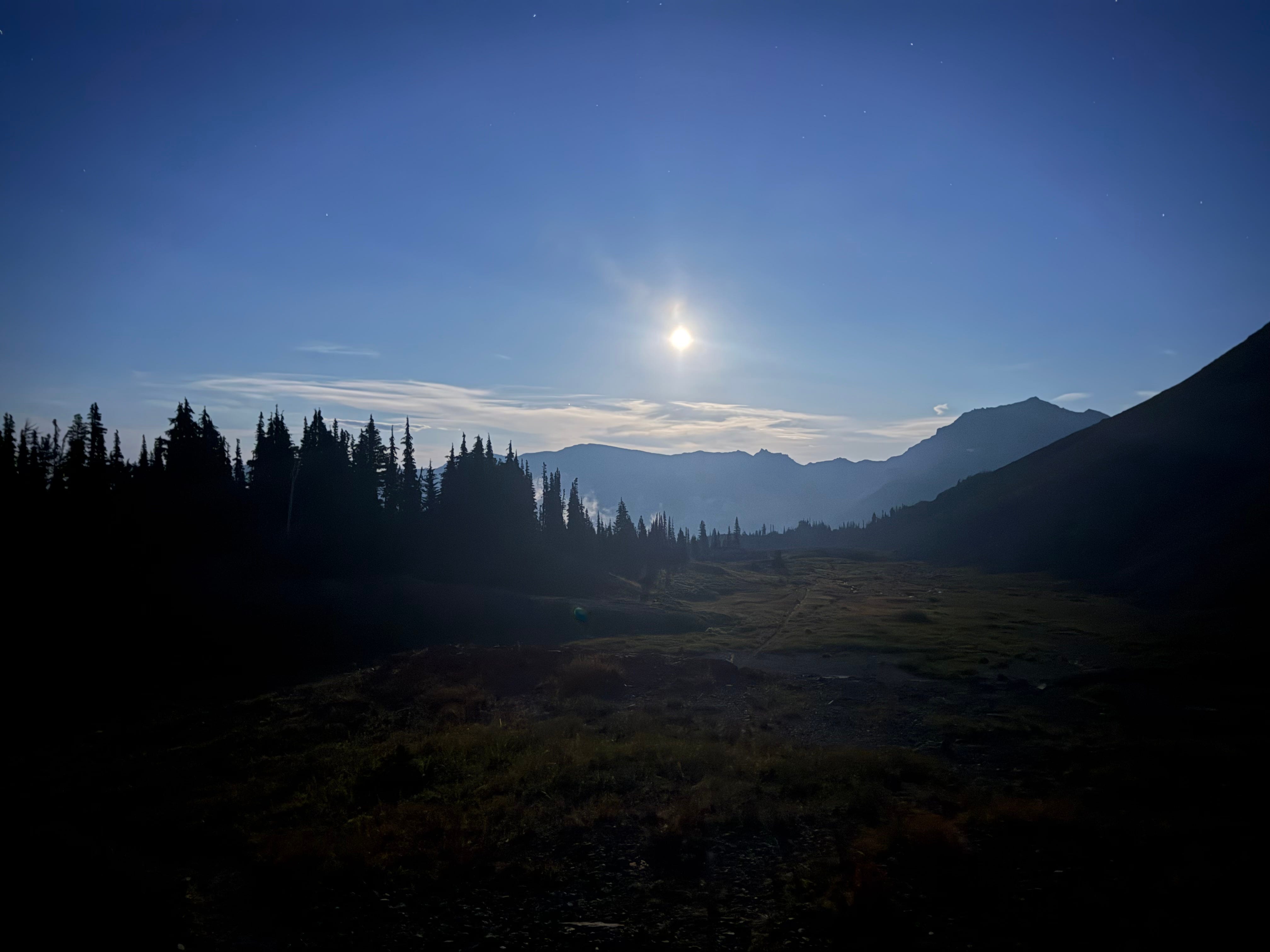
We started to descend the ridgeline below, called “Knife’s Edge,” as the sun dipped behind the clouds. Shortly thereafter, a full moon rose exactly opposite the sun, illuminating the breathtaking terrain into the night. As we walked our final few miles into camp I turned and captured Mo’s face as he looked up at the sunset. Speechless until he mustered up a prolonged “wooow,” all I could think was “this is exactly why we do it.” We go through the slog day in and day out to put ourselves in a position to witness the sun, moon, stars, clouds, and mountains putting their best on display in perfect harmony. To be humbled by a collation of natural beauty whose whole is undoubtedly better than the sum of its parts.
By the Numbers
Hiker Profile
Karen “Ms. Elegant” Eagleton, 80, hails from Southern California but has spent a good chunk of the last two decades on the trail. I first heard of her in the Seaid Valley, where a trail angel told me about helping her along her journey. So when I spotted an older woman shuffling up the hill, I immediately looked for her signature pearl necklace. Once I saw it (and the butterfly pendant that dangled above) I stopped her like a fan girl in the street.
Ms. Elegant started her thru hike in 2006, 19 seasons ago. Each year since she has made her way little by little, having completed 2,070 miles by the time we crossed paths. One of the grand ironies of the sport is that going slower is often more difficult than breezing through. Ms. Elegant has to carry an excess of food and water, making her pack massive, probably never weighing less than 1/3 of her body weight. She’s only capable of single-digit mileage every day and yet she continues along. “So few people in this world actually do it, so few people are able to see what we see…how could I not?” she said in reflection.
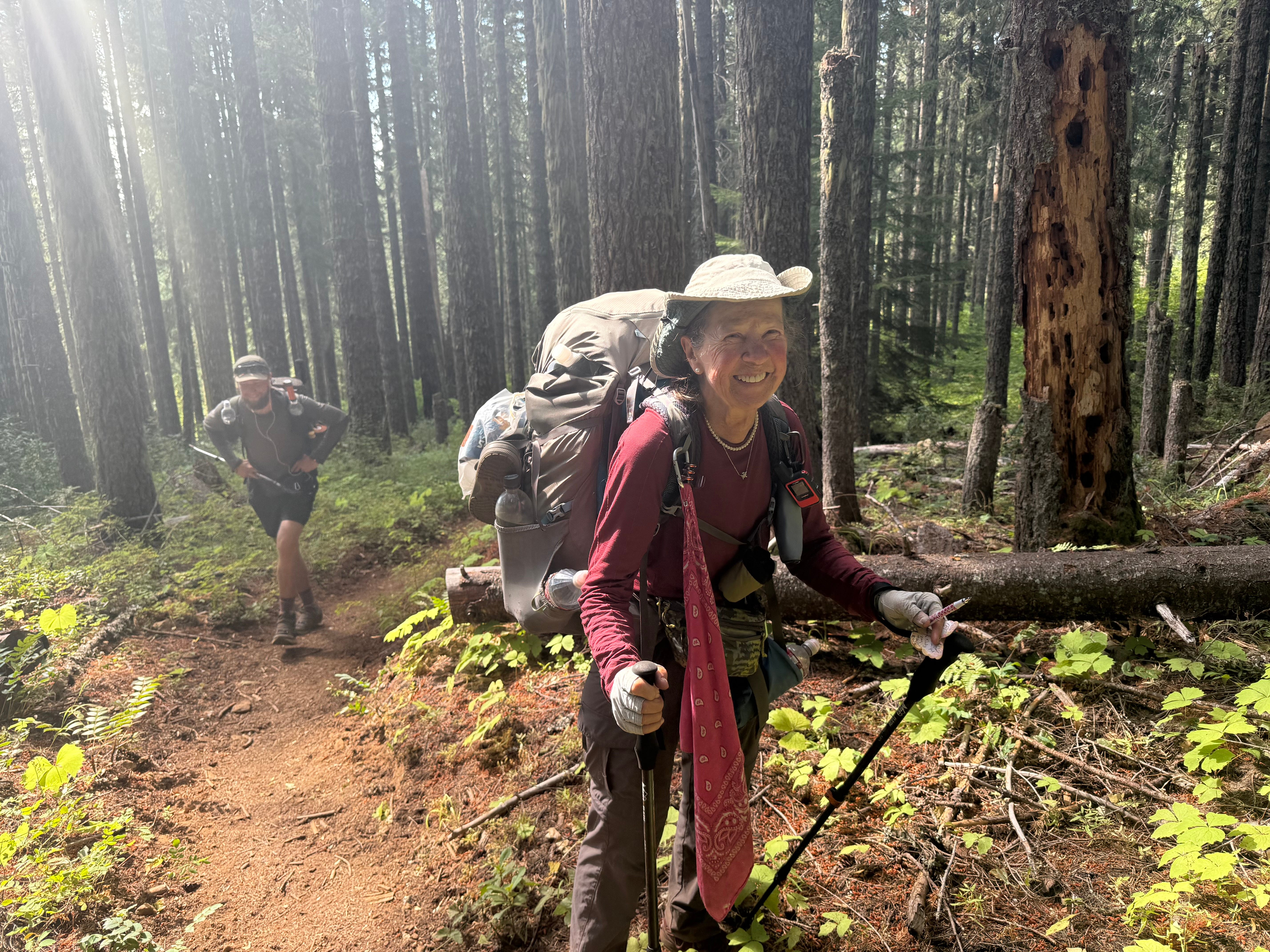
After I told her my name and the trail angel, Mark, who had told me her story she took out a small butterfly post-it note, almost entirely covered in haphazard scribbles, to write down my information. She always reports back to the trail angels that have helped her along the way, noting what an integral part they’ve been in her journey. She told me about a time where she had been evacuated by search and rescue. After her recovery, a local angel drove her for three hours on mountain roads just to get her back to the place where she had been taken off. “He wouldn’t accept a dime” she said, still in disbelief.
This will not be her last year, she knows that, but quipped “I’ve made it this far, I can’t stop now. If I’m still alive next year I’m coming back and I’m gonna keep doing it every year until I finish.” With enough time, she may be able to finish the entirety of Washington next season, 20 years after having started at the Mexican border.
As we parted ways, she gave me a fist bump, but then shook her head and put her fist back out. “You need to do better than that, I really need the energy” and so I tried again adding some oomph that contained all the love, luck, and positivity I could muster. I had another 32 miles to that day, she wasn’t even sure if she would make it to the next water in seven. I cannot imagine doing what she does but can think of no greater inspiration and living proof that nothing can stop pure determination.
What I’m Reading (pt 3)
Understanding World Religions Through Scripture
With about two months left I realized what a unique opportunity this was for focused study, one I’m unlikely to enjoy again until retirement. I started thinking about what long-format reading projects I could embark on and it dawned on me that for decades, I had passed over the greatest selling texts of all time: those of organized religions. So, I set out on an independent study to better understand the basis behind the organizations that have shaped culture, warfare, and society for centuries.
In the interest of time (and hopefully not pissing anyone off too much) I’ll synthesize my many thoughts into the following. First, I was surprised by the similarities within and stark differences between Eastern and Western religions. While the thoughts of the east generally concentrated around human imperfections and ways to overcome them, Western religions were built on themes of violence and conflict. Much of this was just a product of their environment, the books were being written in times of general unrest, and religion was pitched as a means of gaining a divine advantage (something that was confirmed in hindsight by the victors). However, the same could be said of the east and yet they struck a decidedly different tone.
Another clear difference was the role of the deity. Western idols are touted as mighty, jealous, spiteful, and all-knowing. Those of the east were described as calm and measured, often humble, shying away from excess praise. Some were even said to become disciples of their former students if they had gained knowledge beyond their own. I believe this also fed into the pacifist nature of the east. Eastern texts generally did not portray the other gods as threats, their justification being that a lack of adherence to their path would merely subject the dissenter to an infinite cycle of rebirth. This was the opposite of the texts who were adamant about countering the nonbeliever and taught “to detest and abhor the idols of others.” It really was a wake up call in understanding that religious and quasi-religious states, are in fact acting on what they perceive to be the word of God when seeking to eliminate those with dissenting views.
At first, it was difficult to look past a lot of the ancient teachings of the West which have aged quite poorly. However, as I took more time to reflect on religion’s role in society at large, I tried to look beyond the words on the page to the messages they attempted to convey. Books like the Bible, Torah, and Qur’an provide out-of-the-box moral compasses and ensure that entire communities are dedicated to their adherence. Some of the rules are outdated and objectionable (stoning disobedient children, permitting slavery, and beating wives), others are just downright arbitrary (don’t wear mixed fabrics, don’t boil a goat in its mother’s milk, don’t eat animals that die on their own), but at the very least the texts provided consistency through which society could evolve. And to their credit, the best of what was preached encouraged love, justice, compassion, forgiveness, accountability, and social responsibility; themes that remain key parts of the human experience to this day. When working properly, this manifested in communities of support for raising children, tending to the sick, and supporting the needy.
As I thought about what to take away from this exercise and how it translates into our rapidly polarizing religious landscape (with sharp rises in both orthodox fundamentalism and atheism) I thought about what each side could do to contribute in a secular but undoubtedly religiously influenced world. For those that choose to follow the texts, a true assessment on the applicability of their every mandate. Today the price for rape is life in prison, not 50 shekels to the victim’s father, in the same vein, should the divorce be shunned from their own? Or rather is it the spirit of what’s being preached: community, humility, and the importance of rest and reflection the most applicable elements for modern society?
For those that choose to live without religion, to ask oneself if you’ve really developed a robust set of morals and ethics in place of what religion would have imparted. And beyond that, have you surrounded yourself by others that will uphold similar values in your interactions?
What worries me is through the great radicalization and simultaneous disbelief, we are throwing the baby out with the bathwater on both ends. On the one hand, refusing to translate the core of these teachings to the modern day and the other rejecting them and not doing the work to replace the important role they’ve served in centuries of societal development. While I believe it’s possible for multiple religions and nonbelievers to peacefully coexist, it will first take a recognition of the other to build that bridge.
Texts Studied:
Christianity
The Bible (Old + New Testaments)
Recorded: ~1400 BCE–100 CE
Followers: ~2.4 billion
Judaism
Tanakh (Hebrew Bible)
Recorded: ~1200–100 BCE
Followers: ~15 million
Islam
The Qur’an
Recorded: ~610–632 CE
Followers: ~2 billion
Hinduism
Bhagavad Gita, Upanishads, Vedas, Mahabharata, Ramayana
Recorded: ~1500 BCE–400 CE
Followers: ~1.2 billion
Buddhism
Dhammapada, Suttas, Lotus Sutra
Recorded: ~500–100 BCE
Followers: ~500 million
Taoism
Tao Te Ching, Chuang Tzu
Recorded: ~600–300 BCE
Followers: ~12 million
(No) Shower Thoughts
Rewiring the Fear-Based Brain
It’s become a common practice when I’m getting to know a fellow hiker to ask what they set out to accomplish on the PCT. Among the more impactful and unexpected responses I’ve gotten is a desire to rewire the fear section of their brains. Most admitted that in their normal lives, they had begun to feel so consumed by fear and anxiety that they were often struggling to function. Even benign problems could balloon into a crippling anxiety. This prompted me to really reflect and think deeper on how we got here.
One of the first things I noticed change within me on the trip was that even in times of difficulty, my general mood was better than it had been in years. As I thought about it, it wasn’t that any individual thing was causing the change, but instead that the thick layer of existential dread that seems to hover over all of us in society had burned off. I no longer felt subconscious anxiety about crime, terrorism, economic collapse, political strife, and everything else that could go wrong. A practice that was generally accompanied by taking stock of all that I had to lose and was in a constant battle to retain.
The ironic part of so many of those thoughts is that they were theorized, not realized, and even if they had come to be, were unlikely to cause me any real harm. It wasn’t the prospect of getting hit by a car while running or biking through New York City, but rather getting a shitty email from a superior at work, a passive aggressive text from a significant other, or some political race not going my way that did the most damage. Without posing a real threat to my survival, they could evoke such a visceral reaction that it would consume my being and lead to both physical and physiological pain.
In my new context, my fears completely changed. I don’t exist in the day-to-day waiting for the next shoe to drop, wondering what it will be, but quite the opposite. I have a far more positive outlook on life and 98% of the time things are good. But every once in a while, I come across something that presents real danger. Staring down a cougar alone in the dead of night, while it growls to make its presence known. Waking up to a lightning storm while exposed on the top of a ridge, the ground shaking beneath me with every strike. Or being inches from a rattlesnake who’s coiled, hissing and prepared to attack. In those moments of real danger, my body behaves very differently. I don’t shut down and my mind doesn’t race, instead the response is measured and rational. The situation occupies my full attention, I think through my options and best course of action. I focus on my breath and do whatever is in my control. In each case, things have worked themselves out and shortly thereafter, I returned back down from my heightened state.
The key differences between the experiences are both a sense of control over what can be done and a release of tension from what cannot. And so I’ve tried to better understand, through research and reasoning, why we almost universally put ourselves through such needless agony. Biologically, our fear-based brain was developed to respond to immediate threats (like a rattlesnake) and anxiety utilized similar neurological pathways to put us on alert when there is a higher likelihood of threats (like when walking alone at night). And in an extra effort to ensure our safety, we developed a tendency towards false positives. Our brains believing it’s better to suffer in the short term mentally than to make a fatal miscalculation.
However, in the rapidly changing environment of the past few centuries, two major changes have occurred. First, lions and bears are no longer the most immediate threat but things far more existential like crop failures and job loss. Secondly, with the development of hierarchical society, man came to understand that fear was the ultimate tool for control, and that its weaponization allowed for the grouping of individuals on a scale never seen before. This has evolved from kings, generals, and religious leaders to politicians, CEOs, and news anchors; but at its core, the thesis remains the same. If you can tap into someone’s biological risk-aversion, you can influence nearly all of their decision making.
As I’ve thought about my goals upon reentering society, fighting against my own biological fear triggers is near the top of the list. As a part of that, I also hope to better understand the motivations of those around me. To decipher the authentic from the fraudulent and to regain autonomy in my own life. The goal isn’t to be fearless, as fear plays a key role in some of our most pivotal moments, but rather to fear less. In doing so, I hope that my decision making, risk tolerance, and mental health will be under my own command and that taking back control will lead to a life of greater happiness and fulfillment.
Much love always,
Connor
Useful Links
Brilliantly written as always my friend. Excited to see how you bring these revelations and experiences with you throughout your life. Very poignant, we can all strive to fear less.
In the words of the great Jerry Garcia, “There is a road, no simple highway; Between the dawn and the dark of night; And if you go, no one may follow; That path is for your steps alone”
Safe journey through Washington!
Always leaves me wanting more.