
Lost in Space - Chapter 4
Agua Dulce (mi 455) to Kennedy Meadows South (mi 703)

Sections E & F
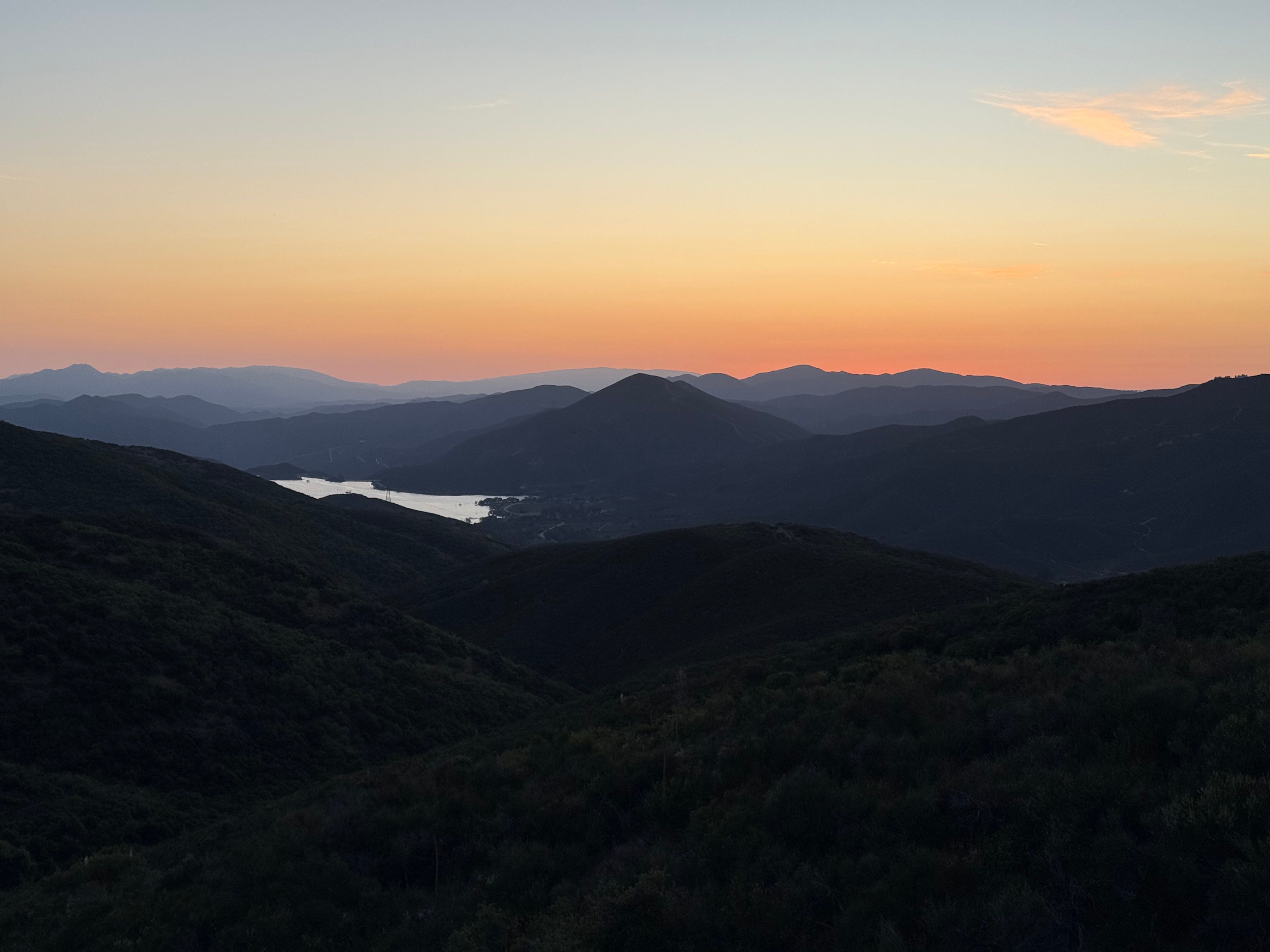
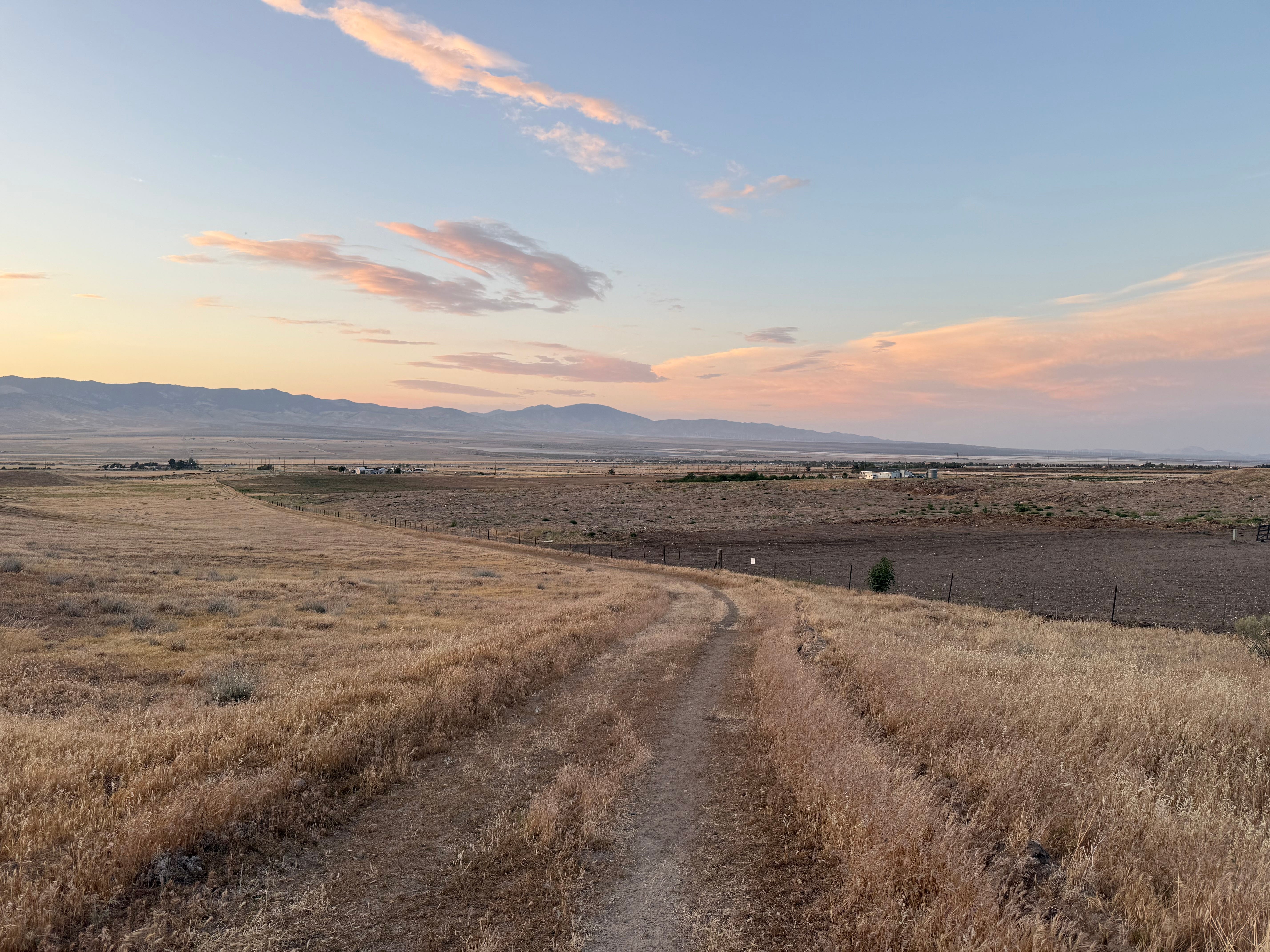
Section E began solo with a sunset climb out of Agua Dulce overlooking mountains while climbing over barren, windswept ridges. I quickly encountered two dangers on the trail. First, an adolescent Western Diamondback Rattlesnake, whose bite is nearly fatal as they’ve yet to learn how to regulate their venom. Second, was a local man asleep in the trail with no food, water, map, or plan and was struggling up the final stretch. After giving him water, protein bars, and directions I set up a cowboy camp a few miles further, forgoing my tent in the strong winds.
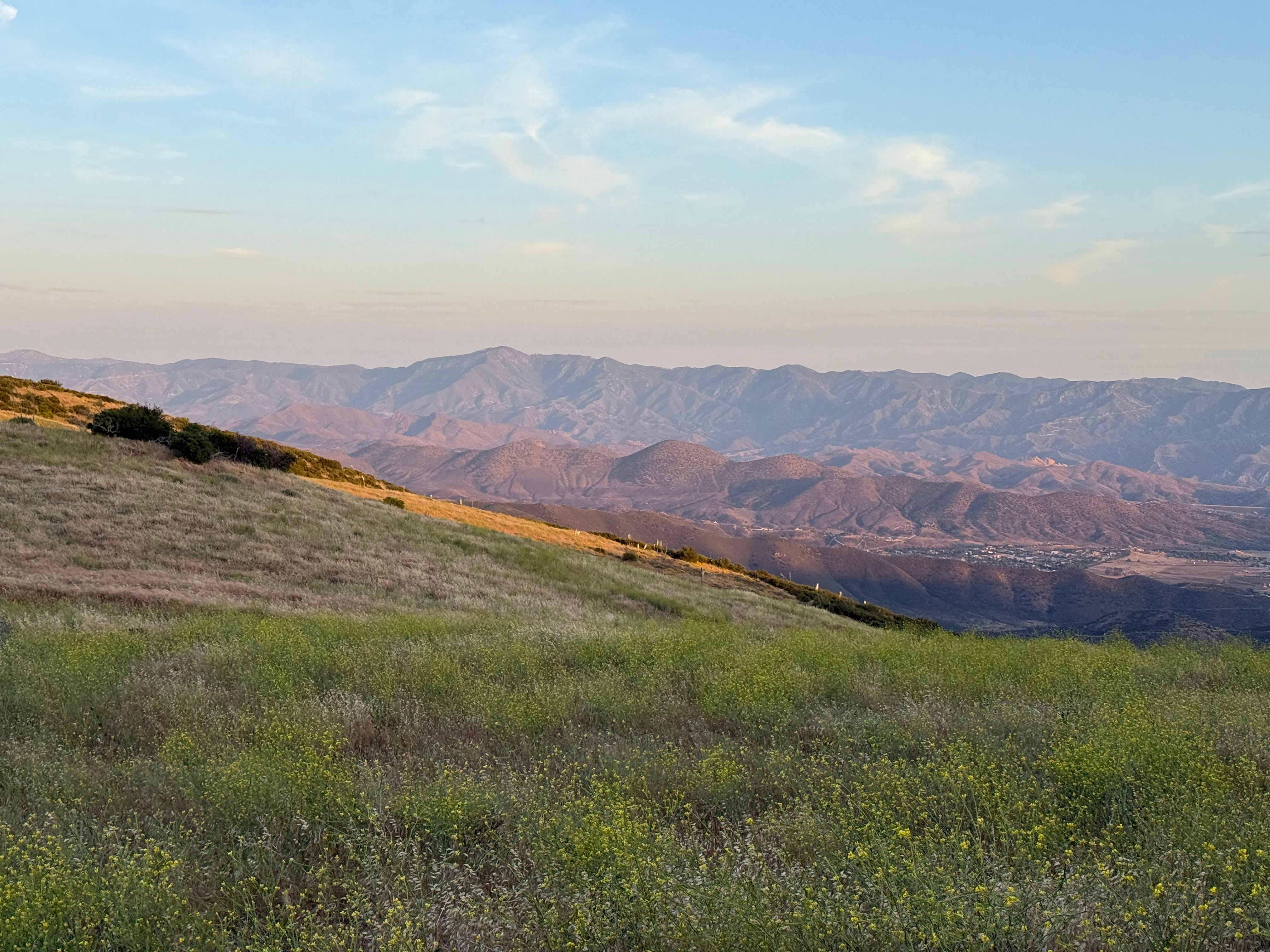
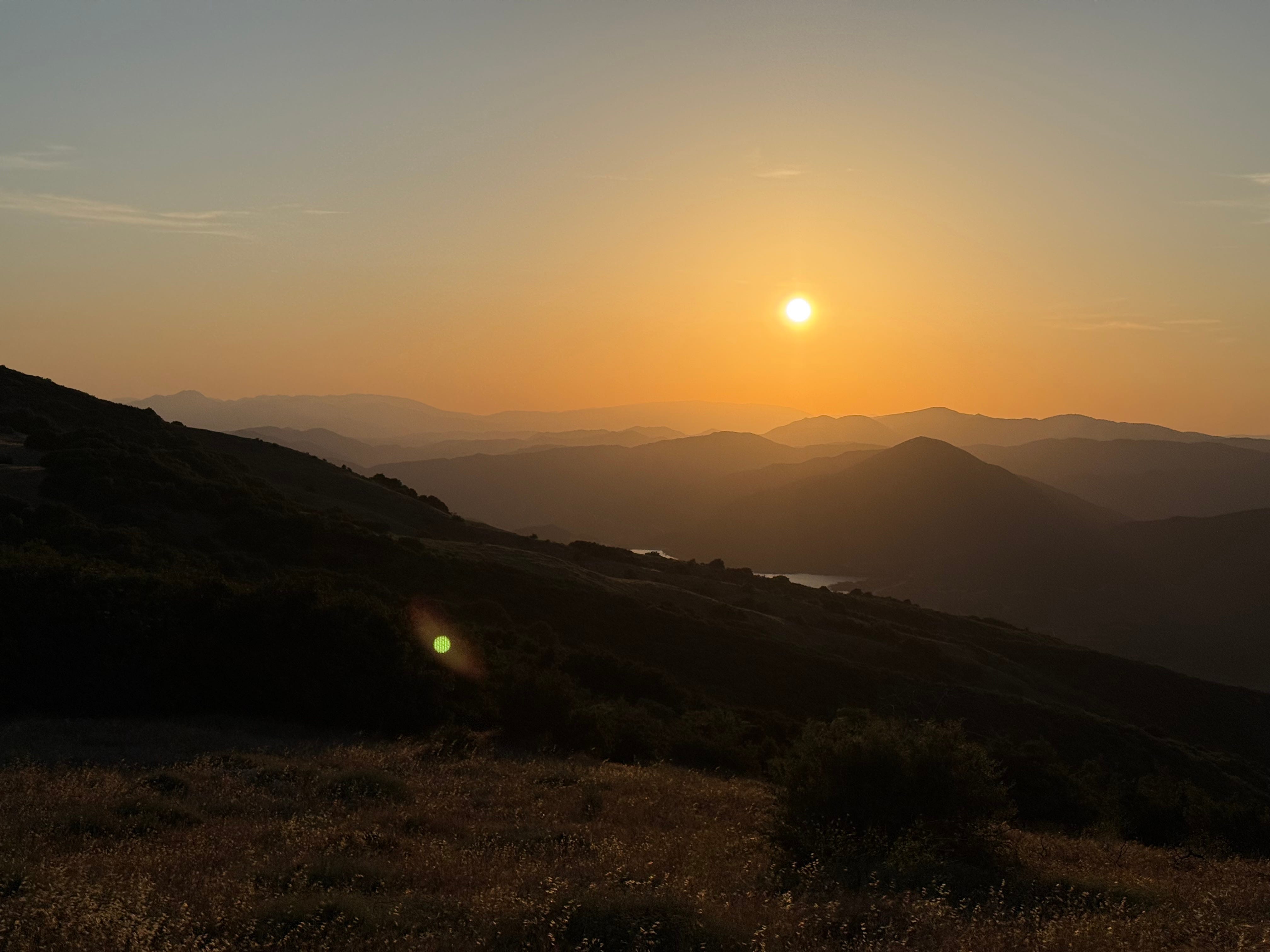
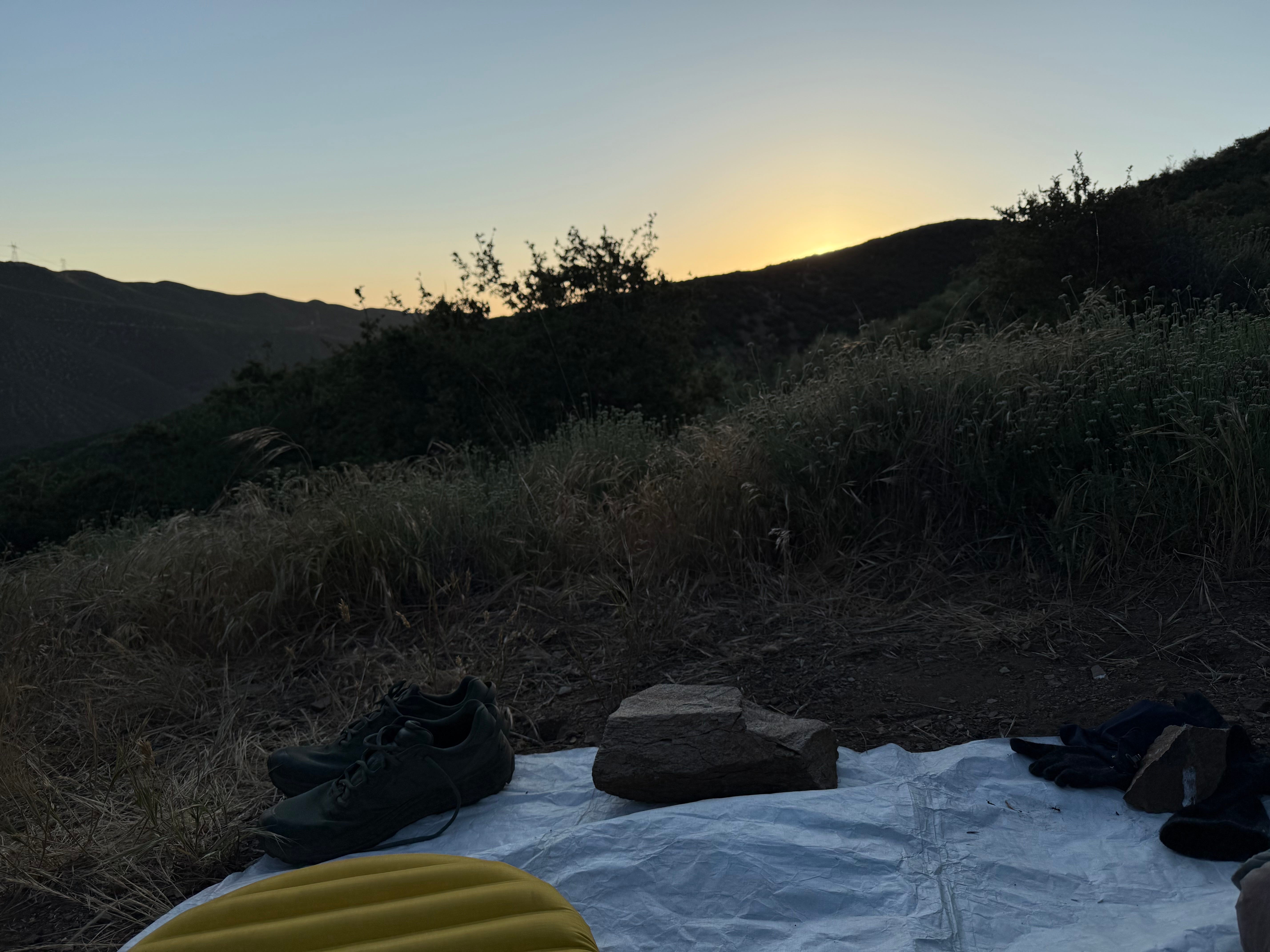
The next two days went by quickly. Having fallen a day behind my hiking partners, finally figuring out my foot problems, and getting my proverbial “trail legs” I was officially unleashed: hiking the 62 miles between Agua Dulce and Hikertown in just over 48 hours, topped off by a 32+ mile day into town. It was a great feeling to really empty the tank for the first time in a while, as I’ve missed the high aerobic “runners high” which I’ve exchanged for the long slog of the trail.
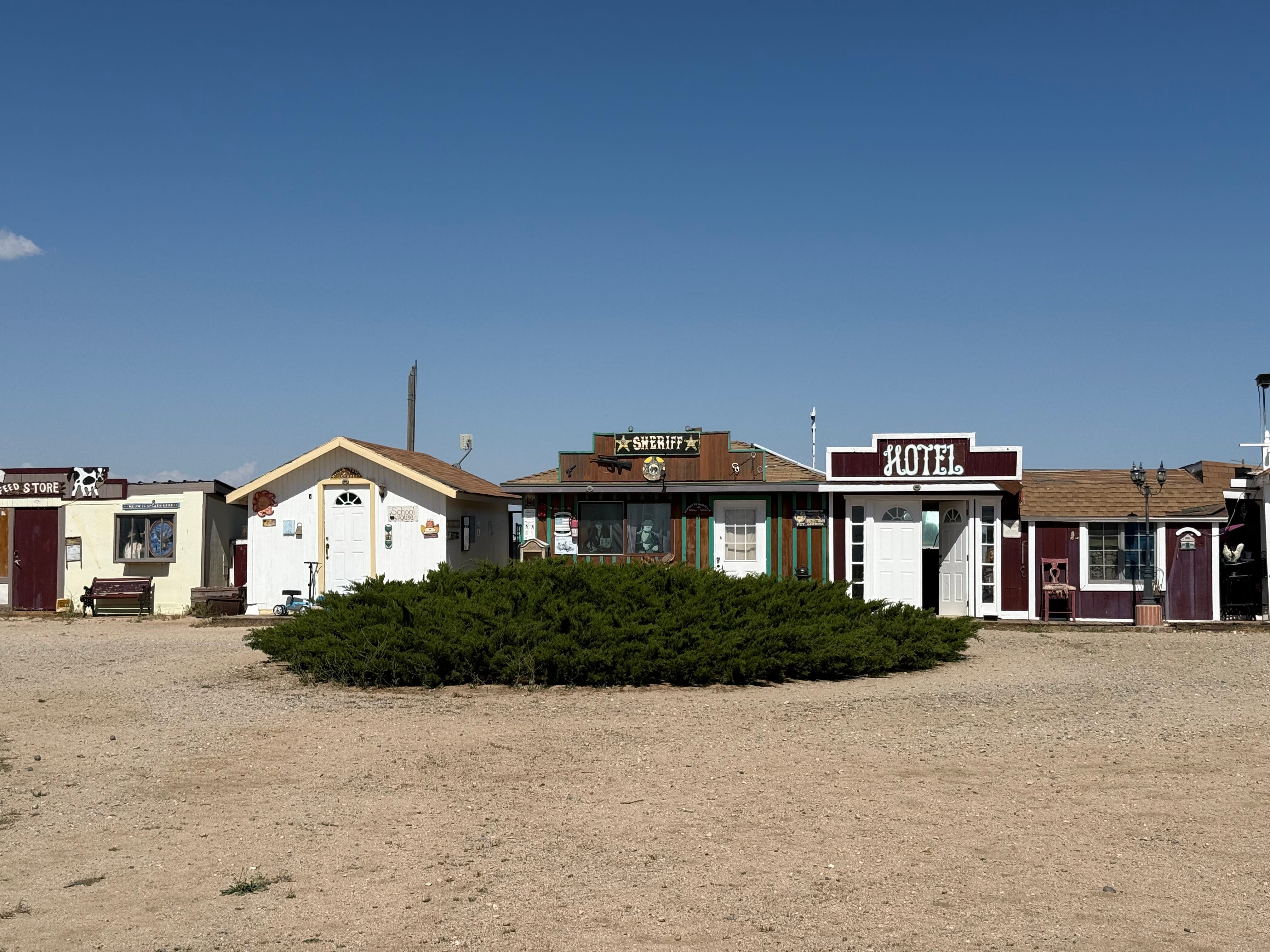
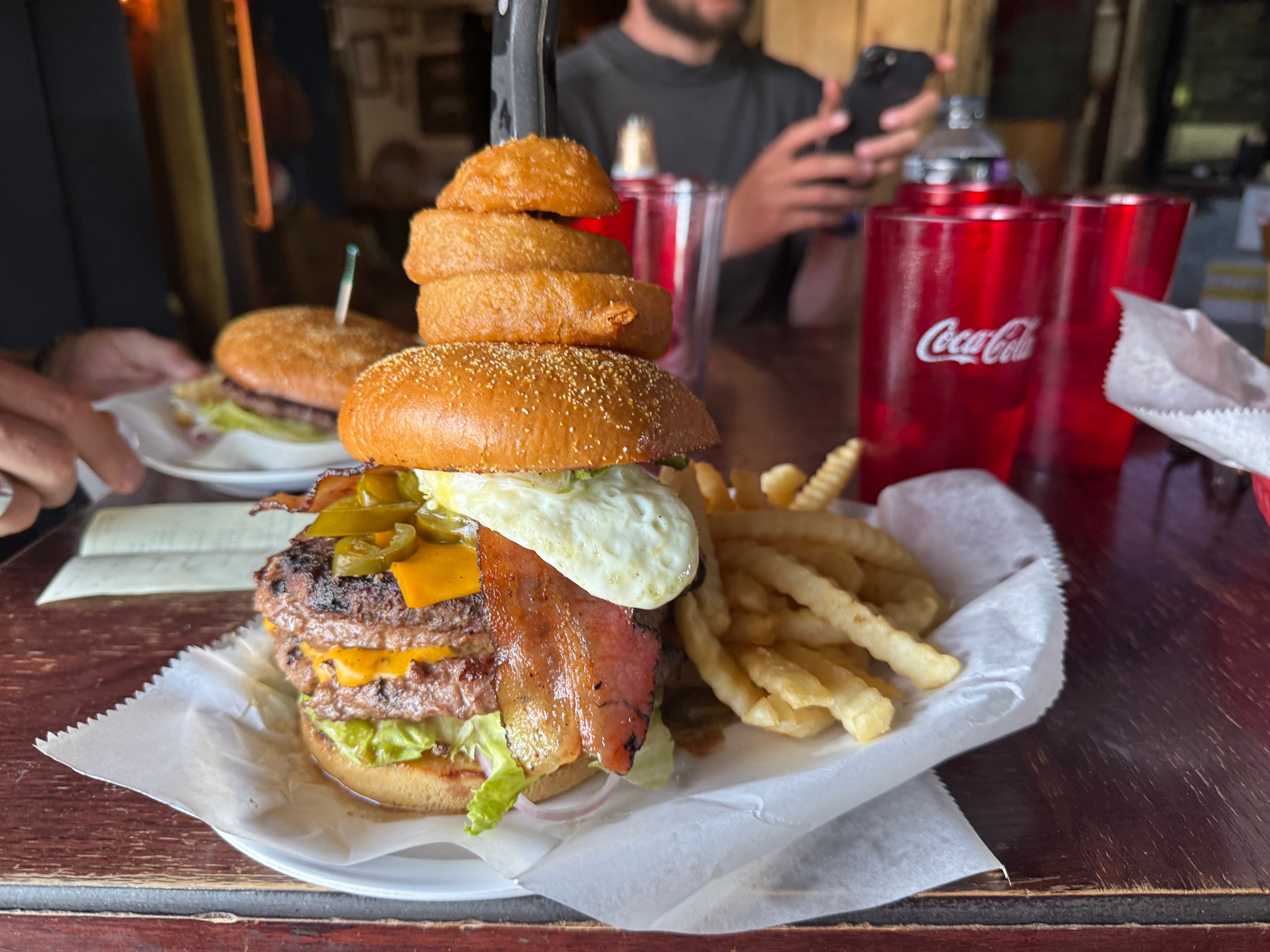
Hikertown was the strangest stop yet. It’s a plot of private land intended to look like an old western movie set that’s run by an eccentric oil executive and his crew. Our group was thrust into the middle of a feud between rival convenience store owners over hiker’s business. We were taken under the owner’s wing and toured around what they claimed were their foes’ meth labs: a collection of trailers adorned with tin foil window coverings and extra roof ventilation, guarded by a hoard of angry dogs. We requested a swift departure after he began to antagonize them by laying on the horn of his truck. We were taken back to the other store where spare ribs were waiting as a quasi-bribe for our business and endorsement on the trail.
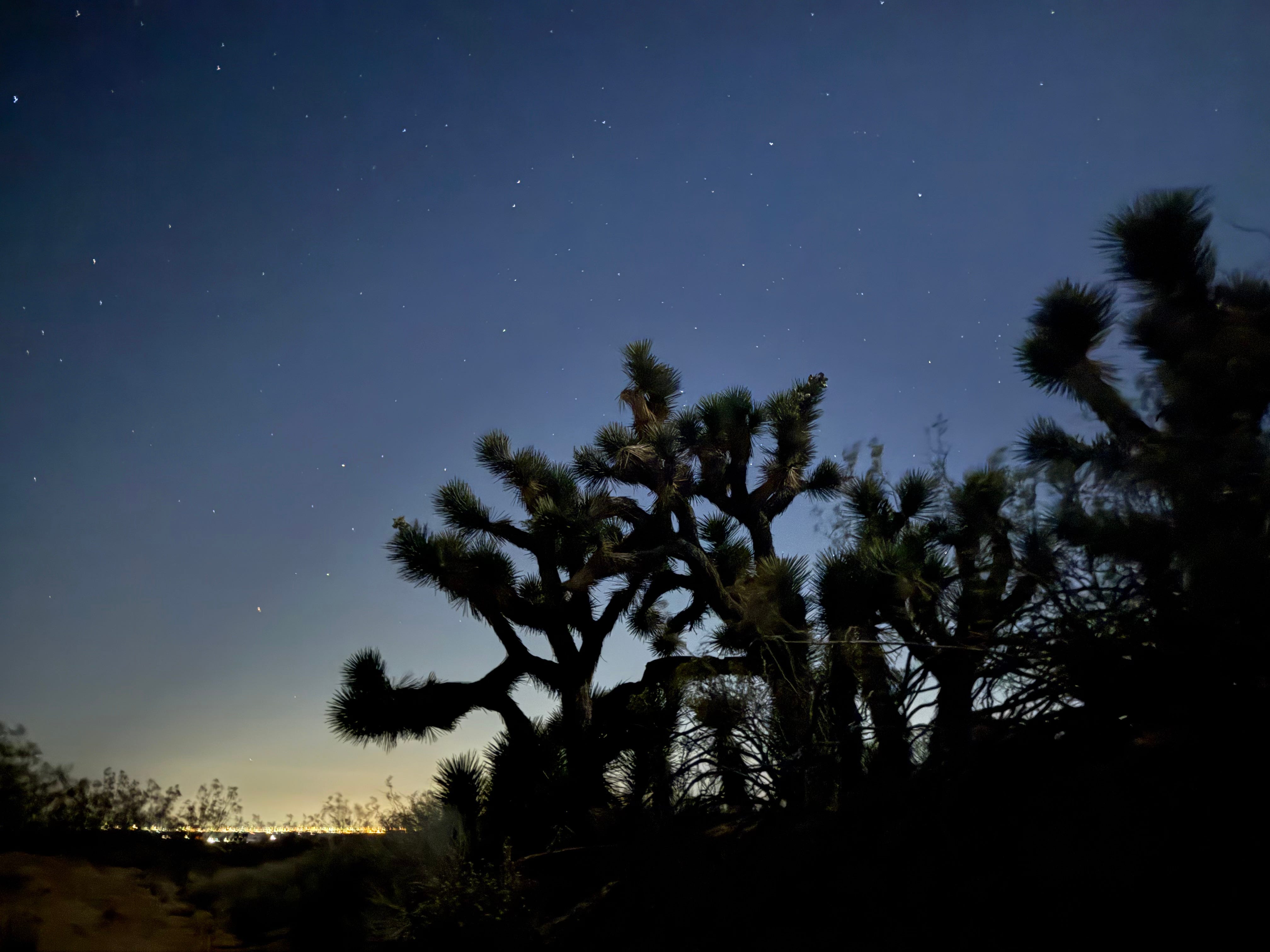
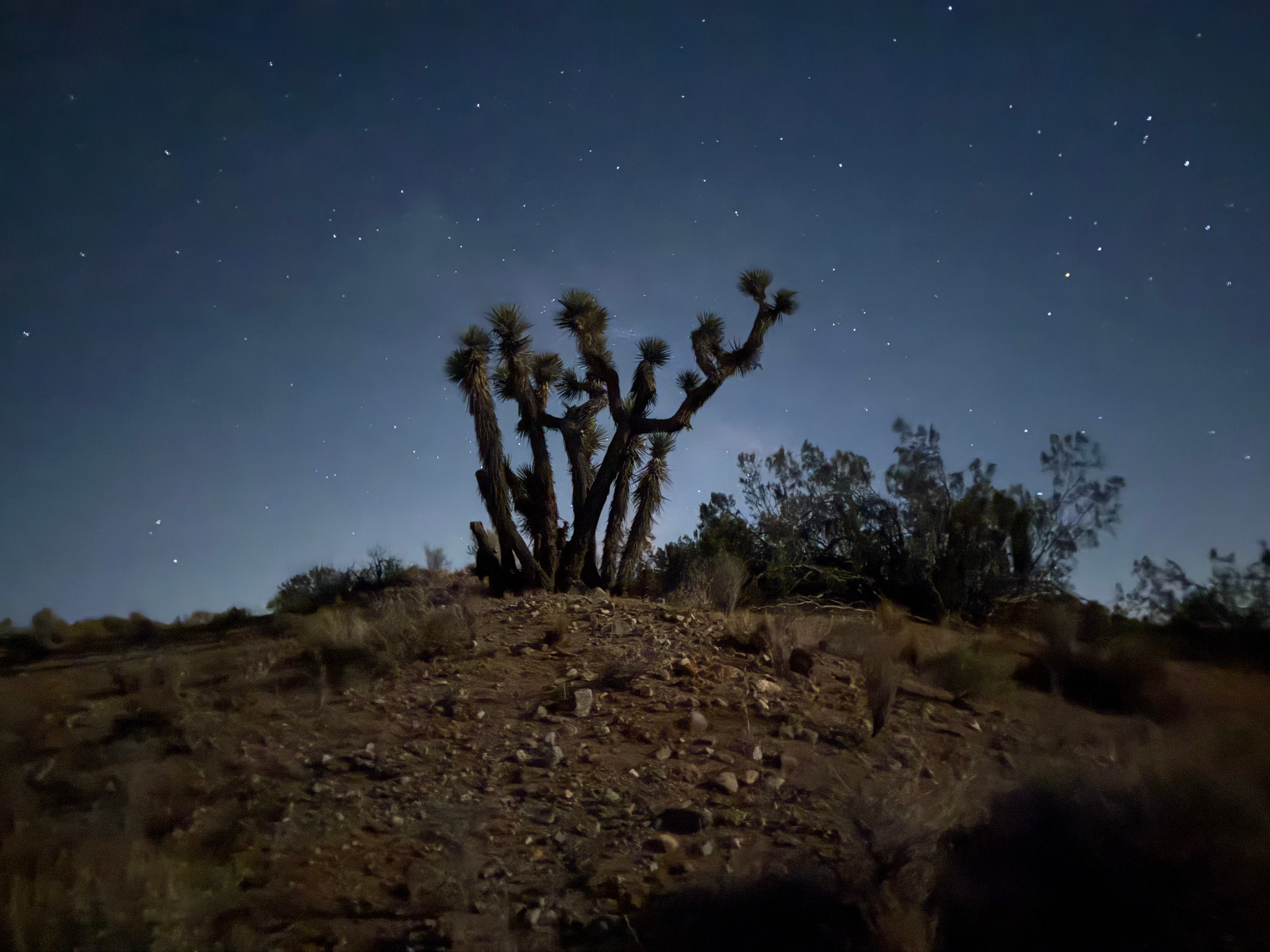
We left Hikertown at 4:30 pm the next day, with the goal of going 42 miles to Tehachapi on one “nights” sleep through the notorious LA Aqueduct section in the Mojave desert. After the sun set, the Joshua Trees seemed to dance, casting shadows in the moonlight as the cosmos revealed itself with breathtaking clarity. In the distance, two mushroom clouds hung above the horizon and a lightning storm rained down to the East. I got into camp at 4 am and slept until 8 before heading out for the remaining 17 miles.
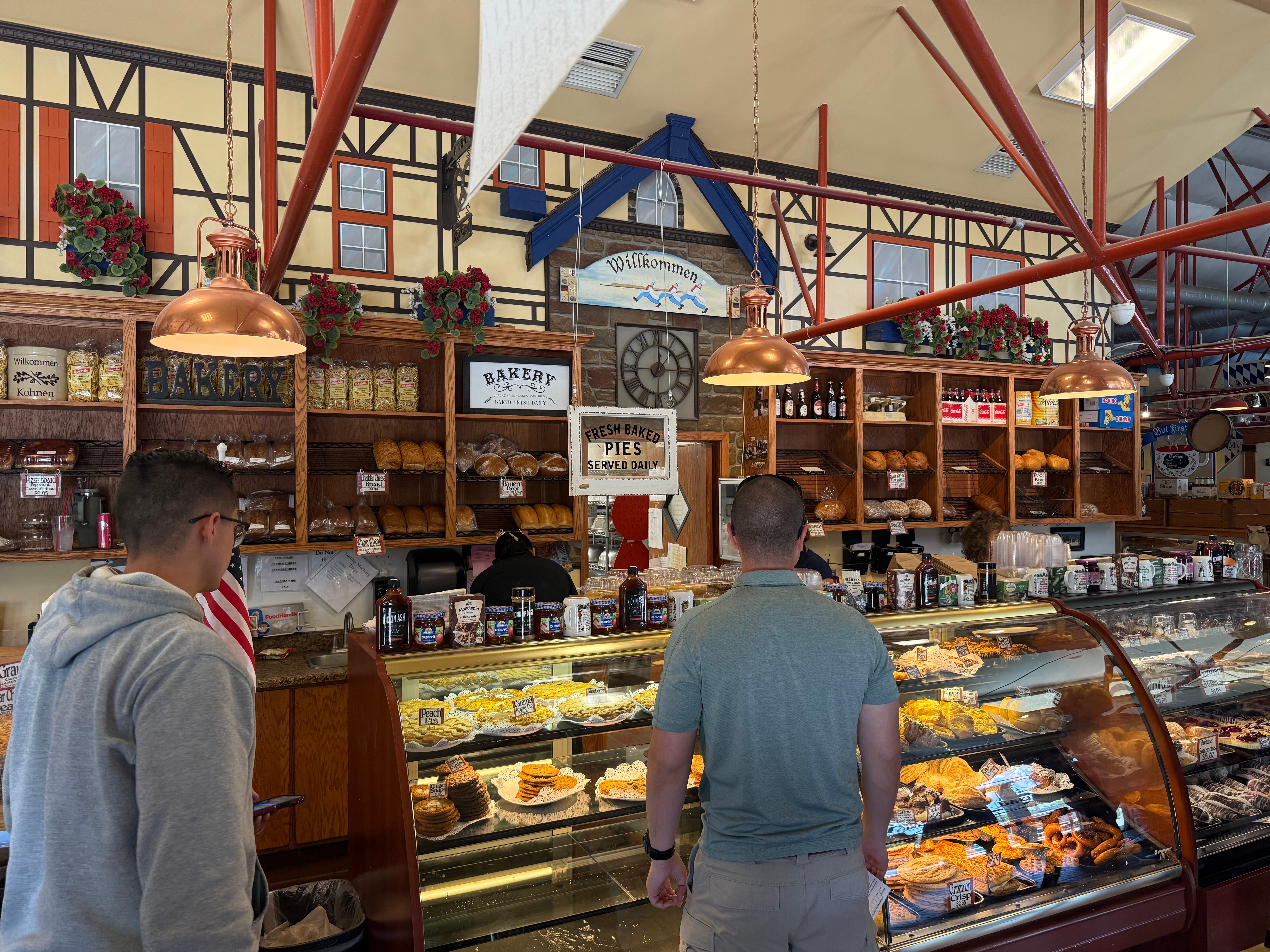
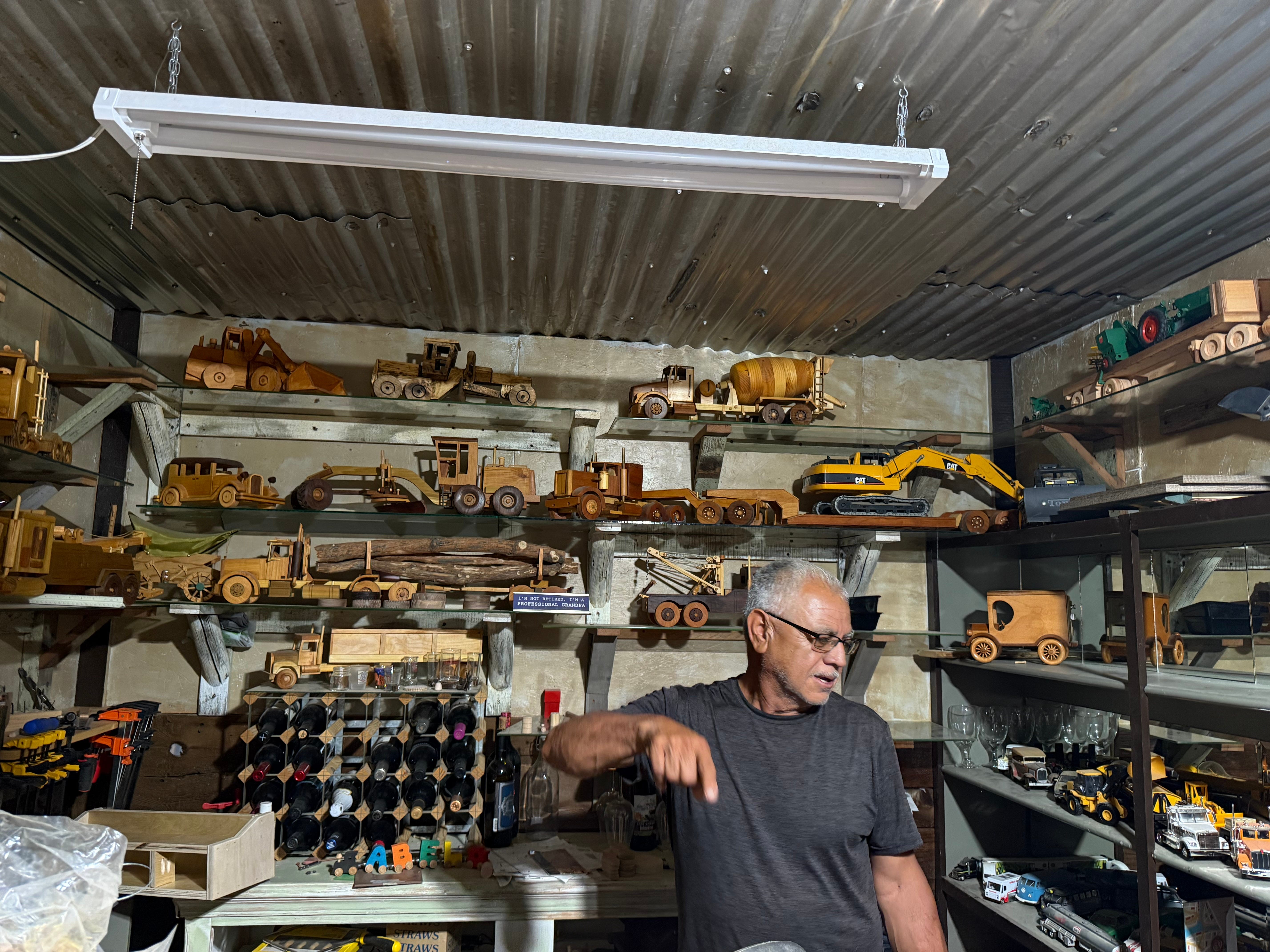
Once in Tehachapi, I was hosted by two separate families over two nights. In between, I resupplied at Walmart and enjoyed multiple meals at the town’s famous German Deli & Bakery: “Kohens.” Our second host was one of my favorites yet. Abel, a retired maintenance worker who moved to Bakersfield from Mexicali as a young man, inherited four acres in the hills above the city from his mother and law and now tends to it full time. In addition, he volunteers with the forest service maintaining the trail, builds model commercial vehicles out of wood in his basement workshop, and hosts hikers & bikers on their journeys. An accomplished cyclist himself, he’s completed a number of double century rides and a bikepacking trip from Santa Monica, CA to Virginia Beach, VA.
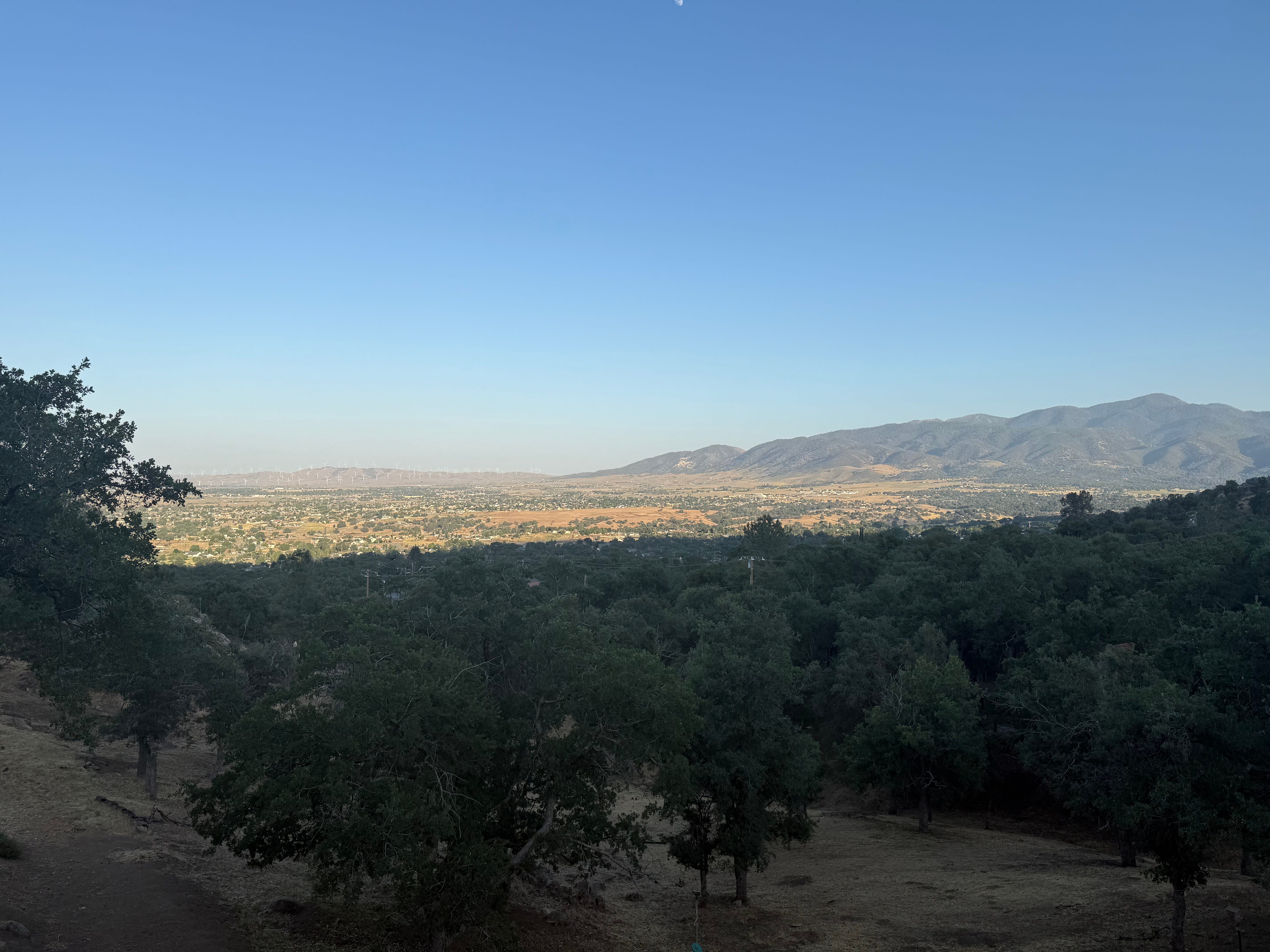
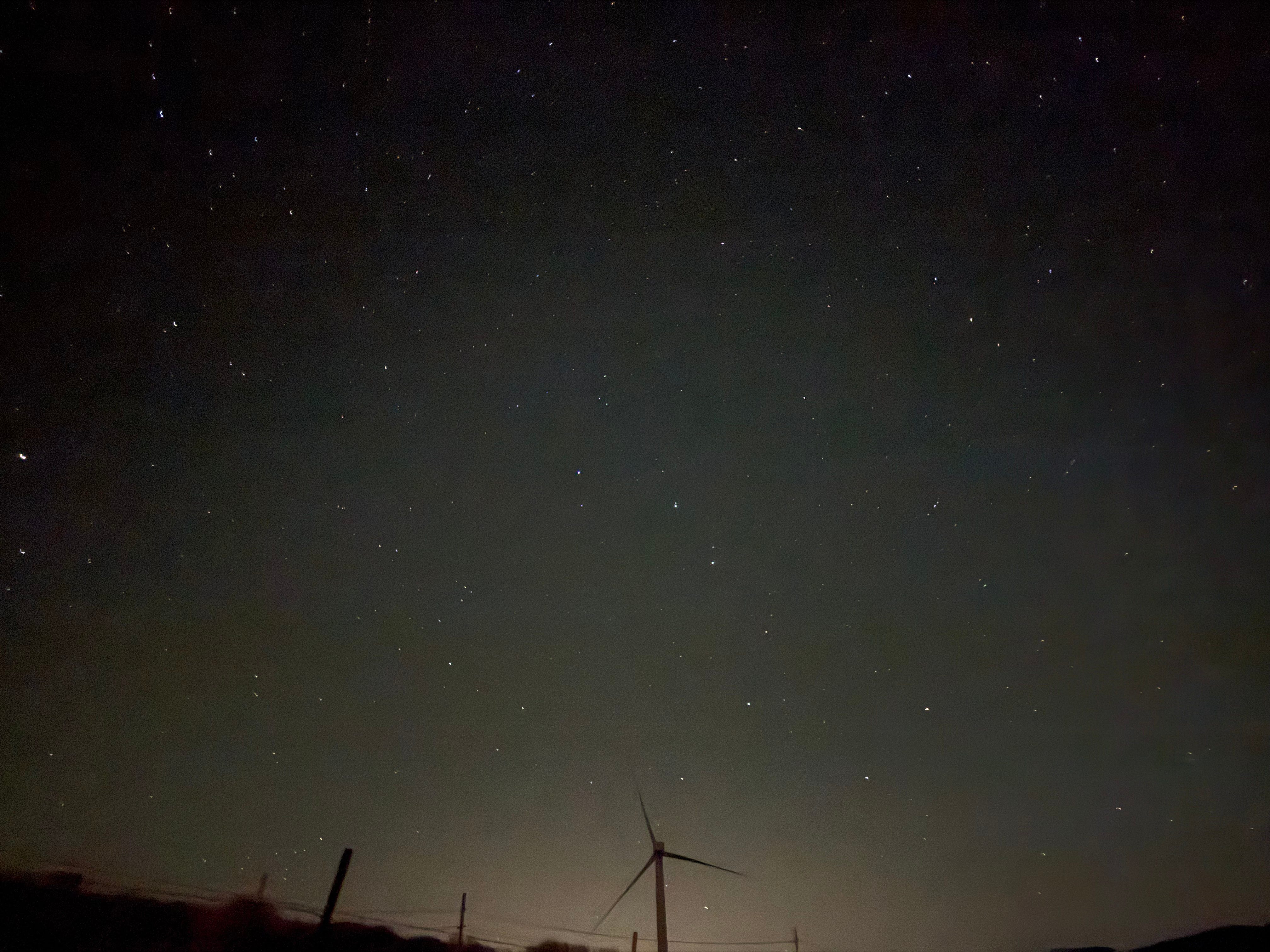
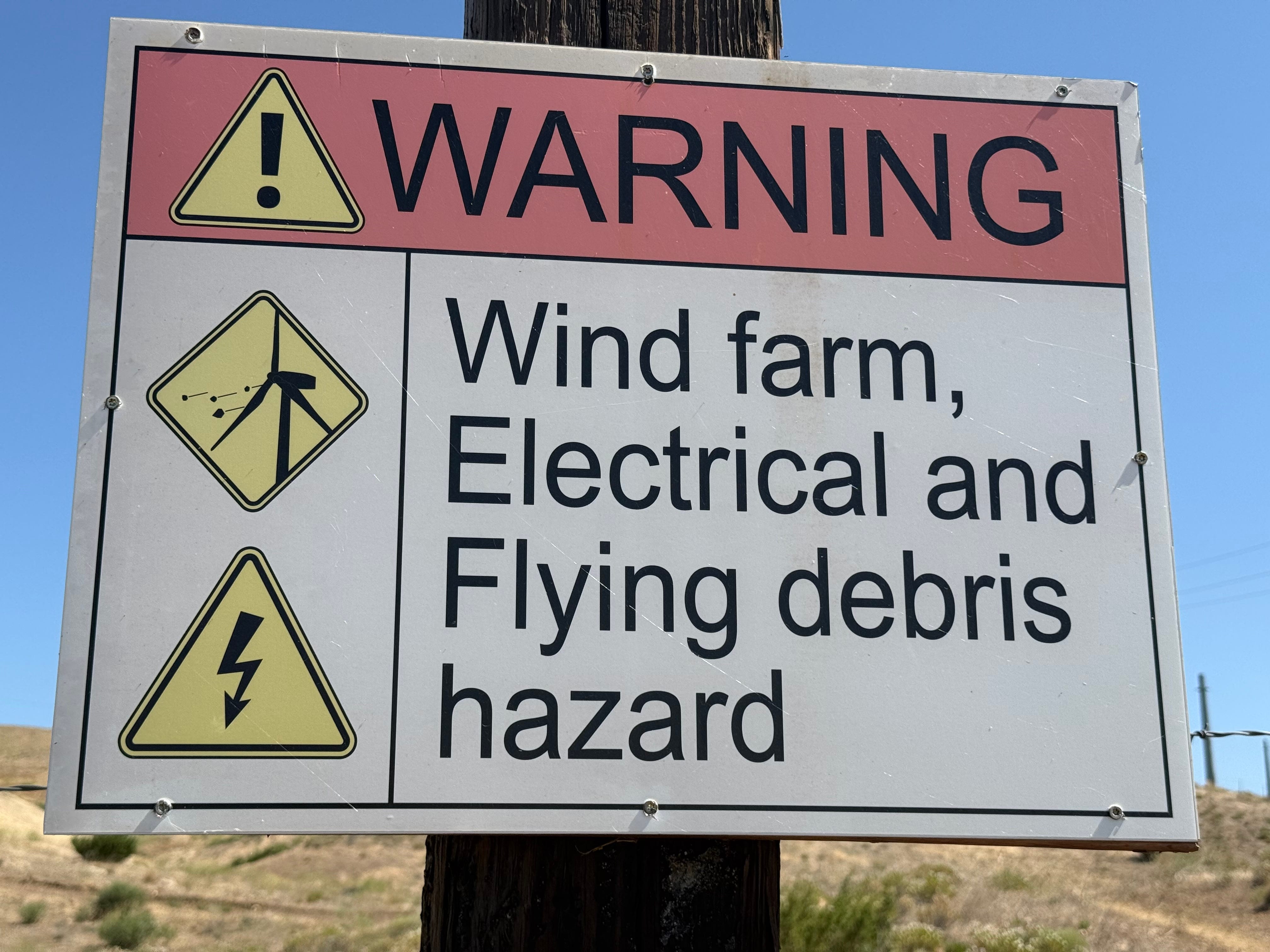
After departing, I walked solo through the third largest wind farm in the world, boasting over 4,000 turbines spread across hundreds of square miles. Initially built in the 1980s, the farm was a pioneer in the renewable energy space. It now produces enough energy to power nearly 700,000 households each year, roughly equivalent to the population of Boston or Washington D.C.
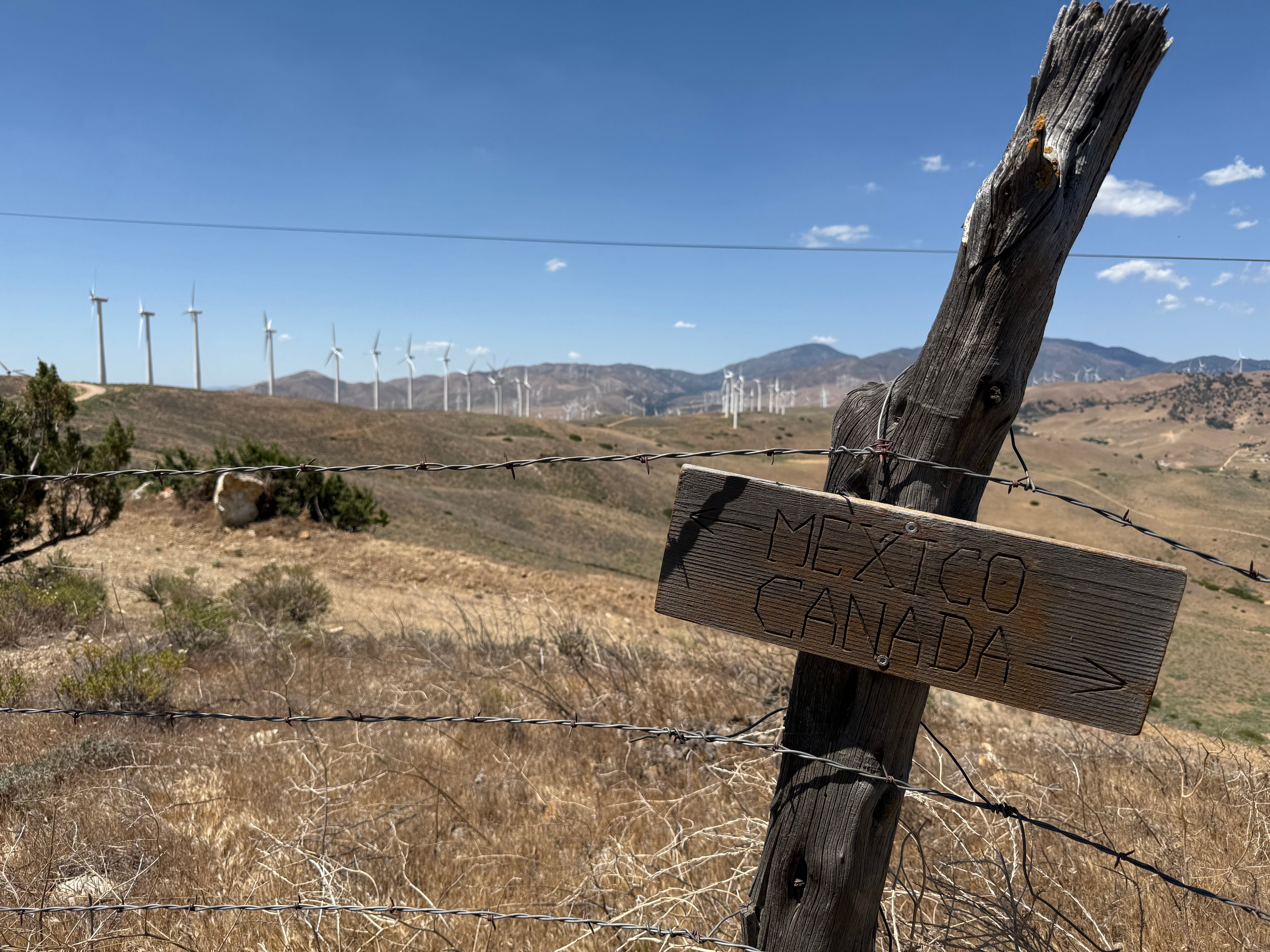
The ensuing stretch was among the most difficult to date. A final desert section with a net increase in elevation as we ascended into the Sierra Nevada. A heat wave produced temperatures well into the 90s at elevation and in the 110s on the valley floor, with next to no coverage from the beating sun. This was made even more difficult by a dearth of natural water sources for over 40 miles. Thankfully, a local trail angel maintains two enormous water caches in between, with over 500 gallons each, reducing the burden. All of our training up to this point had prepared us well and I was surprised by our resolve in overcoming the challenge.
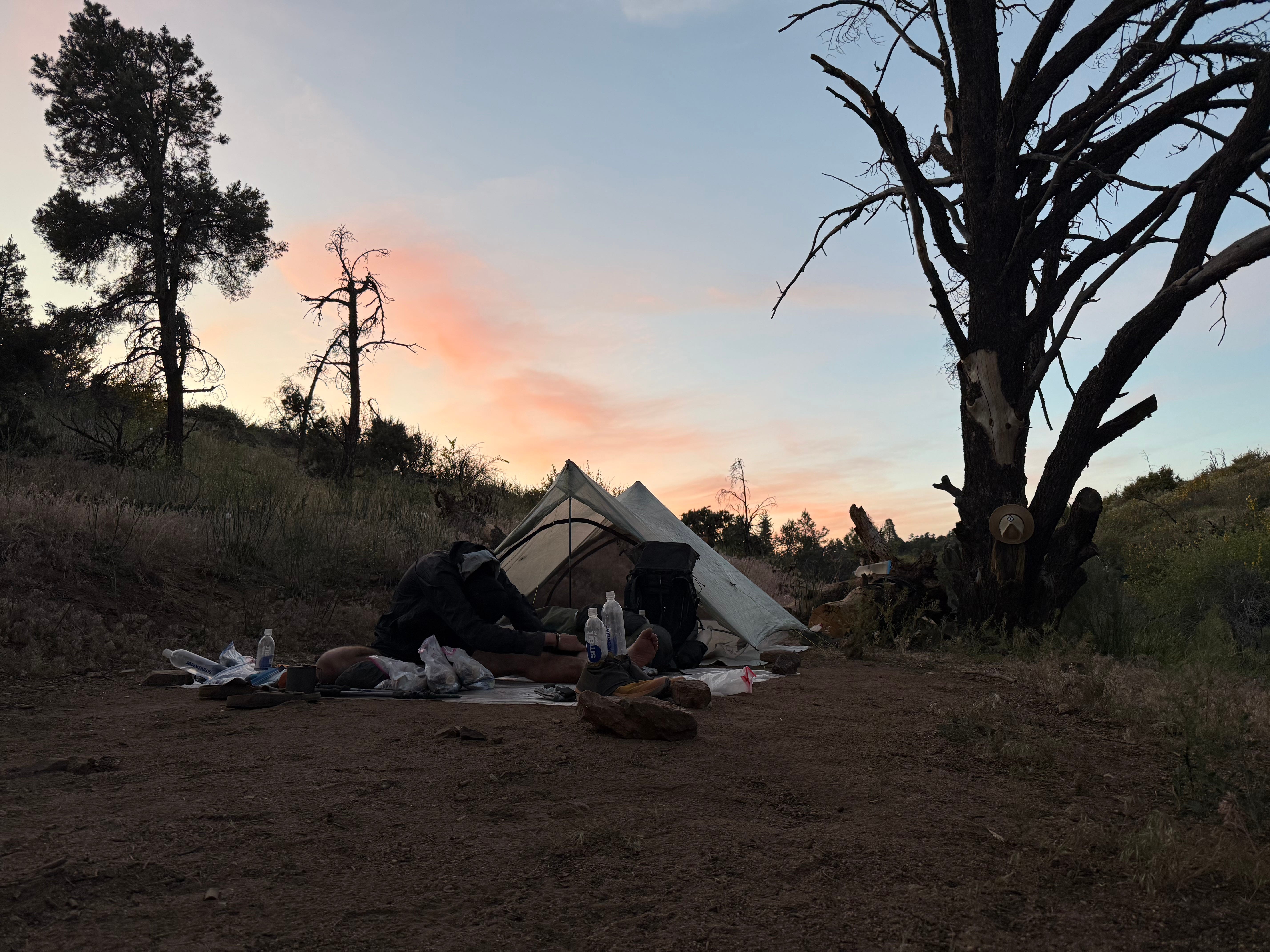
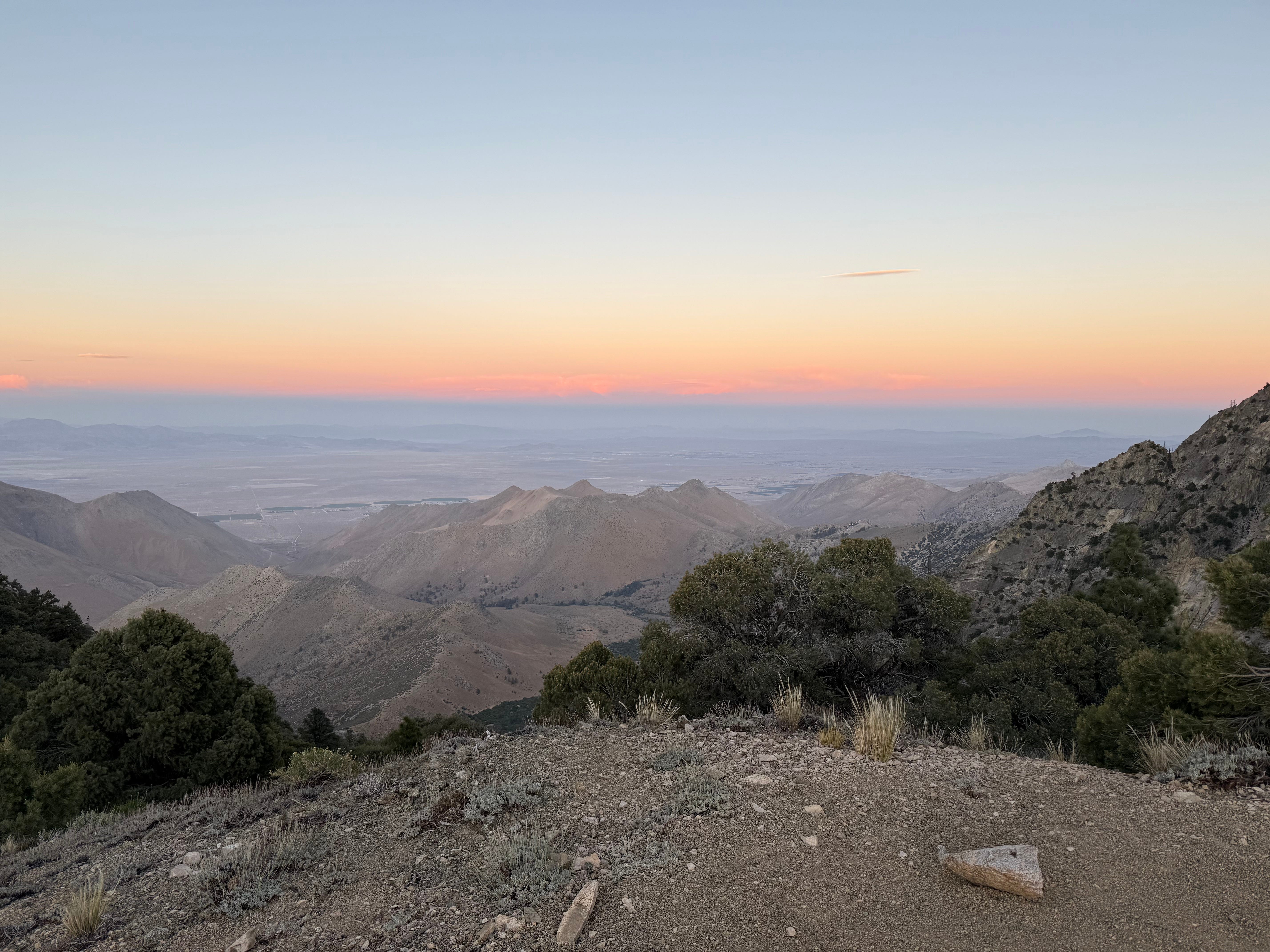
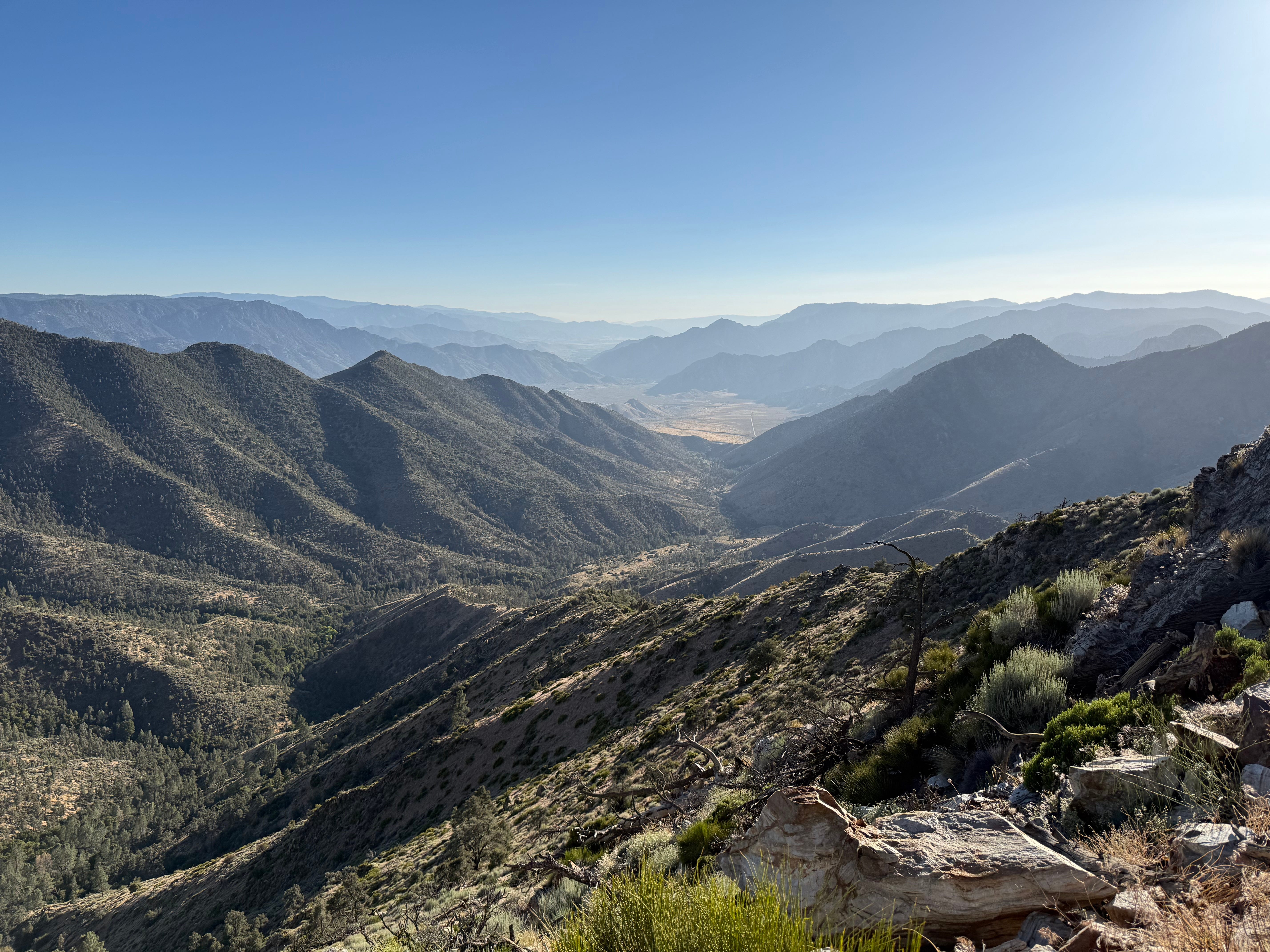
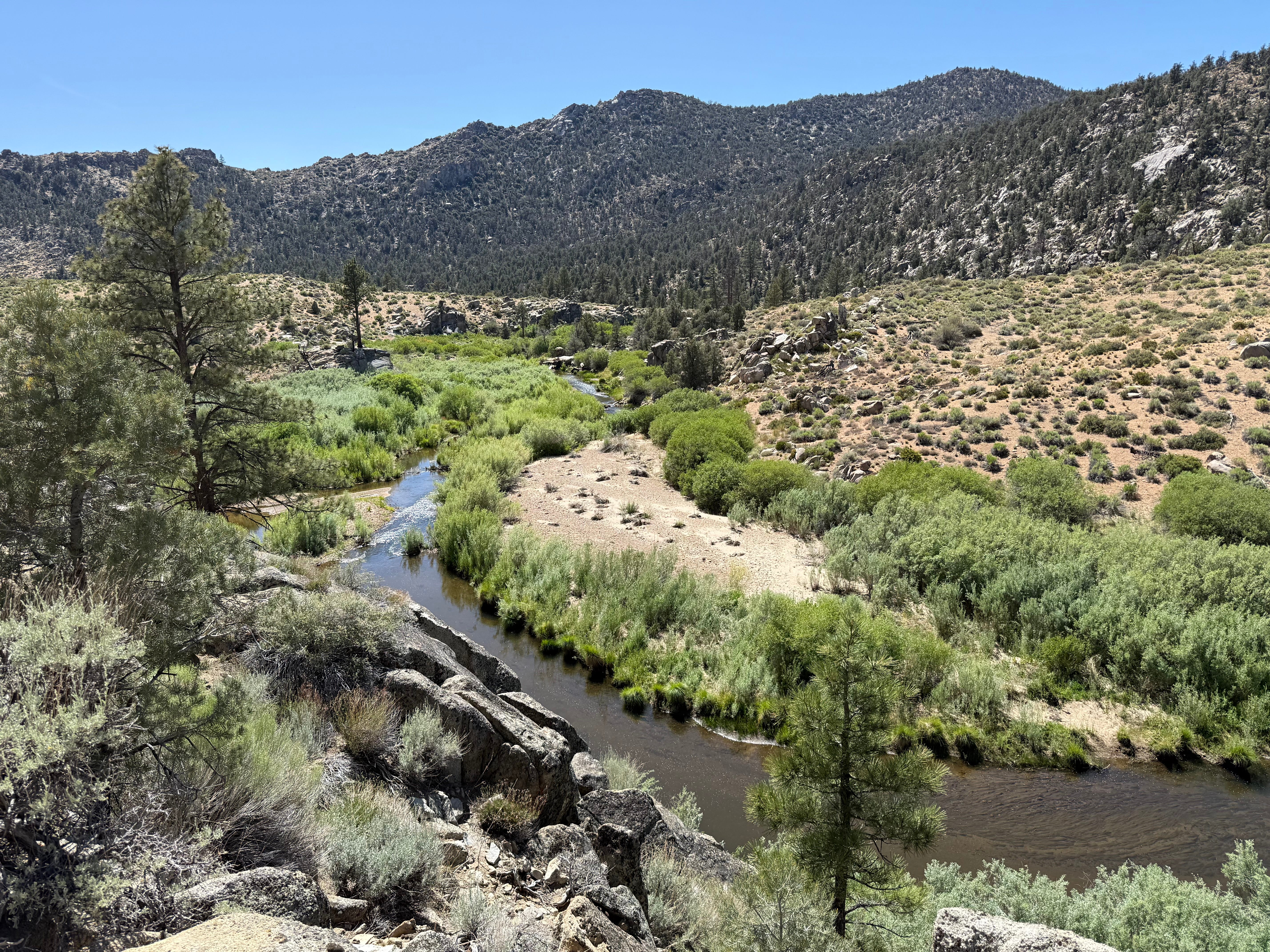
With each mile we could see (and feel) the landscape evolving before our eyes. The color of the rocks dulled, spiked shrubs turned to towering pines, snakes all but disappeared, and snowy peaks emerged above the horizon. This was all before a final descent into Walker Pass where we got a great hitch 45 minutes into Ridgecrest for another Walmart resupply.
Typically, not changing or showering for a week makes you a social pariah but in a Walmart along the PCT, it makes you a rockstar. People constantly came up to us, asking about the trail and offering to buy us food and drive us around, the latter of which was crucial to avoiding the 115 degree high at 2 pm.
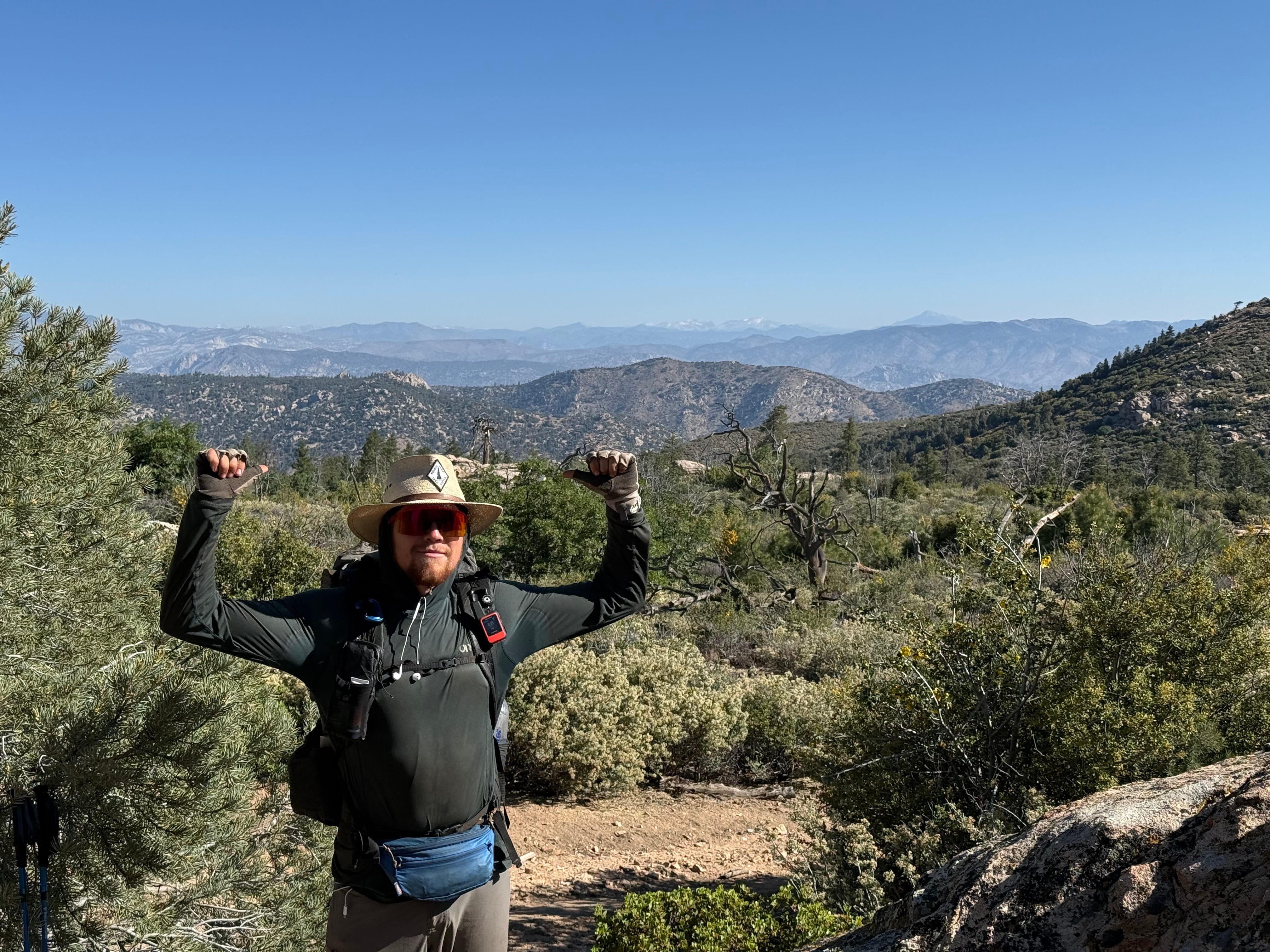
After returning to Walker Pass, Dad Space joined the trek! Some transportation delays had him arrive at 6pm so we started with a night hike up a brutal 3,000 foot climb over the first 10 miles. Ending at 2 am (5 am for him) and completely exhausted we both collapsed into bed. His snoring that night quickly earned him his trail name: Chainsaw.
We spent the next two days ambling through Inyo National Forest before the desert finally gave way to a high alpine environment and we entered Sierra National Forest.
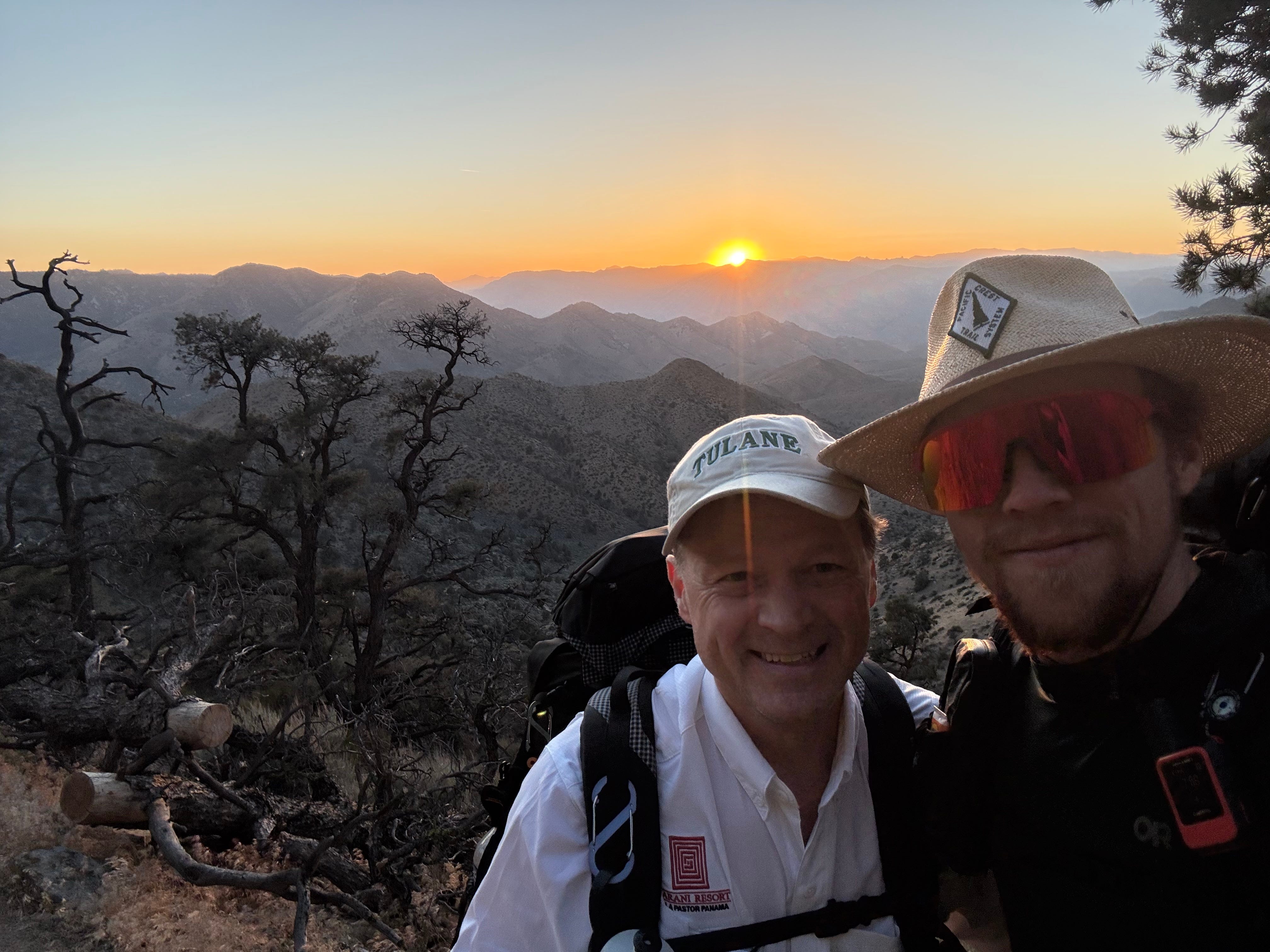
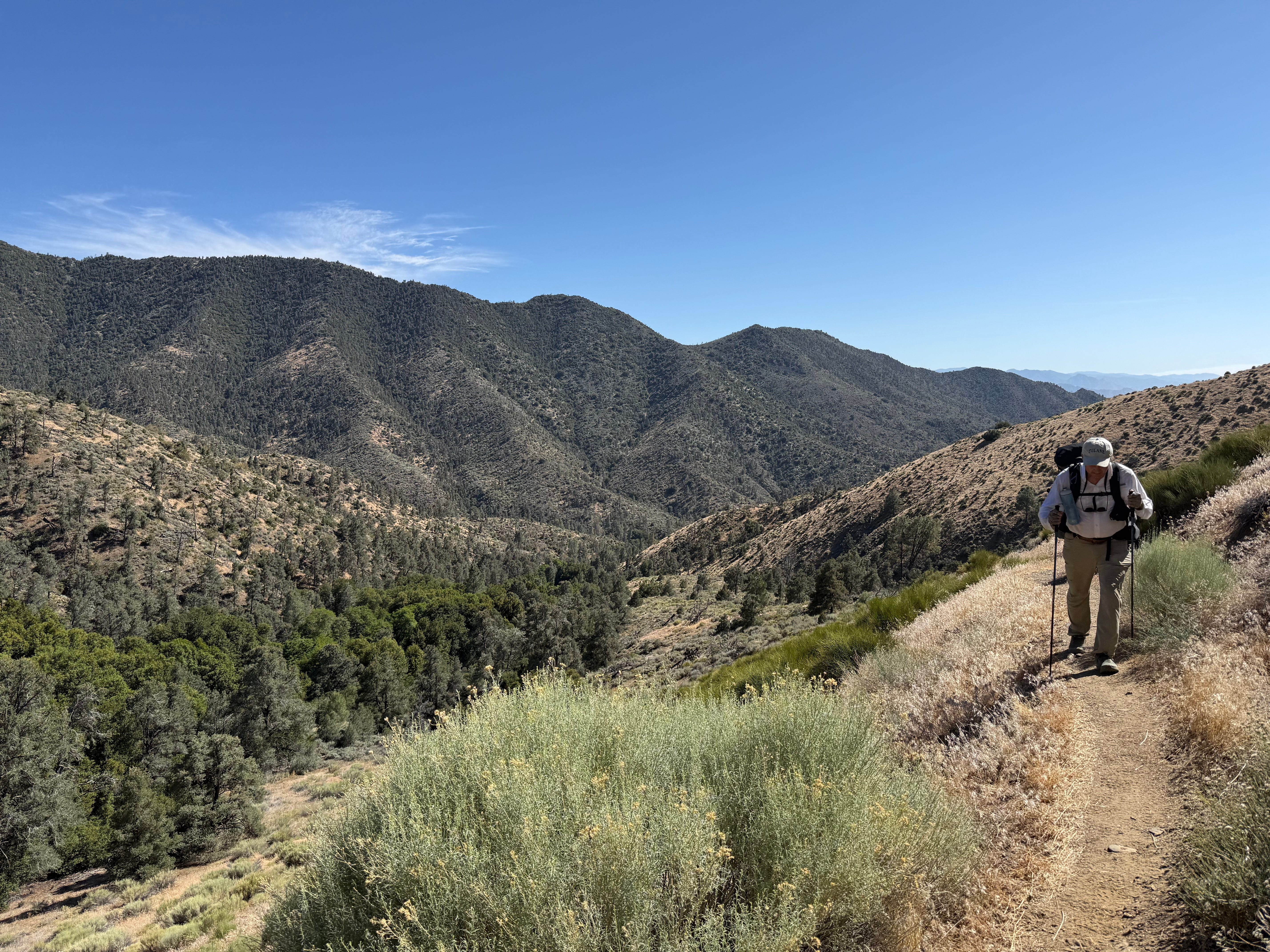
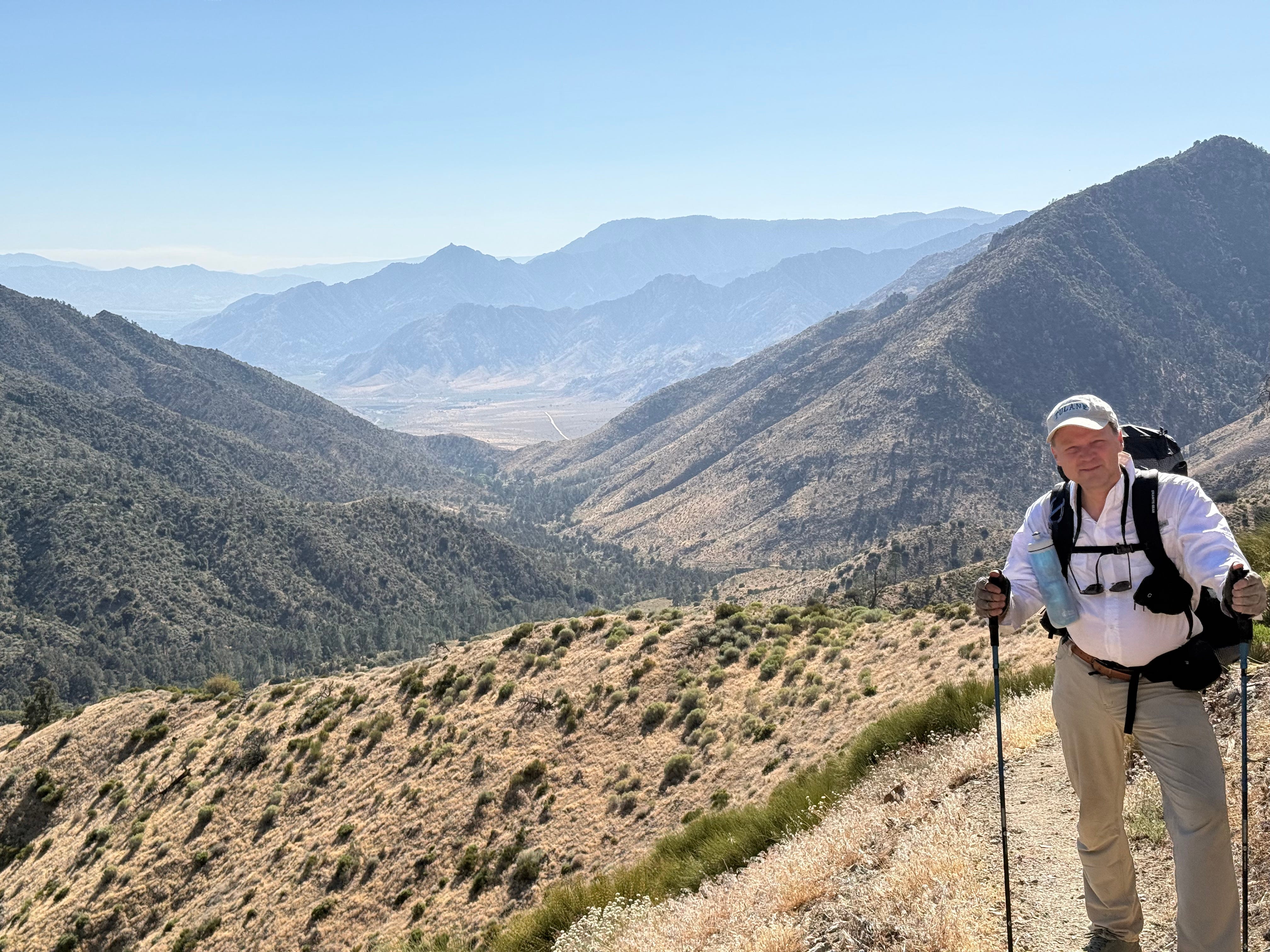
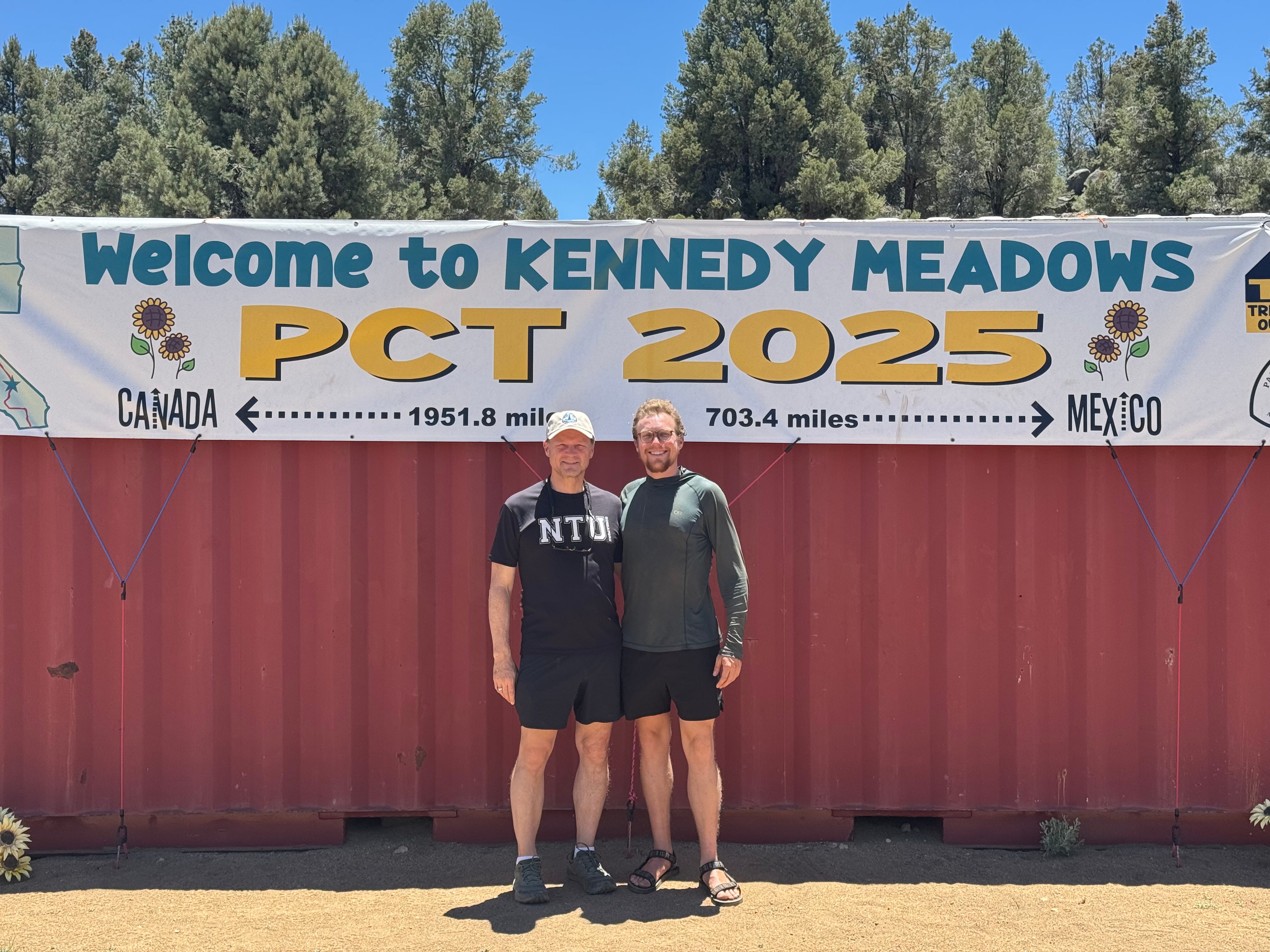
After 43 days in the desert we finally made it to Kennedy Meadows, the gateway to the Sierra. As I came up the final stretch of trail having hiked the previous 20 miles alone, Mo, my dad, and a number of other hikers and tourists stood up on the deck above to give me the customary standing ovation for reaching this point. It was an incredible feeling and milestone made all the more special by my father’s presence.
We got to spend Father’s Day together, hanging out with all of my new friends and giving him a taste of the thru-hiking community, one that’s often the total opposite from what we’re accustomed to. This morning we said goodbye as he returned to Miami and I set my sights on the Sierra Nevada, with my summit attempt of Mt. Whitney (the lower 48’s largest peak), just a few days away.
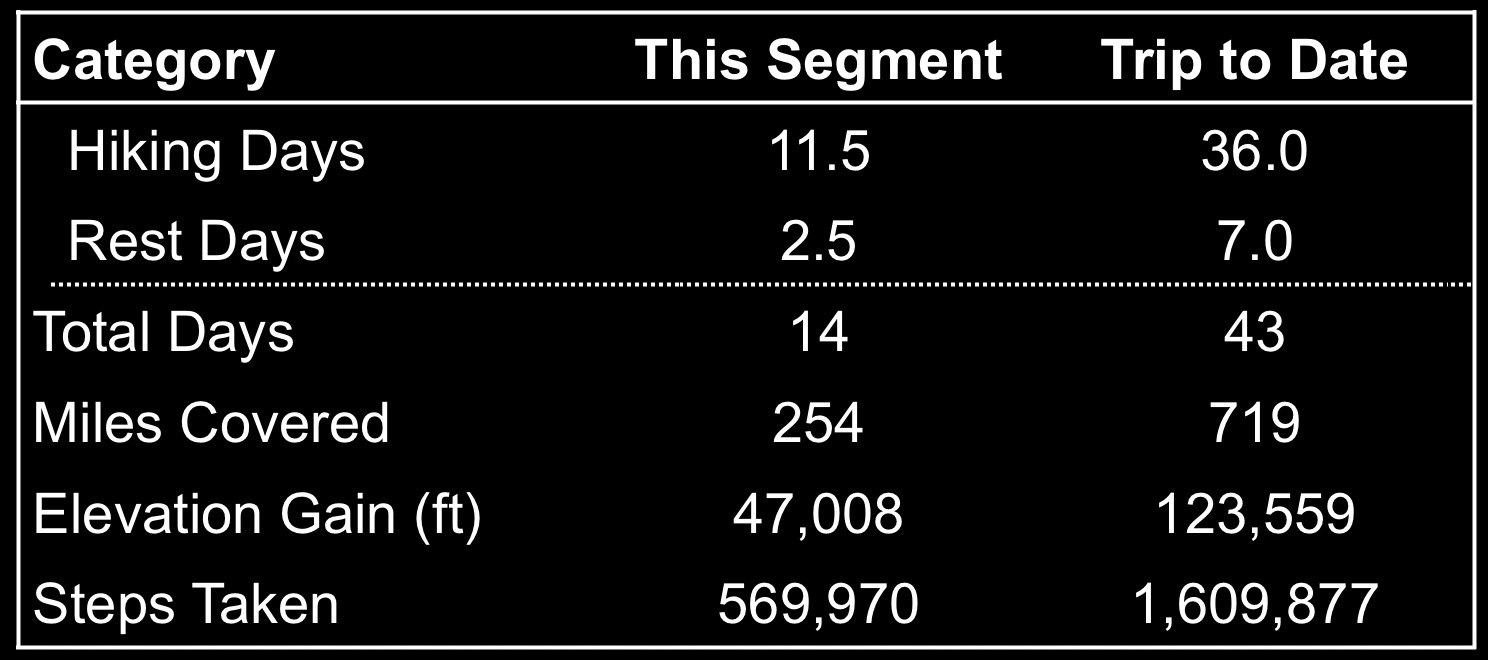
By the numbers
Hiker Profile
Anonymous hiker, 33, asked that their identity be protected as I told their story. Be forewarned, it is heavier than the previous few.
He had always been somewhat guarded with his background. Over the first month of intertwining he had mentioned that he had been working as an EMT and a crisis interventionist in Portland before coming on the trail. But the timeframes provided didn’t add up to the full history for a man of his age.
From the beginning I noticed a hardened ruggedness about him. Not the contrived type that many curate to fit in around here, but rather one shaped by the scars of real experience. To some he may look unapproachable, long stringy blonde hair flowing from the back of his cap is flanked by the sides of his head shaved to the scalp. A ring gauge protrudes from his nose and unidentifiable tattoos are scattered across his body. He posses a great smile but rarely deploys it, generally relying on a deep scowl that is more introspective than uninviting. Despite it, he remains amongst the friendliest and most positive people on the trail, always looking at the glass half full.
We hadn’t had the opportunity to spend any time alone up until the night we hiked through the Mojave. He caught up to me as I took a break pressed up against the concrete barrier of the LA aqueduct watching the sun dip behind the mountains.
We sat and looked over the skyline as Joshua trees turned from beautiful, dancing flora into menacing figures in the darkness. Our conversation started fairly casually, mostly me prodding into his past as I like to do with everyone I meet, asking about where he lives and where he’s been before. I knew something was off when he mentioned moving back and forth from his hometown to Seattle no less than four times over five years. I asked whether it was personal or professional and he laughed to himself as he said "yeah I guess you could say personal, I was a junkie for five years.”
Immediately worried I’d crossed a line he’d intended to steer clear of I shifted the conversation elsewhere. But remaining calm and transparent, he spent the next several hours detailing how he’d lost his twenties, and almost his entire life, to heroin.
Coming from a traditional middle class family (mom is a librarian, dad a carpenter), he went off to the large state school in his hometown without really knowing what he wanted to do with his life. He studied philosophy and got through school without particularly much to note. He moved to Seattle shortly after school “mostly because I wanted to break up with my girlfriend, but didn’t know how.” He moved into a co-op, something that he had always an interest in: not having a lot of money, pooling resources, bartering, and helping each other as opposed just “throwing money away on rent.” He got a job working in the art section of the bookstore at the University of Washington and started to forge a life for himself.
Shortly thereafter and startlingly simply, a member of the co-op (who he now acknowledges as a bad friend), introduced him to heroin. What struck me was the ease in which he fell into the addiction. It wasn’t sprung on by trauma or depression. In fact it was quite the opposite as he’d been in a state of euphoria in his new home. This friend was a chemist and held a respected research position. But he was a “chipper,” meaning he was able to go on and off the drug at will. Our protagonist wasn’t as lucky.
Now, at this point, I had a lot of questions. Although also recognized I was in sensitive territory, asking somebody about what was clearly a difficult time in their life, consistently providing an out to my line of questioning. What I mistook for hesitance in sharing his story was actually a combination of surprise in my interest and a fogginess of his memory during that time. But I made it clear that I wanted to hear his story (as much as he was willing to share), so when he would often say in a practiced “to make a long story short” I would respond, “If I’m being quite honest, I’d rather you didn’t.”
The process was simple, he was in a somewhat manic state, living in a new place, smoking a lot of weed, picking up a second job (one on a night shift), and was vulnerable in a way he hadn’t been before. On one of those euphoric nights this “friend” convinced him to try some of his heroin. At first, it was smaller doses, just a couple hundred milligrams but that grew quickly. Another detail in the story that surprised me was that he was still maintaining a very intense work life. In the nascency of his addiction he was working three jobs, 50-60 hours a week at the bookstore, as a bar-back, and then other odd jobs on the side. But roughly 3 times per day he was spreading out a full gram of heroin that ran him $70, close to a full days wages after taxes.
Relatively broke and with little direction things did start to fall apart on the margins. He started stealing from work, taking cash out of the register here and there to feed the addiction. He was slowly let go from each position and continued to drift from place to place professionally working at various bars, a bakery, even as a nude model.
Over time he realized he couldn’t do it anymore and he moved back in with his parents. They knew something was up but addiction was so far outside the scope of their world they assumed it was something far more benign. This first attempt at sobriety lasted about two weeks before he booked a midnight bus to Seattle to get a fix. Life continued to devolve and it eventually led him into a polyamorous relationship with a friend’s girlfriend. The three of them moved into a trailer together parked in her father’s front yard and he proceeded to do very little and he admits he remembers almost nothing from this time. He recalled her suicidal ideation and her falling out with his friend while he remained relatively comatose and directionless.
At a certain point he “woke up,” realized he was going nowhere and left that trailer nine months later, with the clothes on his back and $40 that her father had given him.
He found his way to Portland, where he was able to crash on his brothers couch for just a few weeks until he was employed. Things were looking up. His mistake was moving into another co-op. Still romanticizing them in theory, he now admits that an environment where “everyone was broke, most had mental health issues, and many were addicted to some aggressive drug” predisposed him to poor decision. So he started using again in Portland.
After a while, he tried detox centers. He detailed the process, going in the morning and taking a number, hoping to be called with the alternative being trying again the next day. If you were selected you were escorted into a separate room, stripped down, and searched for drugs or weapons. You took a shower and were given standard issue clothing and led to an uncomfortable cot with a single thin blanket. It was freezing he remembered, a shiver going down his spine. There was no entertainment, the days marked by the three trips to the nurses station for whatever sedatives you were allowed for the drugs you were recovering from. These never worked for him despite multiple attempts.
And one day amidst the haze of a life being lost, he just couldn’t do it anymore. And just like that, he's stopped using and hasn’t used since. There was no treatment program or rehab that did the trick, it was just his desire to get his life back. It wasn’t easy, he didn’t sleep for 7 days, hallucinating all the while. But he repeated the mantra: “I know the drug is strong, but I can be stronger.”
In the last five years he hasn’t touched heroin but still drinks casually and will smoke the occasional cigarette, deeply understanding of his limits. He’s dedicated his life to providing support and advocacy for addicts. He is a certified EMT, a crisis interventionist, and lobbyist for more progressive drug policies in his home state. He spends his free time on trail reading and reciting Taoist and Buddhist texts, committing them to memory as he hikes and we debate their virtues over meals.
After finishing his story he thanked me and we embraced, saying it felt good to remember, that nobody really wants to know about that time in his life. But it was a honor to have someone be so raw and I reciprocated with some of my own struggles as we continued to hike through the night.
For me, it served as a reminder that addicts are meant to be healed, not scolded or considered less than. Even in the last week I have begun to catch myself when referring to “drug addicts” remembering to reframe the stigma that accompanies the illness. Its something that can happen to anyone, it only takes one slip up (something we’re all capable of) and we need to lead with empathy and support for those impacted.
(No) Shower Thoughts
A Reflection on the Desert
Admittedly, I wasn’t thrilled at the prospect of spending over a month in the desert this summer. To some, it’s the worst part of the PCT and I assumed it would be my least favorite biome, having never gravitated toward the hot, dry, and sparse expanses. However, after trudging through 700 miles, I have to say I loved (almost) all of it, coming to see the value in each of its facets.
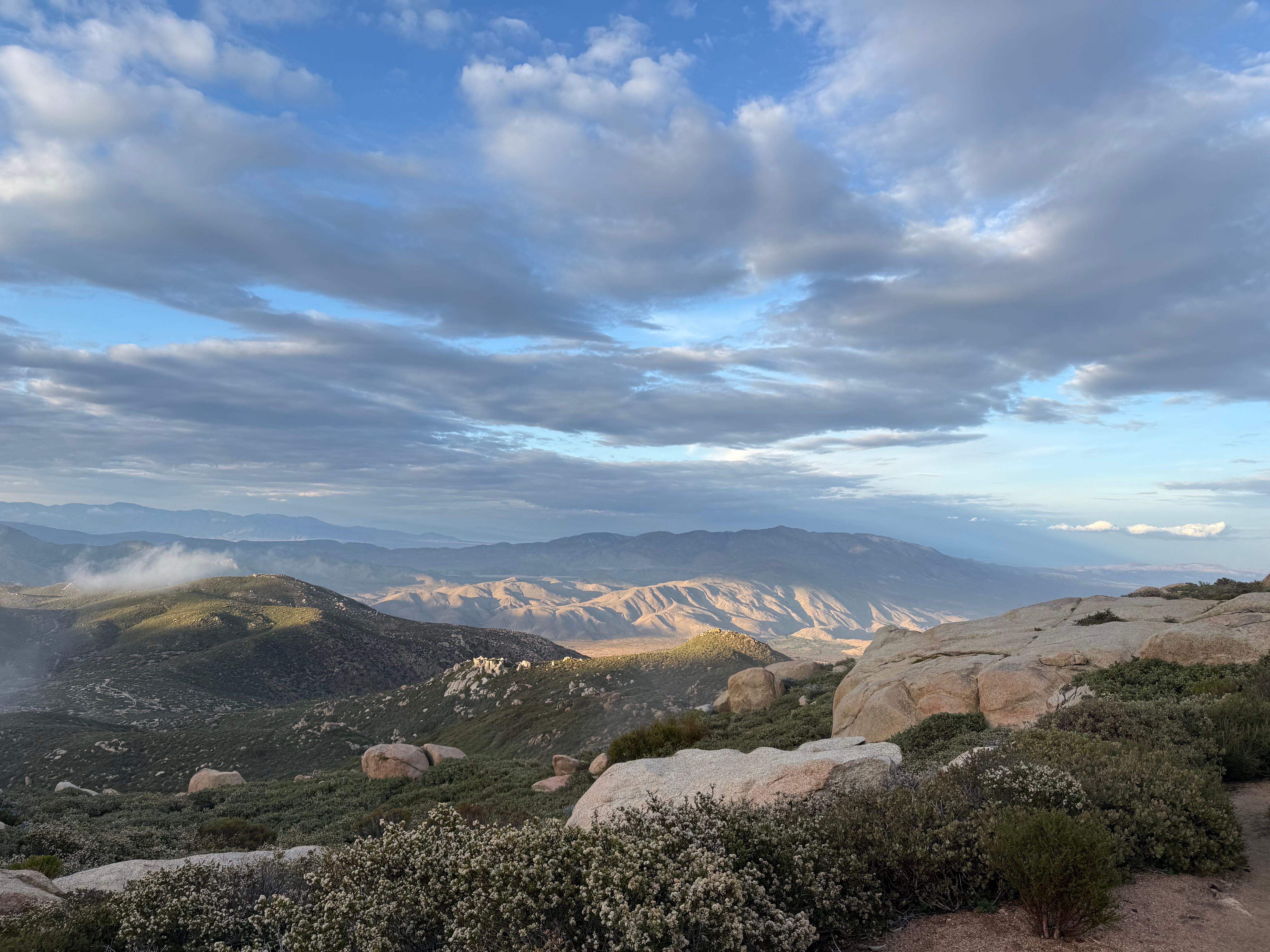
First and foremost, its physical attributes are striking. Southern California’s desert is very different than the rolling dunes that we think of in Africa and the Middle East. We went through six mountain ranges, hitting peaks of nearly 11,000 feet and then descending into valleys close to sea level within 20 trail miles. The large jagged outcroppings, weathered by the elements, produced among the most beautiful vistas I’ve ever seen. Standing atop one of these ridges you can see seaside Mediterranean landscapes on one side and some of the hottest terrain on earth over the other edge. Layered rocks tell the story of millions of years of evolution and almost any elevation provides 25 to 50 miles of visibility.
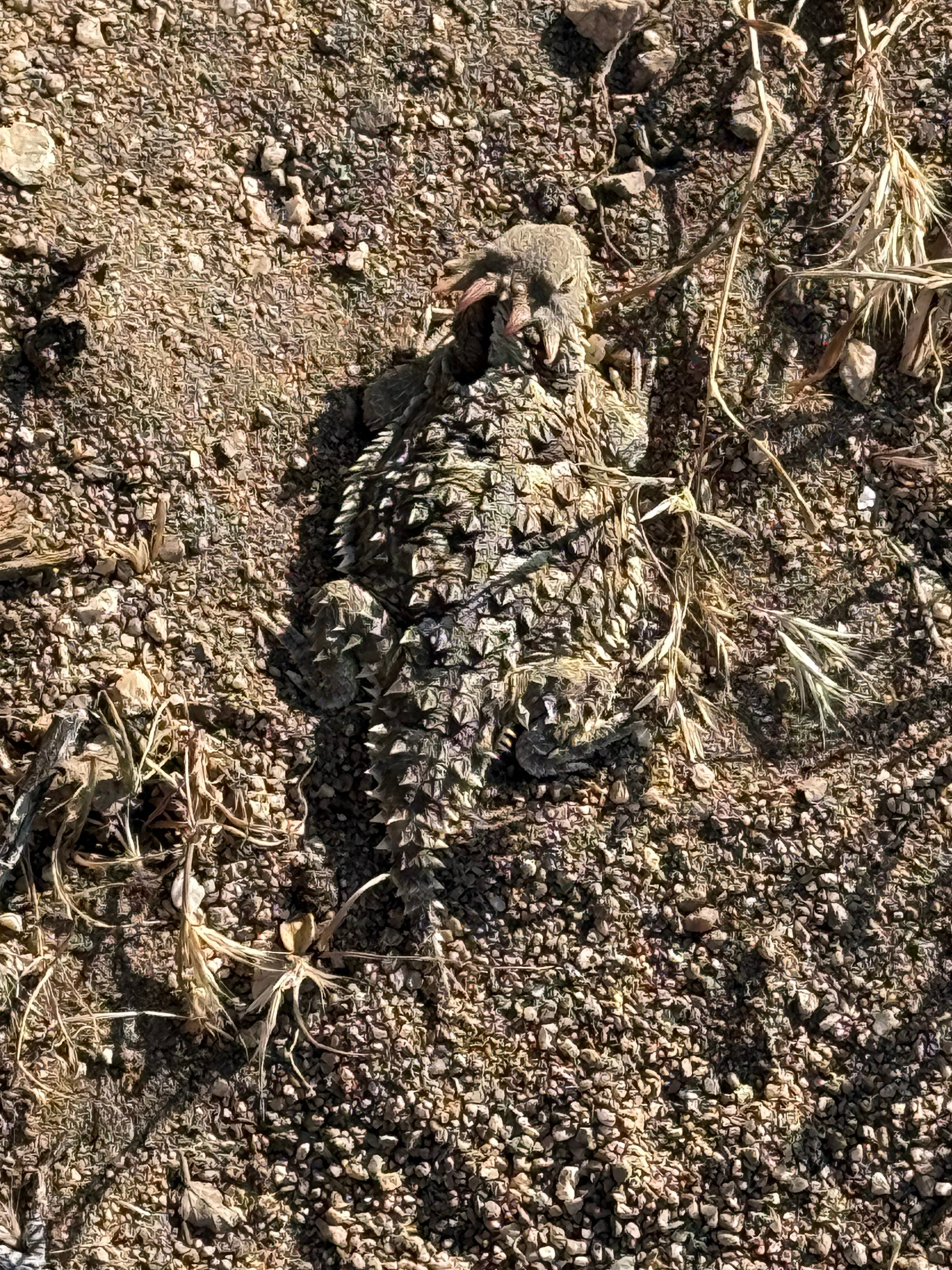
As you zoom in closer, the struggle to survive in the elements is noticiable in the inhabitant’s evolution both physically and temperamentally. With large animals sparsely populated, small ones shine: chipmunks, squirrels, mice, lizards, rabbits, insects, snakes, and birds are the primary species on display. The flora itself is striking, often showing the scars of living amongst the intensity. The unrelenting winds may have been the most unexpected challenge with gusts consistently toping 50 MPH, some getting so strong they would have been hurricane force had they been sustained.
This section straddles dense population centers and frequently passes through hiker-friendly towns. So many locals dedicate their lives to supporting the thru-hiking community in the form of meals, transportation, and housing free of charge. It’s not uncommon to see a total stranger pick up the tab for a group at the local diner, for a mom to proactively offer a ride from the grocery store, or for a retired couple to open their home to literally dozens of people who end up sprawled across their guest bedrooms, living spaces, and backyard. The abundance of kindness has just reinforced that despite what we are made to believe, most people in this world are generous and good. I will forever owe a debt of gratitude to those who shared their time, stories, and resources along the way.
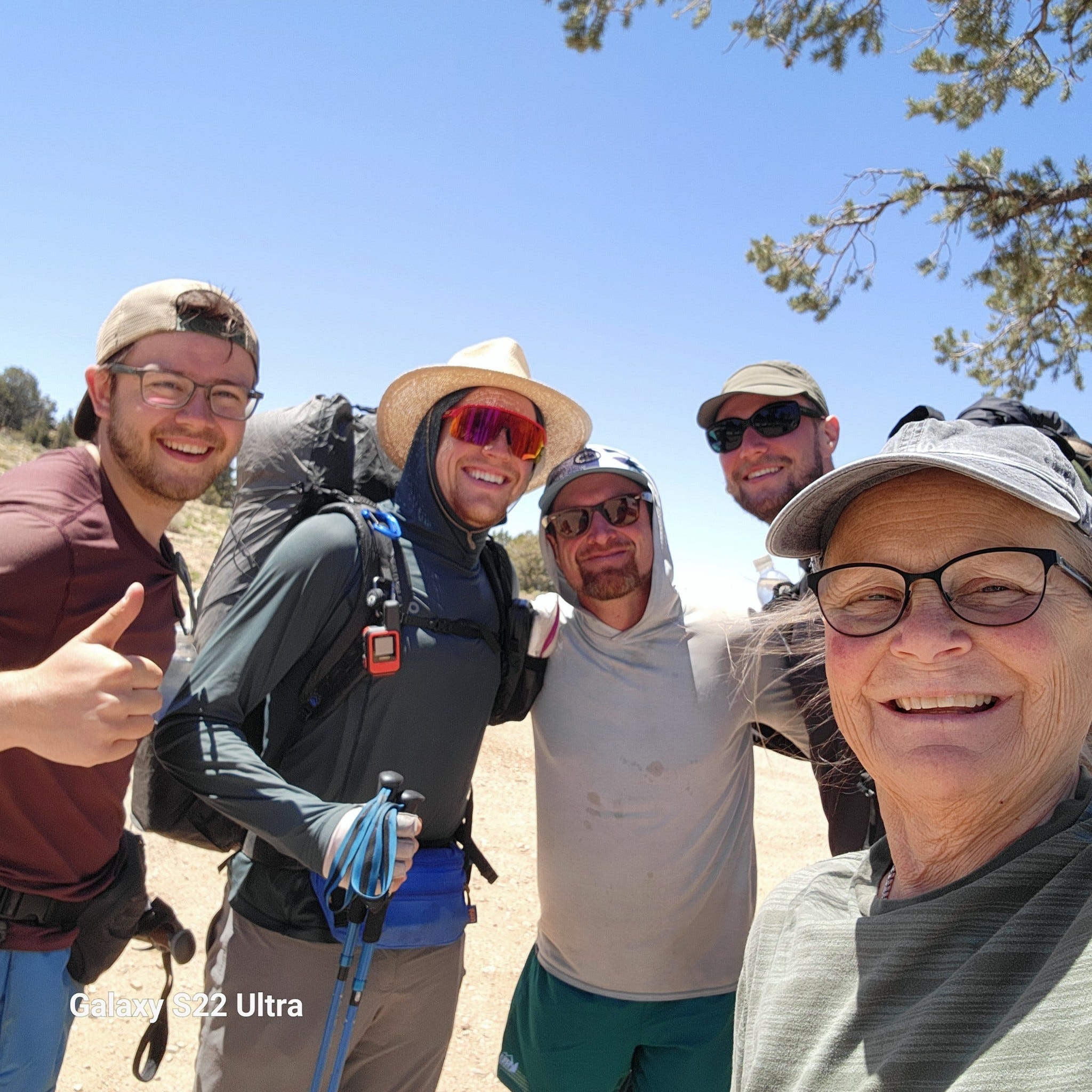
Outside of the tangible, the desert proved to be a great place for introspection. The environment contextualizes your role on this earth, reinforcing your insignificance against the backdrop of its grandeur and the veracity of its elements. Walking alone here, your demons are inescapable, almost omnipresent, as you feel the suffering brought on by your masochistic decision to hike through its most challenging season. You have no choice but to confront those demons. No choice, but to relive the pain and to reframe your mindset as you confront them. When your options are to process or be consumed by your troubles, the only way out is through.
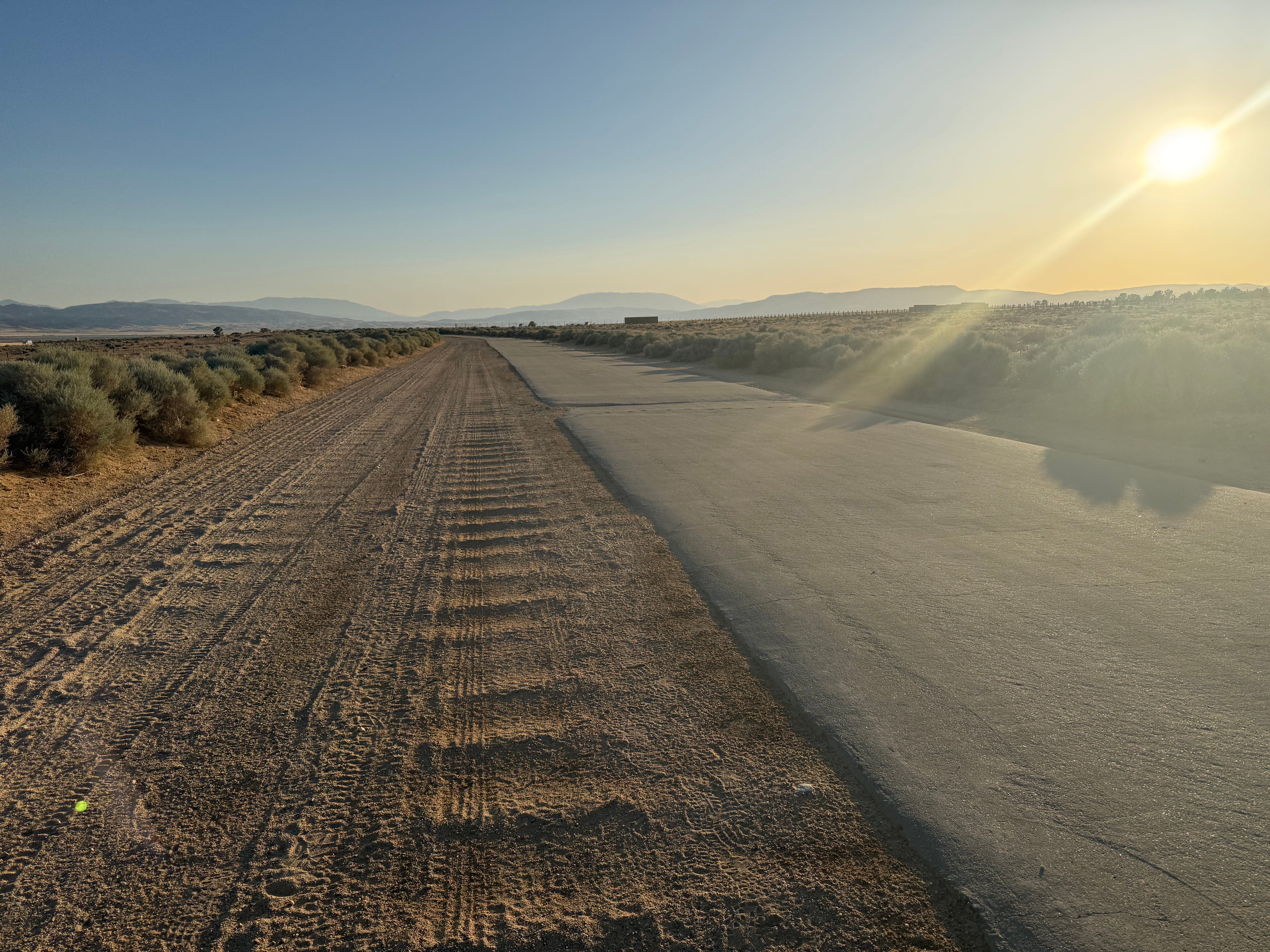
I think it may be why so many broken people, so many who have been cast out from society, so many that find themselves out the outside of the confines of what we consider "normal" find their way to the rural desert. Rejects in one sense, but almost embolden by their own difficulties, they face their challenges head on while supported by others doing the same. They’re able to live amongst the pain with those that understand it and in an environment that promotes self-actualization and welcomes all that can survive here.
I found the people deep in the backcountry generally fell into two groups. First are those running away from something. Many had done so in earnest, attempting to better themselves but often their demons proved inescapable. Yet just as often, if not more, I met people running towards something; looking for a better life for themselves and their families. They sought what small towns, fertile farmland, or urban sprawl could not provide. In truth, I’m not sure which group I fell into, often feeling like I had a foot in each.
A final and pleasantly surprising thing about the experience has been gaining the respect of real men and women in a way I’ve never felt before. Plenty of people understand the allure of hiking through the High Sierra, far fewer the Mojave. Truckers and train conductors honk their horns at me and wave in admiration, construction workers stop me in the street to ask about the journey, ranchers tip their hats and farm workers pay their respects as I walk by. Motorists are always the least understanding, often doing their best to avoid eye contact and shuffle by quickly, apropos given that’s actually the world I came from. But the real people who keep this country moving, those that work the land on horseback, on foot, and behind commercial vehicles truly appreciate what we’re doing. Themselves often longing for the freedom and the wild we experience. It’s an honor to feel a sense of kinship with them.
In all, they tell you that life is scarce in the desert, reserved for only the most depraved. I found it to be to the contrary, at times bountiful, if you really look for it. It’s an eccentric crowd that congregates here, drawn to it by the excess of land, respect for privacy, and its isolation.
One of the hardest things about leaving is knowing that there will be no more desert ahead. There will be high mountain peaks, densely forested canopy, deep lakes, and rushing rivers throughout. But the desert we will have to leave behind and I leave it with a new found respect. For the land, for the people that call it home, and for the challenges it faces. I sincerely hope that we’re able to find a way to respect this vast ecosystem, to live in symbiosis, and to continue to preserve what remains. I may never choose to live here but there will be a part of me that longs for it, knowing a way of life completely the opposite of what I know is always waiting.
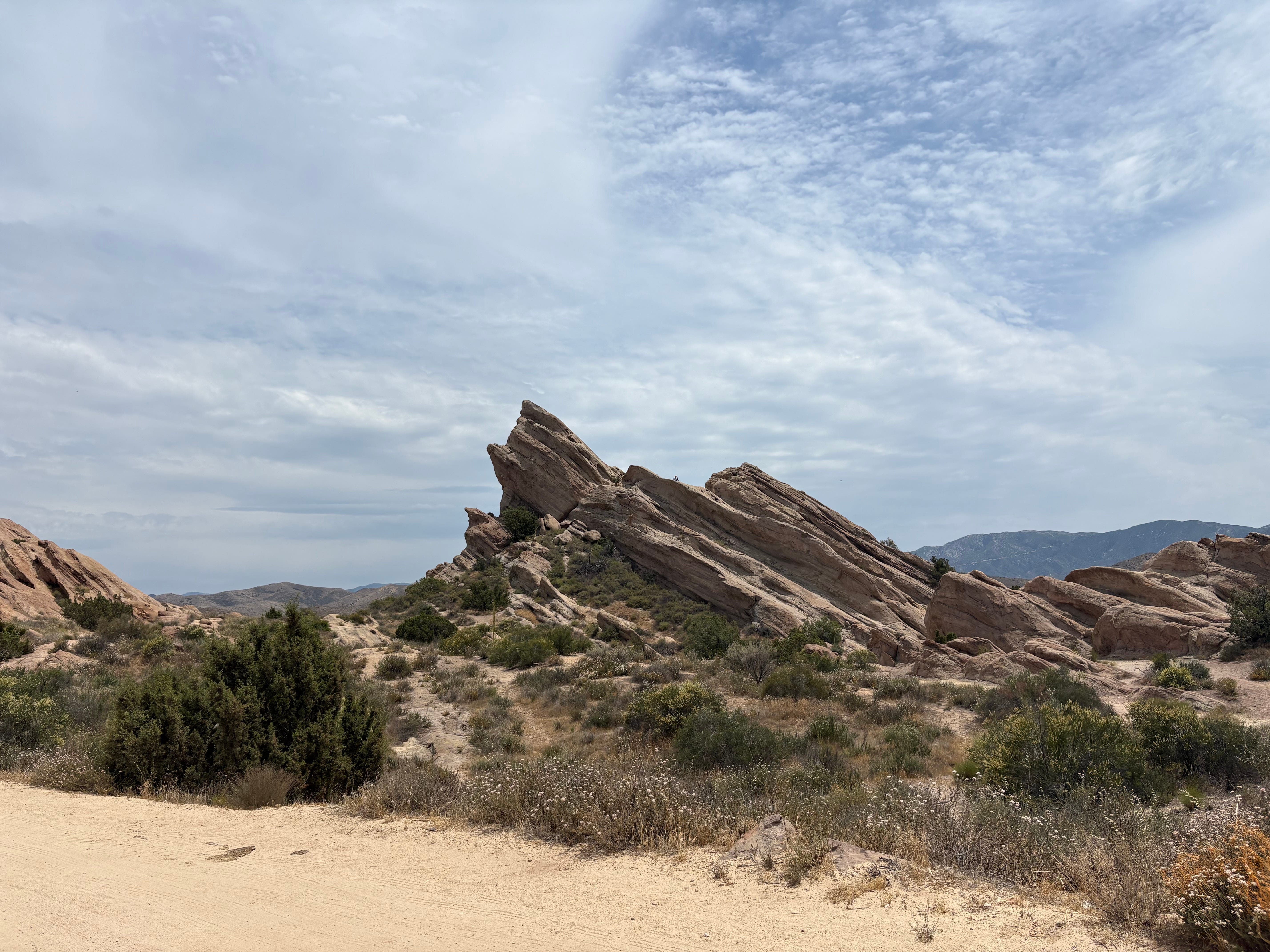
Much love always,
Connor
Useful Links
Where's the hiker profile on Keith?? Love the pictures and the stories, good luck on the next section.
I am sitting on a remote and wild beach on Oahu. With the vast ocean before me and the sounds of the waves crashing reading your desert tales reminds me of the awe inspiring diversity of this planet and the many ways beauty is manifested in humans and in our own humanity. Yes, I am rereading Bowl of Light….we have much to discuss. Rock on my sweet friend….