
Lost in Space - Chapter 7
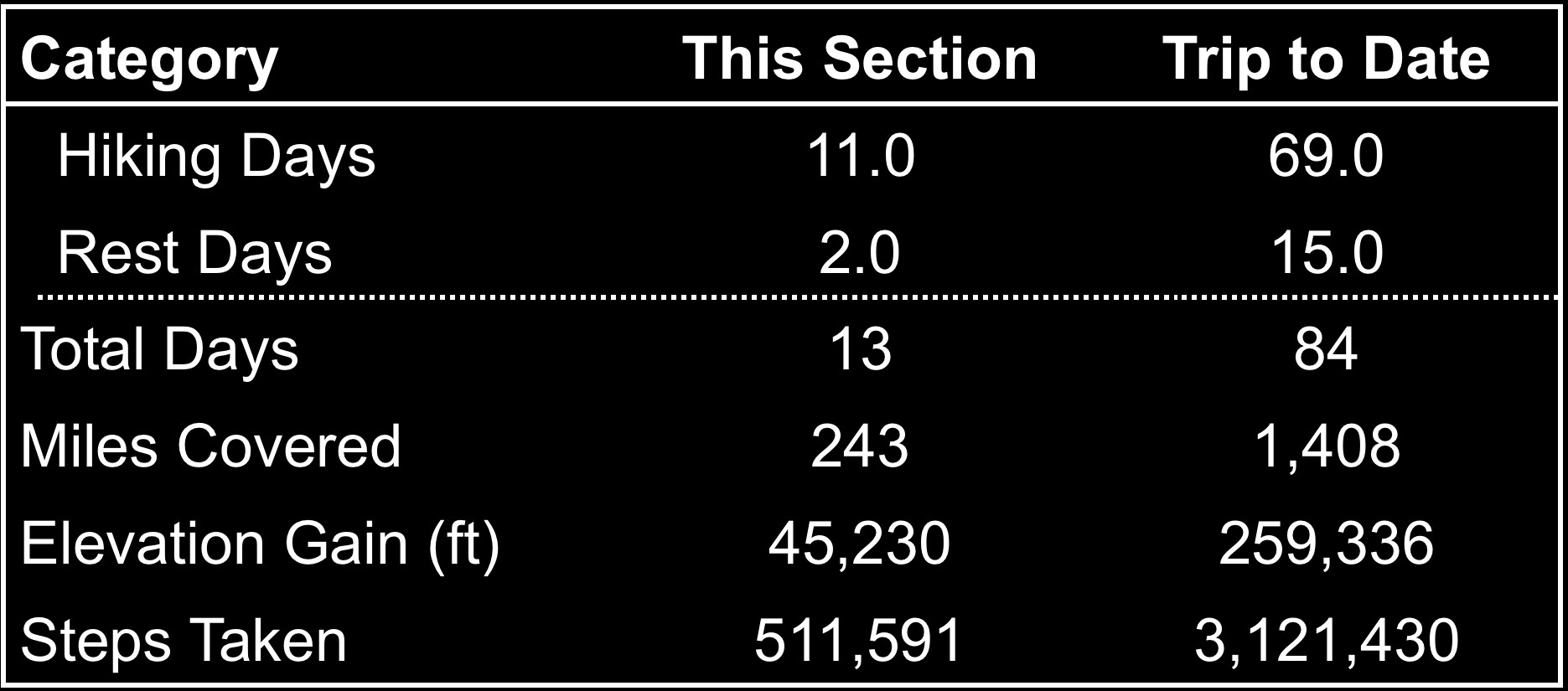
South Lake Tahoe (mi 1,093) to Chester (mi 1,333)

CA Sections K, L, & M
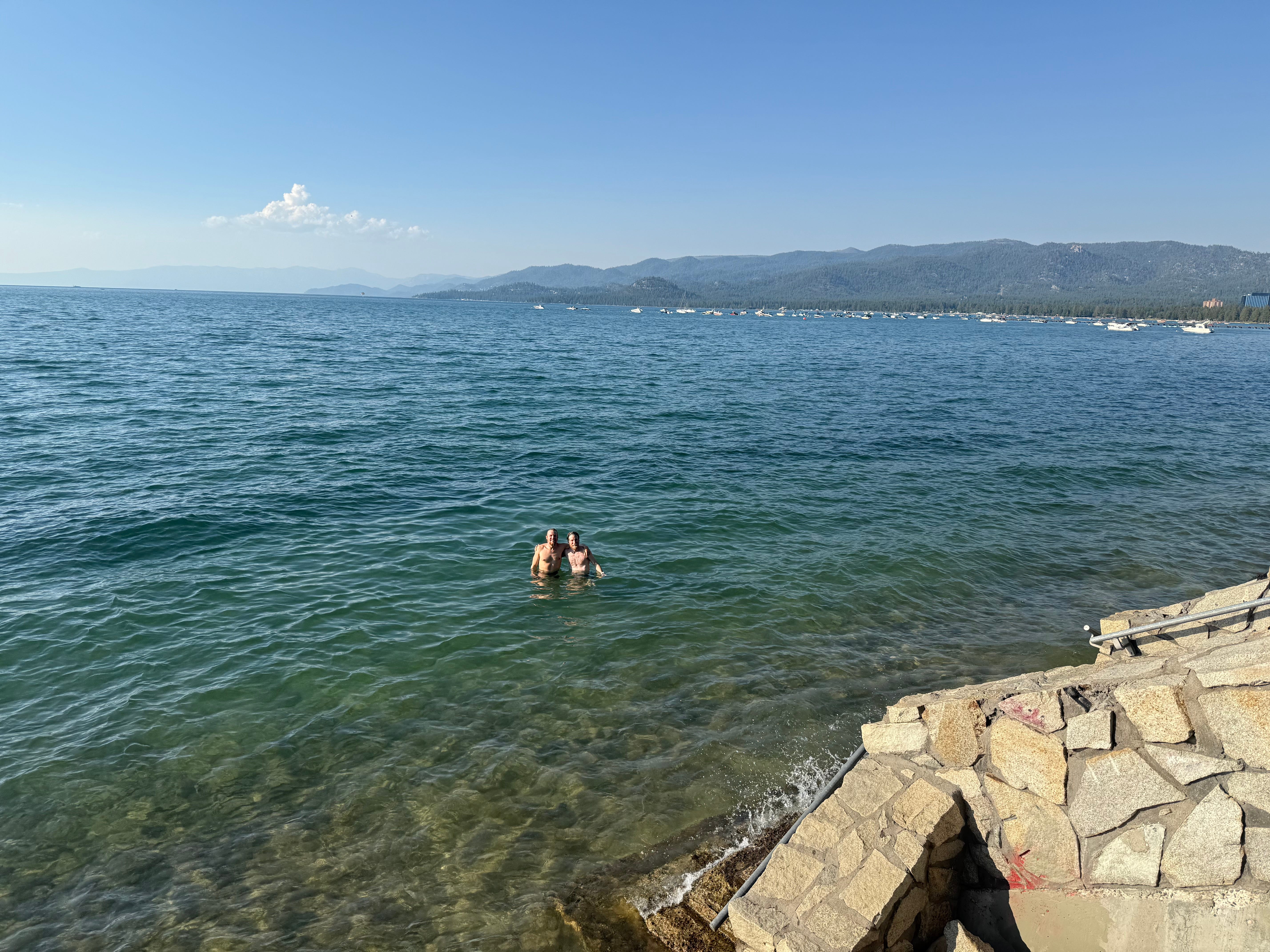
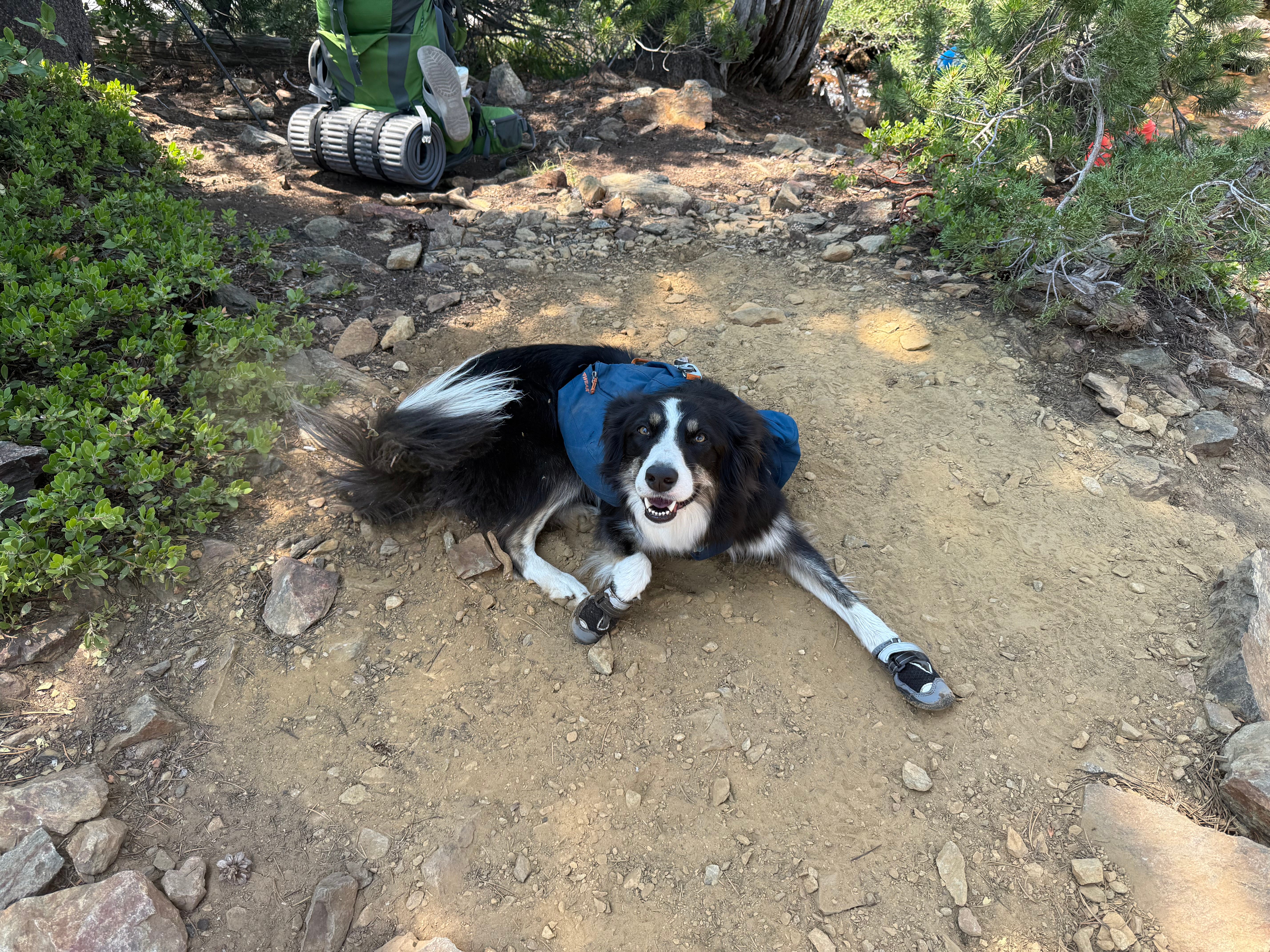
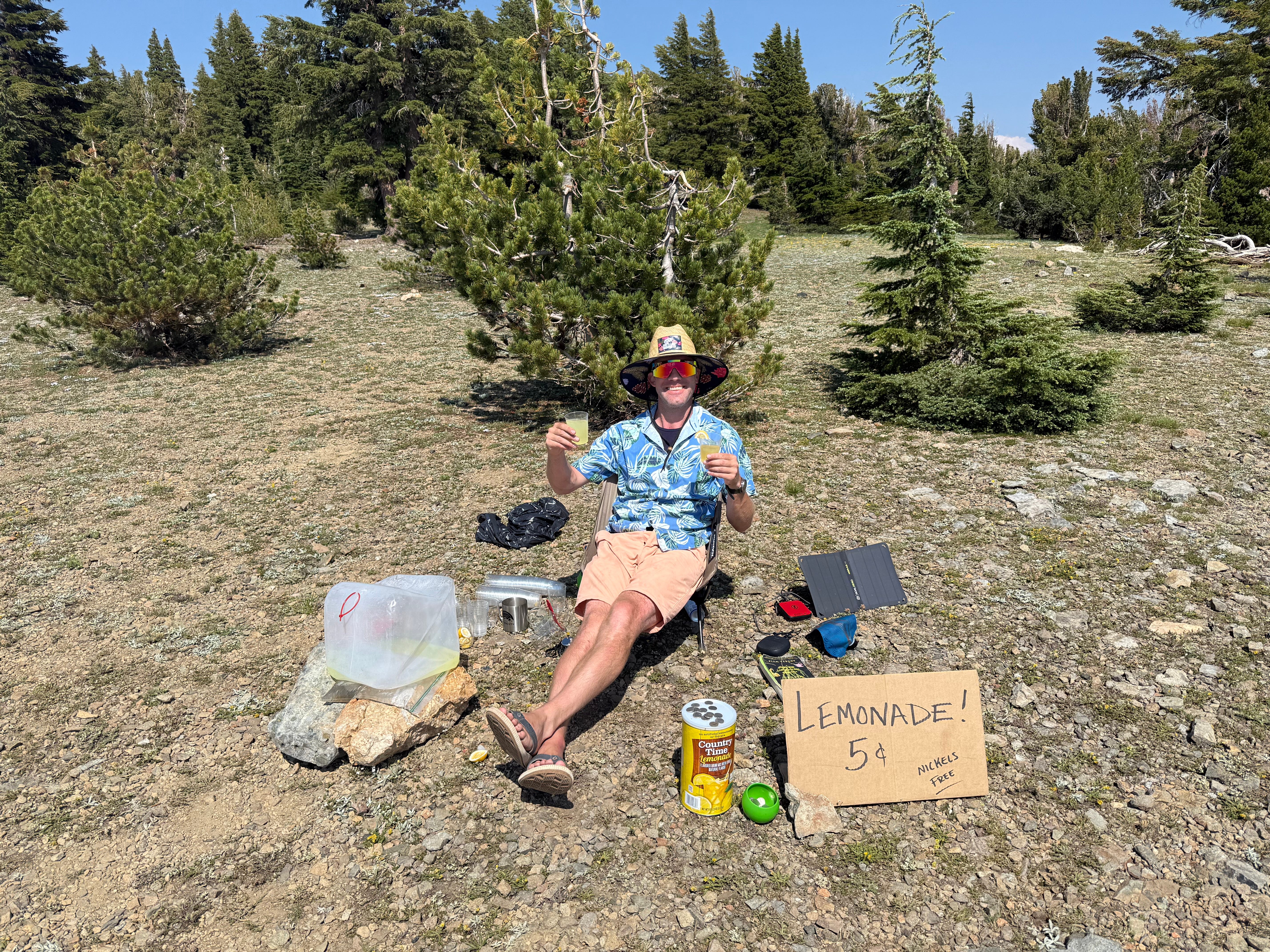
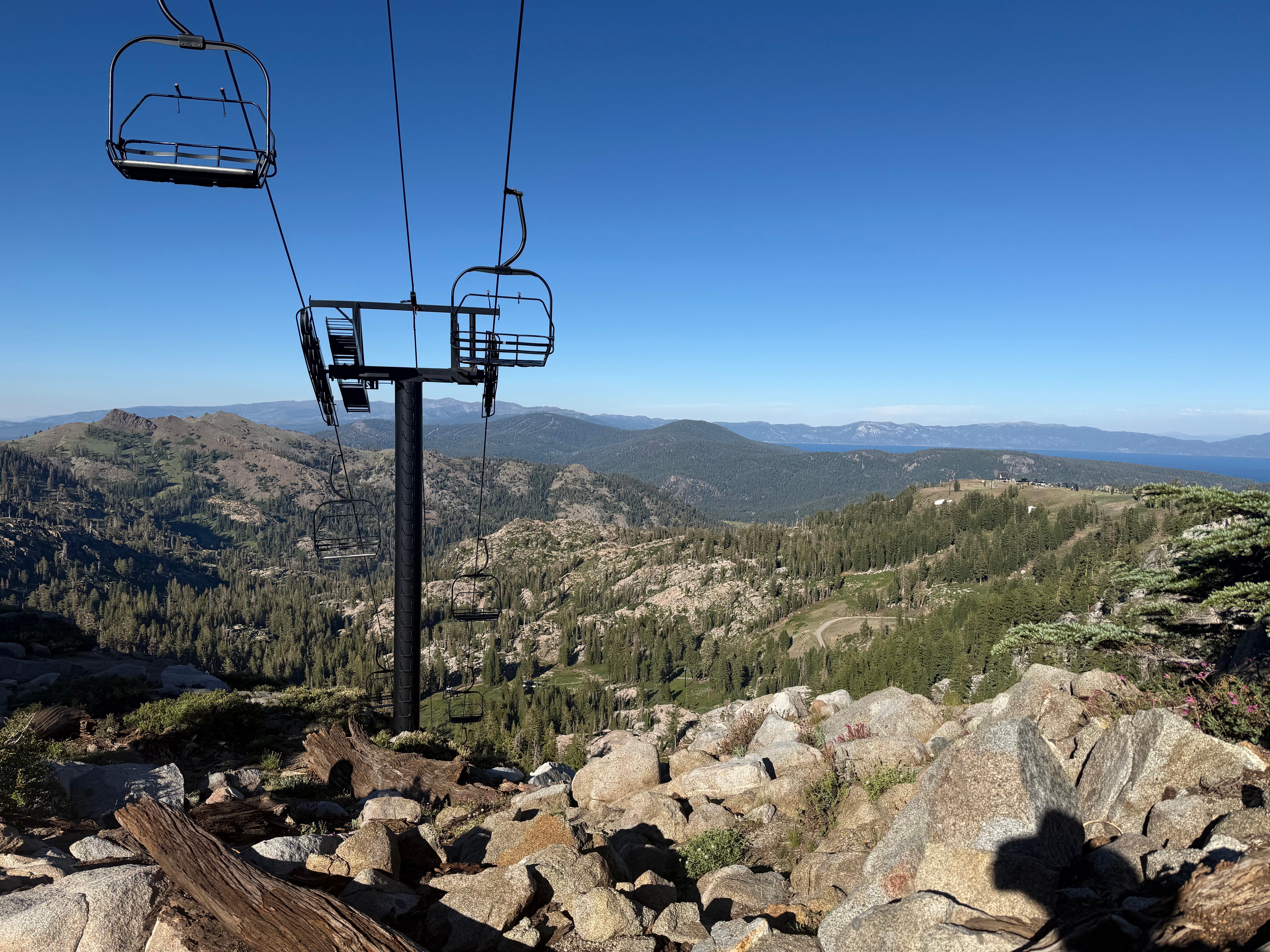
South Lake Tahoe kept me around longer than anticipated. After 3 days of swimming in the lake, catching up with friends, and taking in a few shows from local bluegrass and folk bands, it was time to head back to trail. I traveled alone for the first few days, choosing to forgo the required bear canister and instead hike through the restricted zone in one go. It was gorgeous country in the Desolation and Granite Chief wilderness areas, often with a view of Tahoe off in the distance. Swimming in Lake Aloha remains a highlight with perfectly cool water framed by high alpine mountains. This area was also filled with traffic between the PCT, the popular 170 mile Tahoe Rim Trail (TRT), and shorter backpacking routes all overlapping. This meant lots of dogs and even a free lemonade stand at 9,500 feet atop the area’s most difficult climb. Toward the end I passed by lifts and runs at Palisades that I’ve actually skied before which made the passage extra special.
Next it was on to Truckee, the one place on the PCT I know well and was very much looking forward to. I first got to spend the afternoon with my friend and confidant from our McGrath Properties days, Scott, who drove all the way from Oakland to say hello. We caught up on the last 5 years of our lives, retold old stories, and he was a great sounding board as I debriefed on my evolving life goals. A true adventure athlete himself, Scott was one of the first people who really got me outside hiking and rock climbing at 18 years old. He was certainly an inspiration for this trip and is a living reminder that you never have to give up on being a badass.
That night, Dylan, Mo, and I were hosted by Jeff & Rachel Weitzman, parents of my good friend and former roommate Eli, at their home in Truckee. It was like 24 hours of cheating on the PCT. We had steaks and salad (fresh vegetables!) for dinner, sat on a couch, puzzled, watched television, and for the first time in nearly 3 months I slept under the covers in a real bed (not waking up until 10 am). When the dream was finally over, Jeff drove us back up to Donner Summit and we set out on a sunset hike.
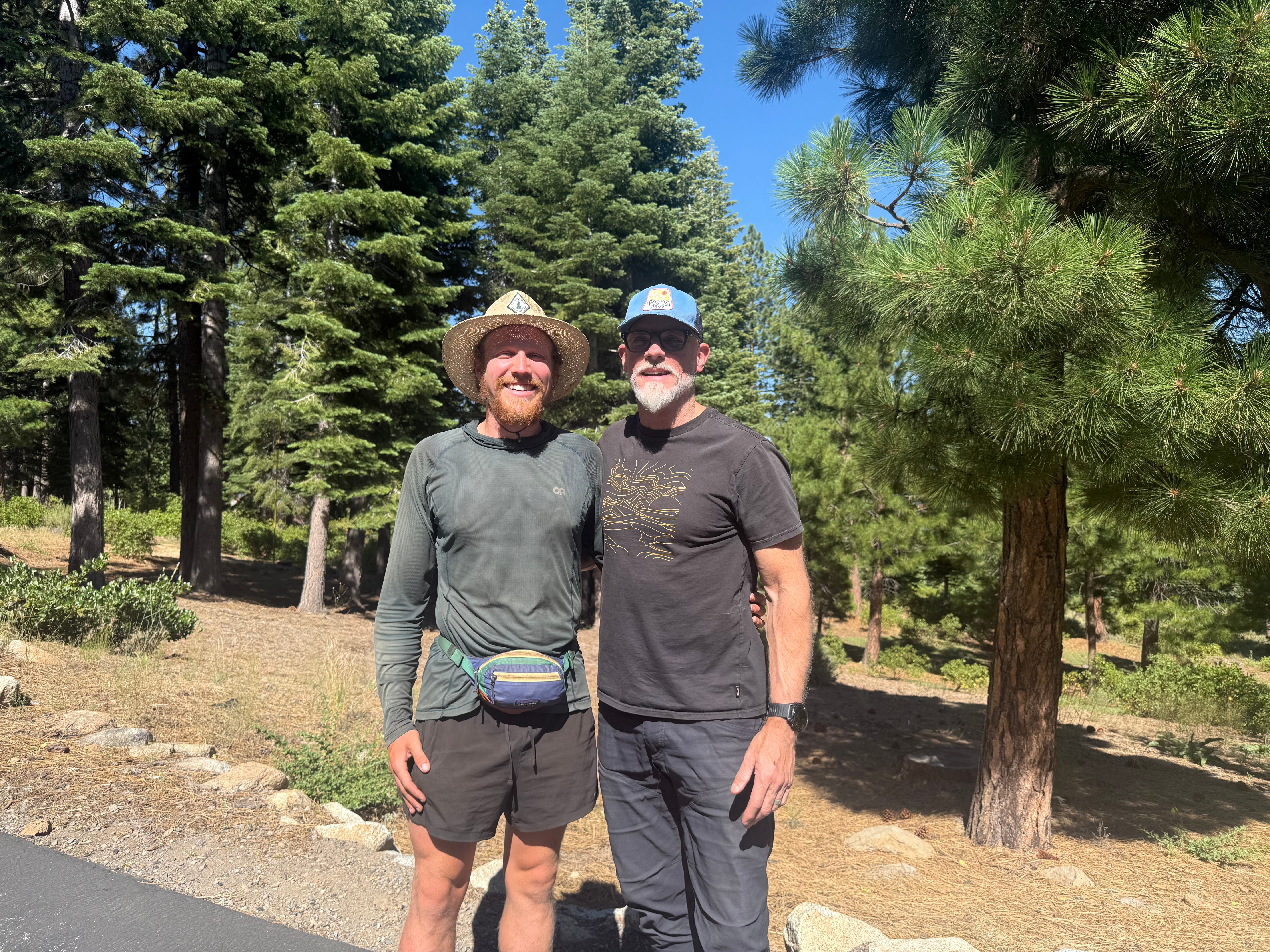
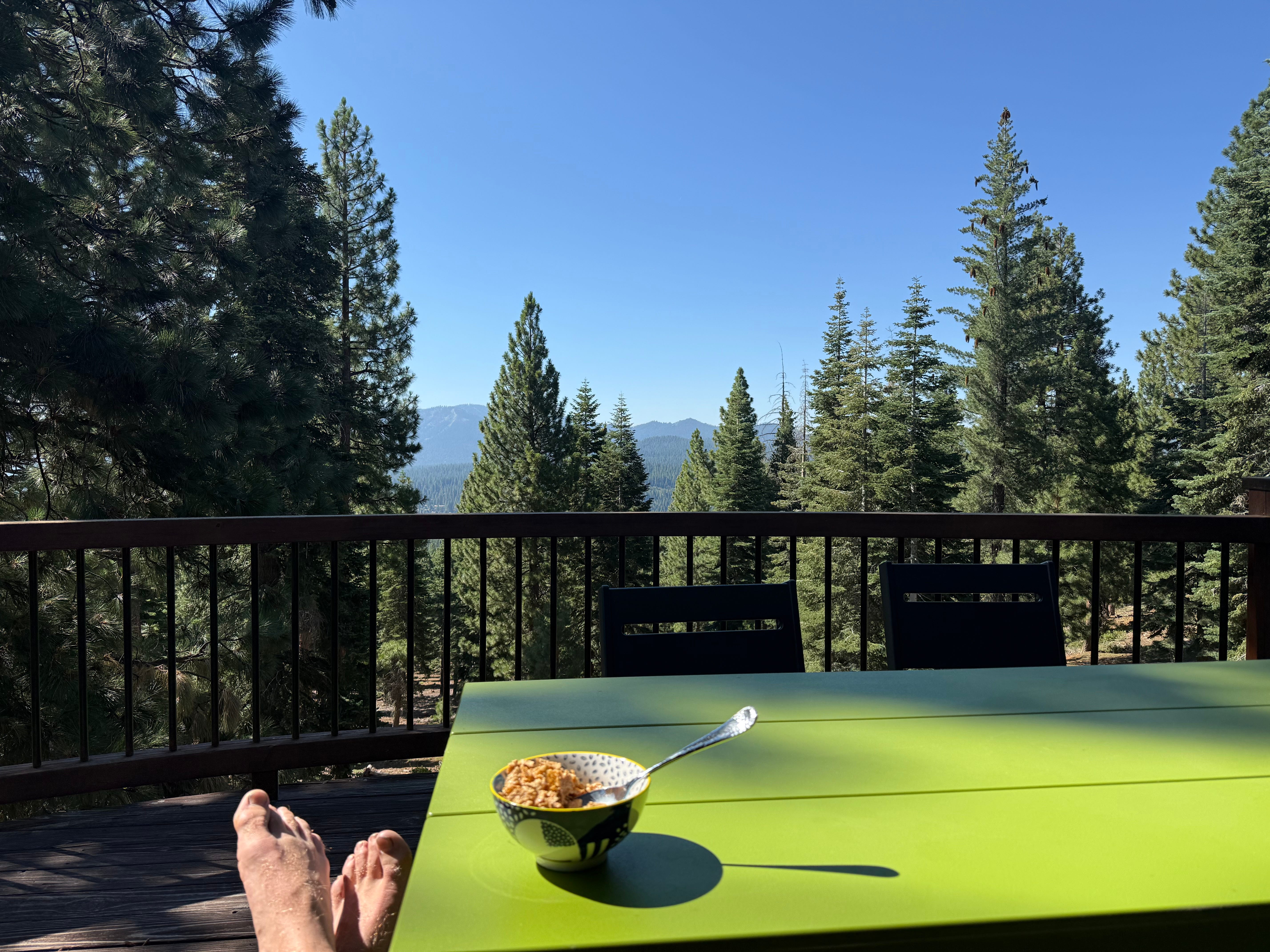
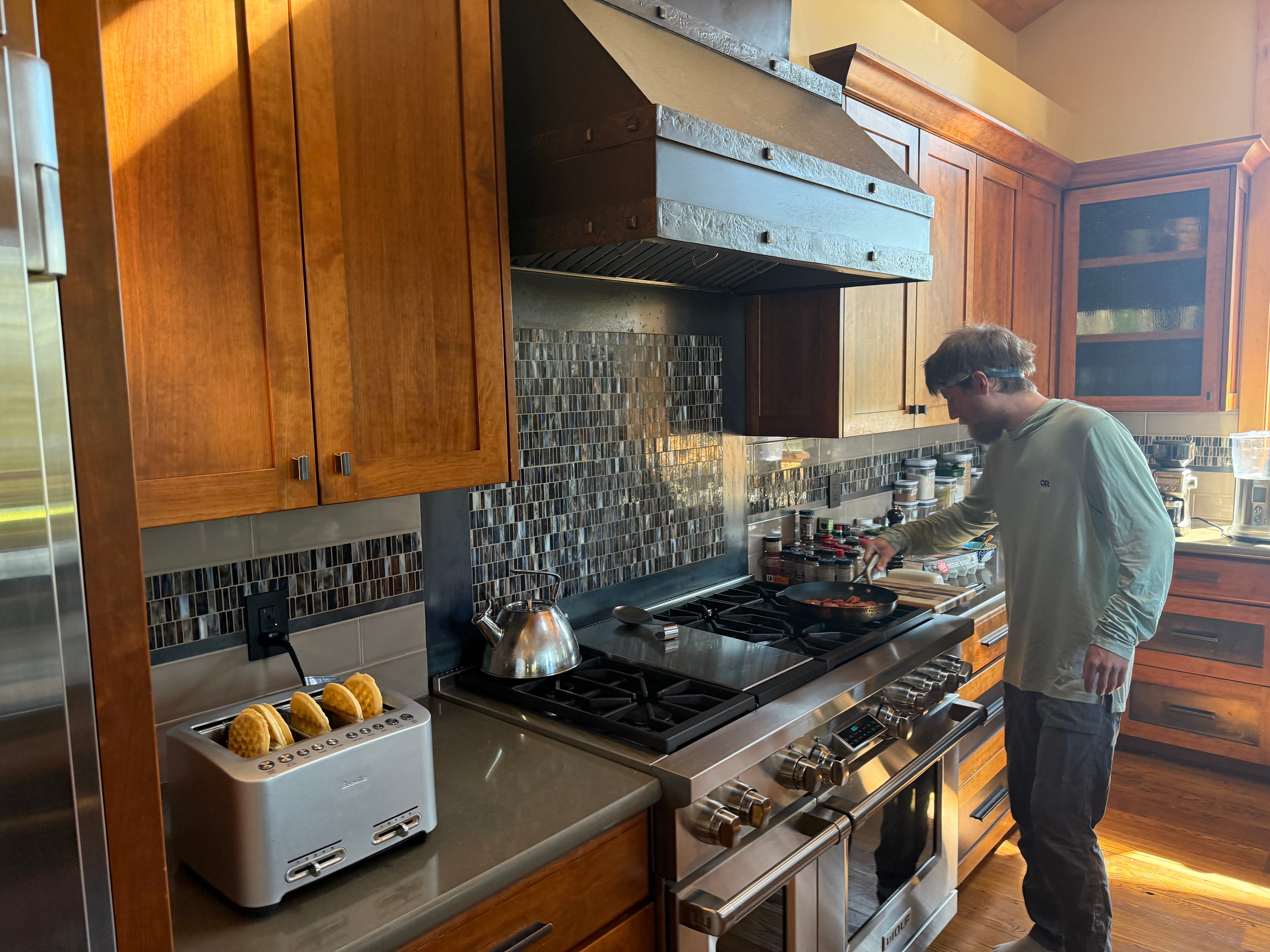
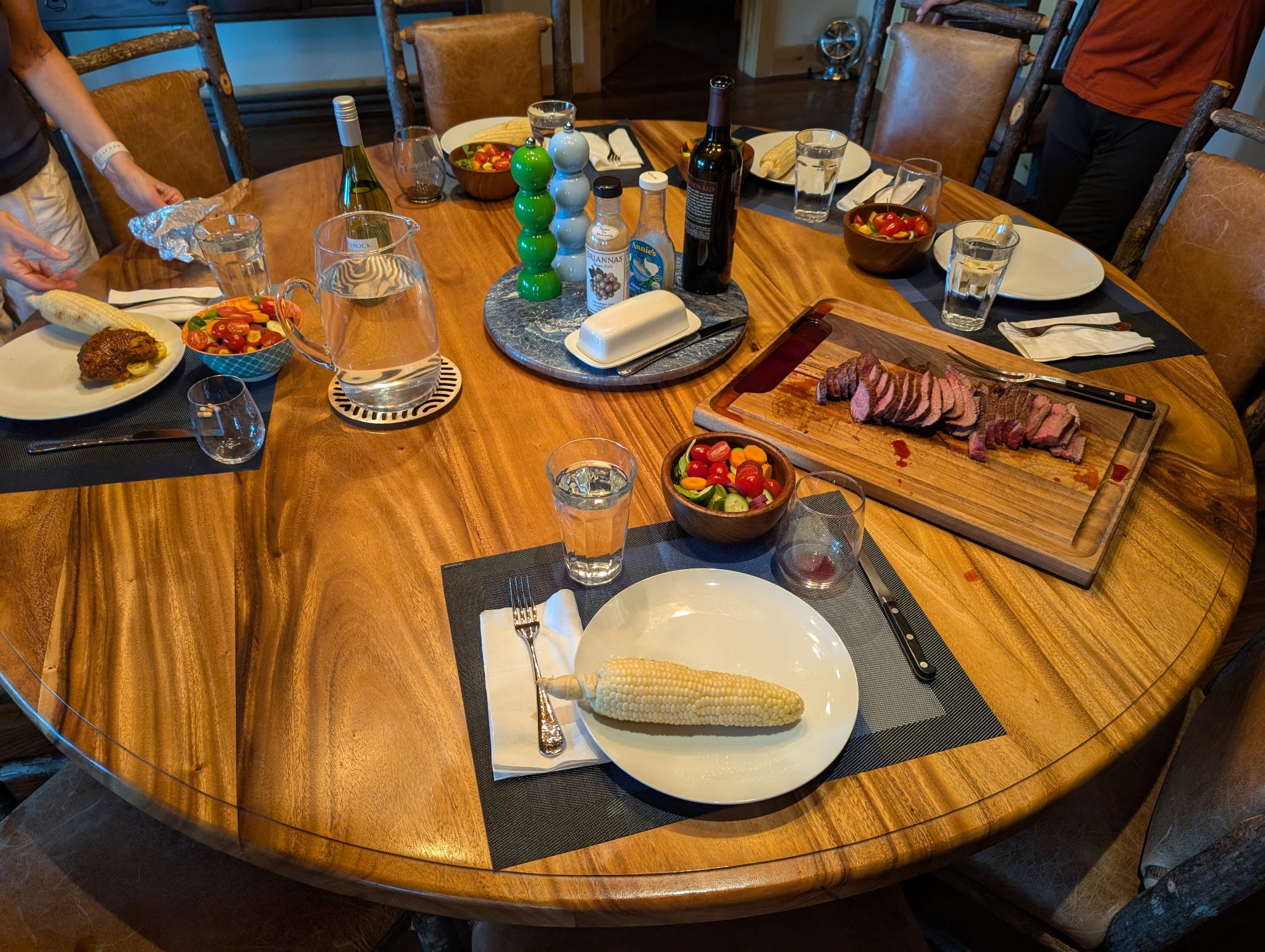
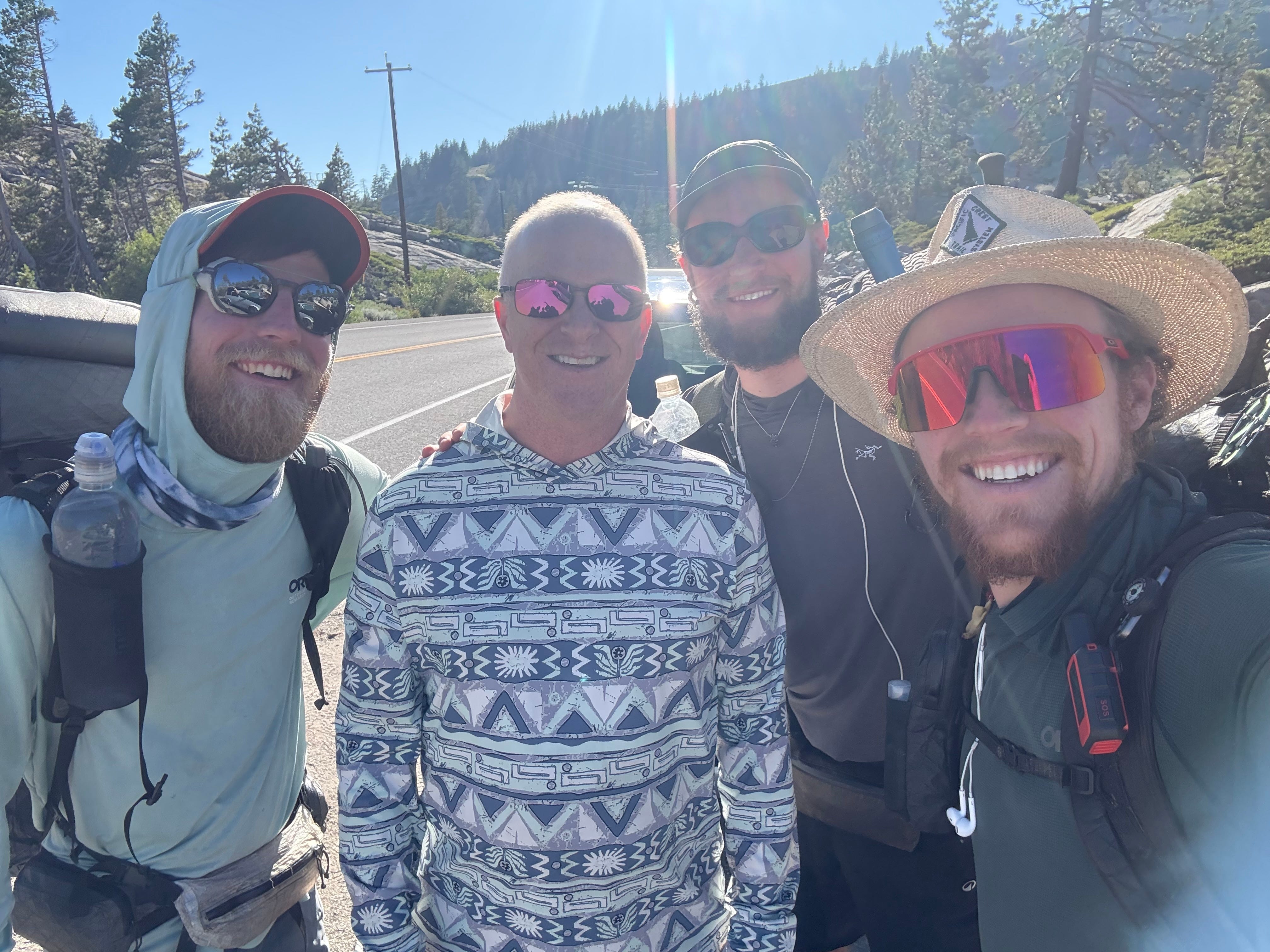
The trip to Sierra City was gorgeous. The landscape was dotted with perfectly calm and temperate lakes and the trail quieted down significantly, with no section hikers and many thru hikers electing to skip the coming miles. The one drawback was that the Forest Service decided to go with an open concept layout for much of the surrounding area and had a logging company raze hundreds of acres. After stopping for a quick resupply we trudged up the first of three intense climbs this week, starting in town at 4,200 feet and ending at 8,500 atop the Sierra Buttes.
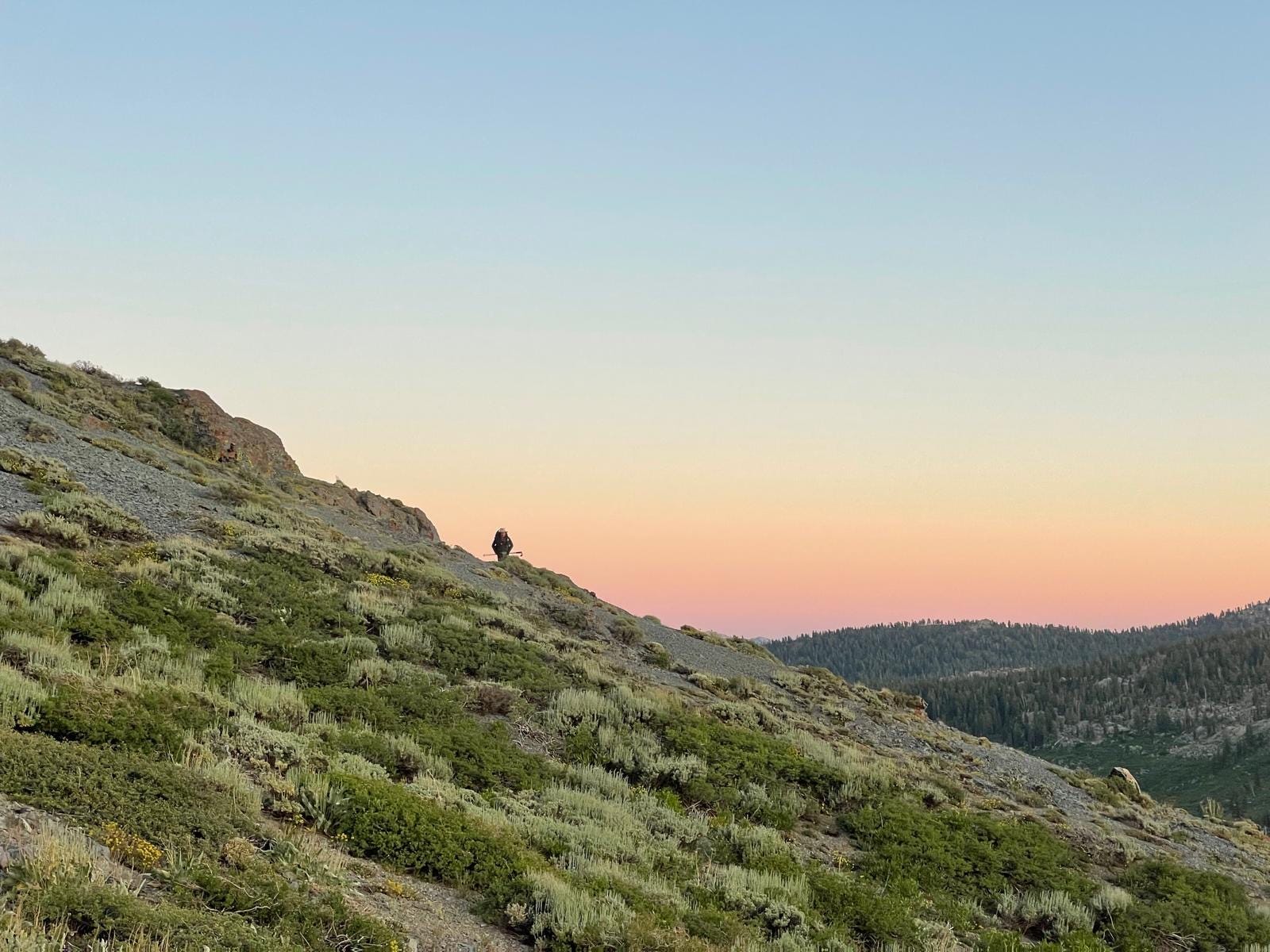
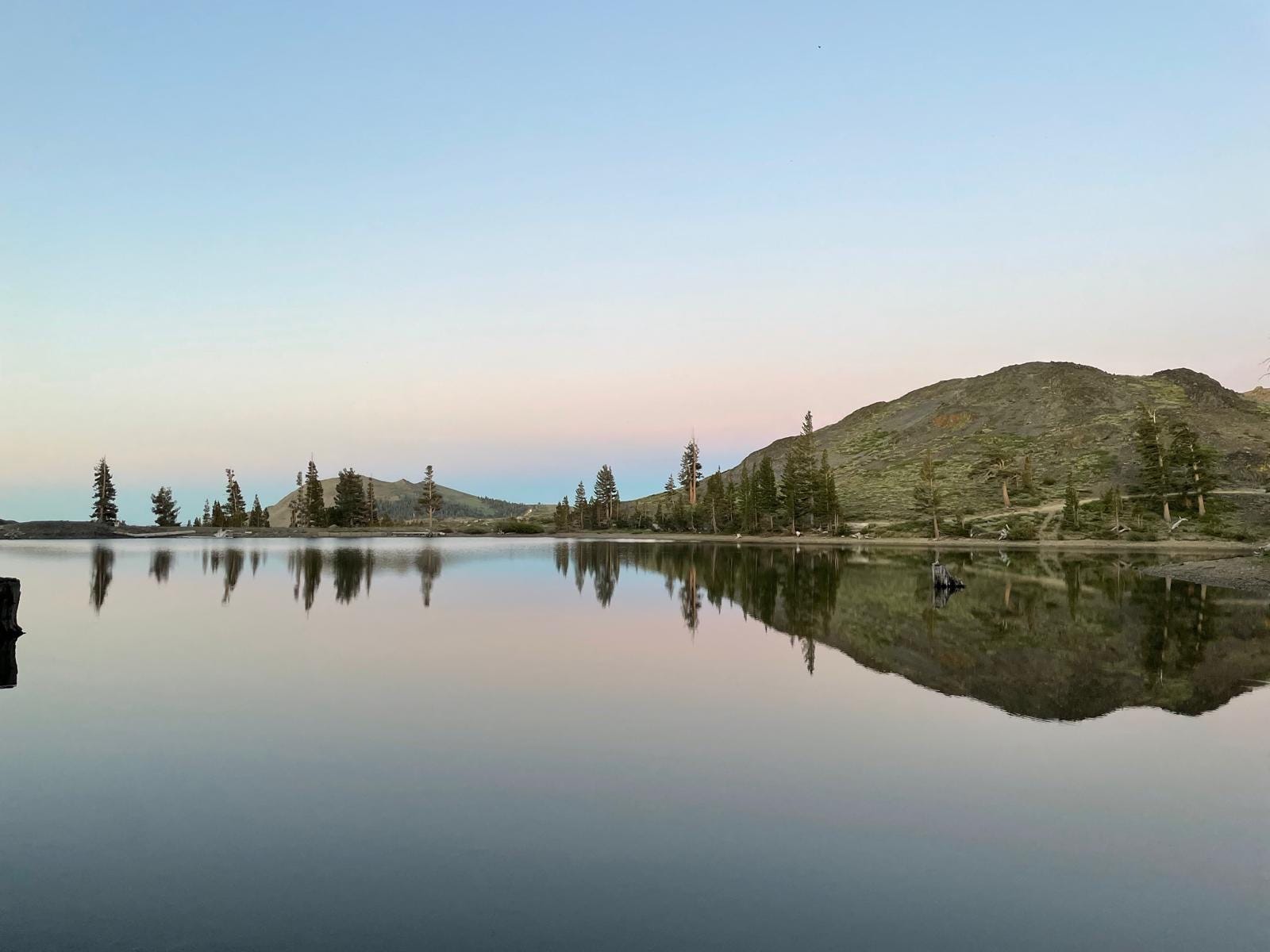
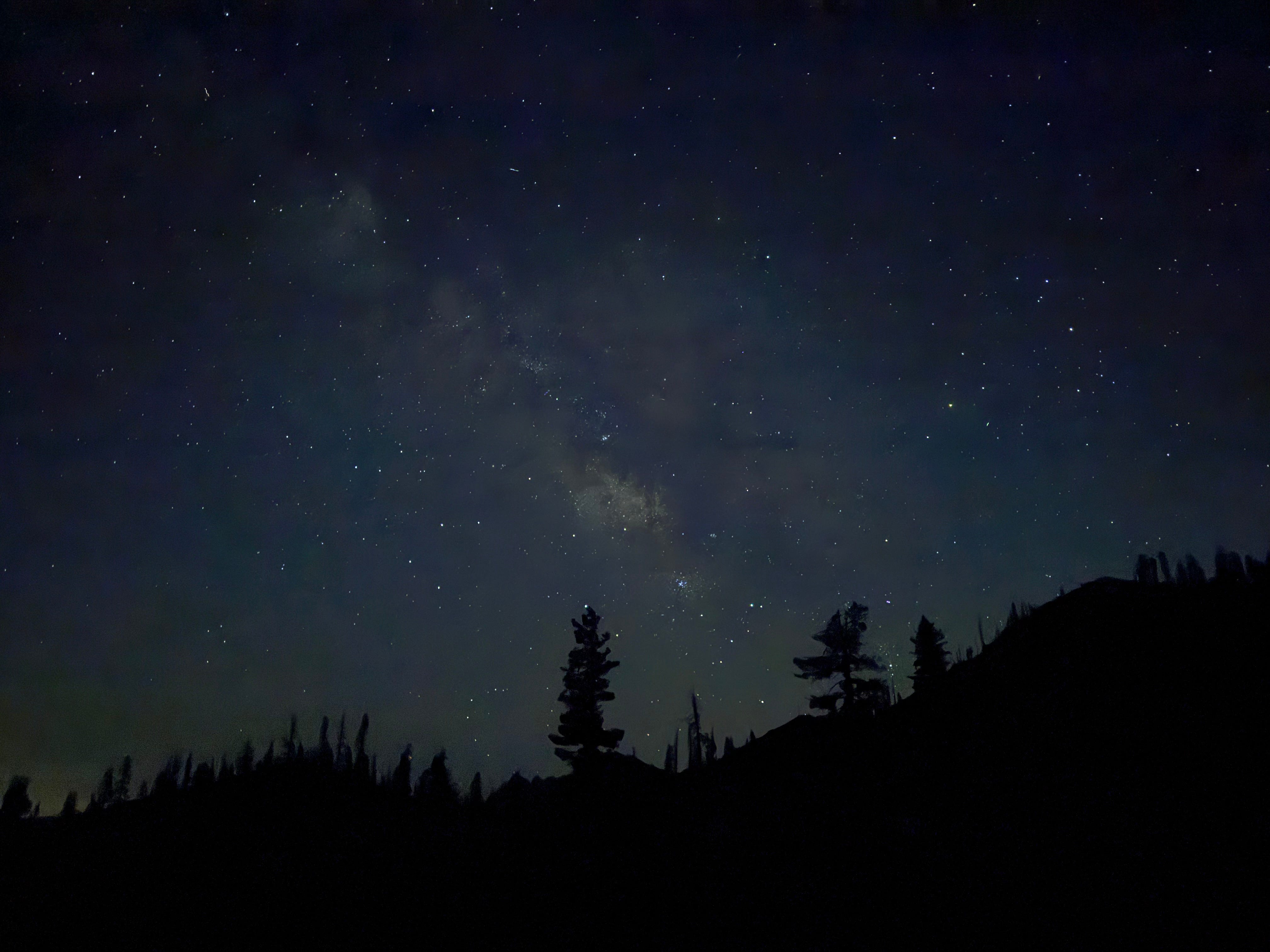
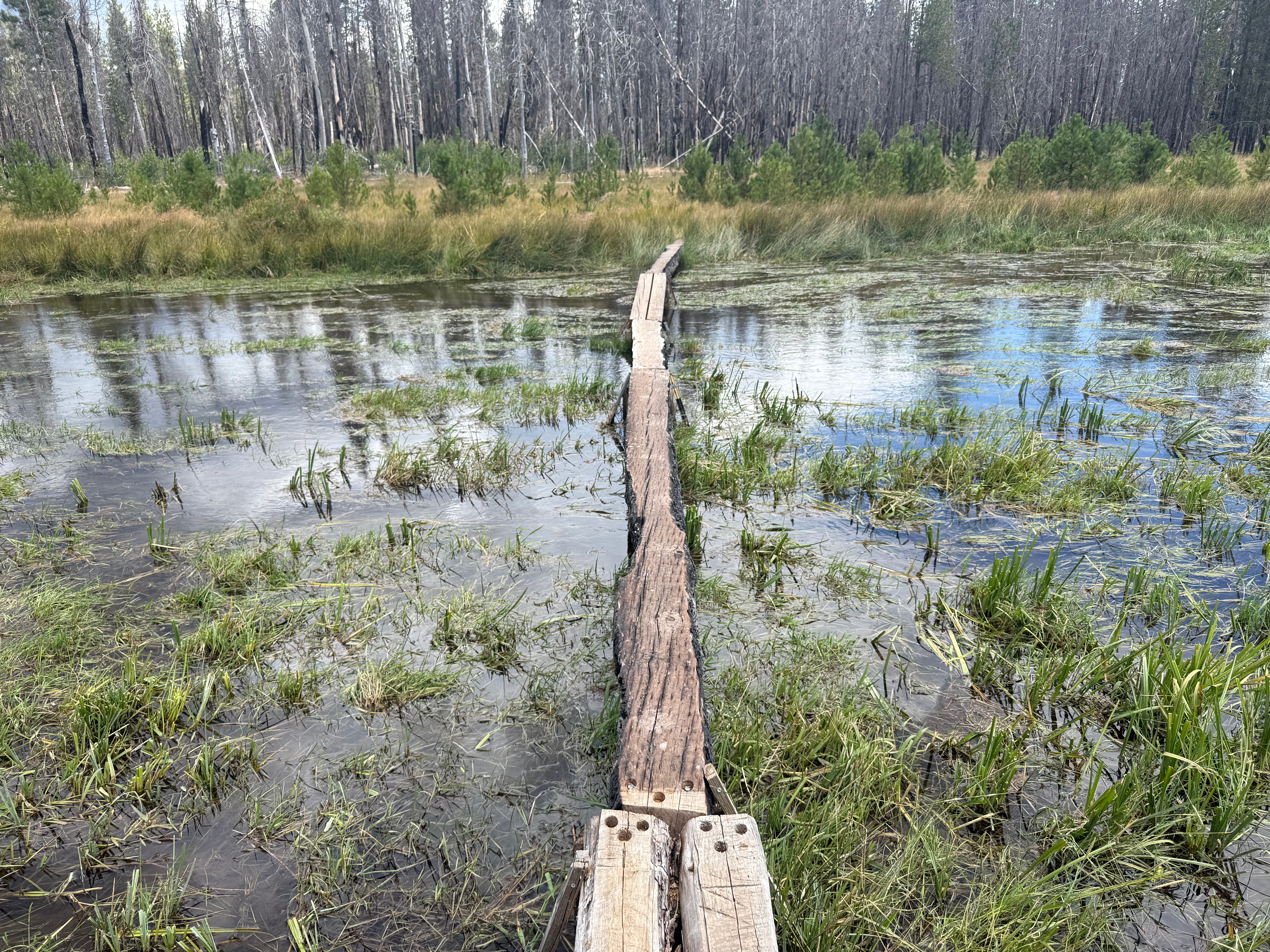
The upcoming 150 miles or so were heavily impacted by the 2021 Dixie Fire, the largest in California’s history, that burned roughly a million acres of land and cost $637 million just to put out. The scars are evident and its why many people decide to skip ahead. I cant necessarily blame them as what remains are miles of towering dead “widowmaker” trees and their fallen compatriots that leave a thick black soot if you so much as brush them while climbing over. What grows back first isn’t great either, the trail is lined with short thorny brush and bur clover as well as the highly irritating but adorably named poodle dog bush.
But like always, there is a lot of beauty that emerges from the destruction. The bark of the burned trees is a deep obsidian that shines like a scaly reptile in the sunlight. The lack of foliage and people makes wildlife more visible and I saw a small black bear run across the trail, maybe 75 feet in front of me. But the highlight was two separate sightings of peregrine falcons, the world’s fastest animal. The first was just whimsically floating above the trees but on my second sighting I got to watch one dive, as it plunged toward its top speed of 240 miles per hour.
Later on we completed large climb number two, 3,800 feet over 10 miles after having already done 20 that day by getting to the base of the Feather River. We raced up that mountain, all feeling as strong as ever, and were rewarded by a gorgeous 360 degree view of the sunset. The sky quickly shuffled through shades of orange and pink, each vista different than the one we’d caught just seconds earlier, as we unpacked our things. We set up camp on the edge of the cliff and woke up the next morning to catch the sunrise from bed before the short hike into Quincy.
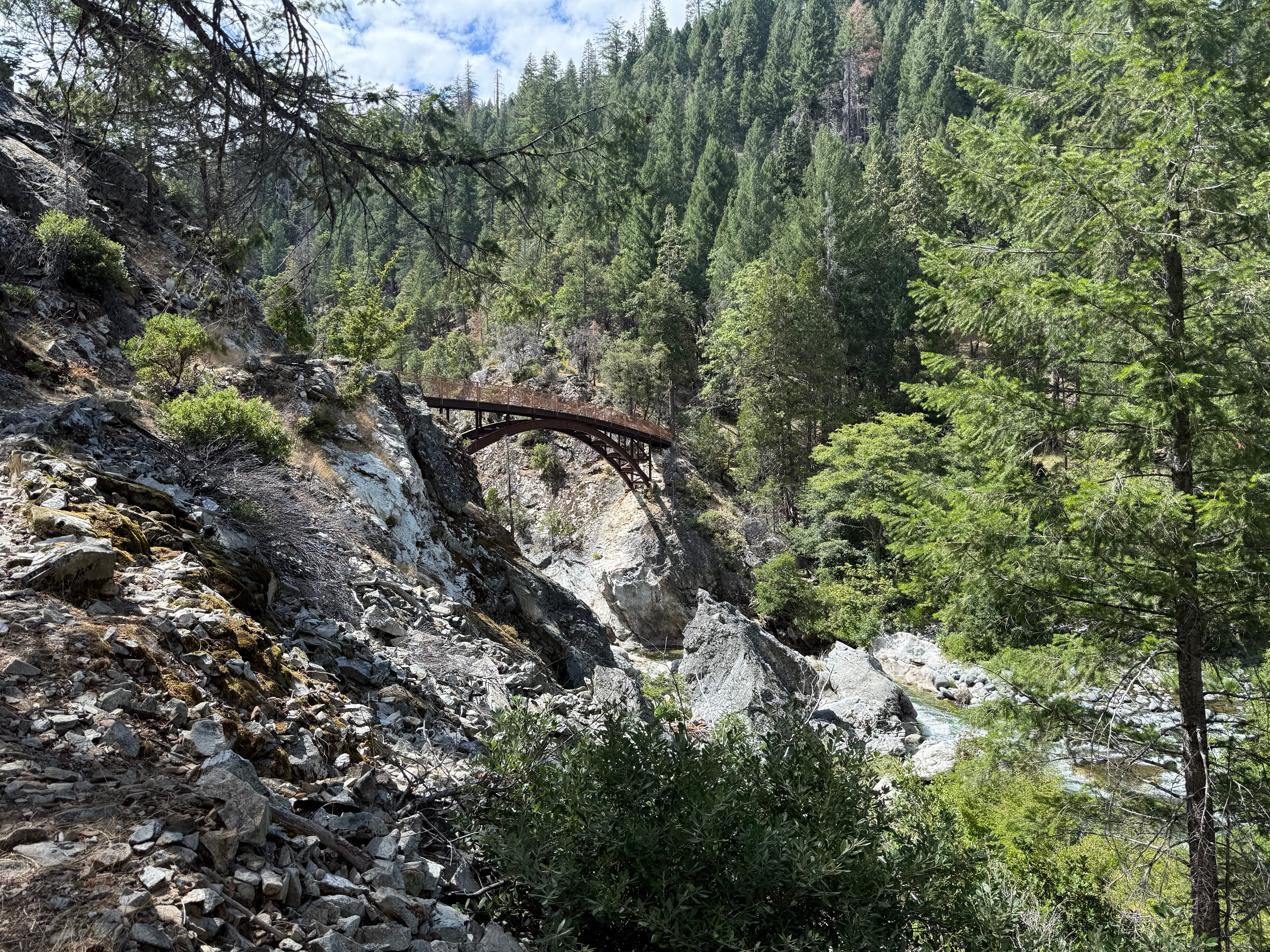
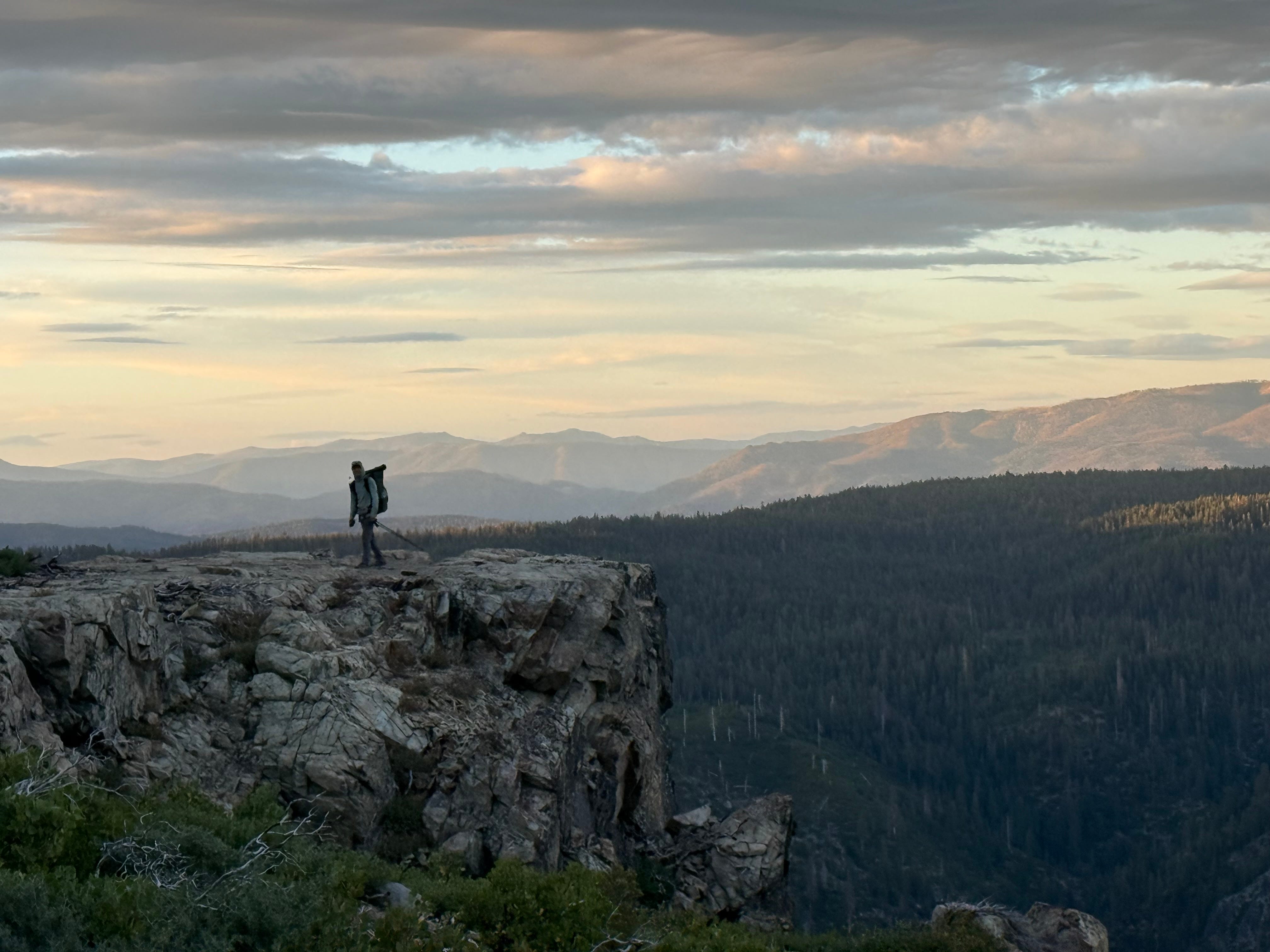
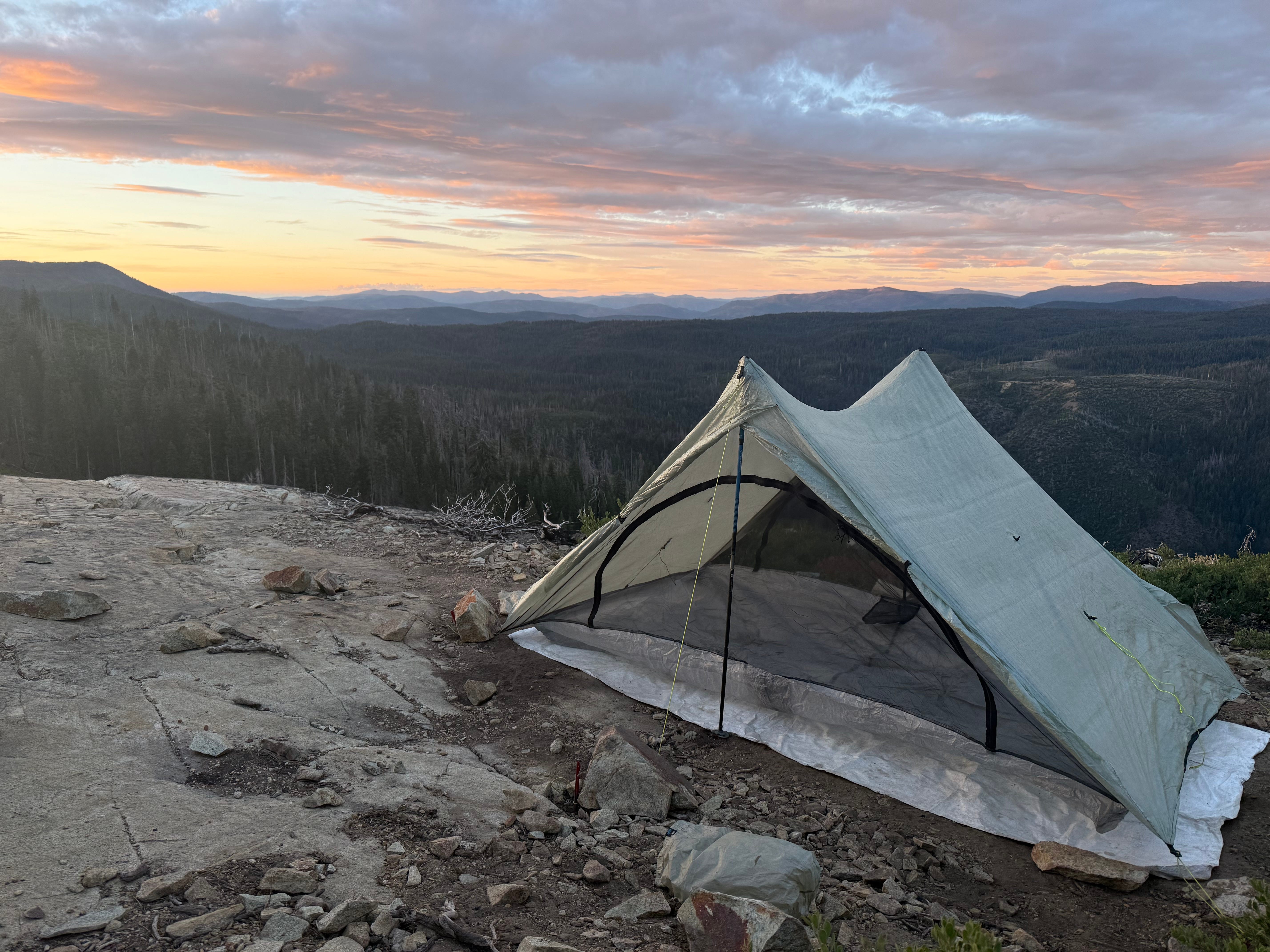
Once in town, we were hosted by a trail angel named Pounder and we met some PCT legends during our stay. First was Outside Jay, another trail angel who’s notorious for dedicating his life to hikers. If you break your ankle on the hill and need a ride 4 hours to the best hospital, he’s your guy. He coordinates across all the major stops in California and has helped some of those in their greatest times of need. The other was Matt, the director of trail maintenance for the 450 mile stretch of trail starting in Yosemite and ending near the top of California. He and his team work tirelessly, underfunded and without the use of power tools due to wilderness regulations, to clear dozens of miles of trail from the various hazards that plague it each year.
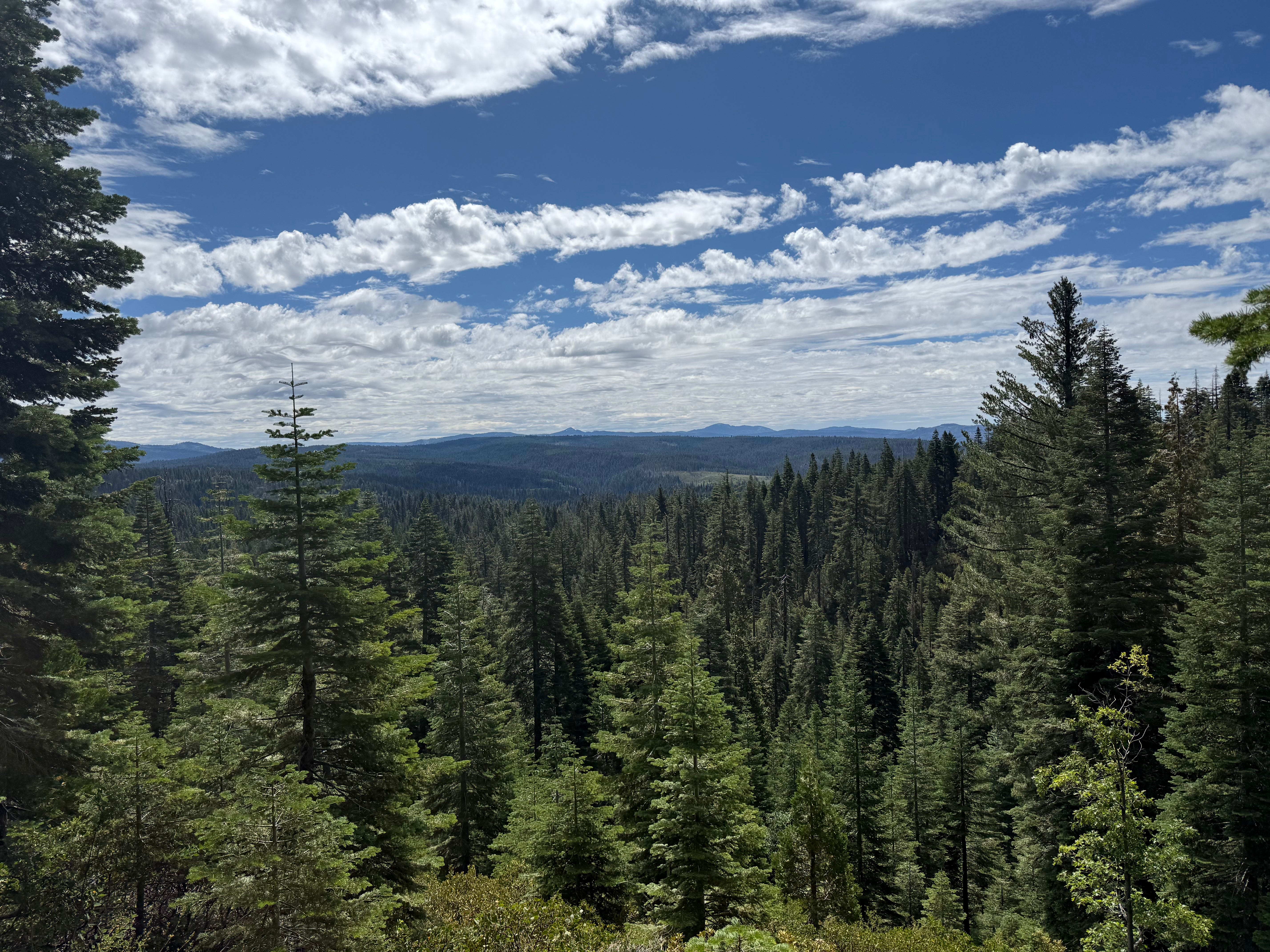
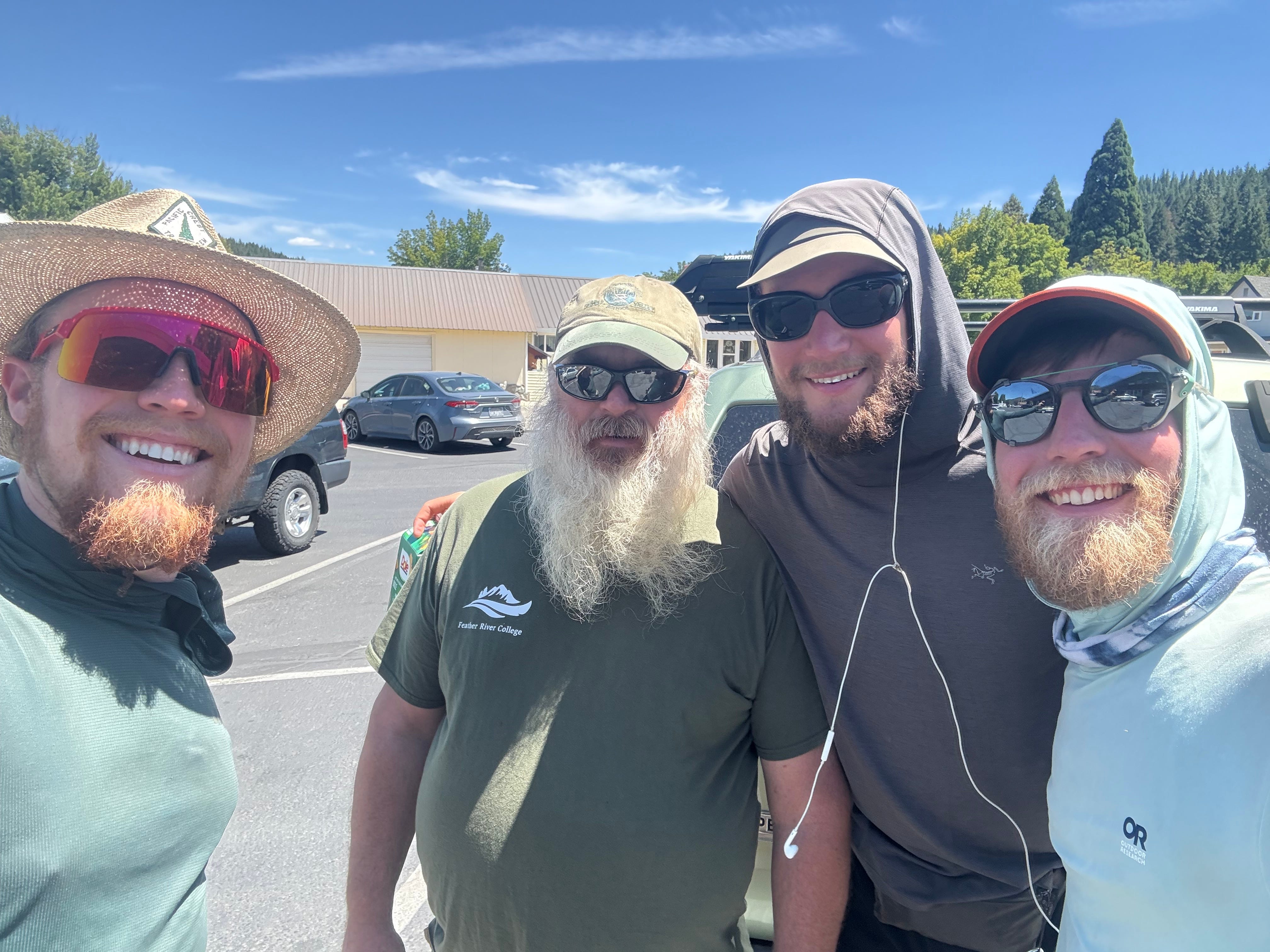
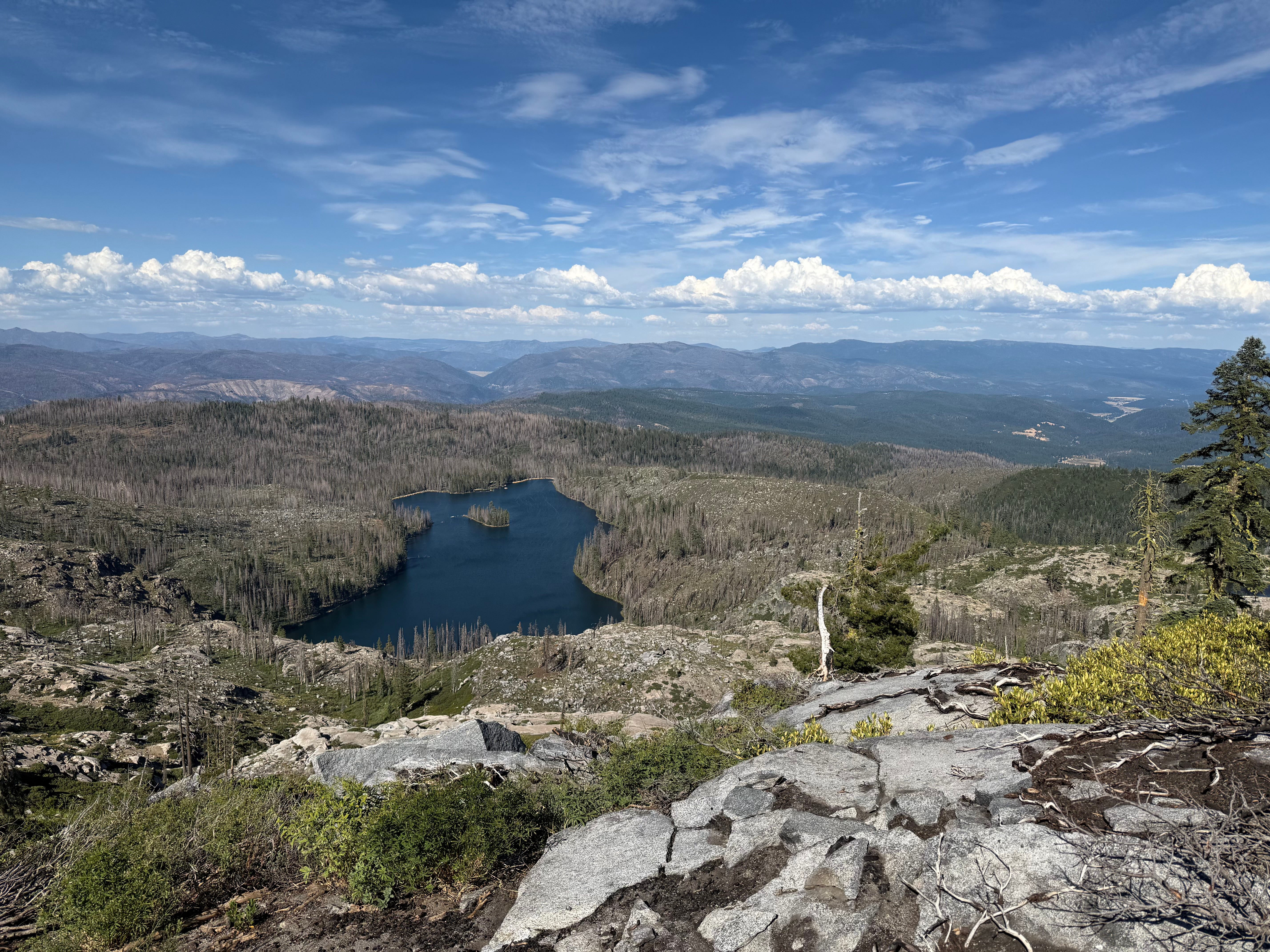
The final 62 miles between Quincy and Chester were similar to the previous stretch: lots of blowdowns and not a lot of people. It also had the final and most difficult climb of the three with 5,500 feet of gain over 13 miles. We did this in the heat of the day, completely exposed by the burnout. About halfway up I decided to jump into the river and enjoy the waterfall, the perfect respite in an otherwise arduous afternoon. Once at the summit it looked like the mountains of Vermont in the winter, with miles of leafless trees, but upon further inspection it was just carnage from those fires farther than the eye could see, sobering to say the least. It was made all the more menacing by the thunderstorm that lie just ahead, our first on the trail, but my busted rain jacket held up pretty well through it all.
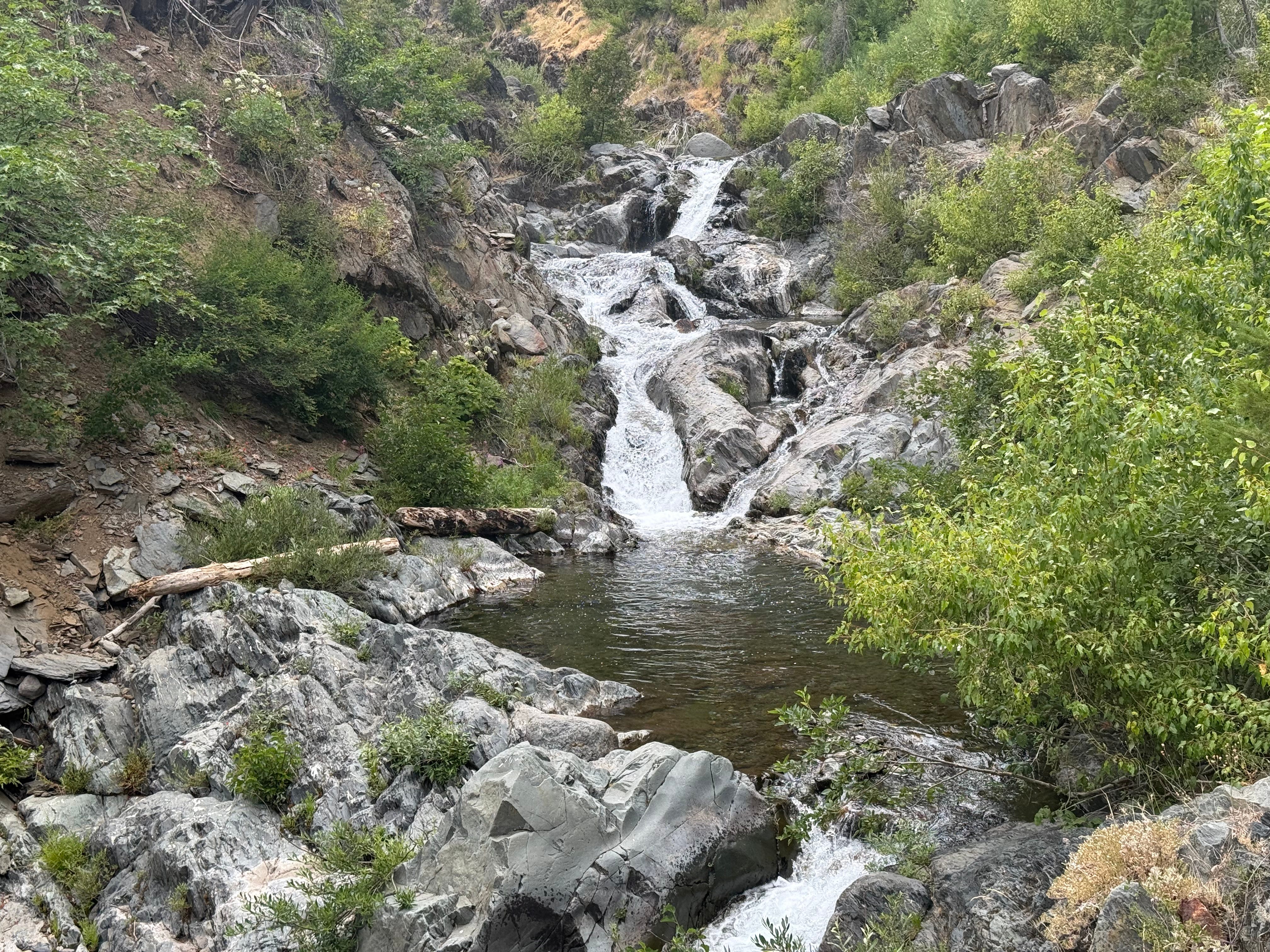
This morning, just before the road that connected us to Chester, I made the perfect trail taco (salami, pepper jack, and mango Thai chili salad kit) and then passed the halfway mark of the PCT! More than 1,325 trail miles later I am officially closer to Canada than where I started in Mexico. I cannot wait to see what part two has in store.
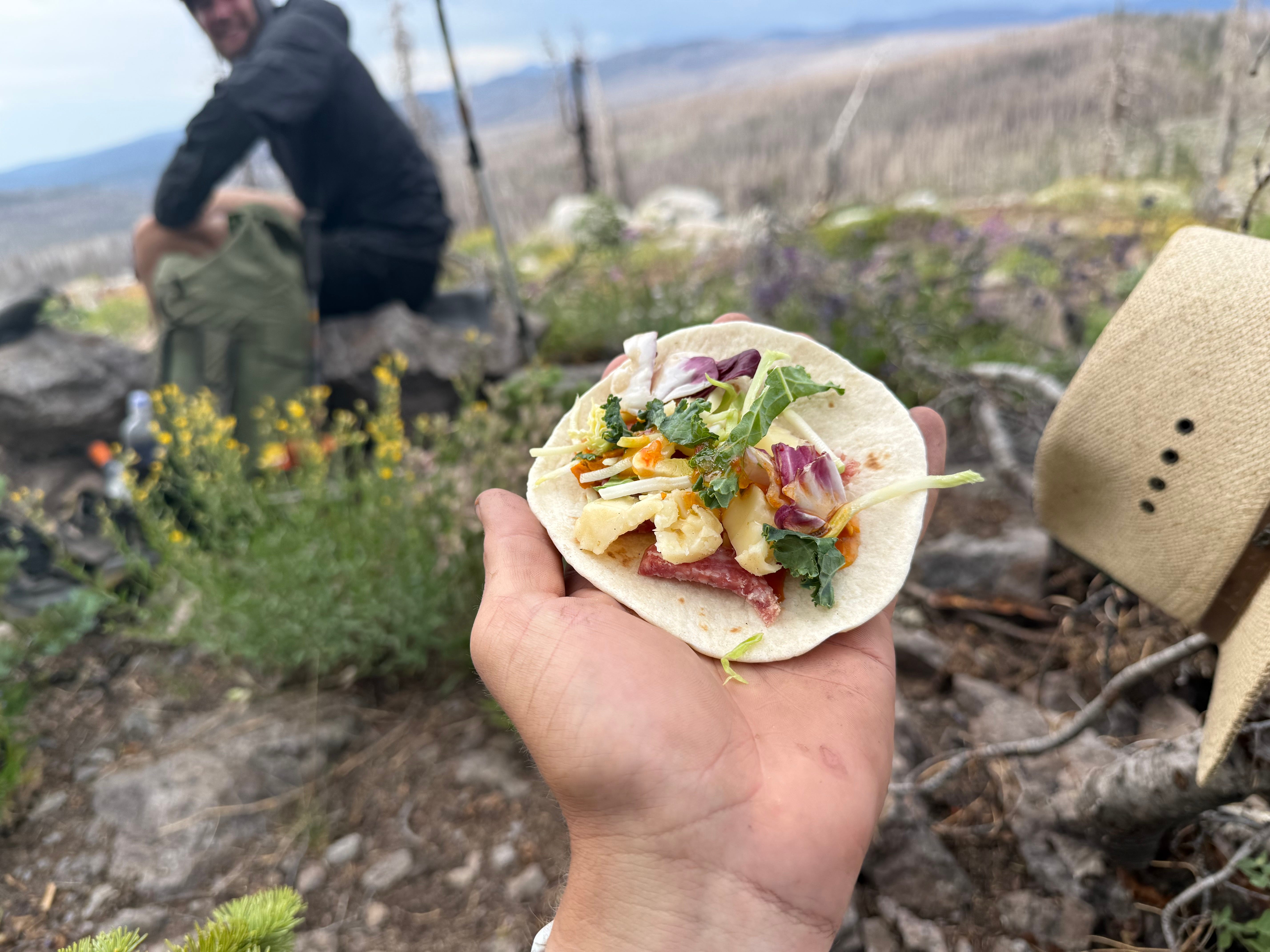
By the Numbers
What I’m Reading (Part 2)
The trail has continued to provide the perfect time and headspace for audiobooks. I have loved opportunity to really dive deep and finish dense titles in just a sitting or two. If you see something you’ve read or are interested in, reach out! I’d love to discuss.
Memoirs
Kitchen Confidential by Anthony Bourdain (2000) - One of my favorite books of all time written by my idol, Anthony Bourdain. While brash and often indicative of his time, the no-holds-barred rockstar description of life as a chef in New York in the 80s and 90s captured my imagination. Although he debunked some of his own claims in the years since, it opens your eyes to the world of restauranteurs and the real happenings behind the kitchen doors at your favorite establishments.
Medium Raw by Anthony Bourdain (2010) - My first time through the follow up to Kitchen Confidential, Tony elaborates on stories from the first book, gives updates on its characters, and just provides laughs and a bit of wonder for the minds of those of us who I’ve never worked in a professional kitchen.
Born a Crime by Trevor Noah (2016) - My fifth listen through Trevor Noah’s memoir of growing up in apartheid South Africa as a mixed race child. Although I’ve never actually read it, listening is the way to go as he hilariously recounts the accents and anecdotes of his family that was anchored by strong women (much like my own). It’s an inspiring story of resilience and resistance to an oppressive regime. From starting a small time crime ring in the slums to hosting the Daily Show within a decade, Trevor‘s life really does read like fiction, but along the way he tells us too many harrowing truths to be anything but reality.
Big Dumb Eyes by Nate Bargatze (2025) - Currently Nate’s my favorite comedian so I jumped at the opportunity to read his book. He talked about growing up in Tennessee and then moving to Chicago and eventually New York to pursue a stand-up comedy career before going back home again. Not particularly incredible if I’m being honest, not as funny as his typical work and he is certainly not known for his academic mind. I don’t regret listening, but I would say skip it.
Science
The Body: A Guide for Occupants by Bill Bryson (2019) - Recommended to me by Sean, a gentleman I met at Walker Pass and shared a lovely afternoon with, the book was extraordinarily helpful and eye-opening for someone who hasn’t taken a science course since high school. Particularly as I’m dealing with a variety of physical ailments, it was useful to understand why my feet hurt so bad, why my back is not particularly well conditioned, and to help better understand how we are controlled by natural selection in everything that we do.
Everything is Tuberculosis by John Green (2025) - One of my favorite authors, creators, and historians; John Green deep dives from the origins to the modern impacts of what remains the deadliest infectious disease in the world. His interest in the topic begins with a visit to Sierra Leone and its capital of Freetown, where he encounters a young boy and is touched by his story. Green anthologizes the diseases history and how it’s intertwined with biases even in the modern day. Tuberculosis could be a thing of the past, but as his common refrain in the text says “the cure is where the disease is not and the disease is where the cure is not.” Good luck getting through it without shedding a tear.
History
Cadillac Desert by Marc Reisner (1986) - Recommended to me by my cousin Phil, this book is a historical account of water in the southwestern United States but focuses on Southern California. It was recommended in part because we went over the LA aqueduct and that is the main topic of his first few chapters. Telling the story of how the city shadily took water from the Owens Valley and redirected it to sustain the growing city. It left that area desolate, something we were able to see looking down on the barren land at the beginning of the Sierra.
After the Dance: A Walk Through Carnival in Jacmel by Edwidge Danticat (2002) - Since her commencement address at my high school graduation I’ve always tried to seek out Danticat’s work. In this book, she returns to her native Haiti over a 10 year period to catalogue the carnival celebrations on the western part of the island. Her first hand account on the evolution of the celebrations and its deep roots in African history were particularly interesting as I got to understand more of the background of Mardi Gras during my time in New Orleans. It sparked an interest and I now intend to dive deeper into the nuances of carnival celebrations all over the world.
Homo Deus: A Brief History of Tomorrow by Yuval Noah Harari (2015) - The sequel to the extraordinarily popular Sapiens that I thoroughly enjoyed years ago, it’s an interesting predictor of the future of humanity. Among the most astute was his prediction of a potential pandemic, which got me thinking about what other positive or negative changes may be on the horizon.
Philosophy & Spirituality
Zen and the Art of Motorcycle Maintenance by Robert M. Pirsig (1974) - Another reread, my first since my high school philosophy course. I appreciate the semi-autobiographical format, the candor and vulnerability with which he discussed his previous mental breakdown, and some practical perspective told through the lens of vehicle maintenance. There’s a reason why it’s still among the most popular philosophy books of all time.
The Way to Love by Anthony de Mello (1991) - This was gifted to me by that same gentleman, Sean, who I met about a month into my hike. We spoke for a few hours and he read a few of my newsletters and felt I would benefit from its content. Written by an Indian Jesuit priest, he melds Eastern philosophy with Christian scripture. It overlaps a lot with the non-mystical teachings of Eastern religions surrounding the source in route of our suffering and our ability to overcome it. I would highly recommend it for anyone who is interested in exploring their spirituality but through a Christian lens.
The Heart of the Buddha's Teaching by Thich Nhat Hanh (2011) - Its crazy to think it’s been almost 10 years since my college Buddhism class. So in an effort to brush up before diving back into Eastern religions, I felt the need to relearn the history of the Buddha’s teachings. This Vietnamese monk covers the four noble truths, the eightfold path and other core tenants of his enlightenment, before covering the growth in branches of study for the past 2,500 years.
Why Buddhism Is True by Robert Wright (2017) - This was a real game changer for me. Wright scientifically validates secularized Buddhism which centers around meditation as a means of overcoming the emotions that control us. By tying the teachings from 500 BCE to the relatively recent concepts of natural selection and evolutionary biology, he empirically justifies much of what has made Buddhists such pleasant and pacifistic people in search of enlightenment.
Fiction
The Hobbit by J.R.R. Tolkien (1937) - One of the only books I’ve actually read on my Kindle since starting, The Hobbit was the perfect adventure novel to get me excited about our journey ahead. Light and easy to read it was my first foray into the Lord of the Rings series, and one of the only fantasy books I’ve ever read. I enjoyed it, but don’t know that I’ll be going any further.
The Grapes of Wrath by John Steinbeck (1939) - A book I’d put on hold all the way back on the fourth day of the trek finally came available and I went through it as quickly as you can a 22 hour book. Admittedly, it taught me a lot, even though it’s historical fiction, I’m not particularly educated on the dust bowl and its impact on westward expansion. A sad story from start to finish, a bit of a slow starter, and sometimes unnecessarily detailed, but puts into perspective how lucky we all are to pursue work and support ourselves compared to those who were so destitute for reasons that were beyond their control.
Where the Crawdads Sing by Delia Owens (2018) - My second attempt at this book, the previous one coming in college, and like many things in college other priorities got in the way of finishing. I absolutely loved the storyline, almost like three different tales in one, each captivating in its own right. I fell in love with the characters and certainly appreciated the way Owens landed the plane in the end. The book left me yearning for the shores of the Atlantic. As amazing as the PCT has been, the ocean is always calling, particularly as we get further and further away from it.
James by Percival Everett (2024) - Although I never read Huckleberry Finn (I’m not sure how that changed my perspective), I absolutely loved this book. Although still fiction, it is rare to find literature that speaks from the enslaved perspective during this time and the narrative itself kept me engaged throughout. Highly recommend.
(No) Shower Thoughts
Reflecting on the First Half of the PCT
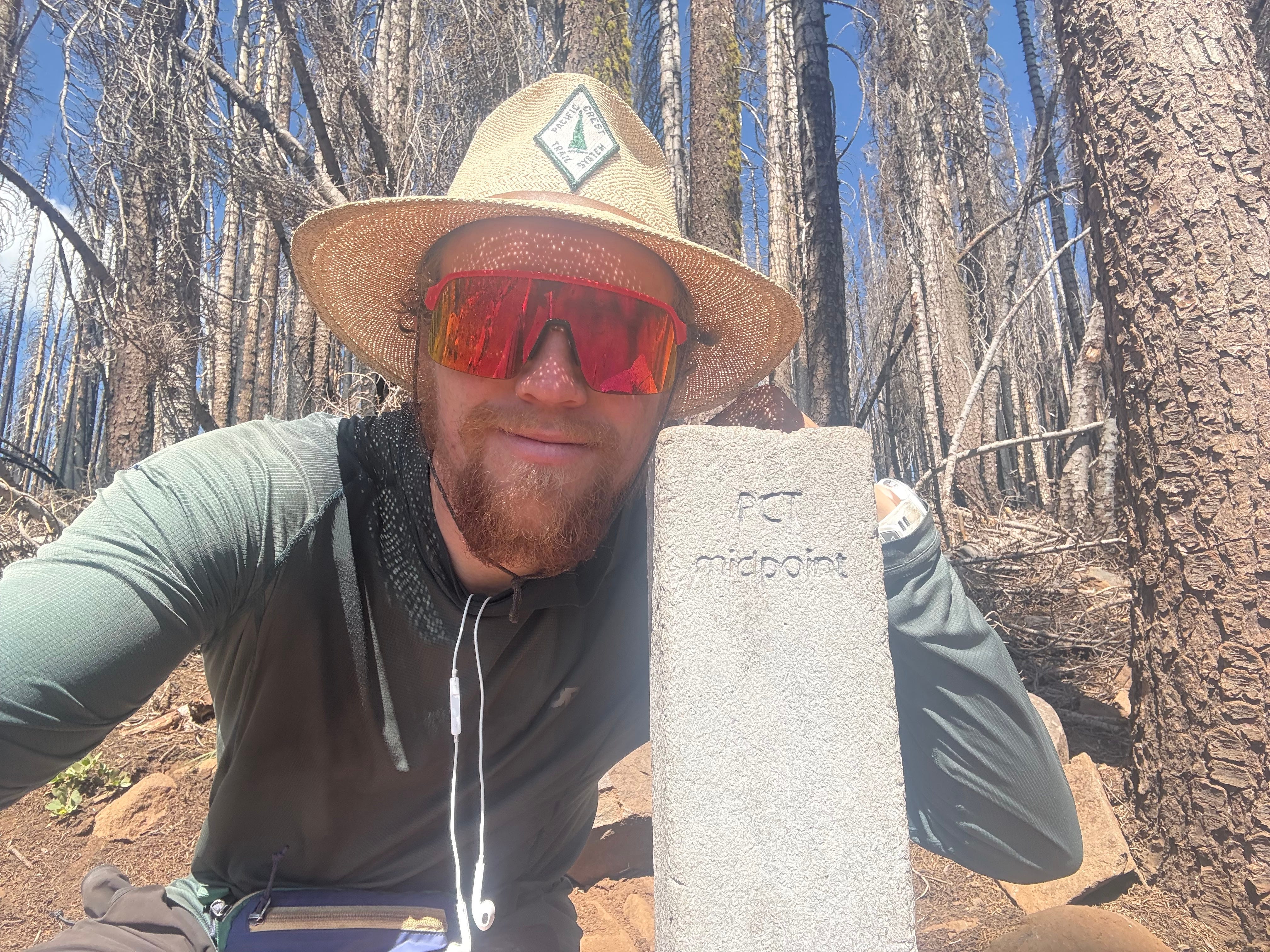
One thousand three hundred and thirty three miles on the Pacific Crest Trail. I had two write that all out because, wow, that sounds like a lot. It’s something that was just a dream I assumed would go unrealized as recently as 6 months ago. Over the last 2 1/2, my life has changed dramatically and yet at the same time it’s really been no time at all and really, not much has changed in the outside world.
On the one hand, it does feel like we’ve accomplished something. There was a certain weight lifted off my shoulders after 1,000 miles; even if disaster struck the next day, I had done something I could be proud of. Until that point, everyone is in a constant state of fear, overreacting to every ache and pain, wondering if it will derail their trip. There’s good reason for this, you tell everyone you know and love that you’re planning to embark on this journey and in doing so you’re showered with congratulations before you take a single step. Imagine having to return home after a couple of weeks: injured, your tail between your legs, your dream unrealized, and no plan on how to spend the next 4 months of your life. It’s something that made me very uncomfortable and thus reticent to share my plans until I’d actually begun.
At the same time, it doesn’t feel like we’re halfway there, it feels like I’m battling every single day. I haven’t spoken about it in this newsletter, but the majority of the time I’ve been injured or on the brink of injury in one way or another and have gone to bed on several nights wondering if it would be my last on trail. I didn’t expect to get some of the better advice I’ve received to date from the checkout clerk at the discount grocery store in South Lake Tahoe. Unbeknownst to her I was worrying about this newly developed nerve impingement in my lower leg, unsure if I would need to leave the trail as she said to me: “Just remember what the Buddha taught ‘It is better to travel well than to arrive.’” The trail always provides, in more ways than one.
The importance of staying in the moment has really started to take hold. The markers after every 100 miles don’t really bring a flurry of emotion as they once did. Instead, I’m inspired by every sunrise and sunset, every towering tree, every time I lock eyes with a new animal, every pleasant exchange with a stranger I’d never encounter otherwise. I’m incredibly grateful for the lifelong friends that I’ve made. The kind that you can go years without seeing and then pick right back up without skipping a beat. It’s a bond that’s cemented through sharing moments of immense beauty, high stress, and reflective silence. Brothers that have enriched my life, merely by having shared theirs with me.
Among my favorite changes has been the worthlessness of monetary currency while in the backcountry. With dollars not worth the paper they’re printed on it’s about sharing resources, acts of kindness, exchanging knowledge, stories, and time that people prioritize. It has recalibrated my view of value, chipping away at the dominant economic lens, and really placing an emphasis on autonomy and experience. We literally live some of the metaphors that we are used in daily life: dust eventually settles, there is a calm before every storm, bees are terribly busy, uphills require that you go to battle, and the circle of life continues on after we’re gone. These truths are truly priceless.
I don’t know how my body or brain will respond when removed from this vacuum and placed back into the environment it’s always known. Undoubtedly, there will be some regression, imperfection an undeniable part of my being. The everyday feelings of jealousy, hatred, hubris, and greed will surface once again. But at the very least, from here on out I hope to be conscious. Cognizant and able to take a step back and evaluate as opposed to giving in unwittingly. To recognize and understand them, detaching as opposed to suppressing.
I don’t know what the next couple of months may hold, but I know that I’m exactly where I need to be.
Much love always,
Connor
Useful Links
Connor, I think chapter 7 is my favorite so far (until you publish chapter 8). Like the other comments, I look forward to your posts and the messages you write, warm my heart. I’m so proud of you, and whether you take one step or one million more I will forever be proud of you. You are a shining example of all that is right with the world. Thank you for sharing your journey with us. Give Mo and Dylan my best. Know that we are all rooting for you and wish you and those that travel with you, very safe and healthy days ahead.
Sending you all my love and tremendous respect,
Always a pleasure receiving your updates in the mailbox. Particularly enjoyed the mid-point reflections and glad to be living vicariously through your adventures!!