
Lost in Space - The Final Chapter
Packwood, WA (mi 2,298) to Canada (mi 2,655)

I’m sad to say we’ve reached the final installment of Lost in Space. While I’m excited to share both the final days of my journey and the reflections in the month since it ended, I want to disclaim that this chapter (in what I’m sure is a shock to all reading) is significantly longer than previous chapters, a roughly 30 to 45-minute read. If you find yourself getting fatigued, please feel free to step away and return later. I just ask that if you’ve made it this far, stick with me to the very end. Enjoy!
WA Sections J, K, & L
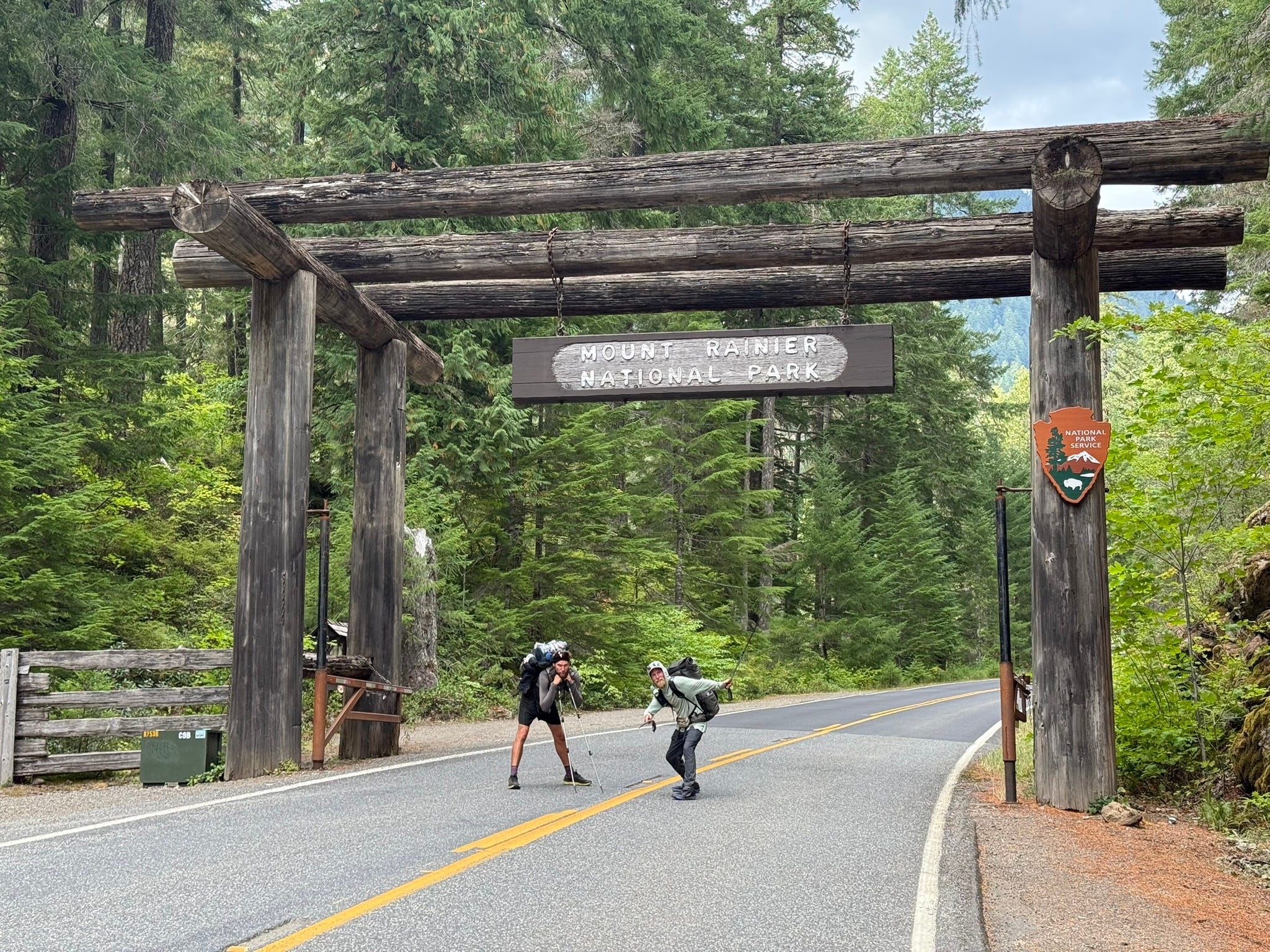
Hiking through Washington on the cusp of fall was a crash course in climatic polarity. We started with beautiful days where the highest peaks protruded from the horizon in sharp focus. Daily temperatures fluctuated between the 50s and 60s, creating optimal hiking weather. However, the threatening Wildcat Fire closed the trail for a third and final time, forcing one last bit of creativity to keep our hike intact. We settled on diverting via a series of forest service roads and national park trails that actually took us far closer to Mt. Rainer than we would have come otherwise. Coincidentally, the main highway running through the park and its main campground were under hurried construction before the onset of winter. Combined with the threat of fire, there was far too much adversity for the sane, so we found ourselves walking through one of the nation’s most popular parks without another soul in sight.
What the Eastside Trail lacked in views of Rainer, it more than made up for by the power of the Ohanapecosh River that ran alongside. Water turned a thousand shades of turquoise as it crashed from pool to pool, dropping as much as 50 feet, before rushing to its next freefall.
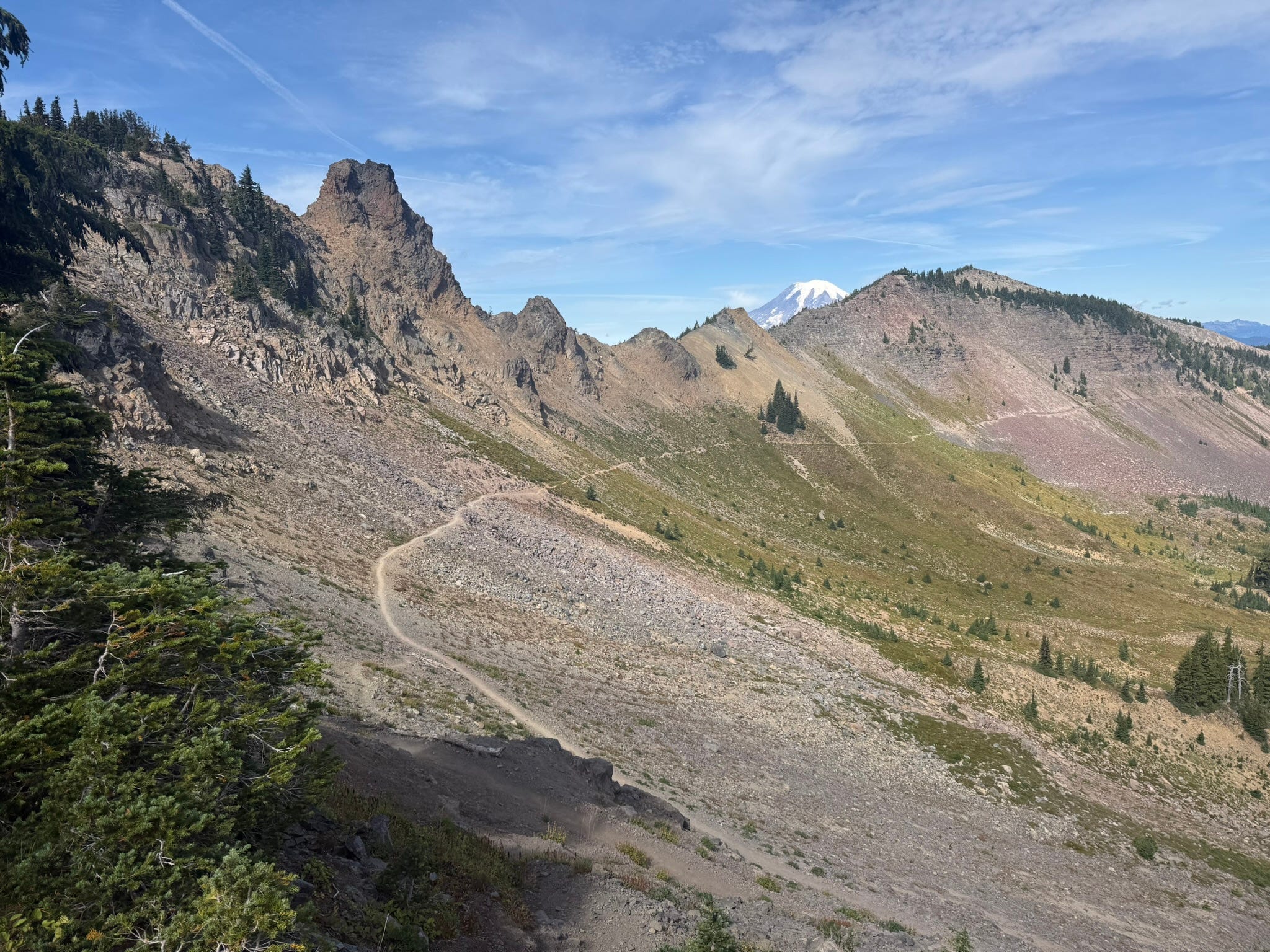
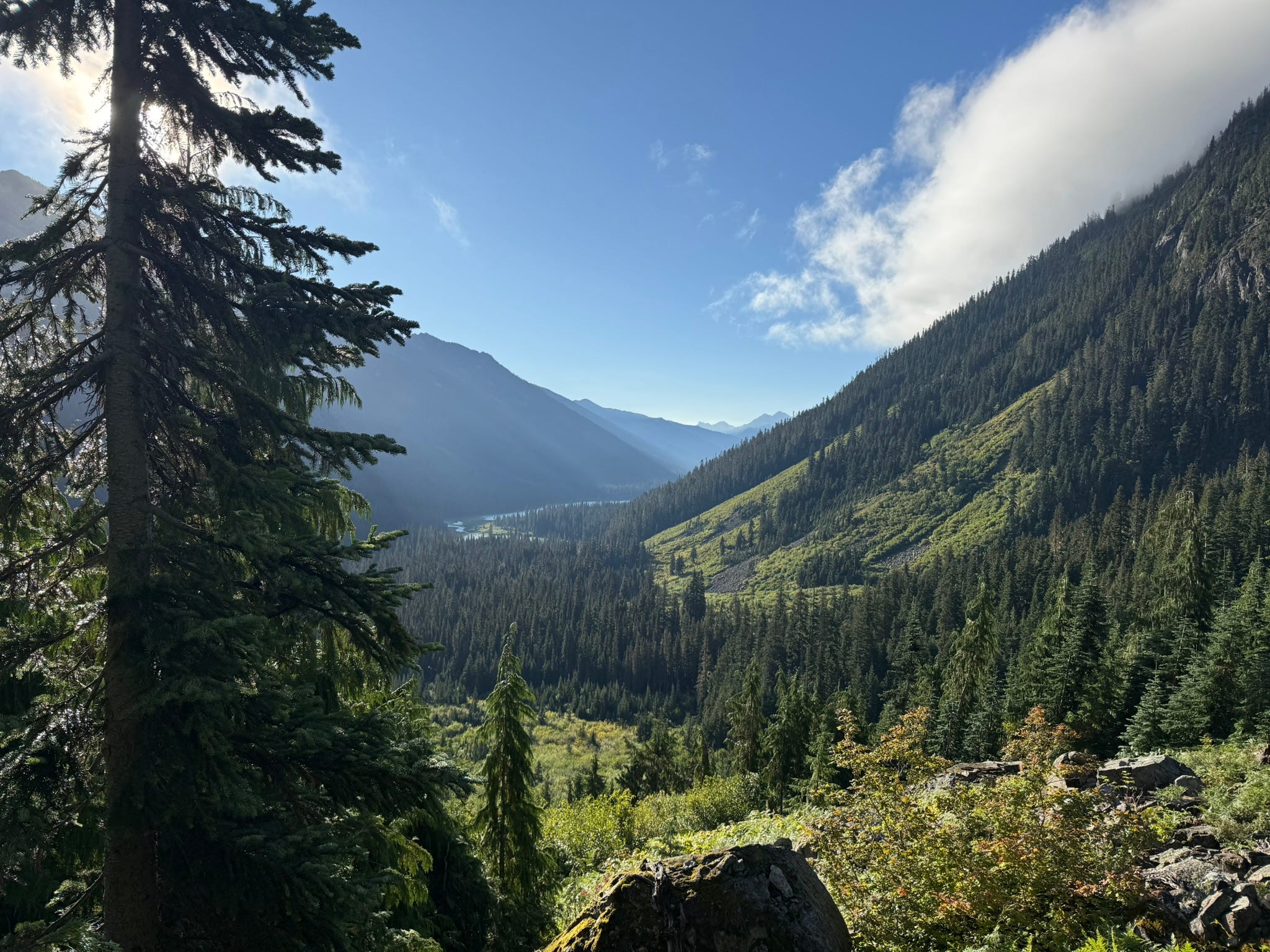
After returning to trail, it was only a few more miles before we hit Snoqualmie Pass. Less than an hour from downtown Seattle, it was initially developed as a city park in 1934 before opening as a full-service ski lift operation 3 years later. We spent one night at the Washington Alpine Club cabin, which they staff with a rotating volunteer who hosts and cooks for hikers throughout their offseason, effectively turning a century-old ski lodge into a PCT hostel. Our hike out of Snoqualmie was the unofficial demarcator of the “Real Northern Washington” we’d all been hearing about since the early days, and the views did not disappoint. With the weather continuing to hold, the lush greens of the evergreen forest lie right next to sheer rock, mostly painted with a palette of dull orange hues that could have easily been mistaken for a desert landscape.
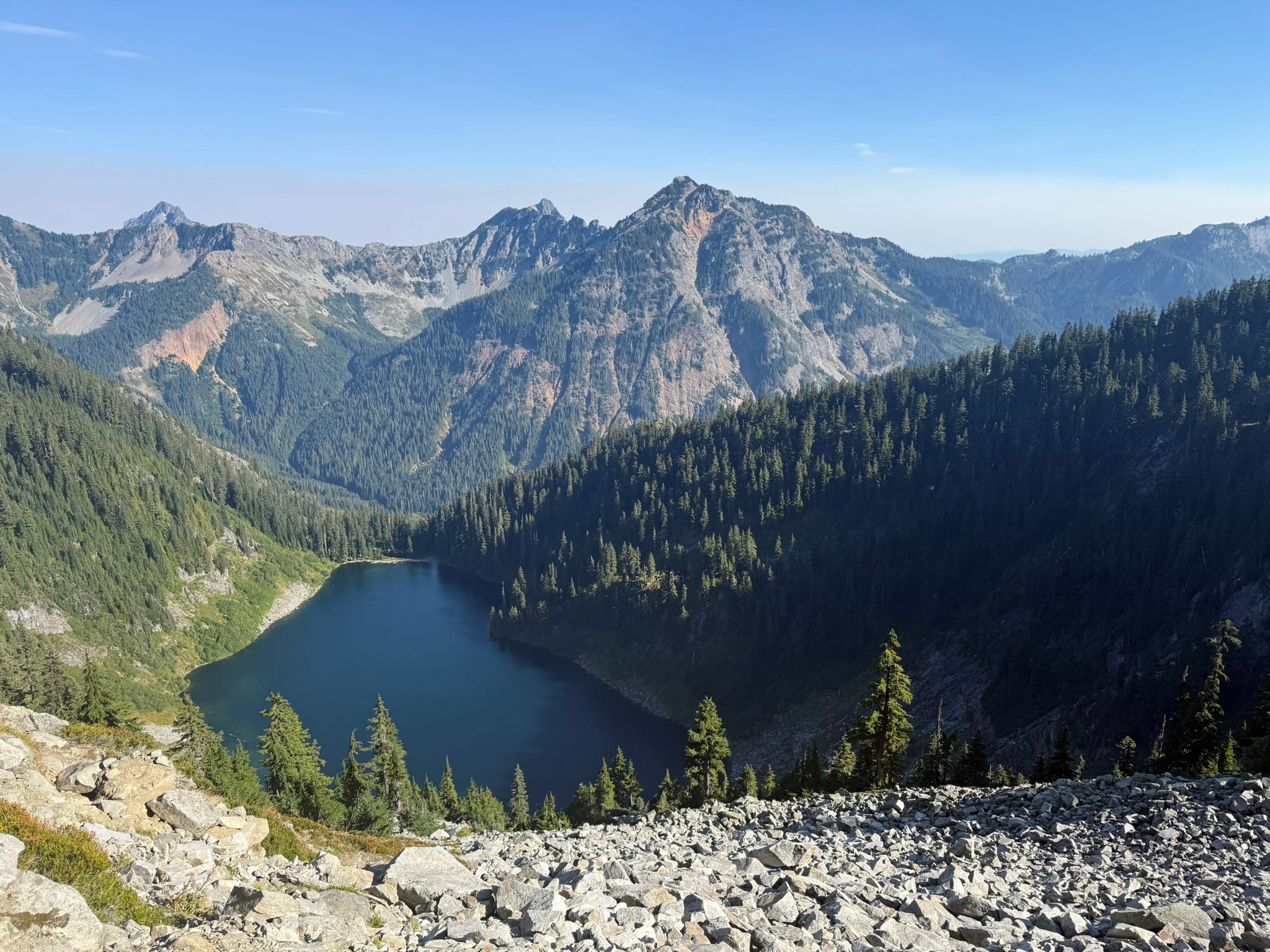
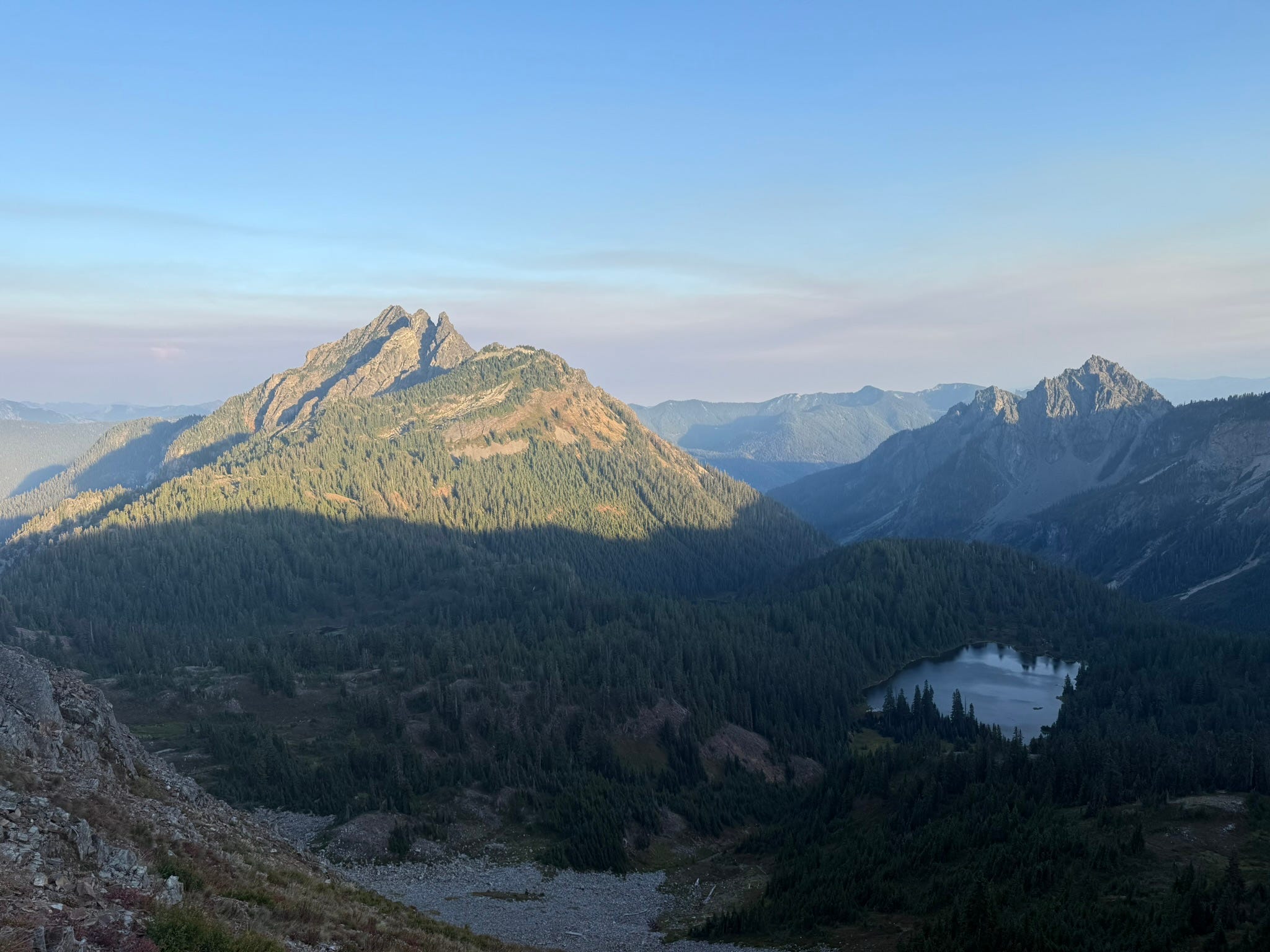
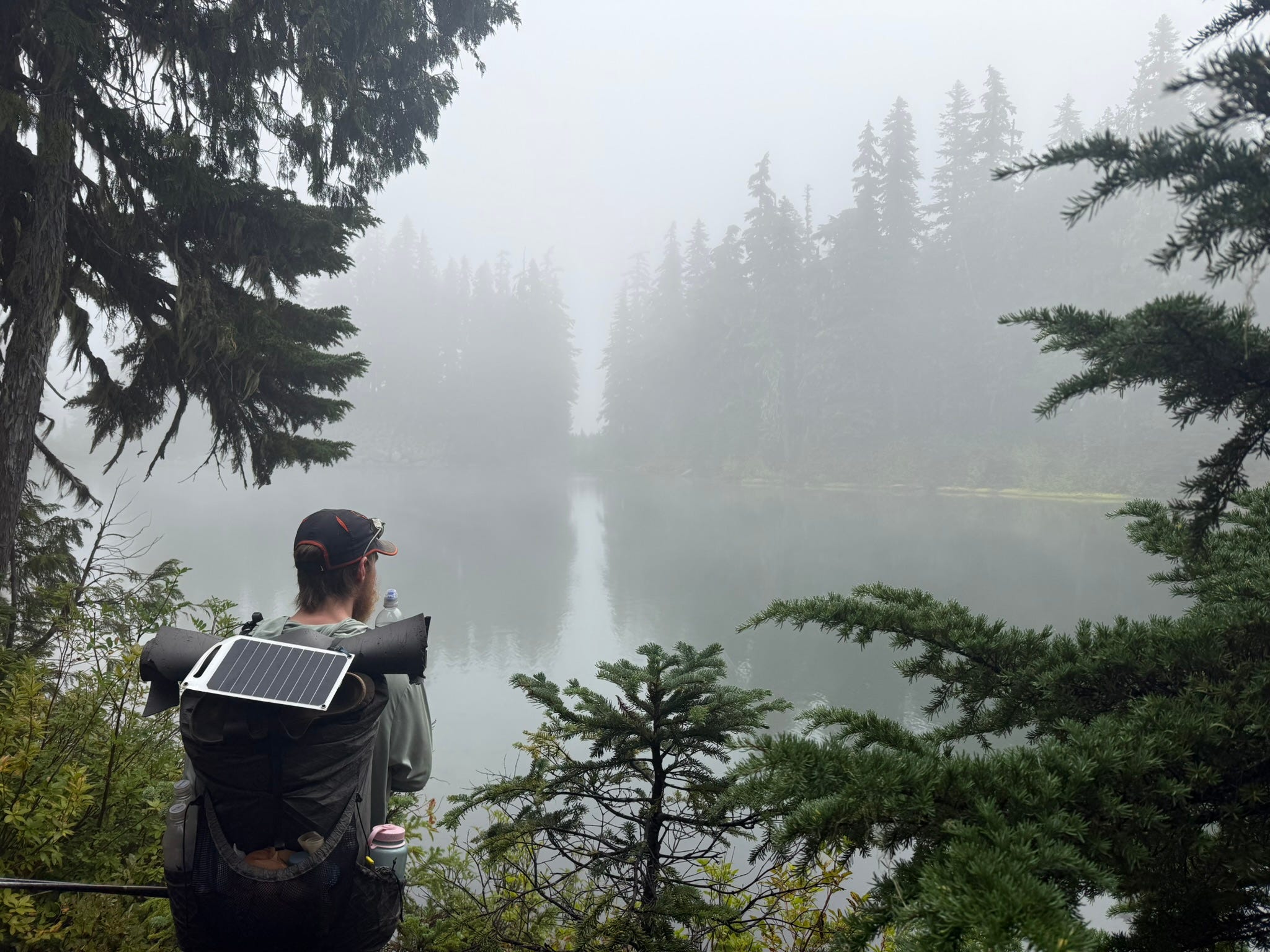
Our luck ended the second day out as the thunderstorms rolled in and brought borderline freezing temperatures along with them. At first, I wasn’t particularly phased by the light rain, electing to forgo my rain pants for our morning ascent. I convinced myself this was nothing, having grown up in the tropics, fending off a little drizzle was well within my wheelhouse. But I learned something very important that day. Miami’s rain is distinctly Latin: hot, fierce, and passionate. It comes on with no warning, drenches you instantly, and is gone before you know it. This was decidedly different; this was white people's rain: a slow, drawn-out mist that inspires false confidence only to produce death by a thousand cuts. After an hour or two, my rain gear had failed, and we were all soaked to the bone, shivering with every step. On these days, we were unable to stop walking as there was nowhere to take shelter, and such a sudden drop in body temperature would leave you flirting with hypothermia. It was undoubtedly the most miserable I’d been on the entire trail, and unlike other times in my life, there would be no hot shower waiting for me at the end of it.
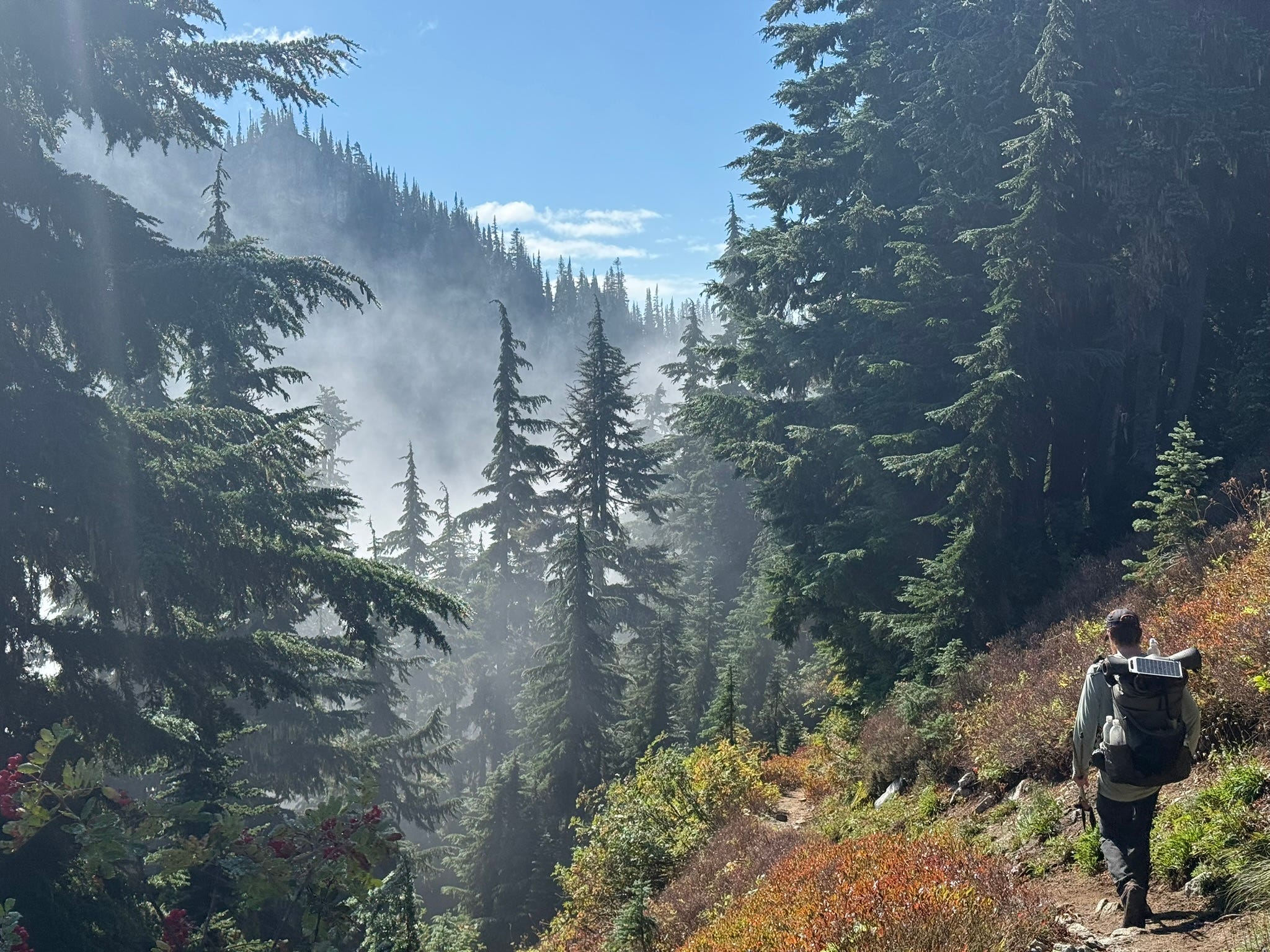
Thankfully, we were shown some mercy the following day and had only dense fog to contend with. And while unideal to put on damp underwear at 40 degrees before sunrise, the views above the clouds atop each mountain pass were not to be missed.
Having finally made it to Stevens Pass, we got a ride down into the charming Bavarian-themed mountain town of Leavenworth (Washington, not Kansas). With Dylan and me having lost Mo, Margot, and Bella in the melee of the previous stretch, we were reunited in town, where we stayed at an Airbnb with 15 other hikers. As the last stop of any real size on the trail, people were going all out: the laundry machine was on overdrive, our belongings were strewn across the floor, and assembly lines repackaging ramen noodles & potato chips into Ziploc bags popped up everywhere. Once all the hard work was done, beers flowed, and the hottub’s capacity was constantly tested as hikers rotated out for cigarette breaks (at this point, many had decided their lung capacity was no longer going to impede the goal of finishing). It was the kind of scene that I imagine keeps Brian Chesky up at night.
While the town of Leavenworth is a caricature designed to drum up tourism, even the many Germans amongst our group admitted it was more charming than anticipated. At night, festoon lights illuminated the gabled roofs adorned with wooden shingles. Mo couldn’t help but smile and reminisce about winter visits to his grandmother in Tegernsee.
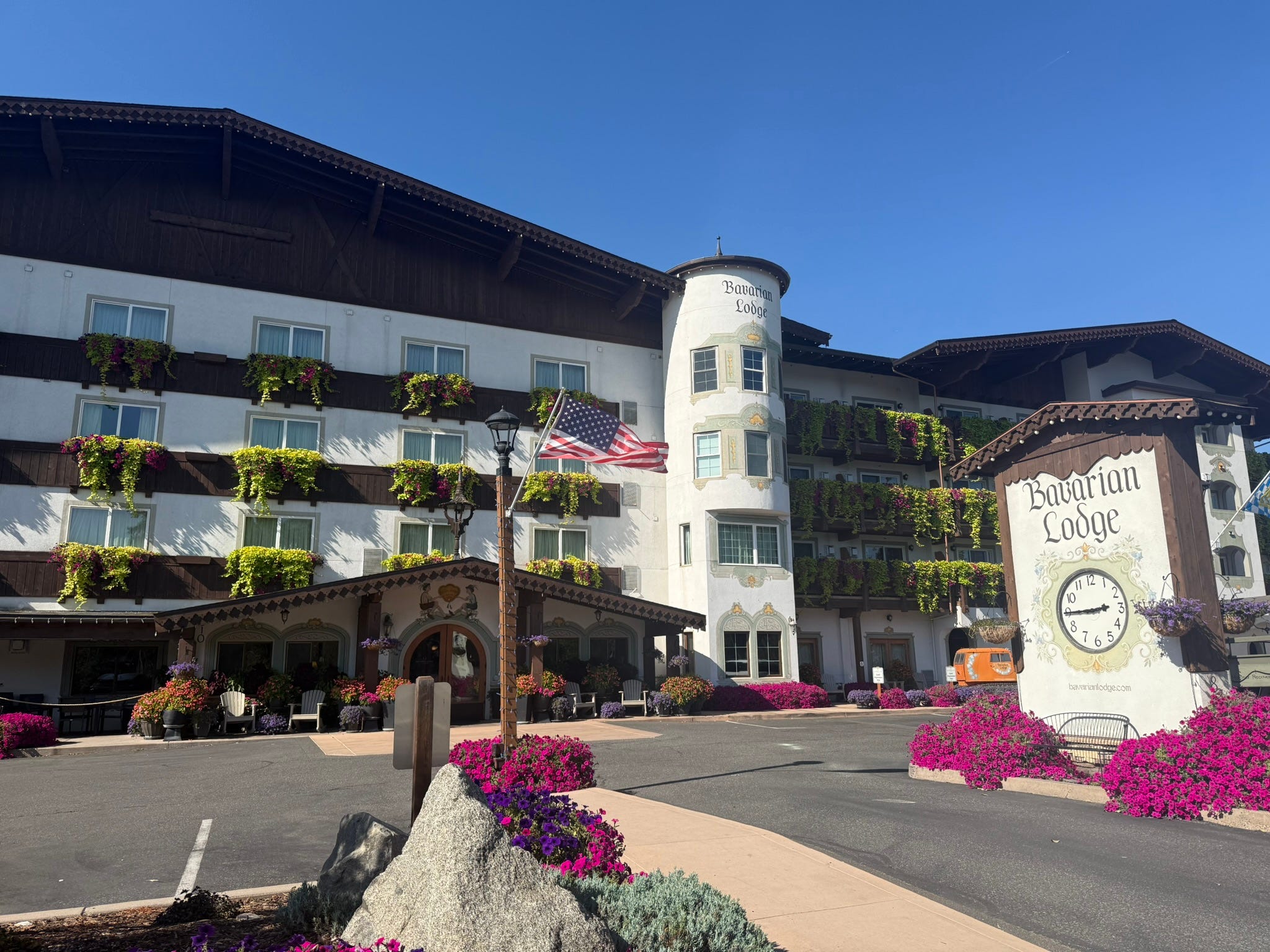
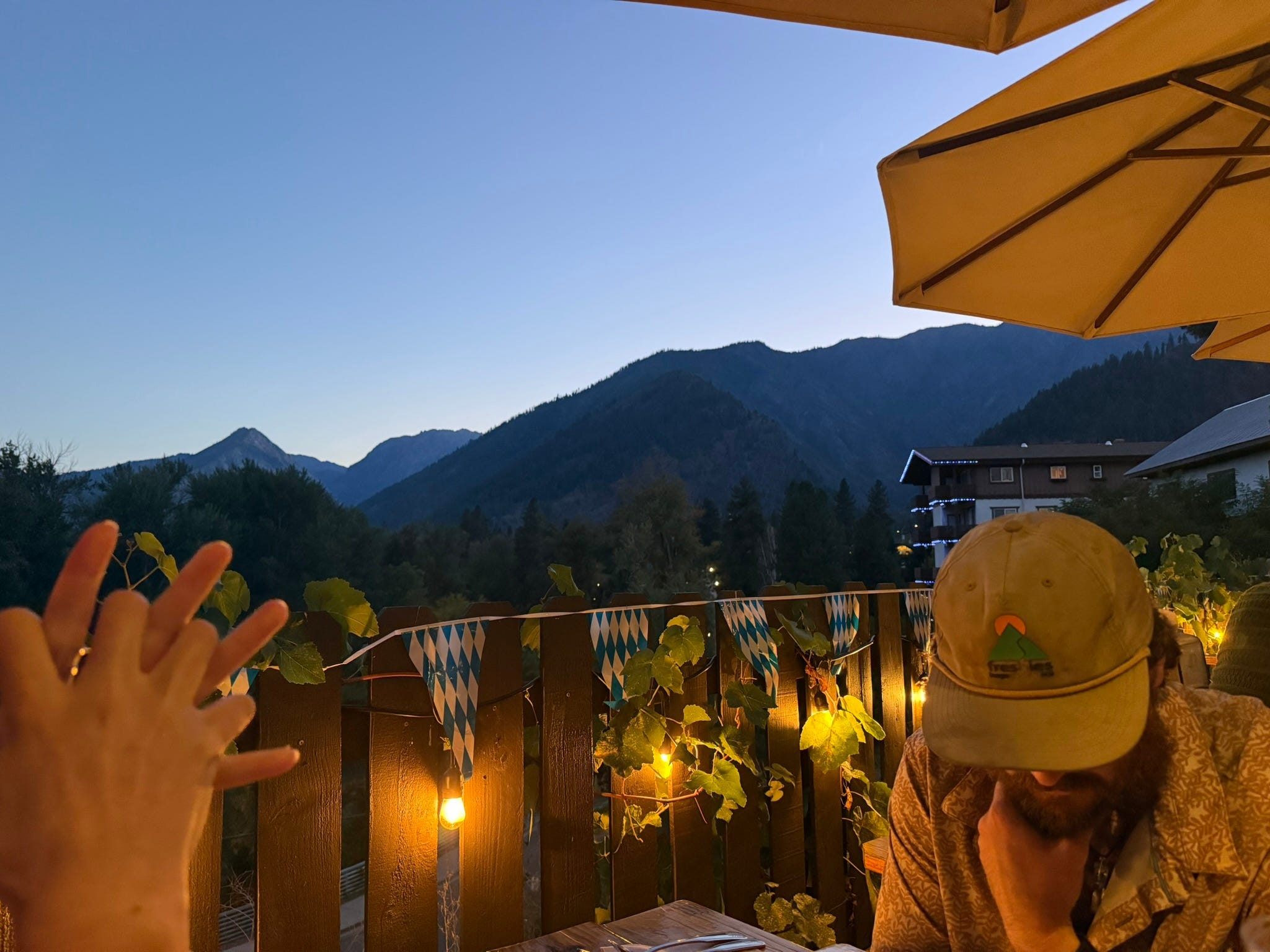
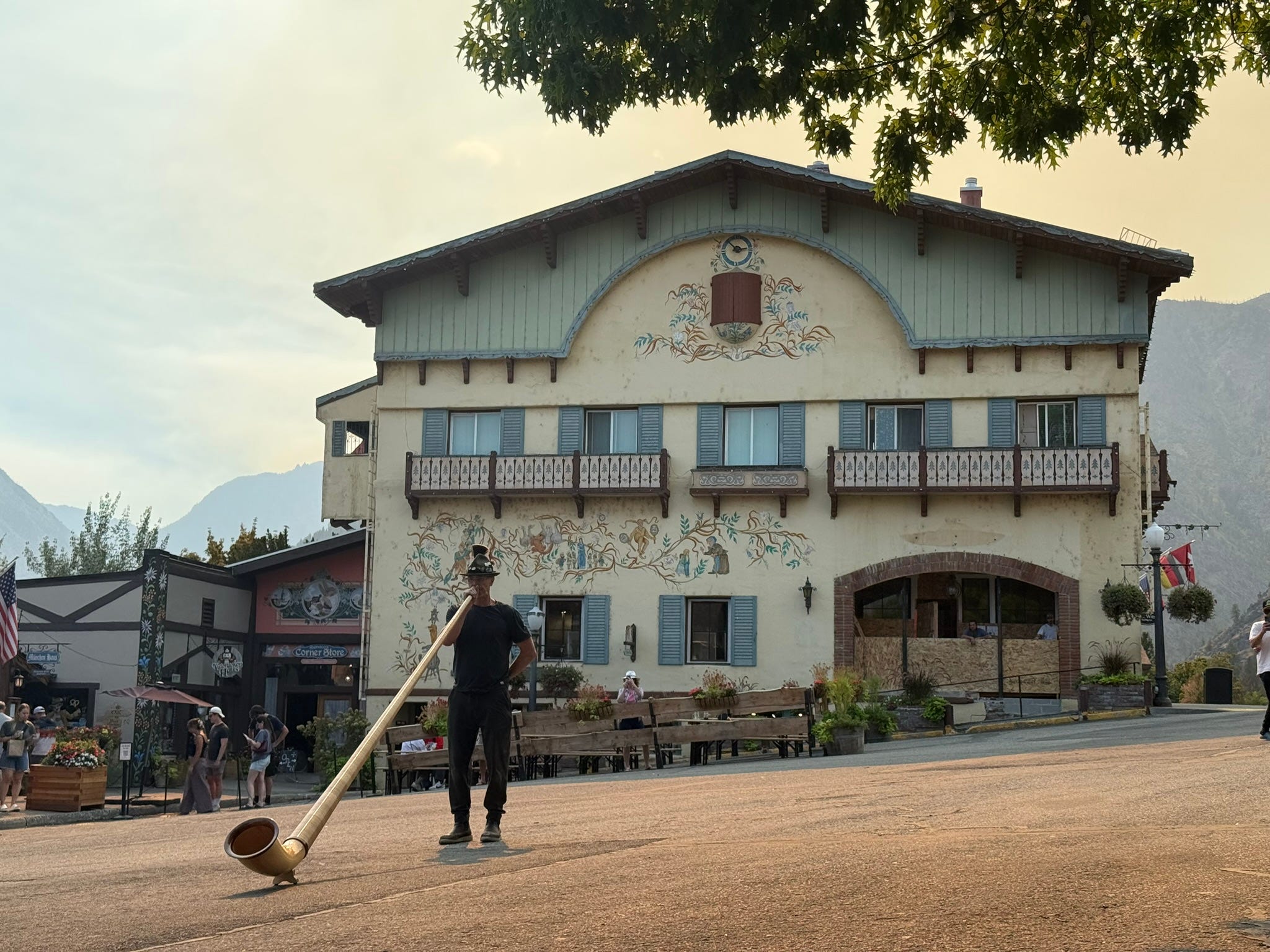
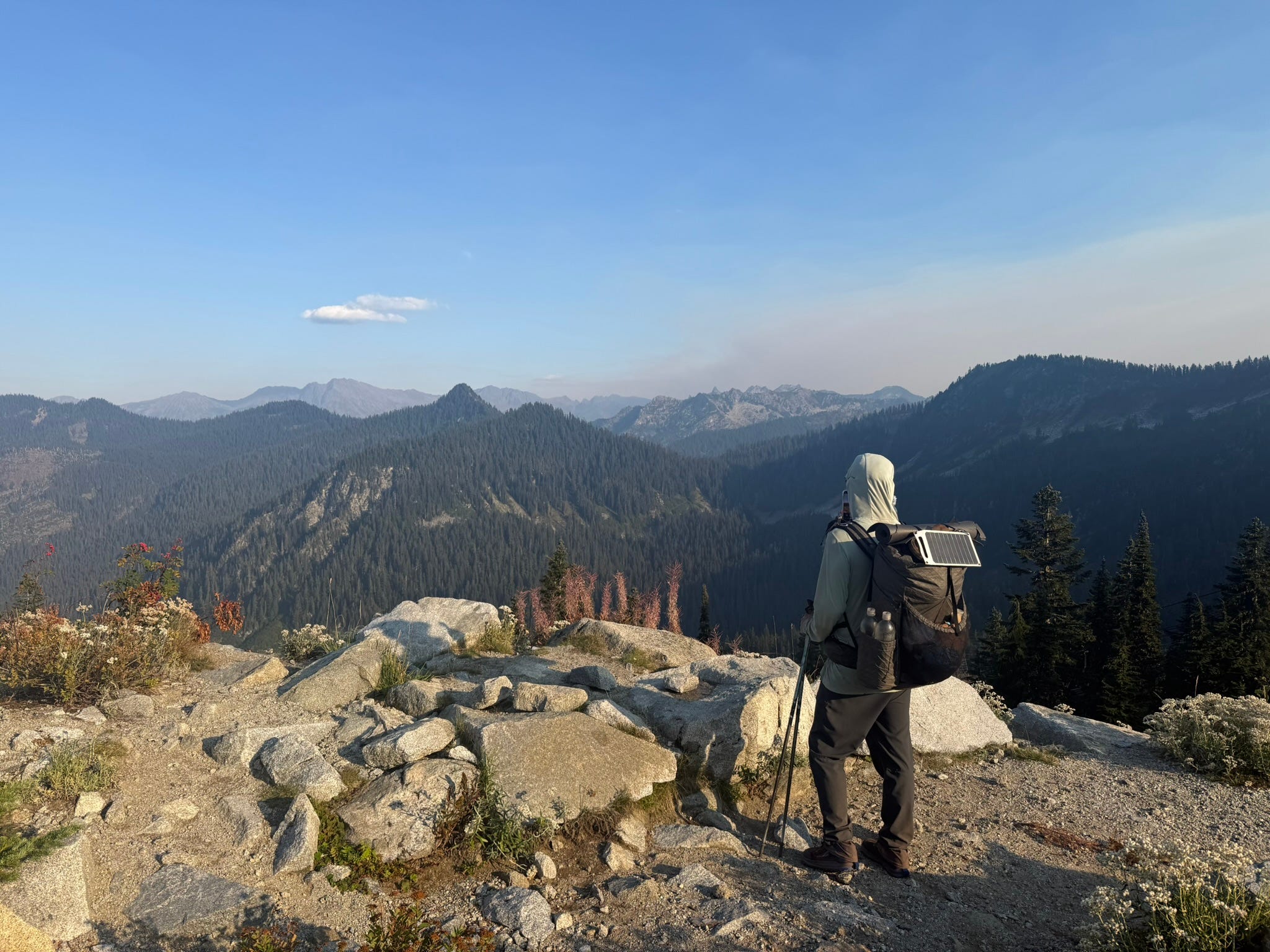
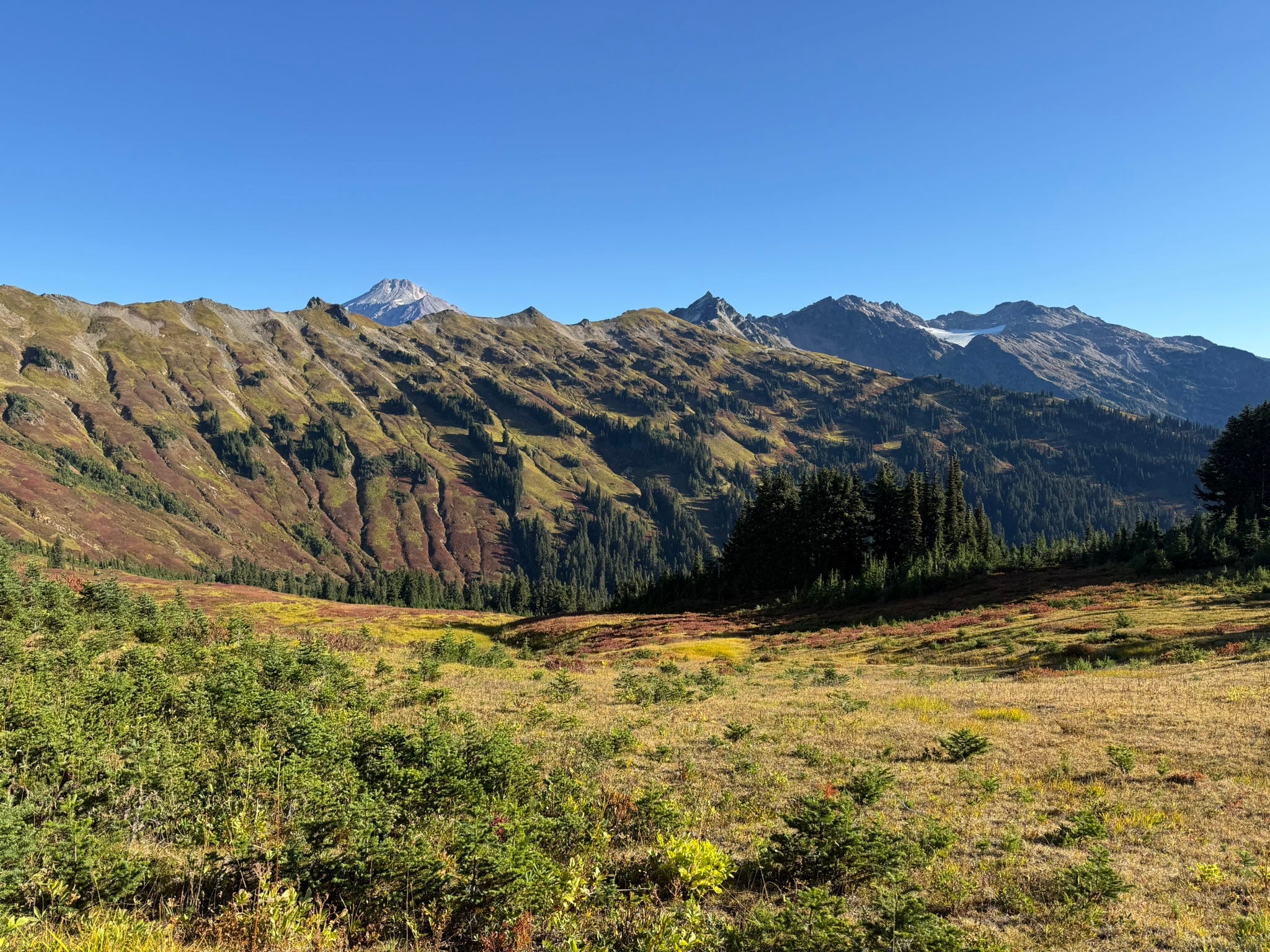
The final two weeks of the trek were among the best of my life. It started with a spontaneous decision to stay an extra day in Leavenworth, as we were all having too much fun to leave quite yet. Once back on the trail, the scenery was breathtaking, and the changing of the seasons was no longer in question. Blueberry bushes turned entire hillsides to seas of crimson, ruby, and scarlet. Steeper terrain sat in stark contrast, as the famous larches, which (unlike other conifers) lose their needles in the fall, turned to shades of amber, saffron, and brass.
Despite having heard about the majesty of this landscape for months, the grandeur did not disappoint. It reinforced a learning that rang true throughout this entire experience: true natural beauty that is visited sparingly and left unscathed by humanity cannot be oversold.
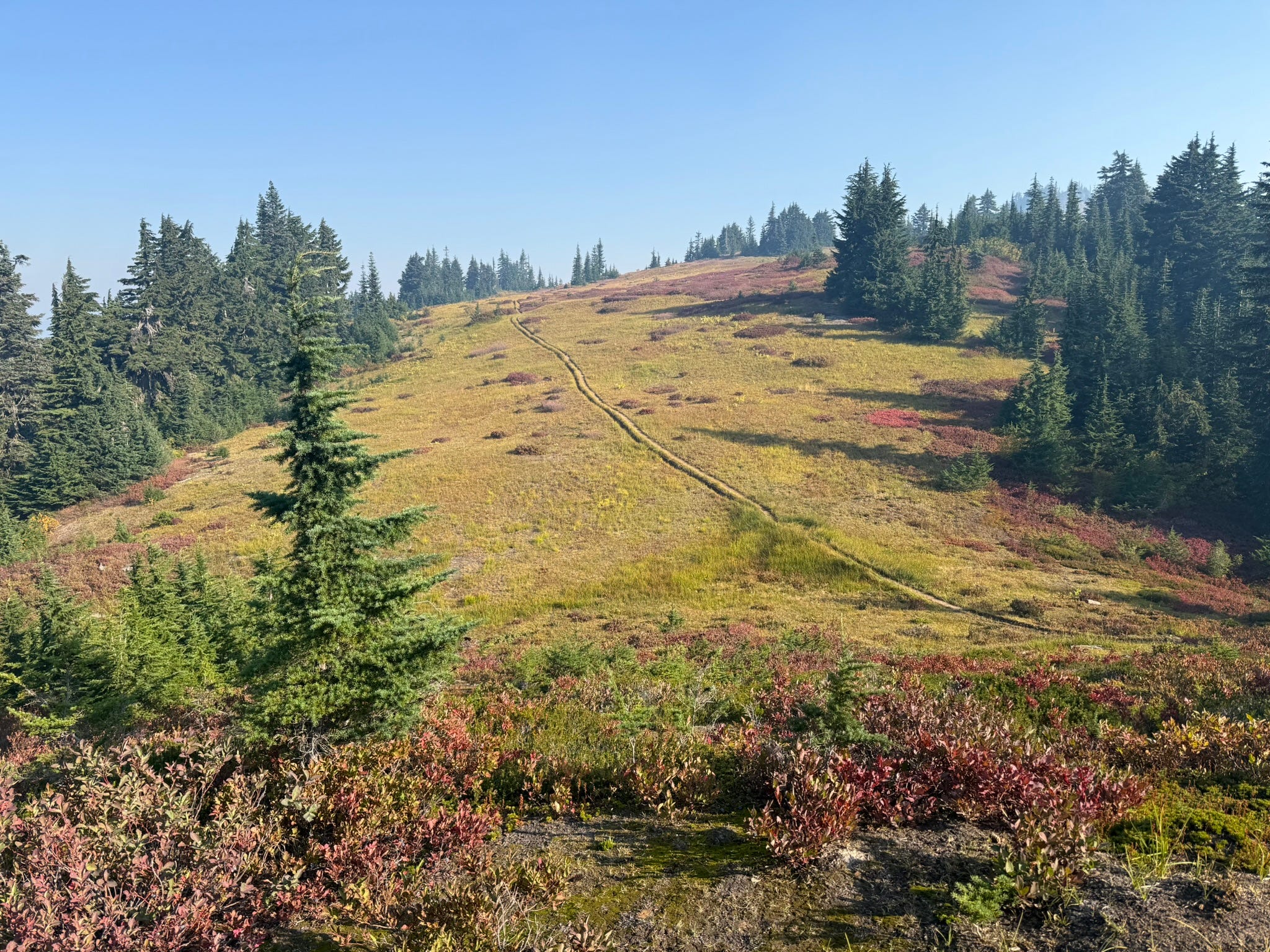
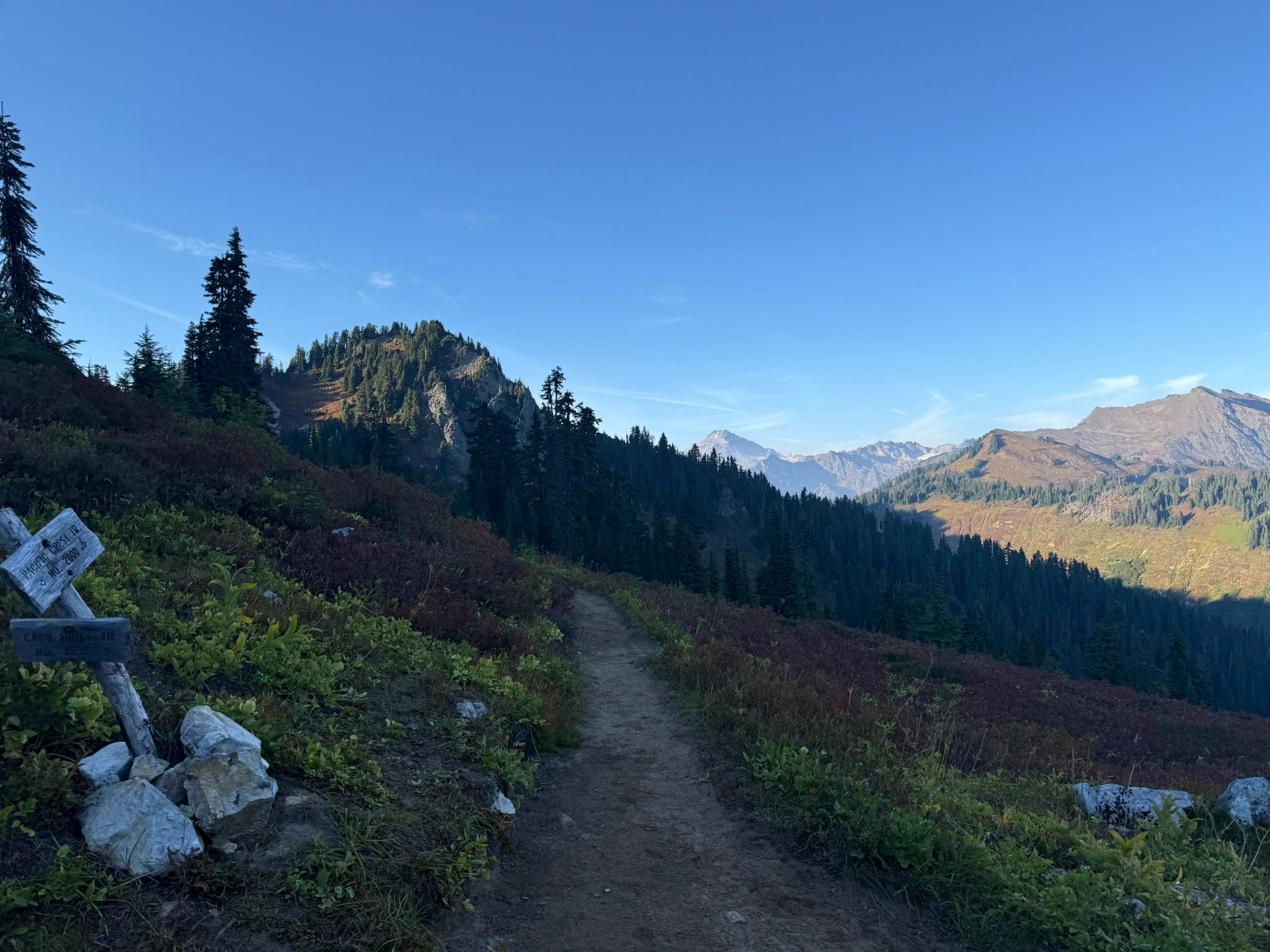
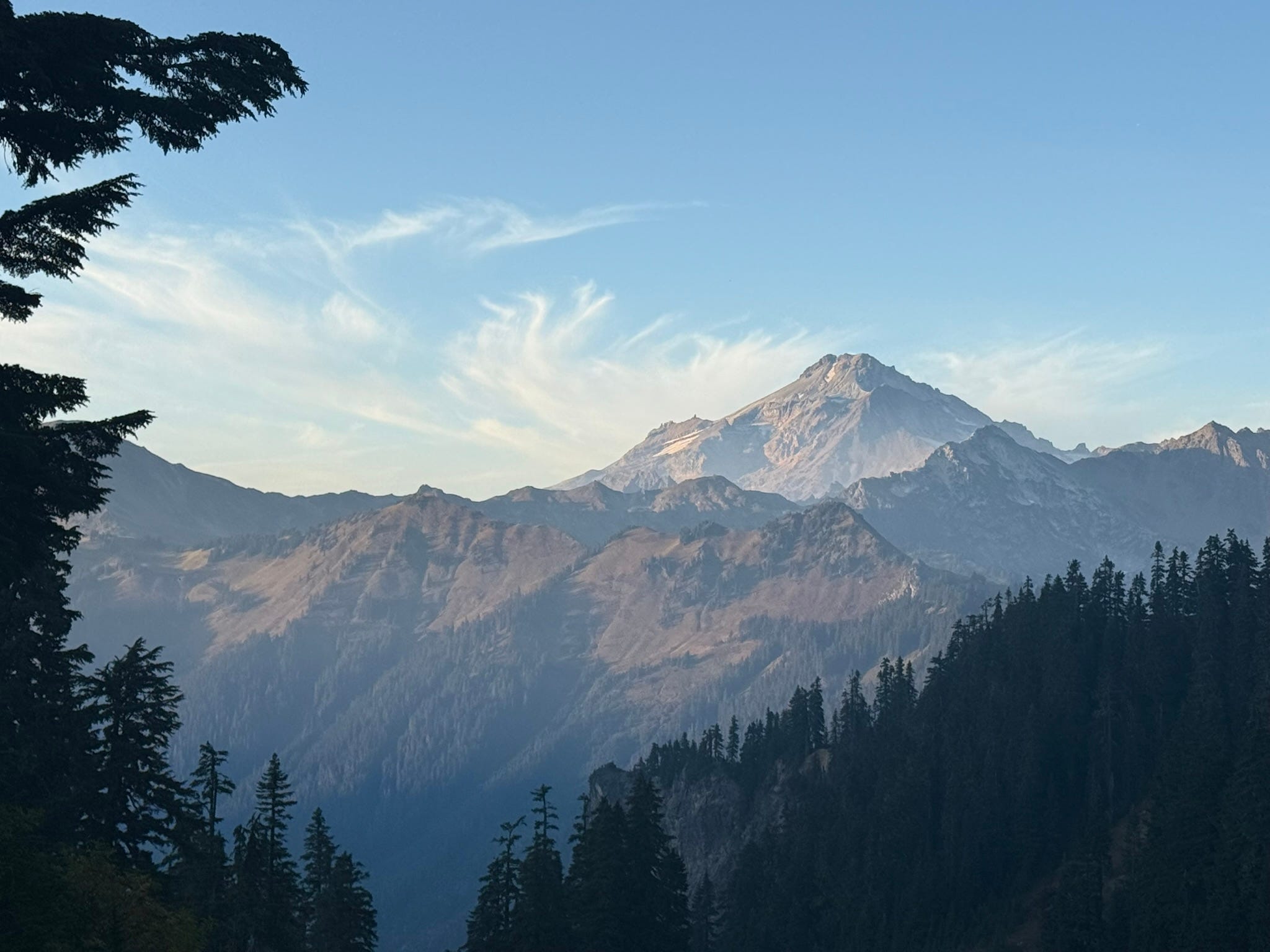
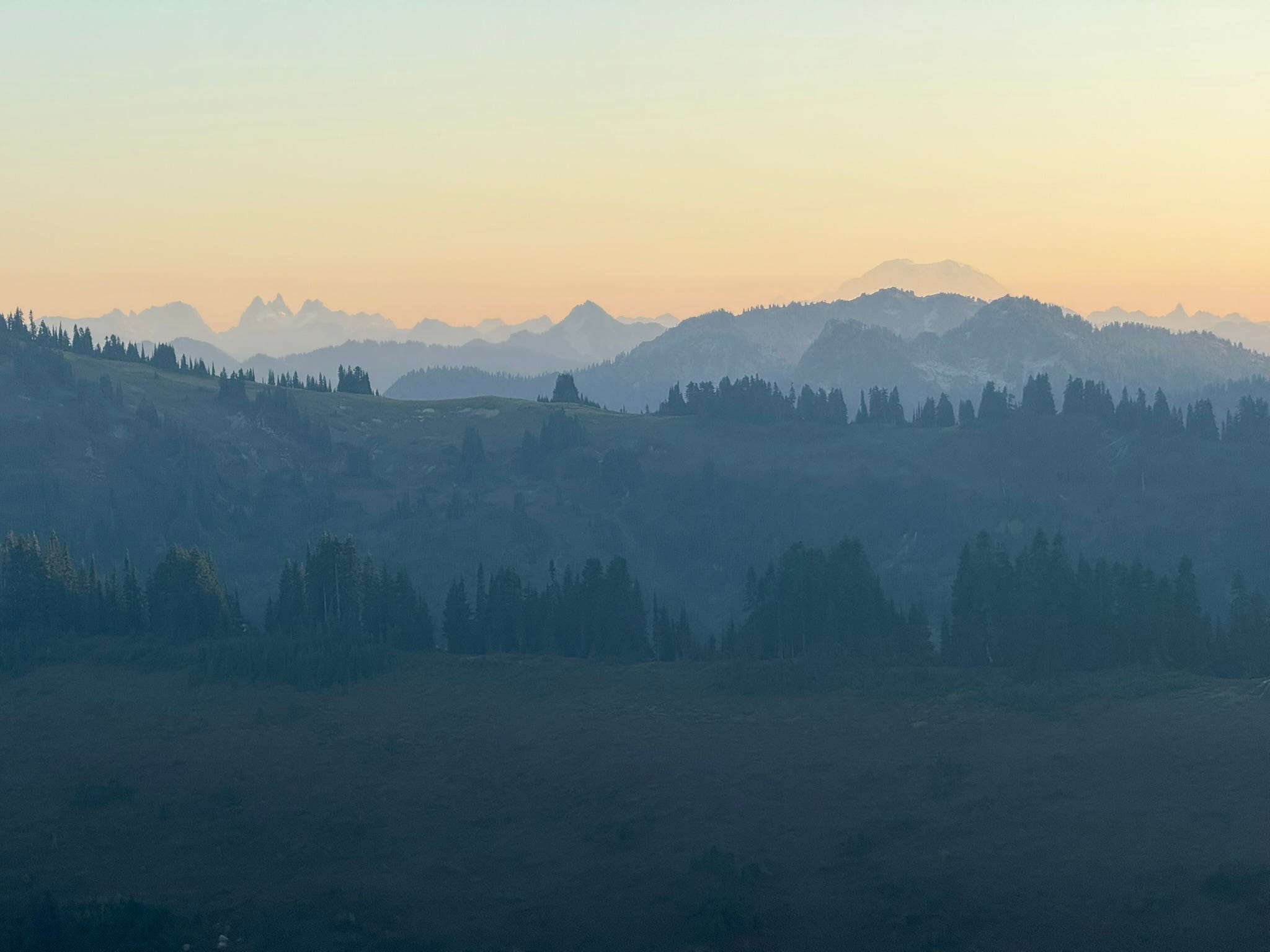
As the weather cooperated and the landscape opened up, we were treated to the jewel that is Northern Cascades National Park. The park is the least visited national park in the lower 48 (and the only one in the bottom 5 on America’s mainland), with only 16,500 visitors last year. That's 738 times less than Great Smoky Mountains National Park, the most trafficked in the system, with over 12 million.
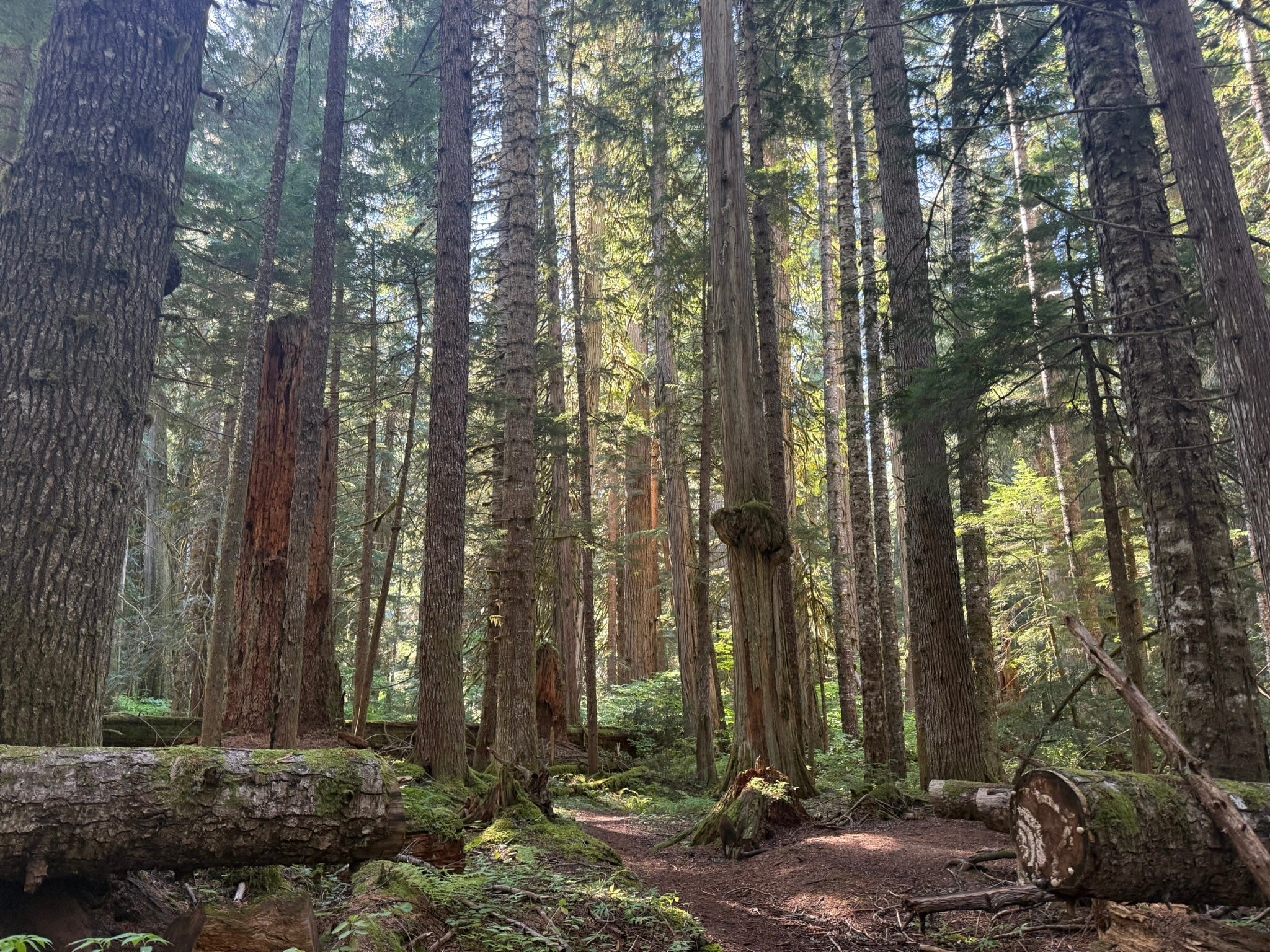
Alpine lakes, smooth valleys, and craggy crowns were present as they often have been throughout the trip, but the sheer scale of untouched land was unlike anything we’d experienced up until that point. Each ecosystem we encountered, whether deep in the forest or well above the treeline, felt like walking along the same environment that had been there thousands of years before. The animals were not conditioned to human intervention, the trees were left to grow and die in their natural cycles, and the rivers were wild, silty, and undammed for reservoirs or hydroelectric power plants. The trail itself was the only sign of human life, and a transient one at that.
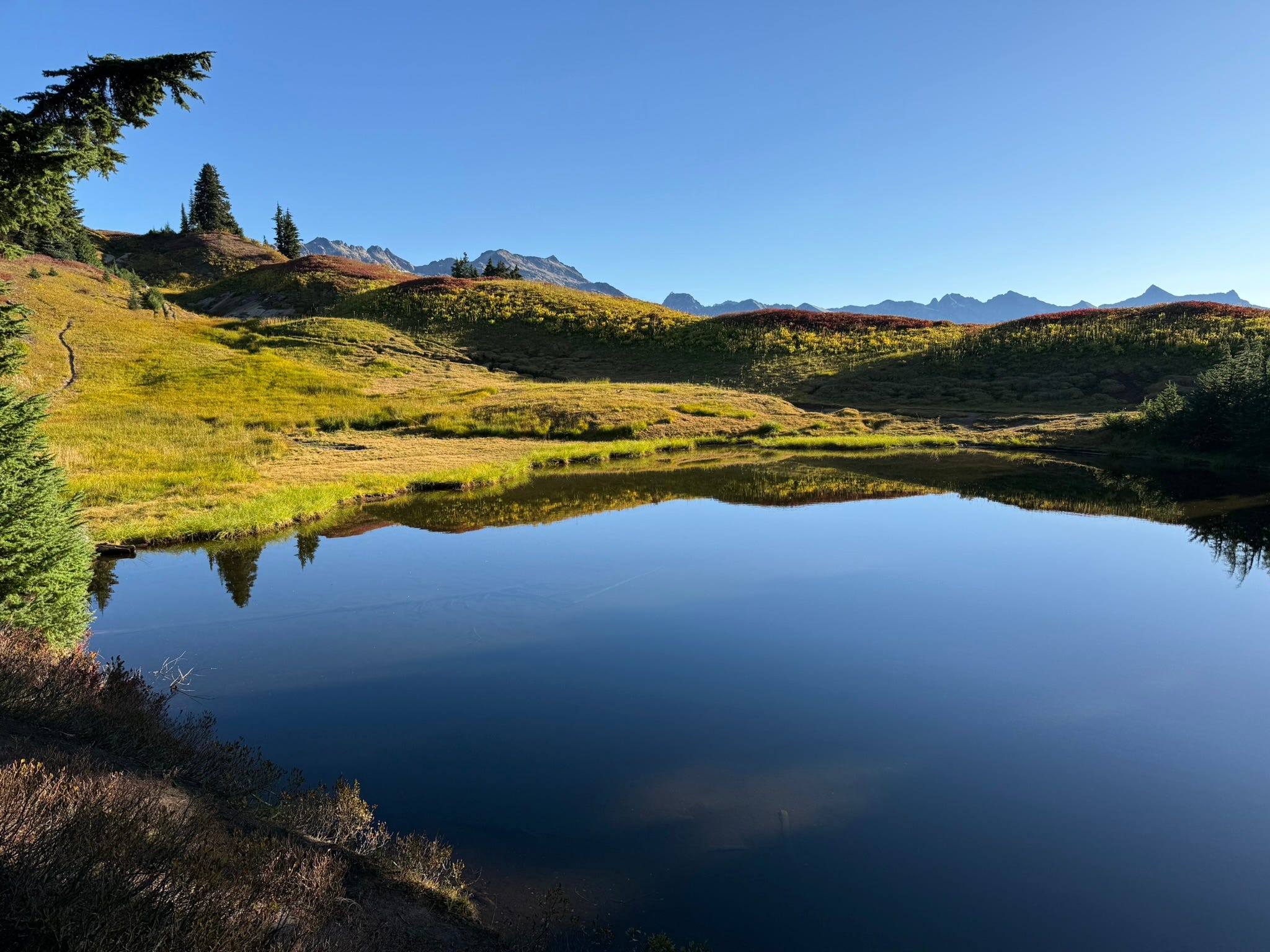
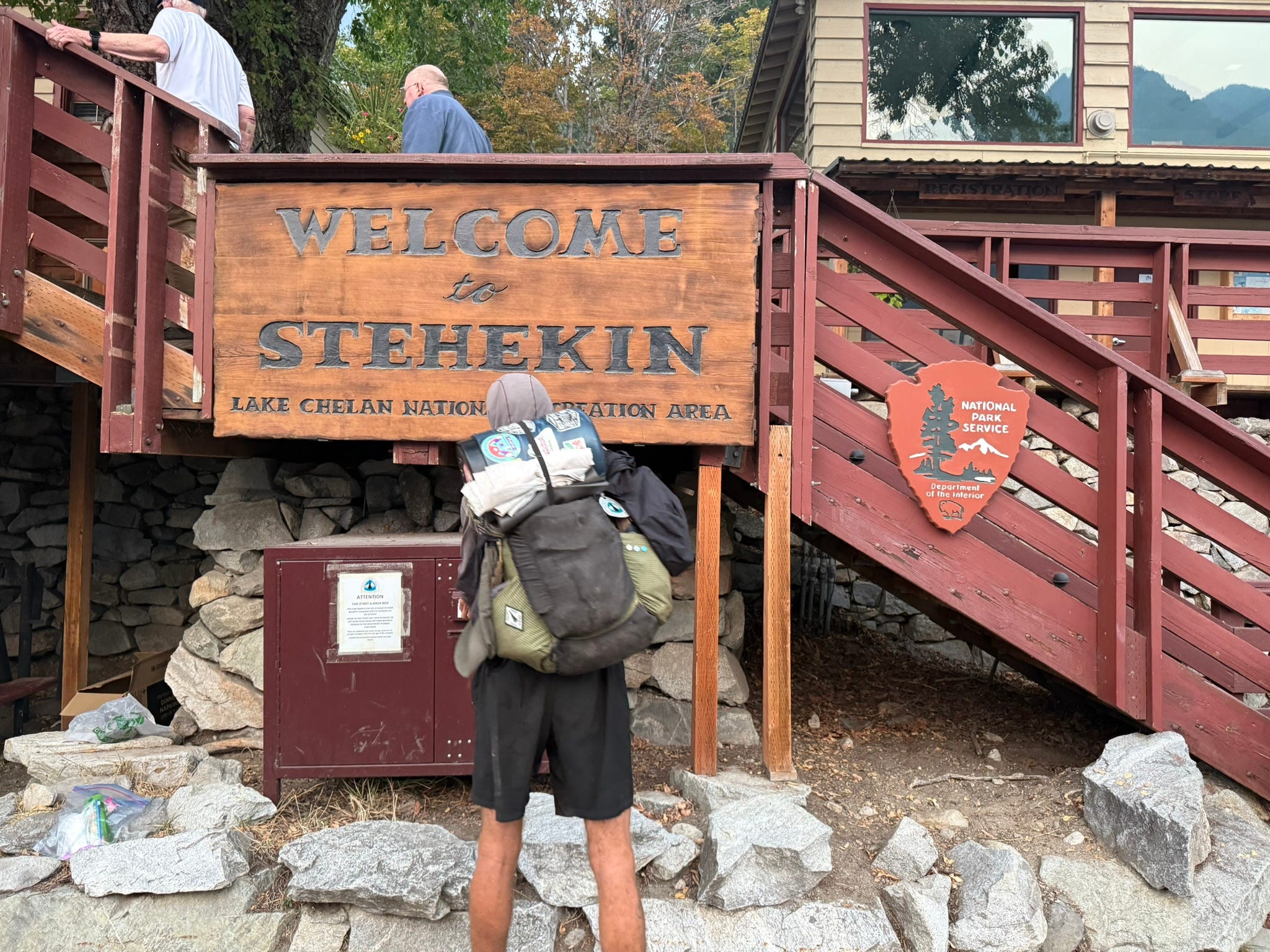
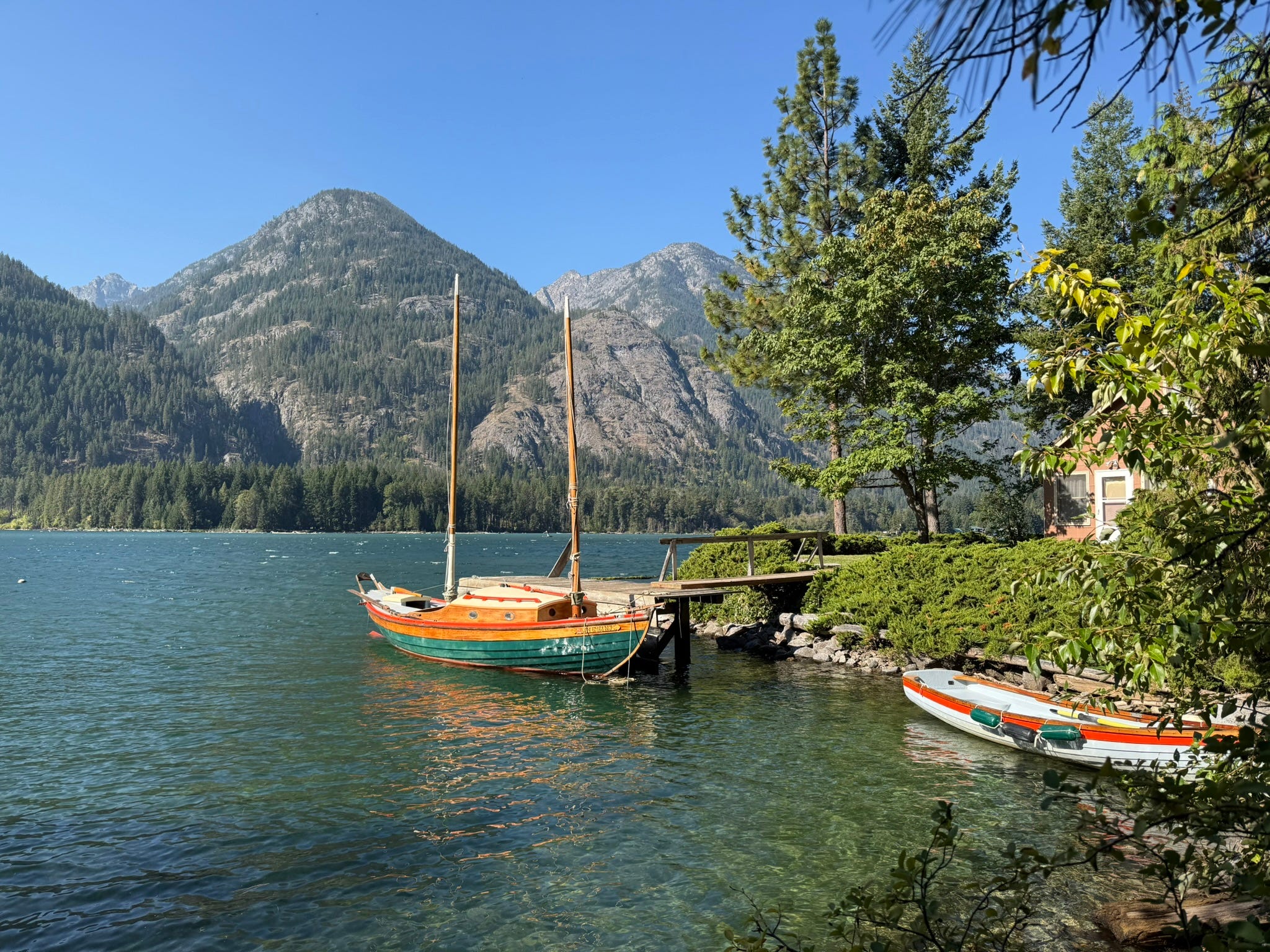
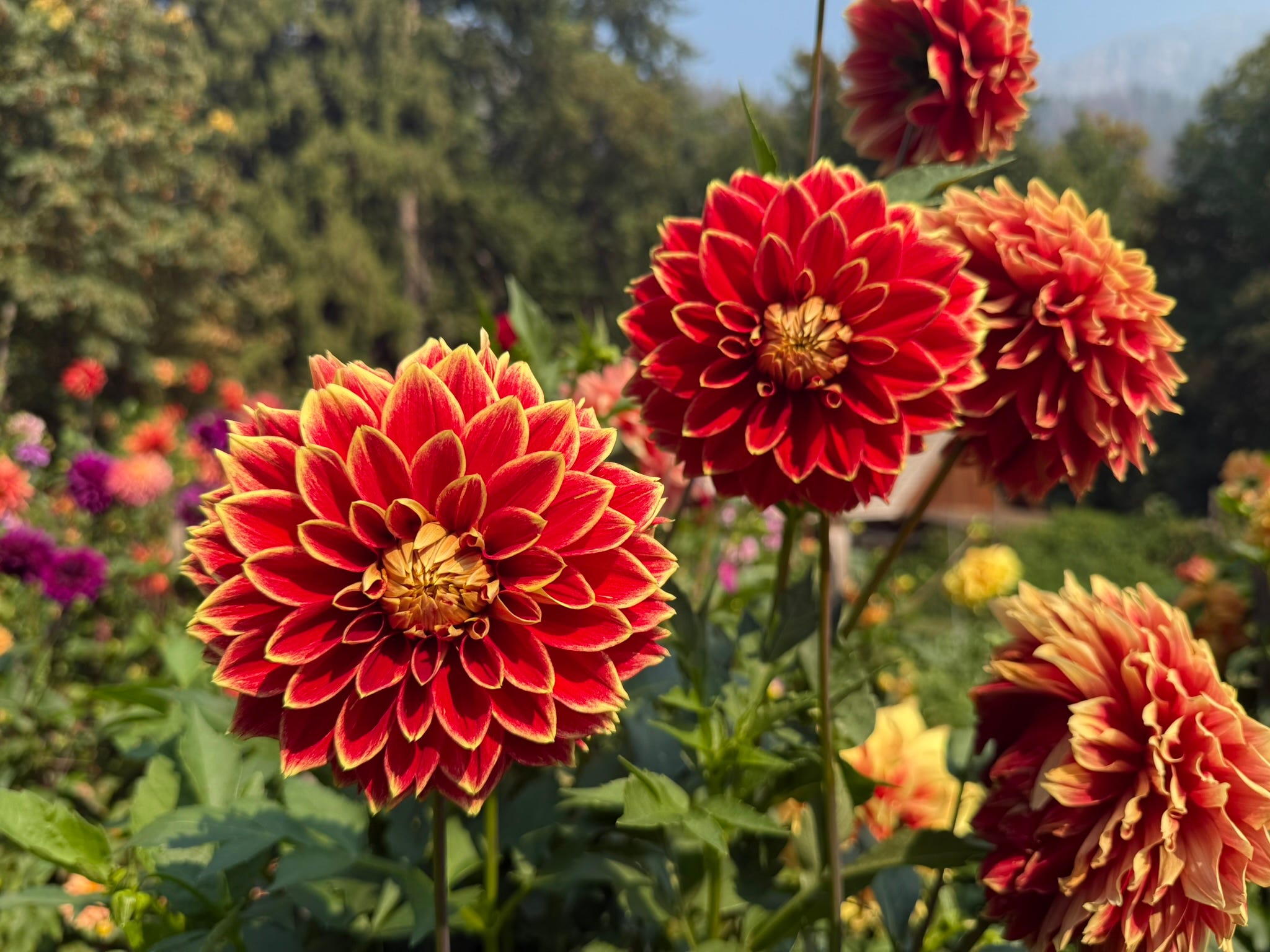
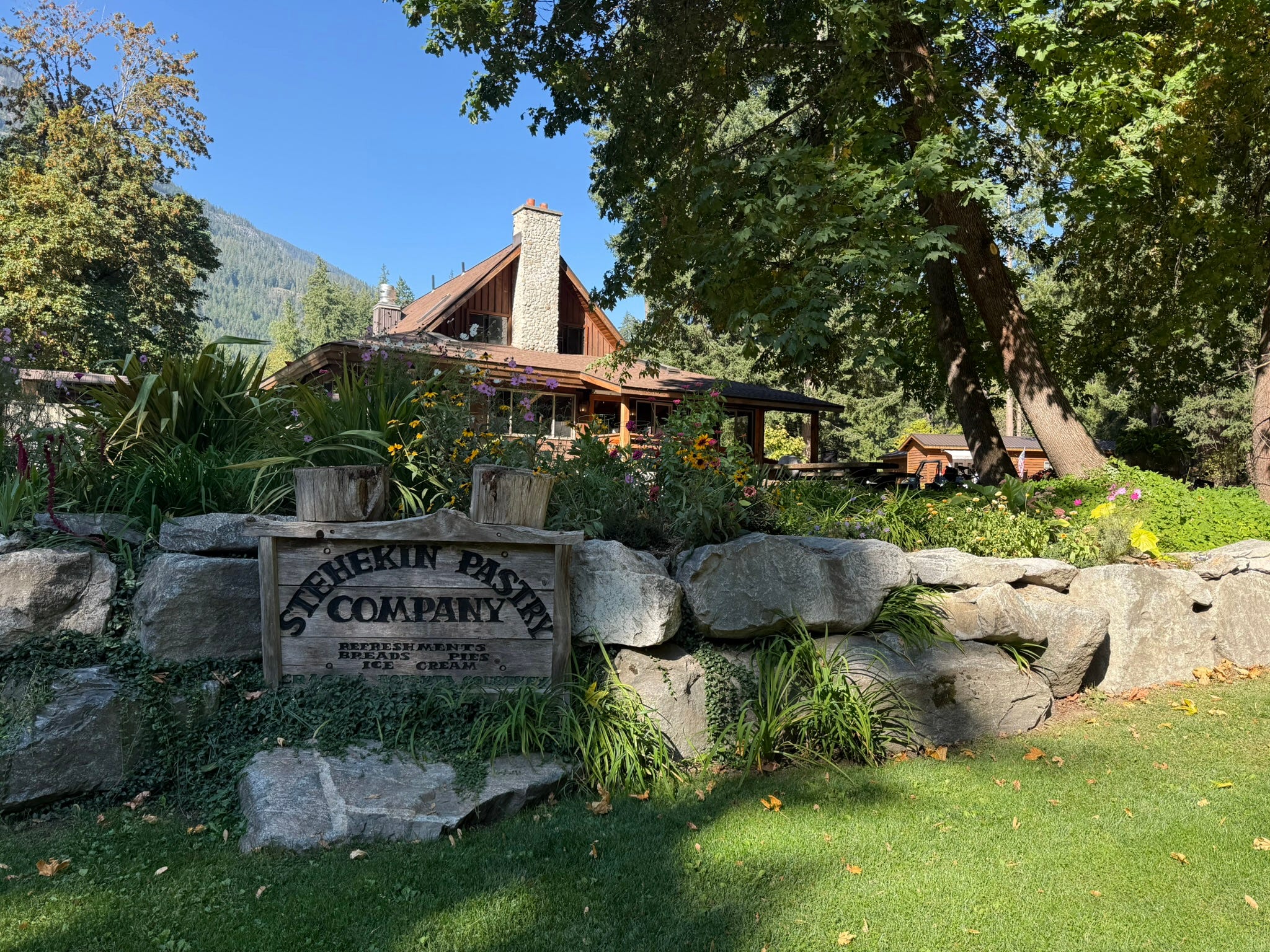
Our final resupply stop was in the rural outpost of Stehekin, which sits on federal land and can only be accessed by foot or a 4-hour ferry ride from the other side of Lake Chelan. For most practical purposes, the population is cut off (or at least heavily delayed) from our deeply interconnected society. What’s grown in its place is a beautiful township filled with charming architecture, sprawling gardens, and a tightly knit social fabric.
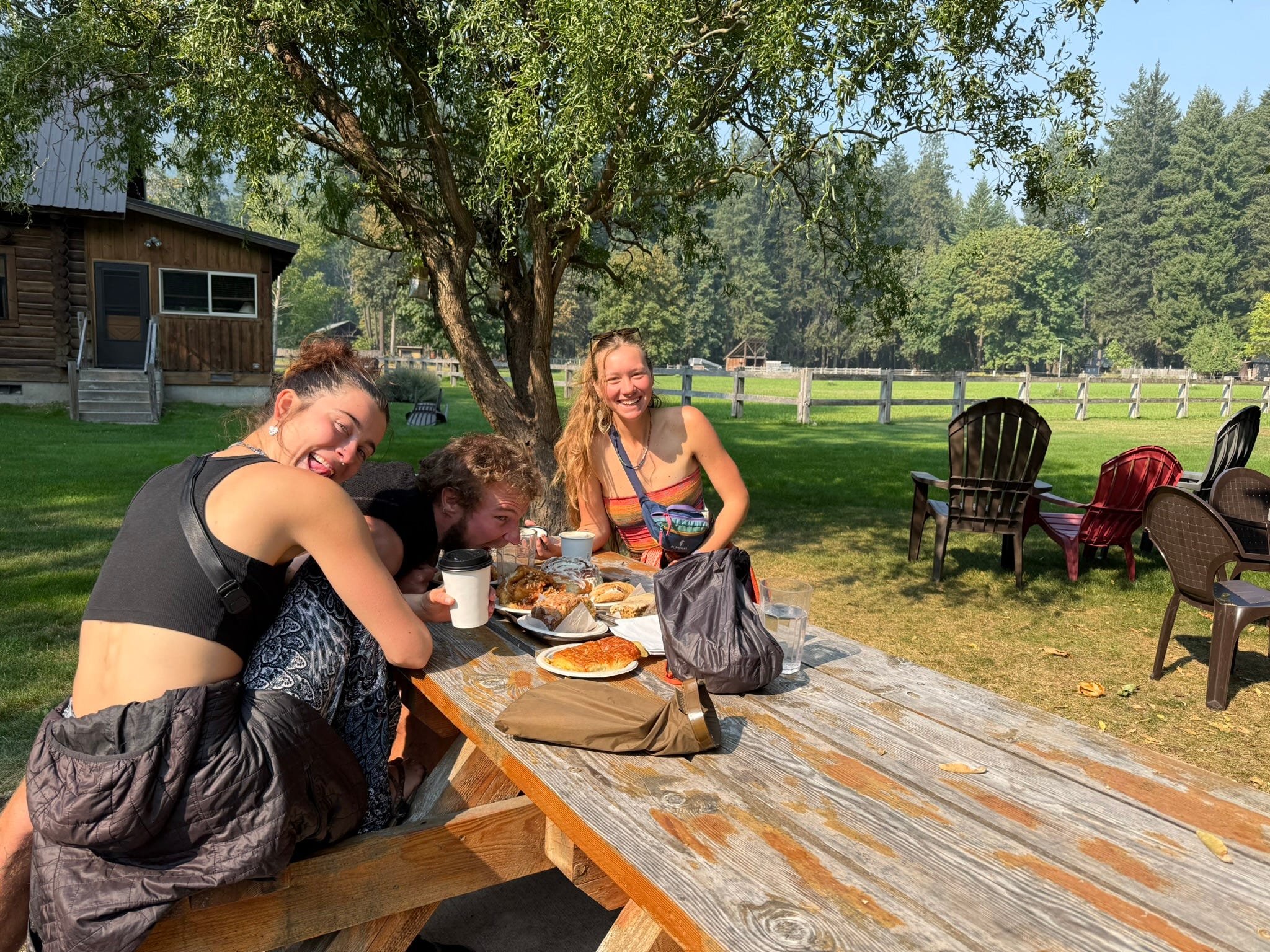
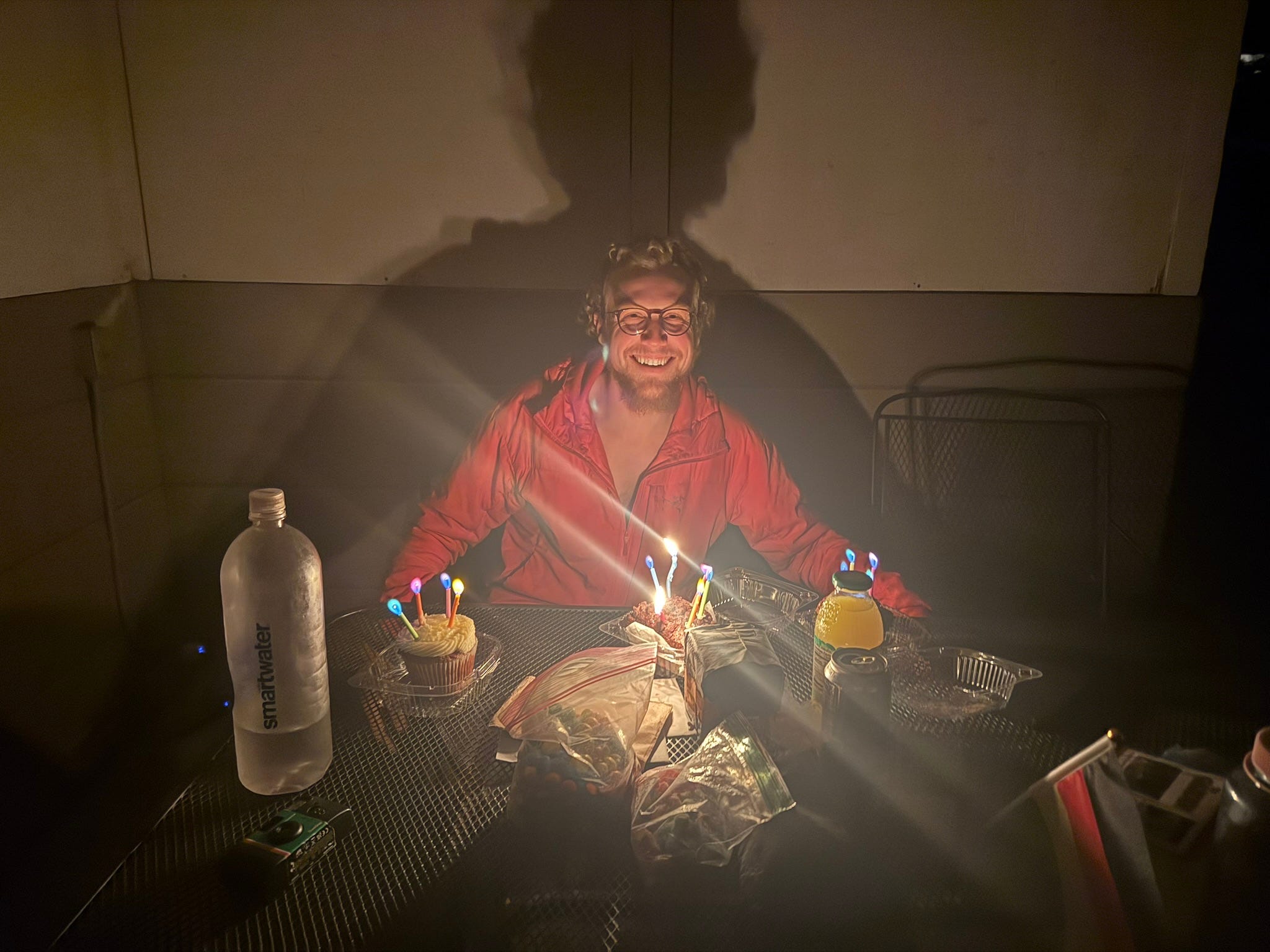
We happened to be there on my birthday, and my trail family went all out to make it one of the most special of my life. We spent the afternoon eating from the famous local bakery in between games of interperative cornhole. That evening, we commandeered a small park on the water where we exchanged laughs, handwritten letters, and plenty of tears. One of the best parts of Stehekin is that it’s bereft of cell service and wifi, save for the one hour that the ferry is docked each afternoon. While it was sad to be apart from loved ones, having everyone around be completely present was among the best birthday gifts I’ve ever received.
Reluctantly leaving Stehekin meant we were beginning the final days of the trek. The views continued to impress, even as wildfire smoke being blown up from the south brought the AQI into the 200-300 range. But we were well past the point of stopping for just about anything; we were going to finish regardless of conditions, because in all likelihood, worse weather would follow. Eventually, the winds changed, and we got spectacular vistas and more serenity. I also saw bears #3 & 4 of the trip over the last 4 days, adding to the majesty.
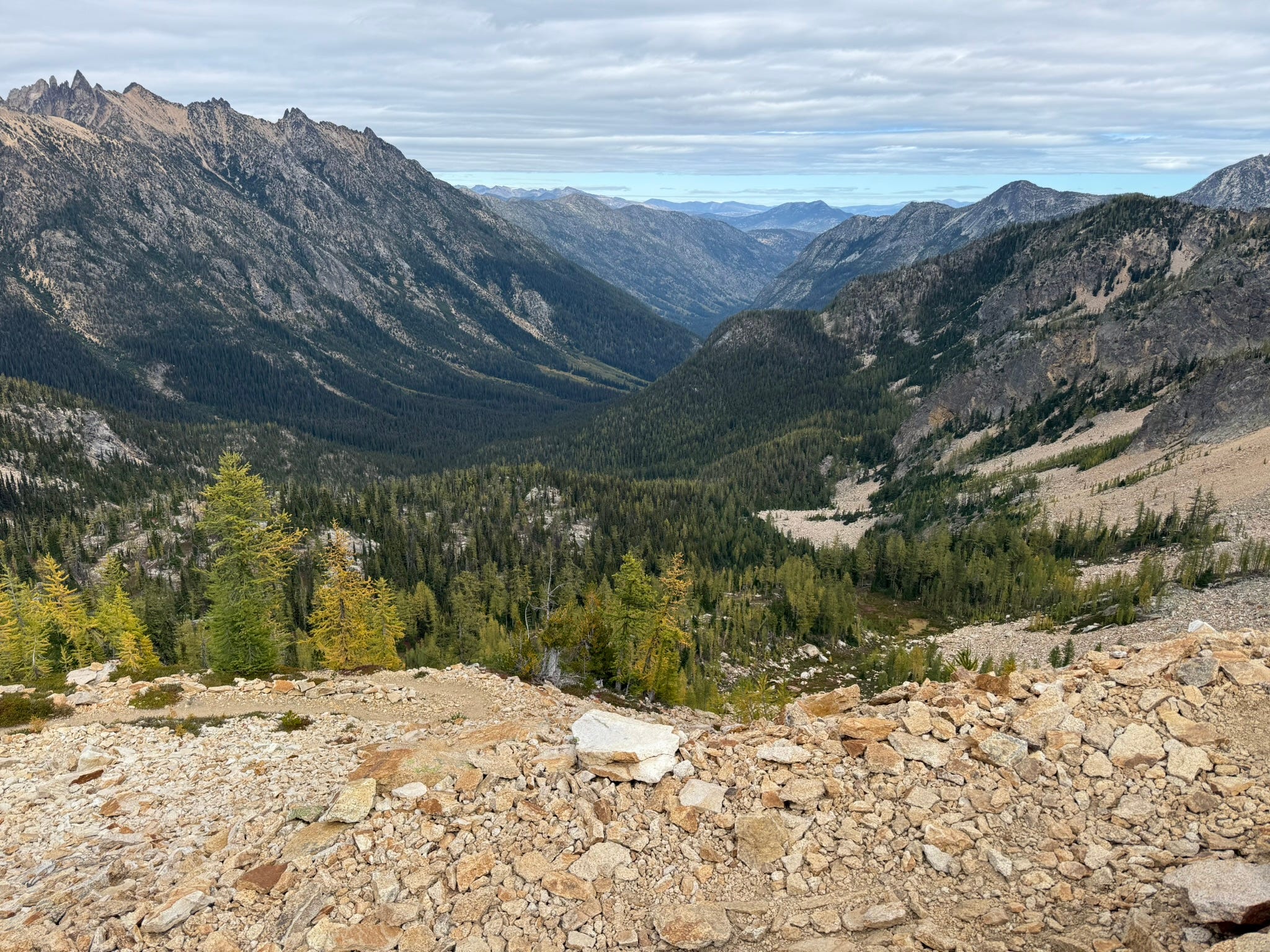
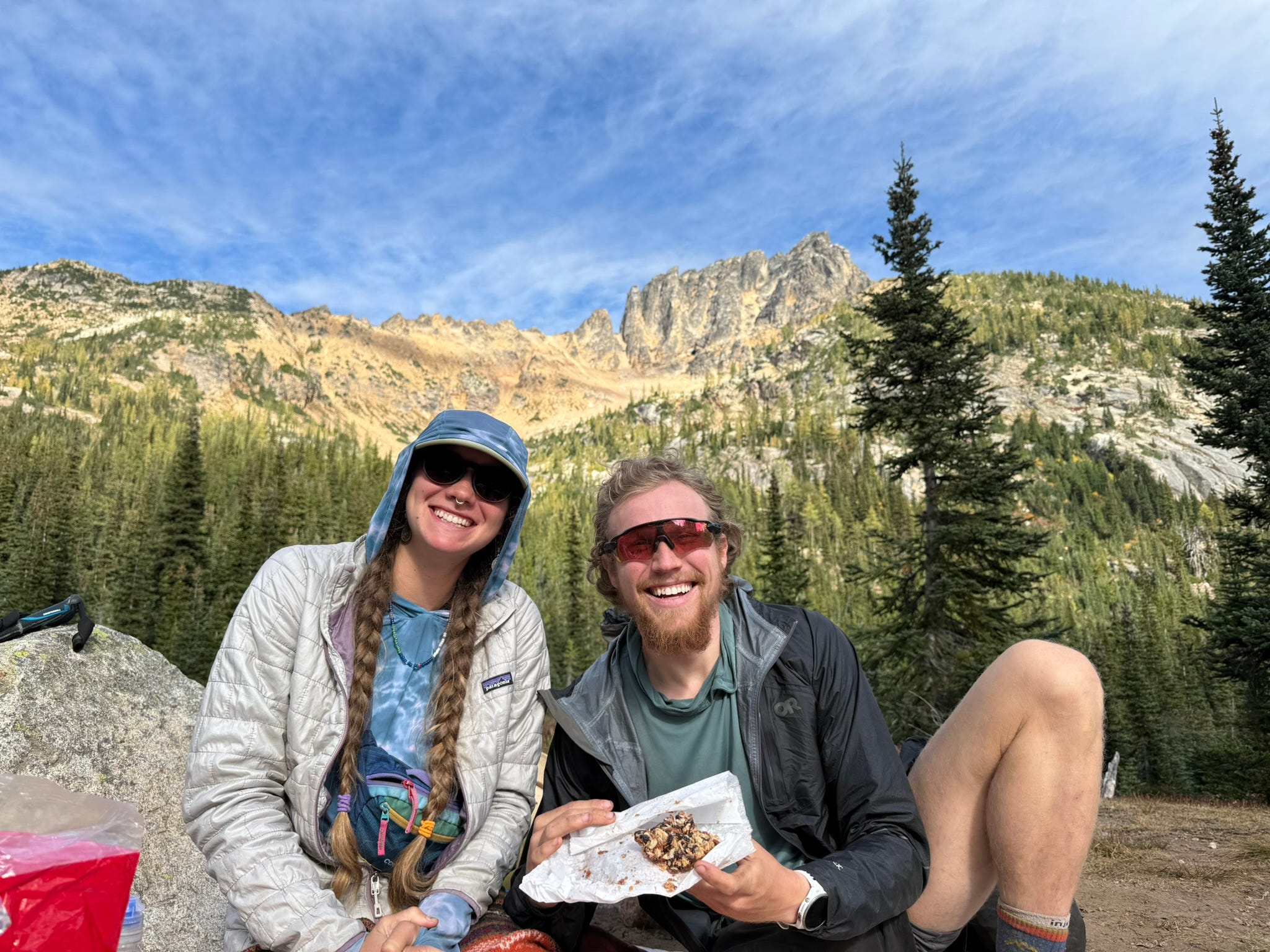
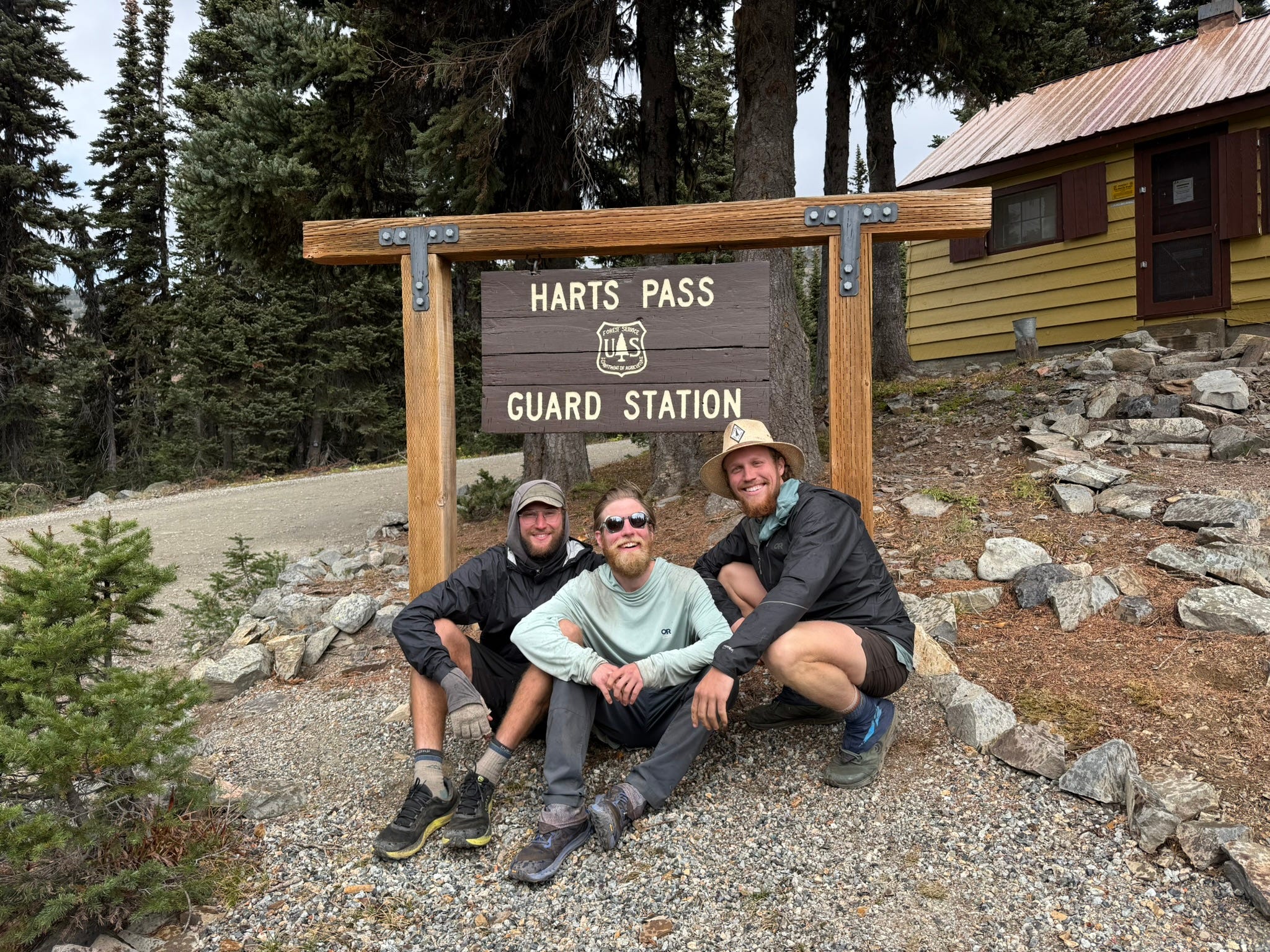
Once 30 miles from the Canadian border, we reached Harts Pass, the exit point we needed to return to upon finishing. That meant we were able to reunite with Dylan, who had gone a few days ahead of us to get his earlier flight on time. He finished with many of our good friends from the trek, including Nacho, who started with me at the southern terminus and hiked with Mo and me for the first 900 miles.
Seeing these two, and all the other hikers heading in the opposite direction, brought on a flood of emotions. On the one hand, the environment was jubilant; every passing hiker gave a hug, high five, or fist bump along with exchanging congratulations for the accomplishment that one had just completed, and the other was on the precipice of. Simultaneously, it was quite depressing. Admittedly, I had no interest in finishing this trail. Had there been another couple thousand miles to go, I would have happily obliged. There was no more putting things off; this was finally coming to an end.
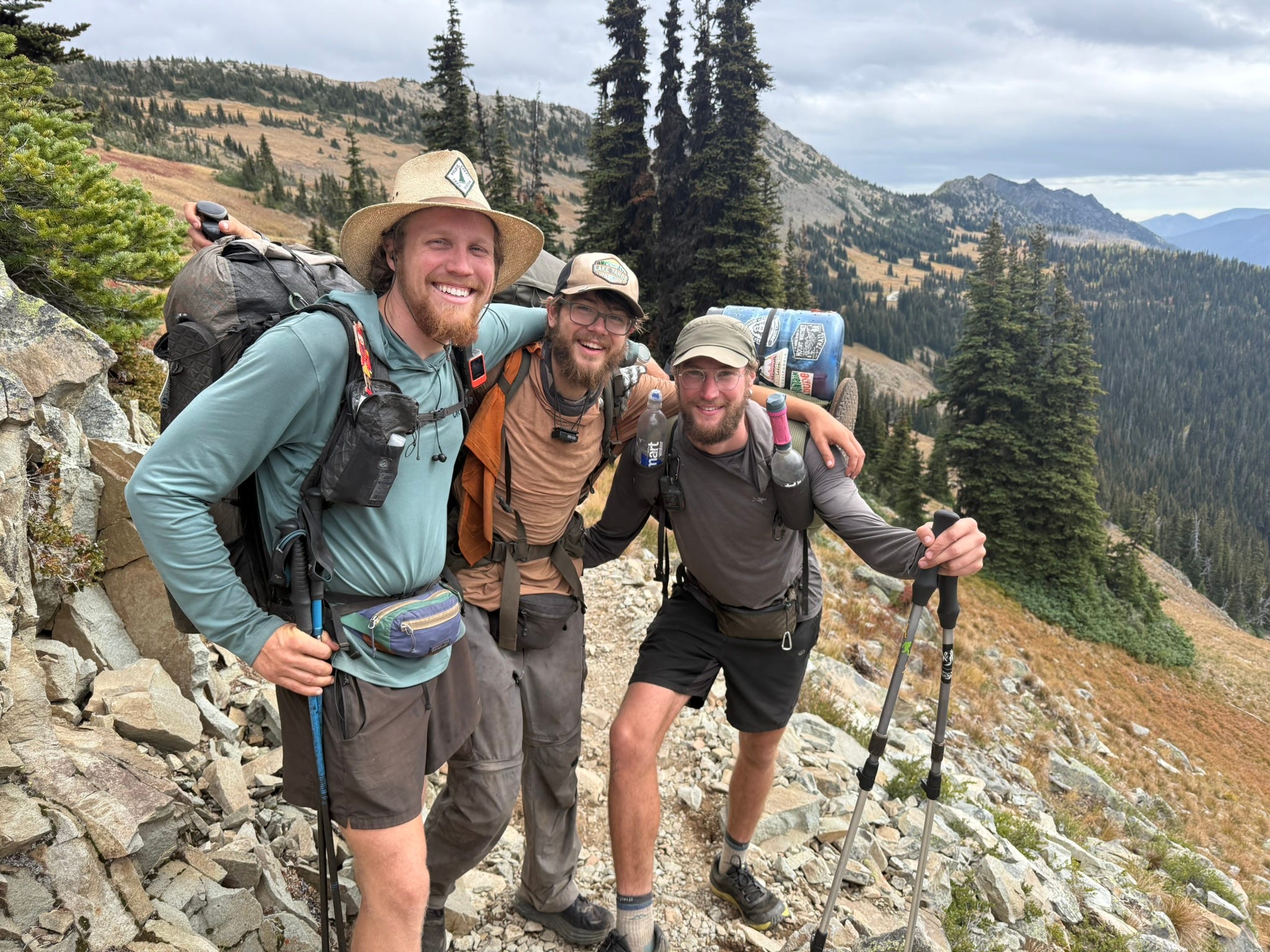
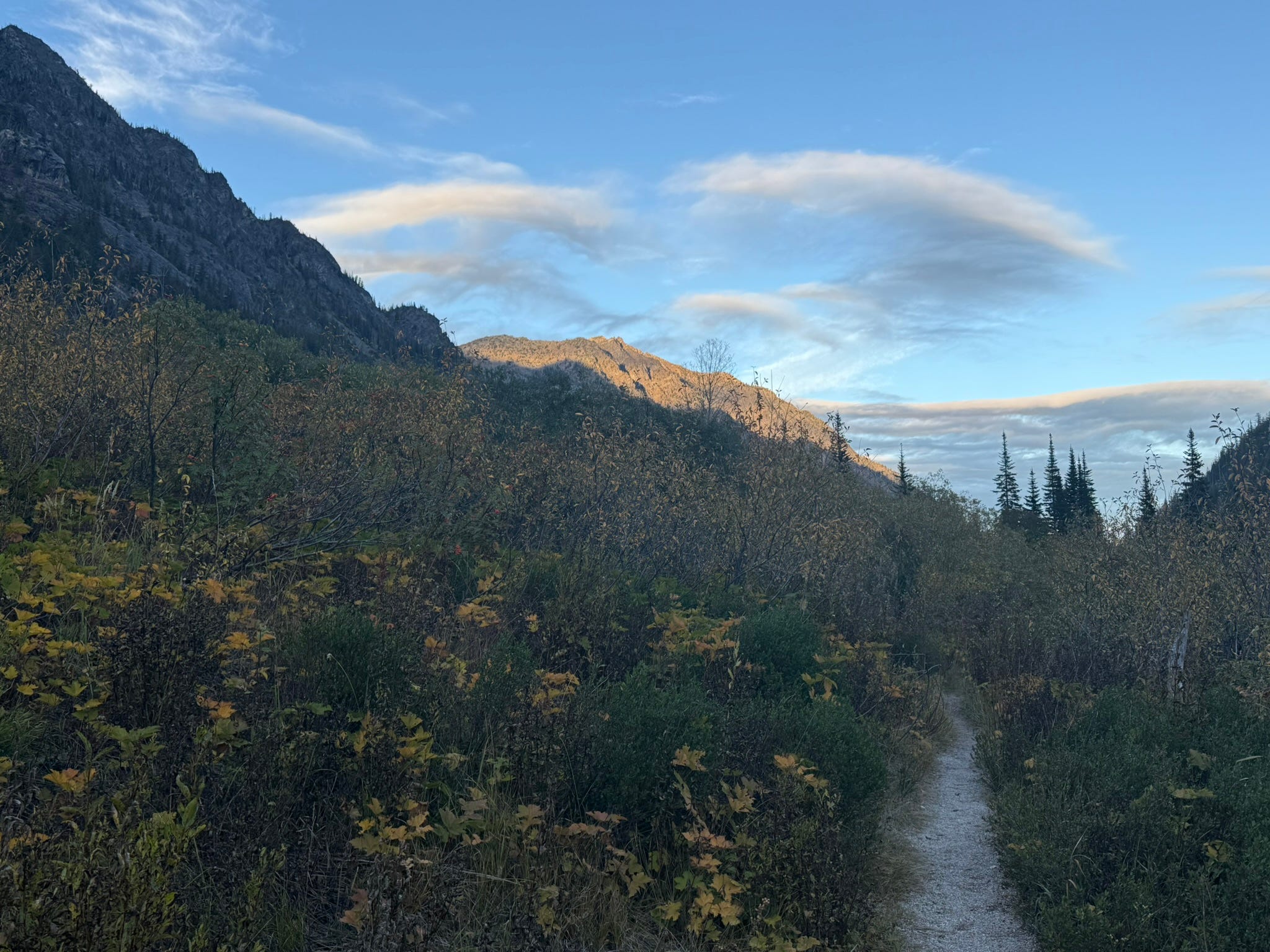
As we approached the terminus the following day, I started alone to collect my thoughts. I broke camp just as the sun began to peek out and selectively illuminate the areas’ most intense mountain tops. As I started along that final walk, I was first saddened by all that I’d lost that had brought me out here in the first place. I mourned the deaths of my maternal grandparents, who had passed just weeks apart at the beginning of the year. It felt like with them, I lost an entire generation of Americans for whom I hold so much respect. Those who focused on family, friendship, and self-determination, who held value systems and helped their communities thrive. As much as I enjoyed sharing all of my stories with those back home, it was really my grandfather, Paul, whom I wanted to share with most of all. It pained me to know that I would never be able to sit at his side and debrief all I had seen. To tell him how I’d experienced the lands they’d fought to protect and saw firsthand the kindness and generosity of spirit that they embodied. To let them know that there was still hope for this country, which I fear he’d all but lost by the end.
I mourned the loss of the company at which I’d spent the majority of my young career. It was a place that not only brought me into contact with the smartest, most driven group of altruists I’d ever known, but also allowed me to feel like we were actually making a difference in people’s lives. For all the shitty phone calls I fielded about high rents, broken air conditioners, drag racing neighbors, and junkyard dogs, it was the occasional but not infrequent sobbing single mothers who thanked us, perfect strangers, for helping provide the safe household she never thought she’d be able to give her children that sparked something in me. Or the aging grandparent who had long ago thought they would be another Black American stuck in a cycle of endemic poverty, unable to build generational wealth for their family, but instead had bought back a home that had room for everyone at the holidays. It troubles me to know there were so many more people we couldn’t help and, unfortunately, may never be able to.
I reflected on my distance from the relationship I once thought would be my last. While very clear on the fact that I found myself in a better place, I couldn’t help but reminisce on the life I thought I’d created for myself, the one I always thought would mean success: a power couple, with a swanky Brooklyn apartment, and big plans to take on the world and reconciled how miserable I really was as it all came together. Rushed by my own idealism, supercharged by the collective expectation of “the next step,” I had stayed from the principles I’d convinced myself I held dear.
But as I came to terms with all that had pushed me toward this moment, I came to appreciate what each loss opened up in return. I feel extraordinarily grateful to carry on the Arrowood legacy. To be responsible for upholding the values of hard work, selflessness, family, openness to experience, and laughter that they’d built their lives on. I recognized the immense privilege it was to learn the importance of feeling like you’re contributing to the greater good with what you choose to do every day. And finally, to regain the confidence in the love I have to give and to learn how I want to receive it in return.
Shortly thereafter, I caught a glimpse of my hiking companions in the distance and felt chills when thinking about all the healing they had provided. For whatever hole existed in my heart at the start had been patched by those I had come to call my family.
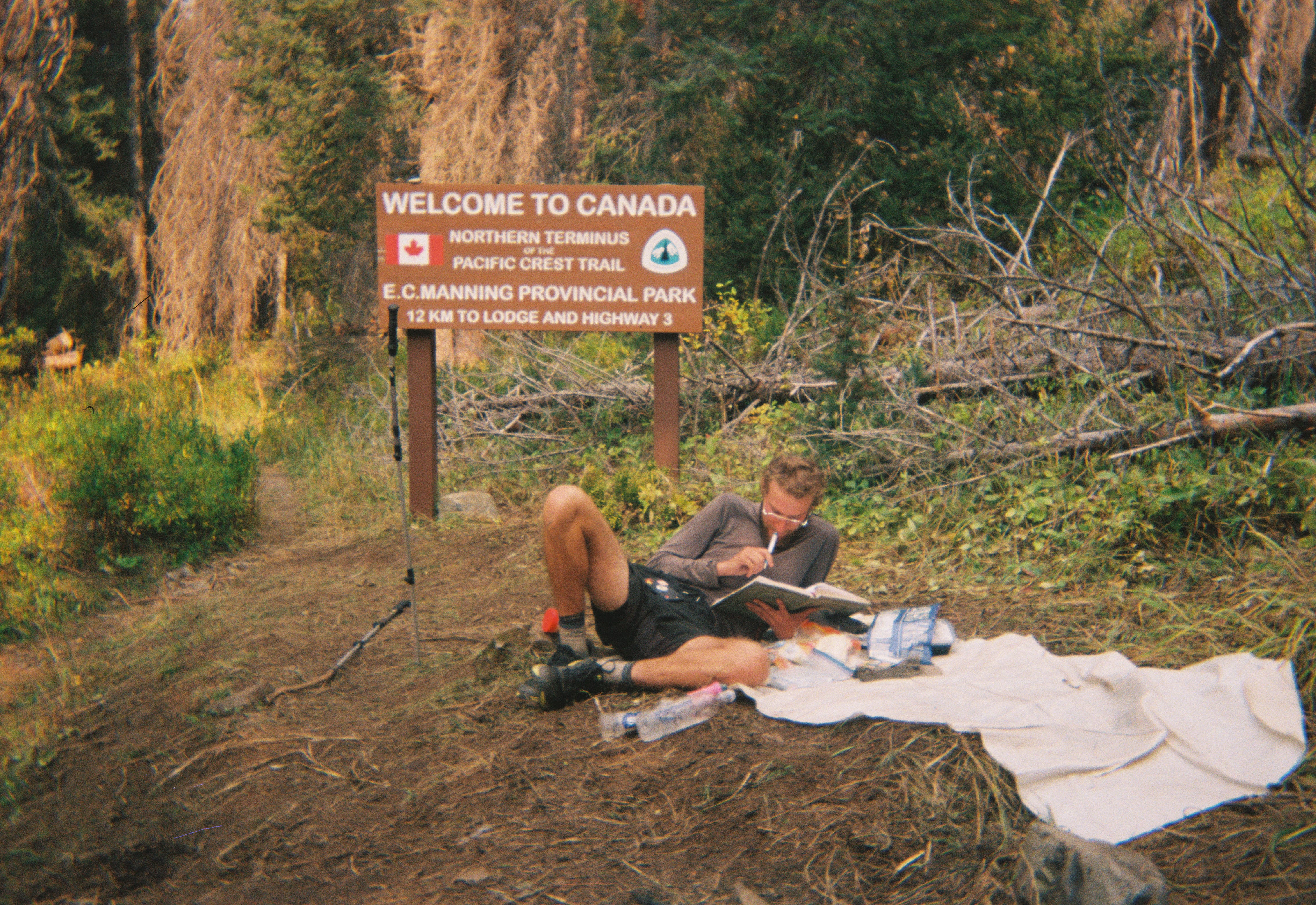
As we reached the top of the climb, everyone had caught up, and we spent the final 8 miles reminiscing and handling the emotional rollercoaster in stride. One minute, we were the emotional rock, only to return the favor the next. As we emerged from the trees and saw the clear-cut of the border line, it didn’t feel real; it felt like we were out for just another hike, as we’d been every day before. But as we sat below the “Welcome to Canada” sign and thumbed through the terminus journal filled with entries from those who’d finished before that, I really came to appreciate what it all meant. There were poems, pictures, and paragraphs in dozens of languages. One entry from a hiker we’d befriended celebrated finishing the “thru-hiking triple crown,” having completed the AT, CDT, and PCT. It was his third attempt at the PCT, the previous one cut short due to the decline of his father’s health, just before his passing. His heartfelt passage ends with, “I finally did it, Dad. I love you.” My heart shattered into a million pieces.
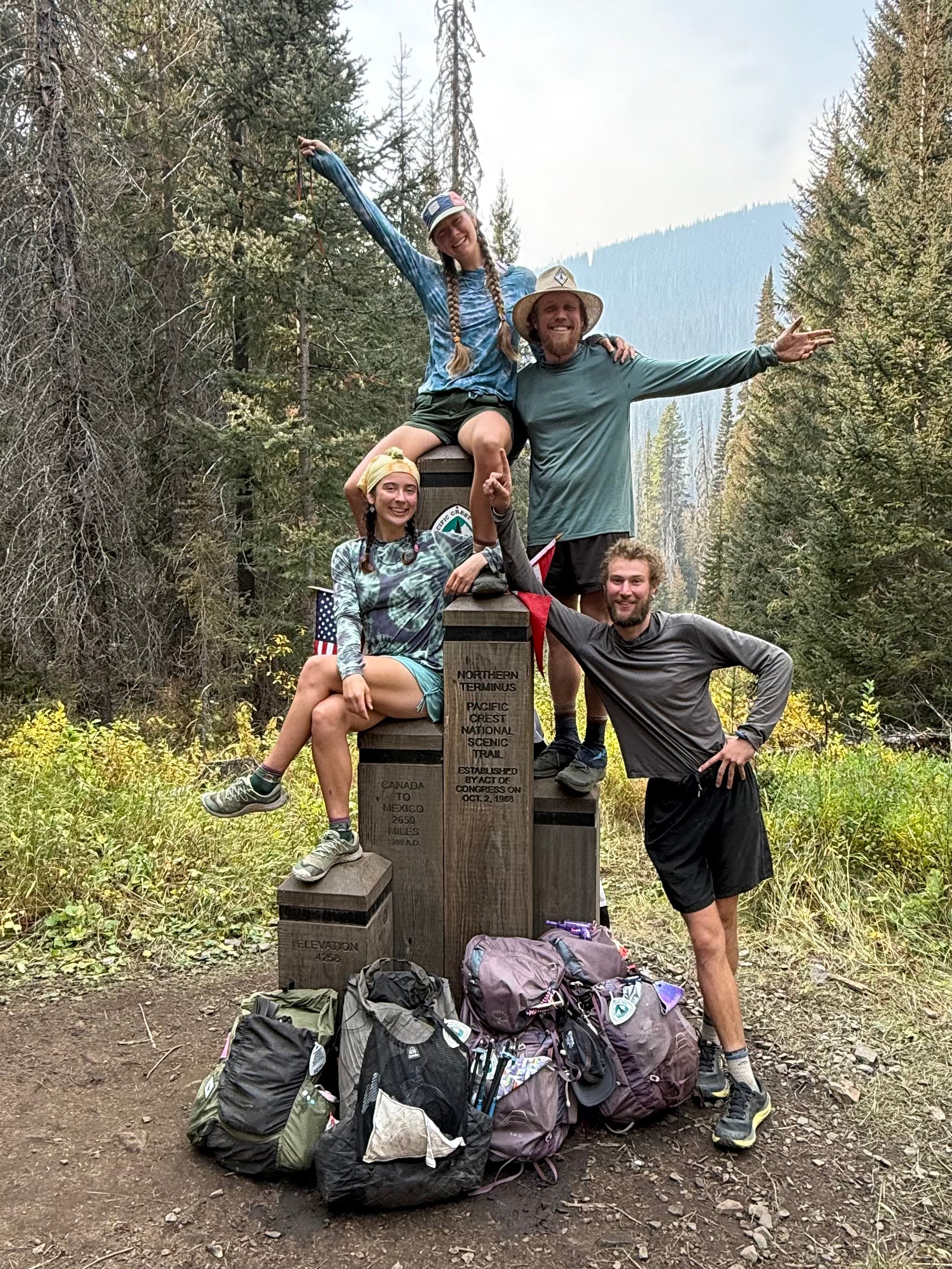
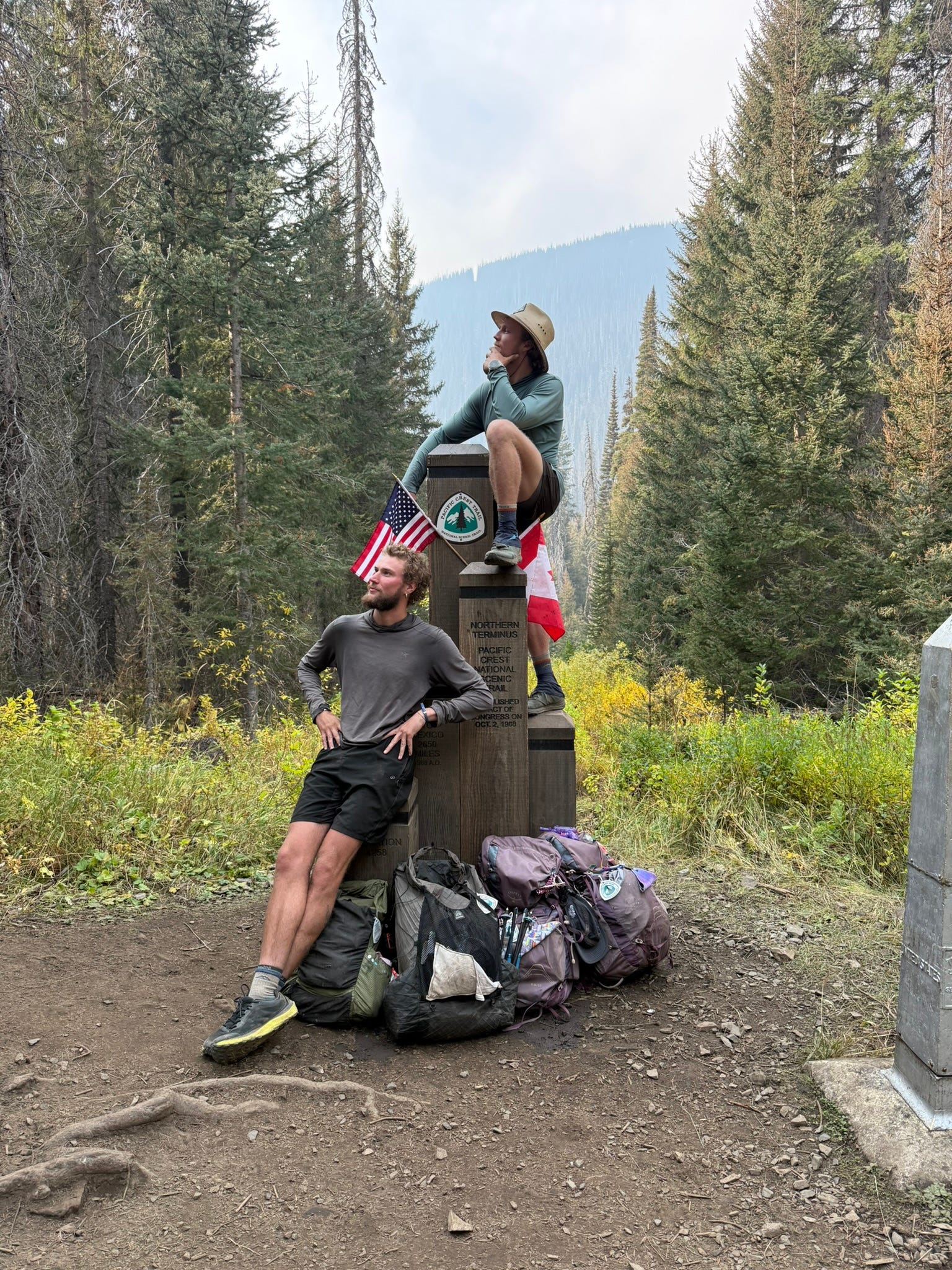
As our time at the terminus wound down, it was my turn to write something. The irony was that after having written tens of thousands of words on this journey, I was wholly unprepared when confronted with those five blank lines. I tried to connect myself back to the “why” behind it all. By all accounts, I shouldn’t have been able to make it. I had no training, no experience, and no prep time. I started alone and in a dark place at that. And yet, I realized that may have been the very thing that drew me to it at all. The challenge of abandoning all comforts and facing one of the great physical feats known to man, armed with nothing but my own pure determination, was an attempt to see myself clearly in the face of adversity. To try and break myself down and understand who I really am, not the person I had learned to be.
I started from the heart, “I arrived in Campo a broken man, intent on finding meaning in a world that often feels so devoid of it. To walk this path has been both restorative and inspiring. As I sit here today,” I stopped myself from going on an inevitable tangent and took a deep, slow inhale. In trying to encapsulate my feelings with concision, I thought back not only to the mountain peaks and wide sweeping views, but the moments of uncontrollable laughter, the tears of joy, the depths of physical pain, and the resolve I relied on to continue. I erased the start of the previous sentence and penned what came into my mind with absolute clarity.
“Now I can die, for I have truly lived.”
By the Numbers
The Pacific Crest Trail
“What does it mean to walk across America?”
It’s a question I have asked myself time and again since I committed to embarking on this journey back in April. Over the course of the first week, I was nearly brought to tears each day at the gravity of what we’d all set out to accomplish. But over time, the majesty inevitably faded. When I left New York City, I was the only person I’d ever known to take such a leap of faith. But then you’re on the starting line, and everyone there has quit their job, moved out of their home, and left their world behind with the ultimate goal in mind. Then you start to walk, and while you know that the success rate is low (<10% for first-time thru-hikers), you seldom see those who end their journey prematurely. Instead, they merely fade away, never to be seen again. No matter how far you make it, everyone you meet has gone just as far. So in a way, what once felt like a near-impossible task becomes normalized. In an attempt to wrap my head around what we’d just accomplished, I did what always helps me most: I put some numbers behind it.
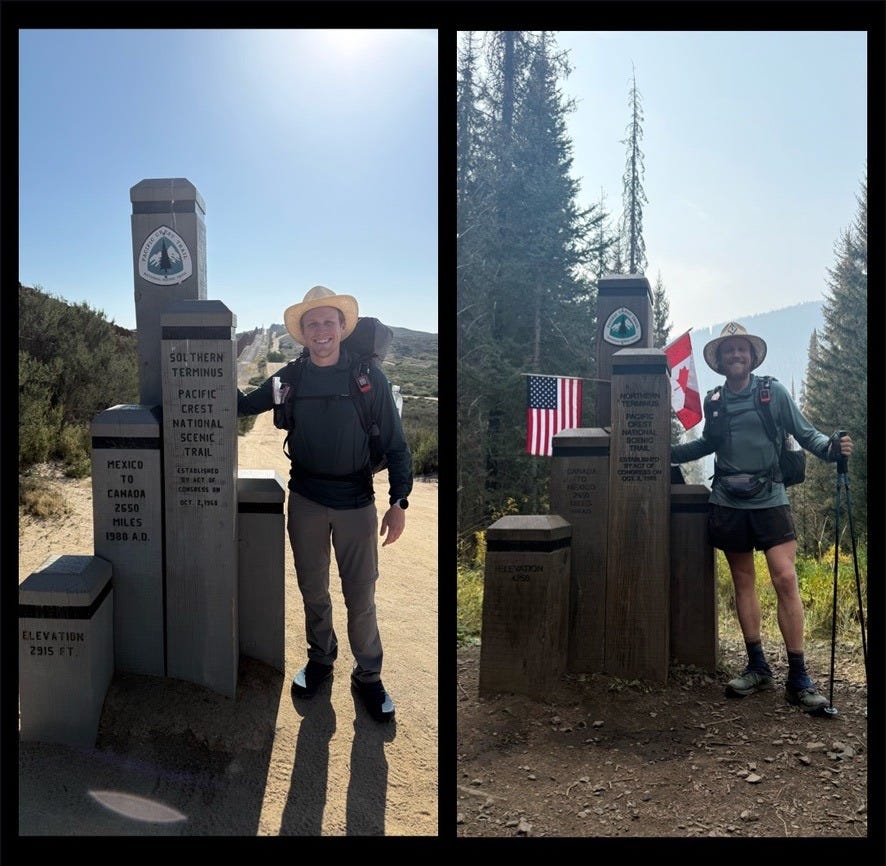
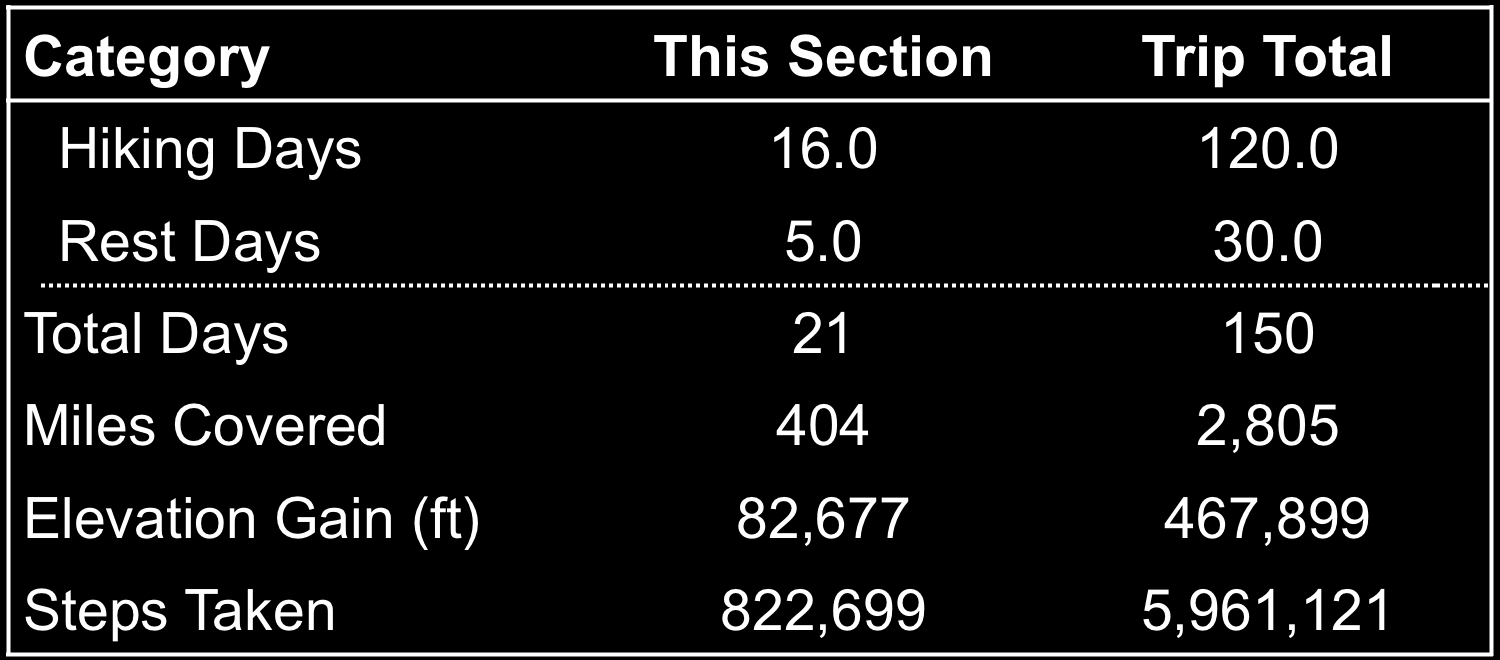
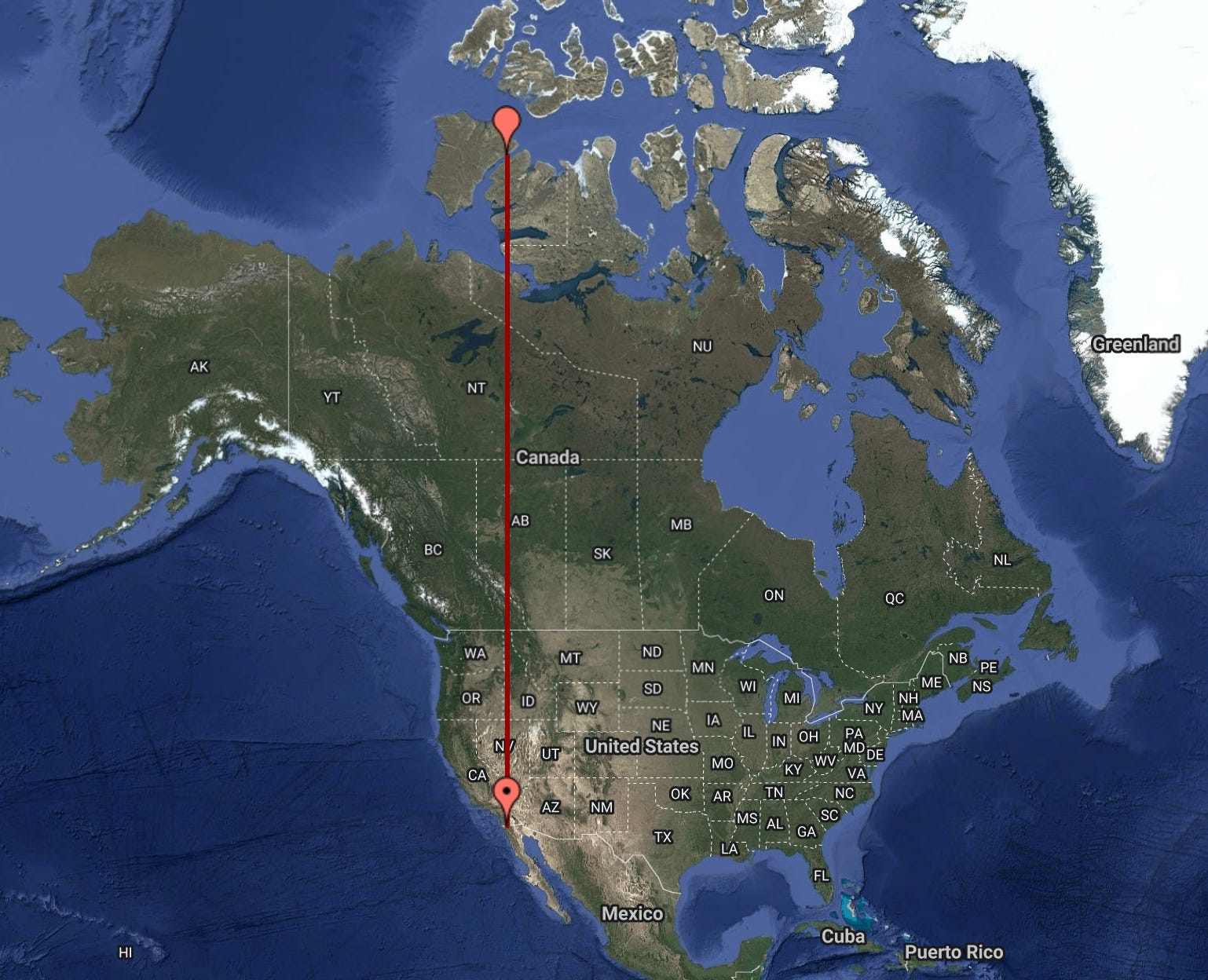
After leaving the Mexican border on May 3rd, we hiked for 150 days, covering 2,805 miles, and gaining 467,899 feet of elevation. That is equivalent to completing 107 consecutive marathons across terrain that starts at sea level, ascends to the top of Mt. Everest, and then descends back down again, 16 times. The path through the mountains was quite circuitous; had we gone due north from the Mexican border, we would have ended up 450 miles into the Arctic Circle, 1,100 miles from the North Pole. Our 2,805-mile journey is farther than the air distance from Miami to Seattle, Lisbon to Moscow, Madrid to Baghdad, Athens to Nairobi, and New Delhi to Taipei.
Our more than 300,000 active calories burned is roughly equivalent to what the average person would accumulate from exercising 2 to 3 times per week for 12 years. The nearly 6 million steps we took equated to roughly 50,000 per hiking day, 12.5 times greater than the average American's daily output.
Over the course of the trip, we experienced more than 100° of temperature variation, from 13° at the top of Mount Whitney to 116° on the valley floor of the Mojave (ironically, those two points were less than 55 miles apart). The UV was usually at its highest possible rating (11+) for the bulk of each afternoon, punishing at any temperature. We walked through rain, snow, sleet, and marble-sized hail. We endured dust storms, lightning storms, hurricane-force winds, and thick wildfire smoke. We climbed over thousands of dead and burned-out trees and bushwacked through areas where Mother Nature had taken back the trail long before our arrival. And we did all of this with anywhere between 20 and 45 pounds strapped to our backs, the entirety of our worldly possessions resting on our shoulders.
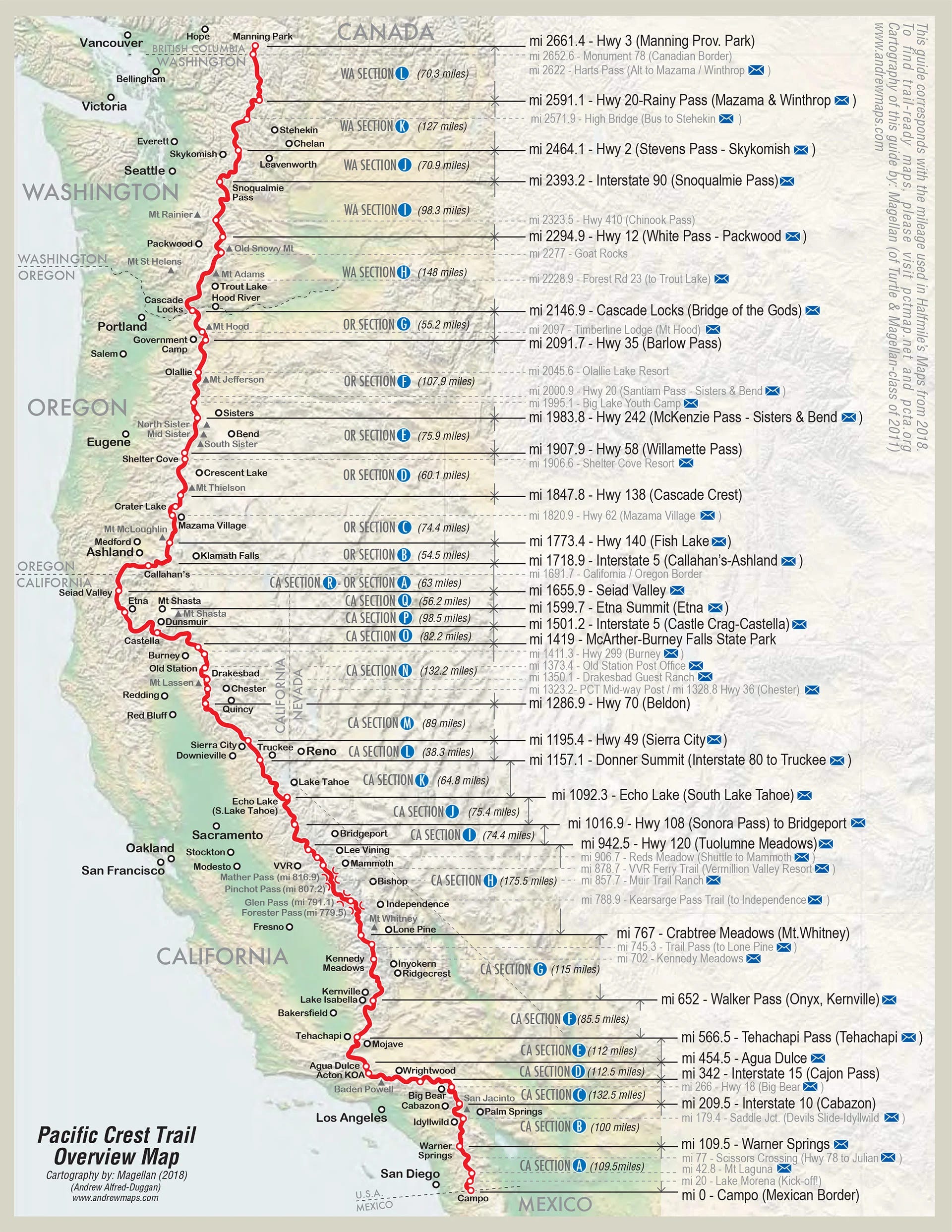
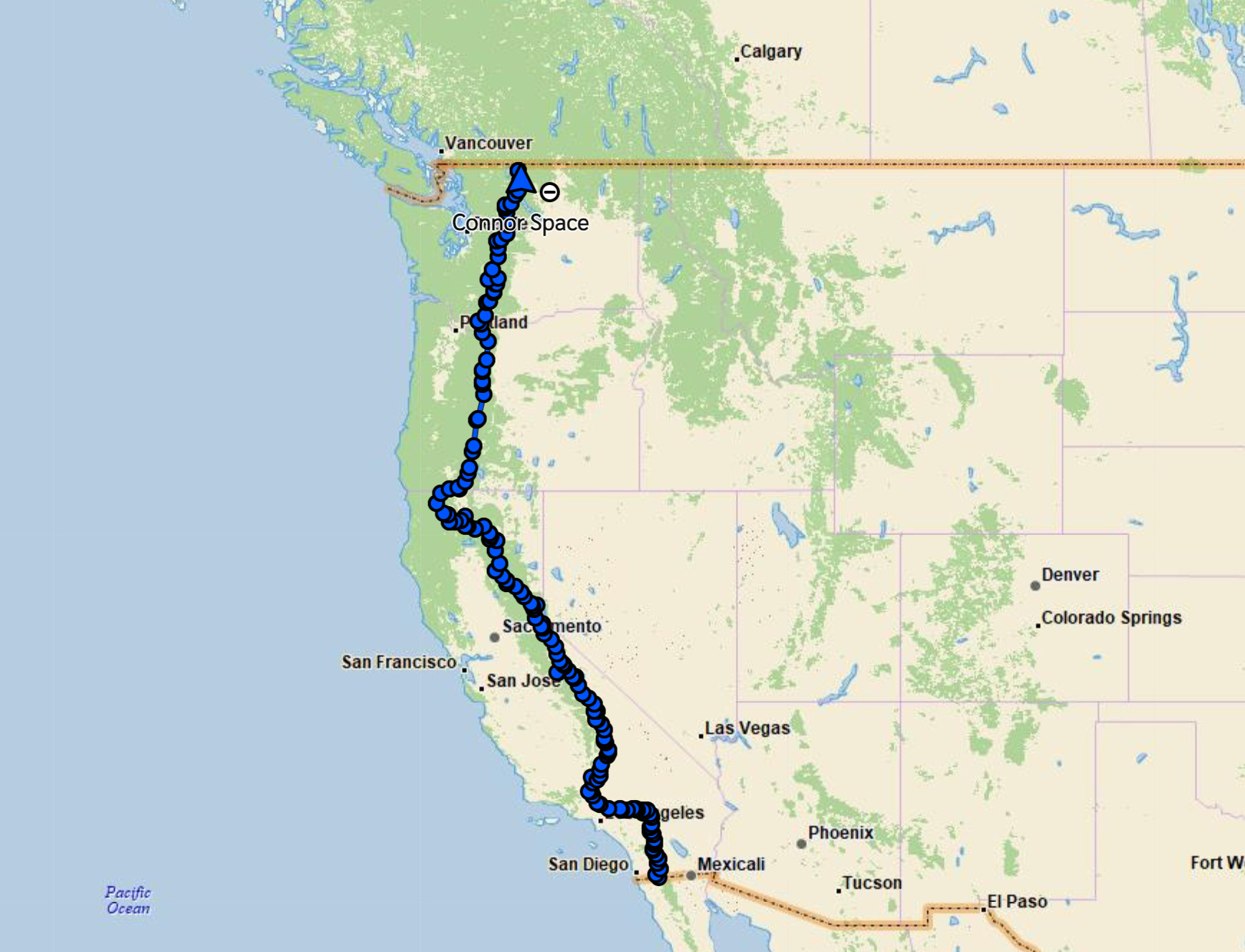
Early on, every hiker is faced with a question: What does a thru-hike mean to you? For some, it is merely about enjoying a summer amongst the trees, for others, it’s about hiking as quickly as possible from one end of the country to the other. For me, I knew that I was not there to set any records or impress with my speed; instead, this was a pilgrimage. I wanted to walk from border to border, to be able to trace every single step, no matter the obstacles that lie in our way. Thankfully, I was able to find hiking partners who felt the same way, and as a result, we hiked more than 2,800 miles around fires, through burnouts, and terrible weather. We uncovered each mile in sequence, watching the terrain shift slowly as we moved north and the landscape evolve with the seasons. We covered 150 more miles than the trail itself and between 300 and 900 more than most finishers our year. While there aren’t official records kept on continuous footpath hikes, it’s estimated that only a couple dozen are completed each season.
Despite doing almost no training with my short turnaround, my body fully adapted to the experience in under a month. It began to understand the routine and realized that a few hours at night was all it had to recover, and all things considered, it performed admirably. Not just in muscle aches going away, but illnesses as well. I can remember multiple nights where I limped into camp, thinking I was coming down with something, only for my body to completely bounce back by morning. Something that would’ve kept me out of practice for days in the real world wasn’t even a blip, and I’m convinced it’s because my body knew it wasn’t an option.
Within the first two weeks, while battling with my first real injury and given a legitimate out, I decided there would be no quitting, and that the only way I was coming off the hill was on a stretcher. That night, I also decided to splurge on search and rescue insurance. That was a gift to myself that greatly simplified my mentality, and I’m proud to say that I never once contemplated stopping prematurely.
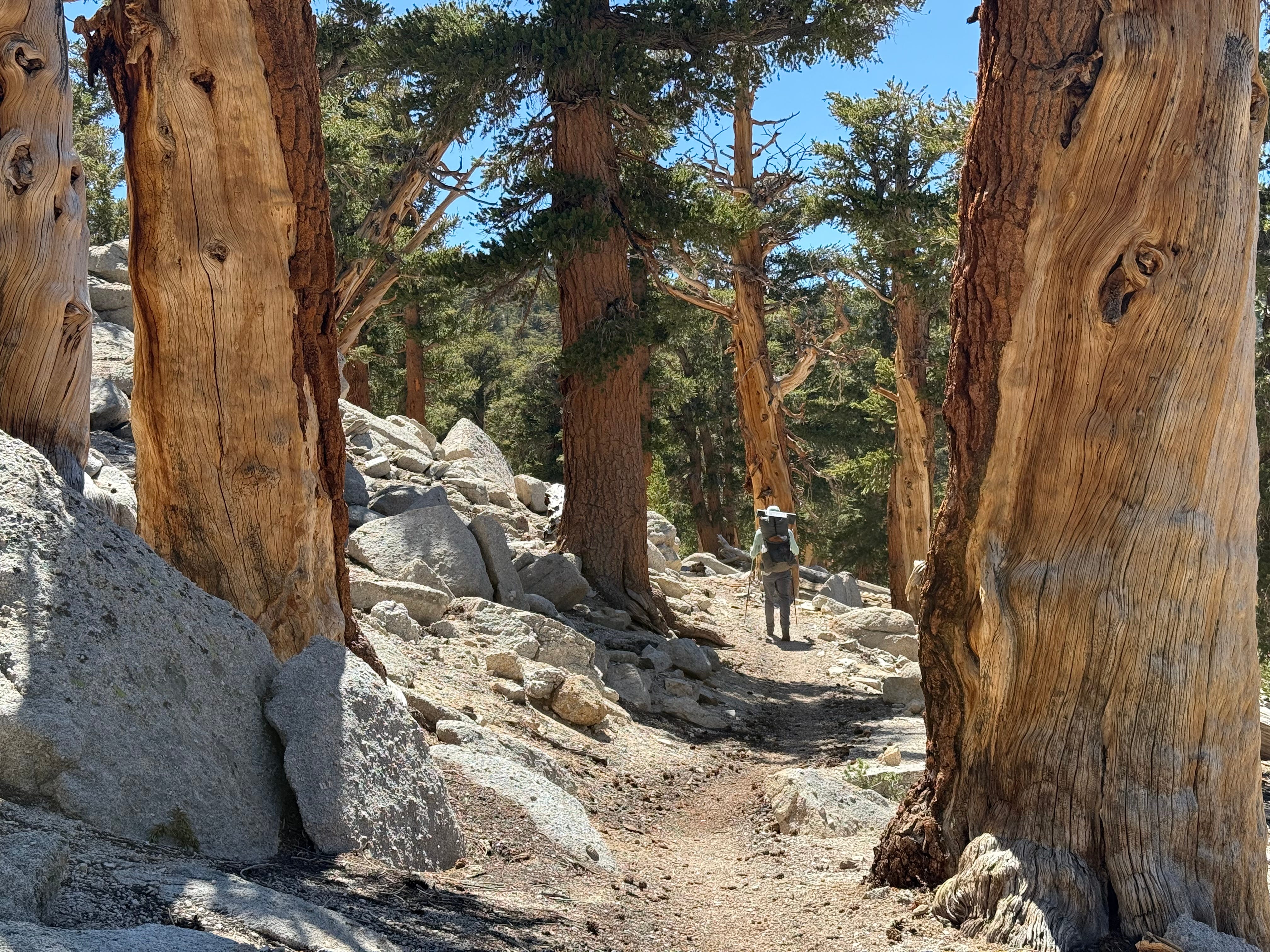
And so, ironically, it was not any of the physical challenges that proved most difficult. If you spoke to anyone I spent time with in the month before my departure, they would likely tell you that it was clear I was a lost soul. On many of those early days, I hiked angrily: head down, full of steam, feeling pain and resentment towards any number of things that may have drawn in my ire. At times, it would boil over, and I would find myself at the edge of a canyon, screaming into the abyss. Luckily, it didn’t take long to get a grip on the demons that led me to the start. However, just as they started to fade into the background, the mental challenge of consistent injury management took over. Because a thru-hike leaves almost no downtime, no access to medical care, and no buffer for recuperation, even the smallest issue can compound into a trip-ending injury. There were several nights, spent sitting atop a mountain, taking it all in, that I figured may be my last.
And so with my mental challenges mostly in check and the physical out of my control, I found myself surrounded by nature, months removed from the routine of daily life, and alone with my thoughts for more than 12 hours per day. In a bout of unrelenting irony, it was through that withdrawal from the world that I began to understand it better than ever before. Every day, we were surrounded by a diverse group of people from all over, representing various walks of life, aspirations, upbringings, and beliefs. In a way, I’ve never felt as naturally connected to a group of people as I did amongst the “hiker trash.” Their desire to do hard things, to be self-sufficient, and to forge their own paths in light of so much pressure to conform was inspiring. It was a group that was sensitive and curious, with a recognition of our real place amongst the natural world, having it serve as their north star.
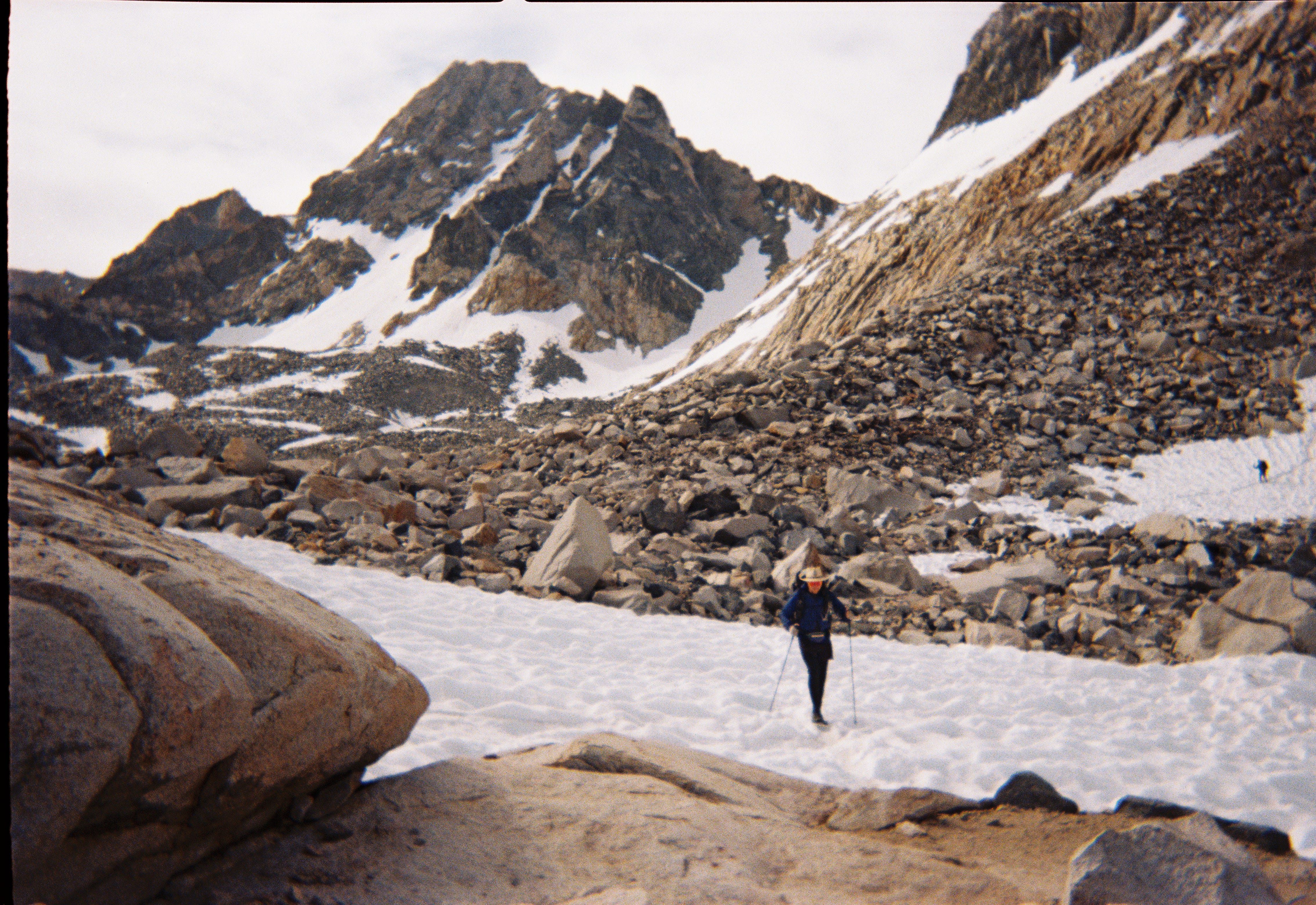
It was in this environment of psychological safety and curiosity (which is crucially different from an echo chamber) that learning burgeoned. It afforded the time to study global history via ancient religious texts, get a thorough background of human biological evolution, and reconcile social devolution in the 21st century. It allowed me to do some real thinking about the most controversial topics of our time: sex, gender, immigration, technology, preservation, etc., and then forced me to discuss those thoughts with people of varying worldviews in the immediate aftermath. It feels as though for the very first time, I can speak a mind that is truly my own, and with that, I am more open than ever to new information, perspectives, and experiences.
The trip helped me develop a purer form of patriotism that surpasses our revolving door of political figureheads. Like many of my generation, I’ve struggled to reconcile my deep love and appreciation for a country that has begun to contradict itself, watching our once stellar global standing deteriorate within my lifetime. Throughout this experience, I felt as though we embodied the resolve and perseverance that allowed our predecessors to create such a revolutionary democracy, intended to represent all interests. And unlike the adversarial world we seem to have developed into, it was heavily aided by the kindness of my fellow countrymen. For the first time in more than a decade, I saw firsthand the opinions of foreign visitors improve through interacting with what I have always known as the true American spirit.
This generosity was not limited to a single demographic. The physical challenge, the experience of being lost in the raw, attracts everything from trans-vegans from Portland to Marine veterans from East Texas. Over the course of 5 months, I met more people from North Dakota and Idaho independently than from Miami and New York City combined (due to an unsurprising lack of any other hikers from South Florida). I walked along artists who would break out their easels during lunch breaks, tailors who handcrafted their gear, and foragers who found a majority of their sustenance along the way. Best of all, I met exactly zero hikers whose previous vocation fell into the realm of real estate, finance, or tech. Or maybe I did, because for the first time as an adult, “What do you do for work?” wasn’t one of the first three questions I was asked, but instead was often left out entirely. Such a departure led to countless conversations about one’s hobbies and passions as opposed to an exchange of summarized resumes meant to determine if your counterpart provided enough value to pursue a relationship.
I think one of the best lessons upon returning has been seeing how little has changed over the past five months. The stock market has made some consistent gains, but is seemingly primed for a correction. The U.S. appears to have been on the brink of war with a nuclear adversary, only for cooler heads to prevail. The military flexed its muscles, and the Supreme Court handed down consequential decisions. But at the end of the day, the world is still more or less the same place that I left, and yet I’m sure there were countless sleepless nights, animated arguments, and frayed relationships, whether they materialized in actual impacts or not. You always hear the term “ignorance is bliss,” and there’s so much validity to it. I think it’s important to ask ourselves how much we really need to know, as opposed to what we take on just to feed our own desire to feel something.
So, what does it mean to walk across America? I think my conclusion is that, ostensibly, it means nothing. I didn’t set any time records; I wasn’t the youngest or the oldest to ever do it. I didn’t gain a global following or monetize the experience. The vast majority of people I will interact with for the rest of my life will have no idea what the PCT is, let alone my passage along it. But as I step back into society and take a look around, it almost feels as though I know something that everyone else doesn’t, like holding a secret that I cannot share, no matter how badly I want to. While there’s a frustration that comes with that, there’s also a sense of internal calm that has set in, knowing that no matter what, I’ve achieved happiness, not one that’s fleeting or manipulating my biology, but a true happiness in the purest sense of the word. And that’s a wealth no fame or fortune could ever match.
What I’ll Miss
As I’ve spoken to those who’ve been following along the way, I’m often asked whether the experience was truly as impactful as it appeared from afar. It is difficult to capture not only the emotions it produced, but more broadly, how a long walk in the woods could come to evoke such profound change. That was until I came across “The 8 facets of awe,” identified by psychologist Dacher Keltner, distilled as a means of outlining the most important factors in human development and well-being. It was through the grouping of awe-inspiring stimuli into moral beauty, collective effervescence, nature, music, visual design, spirituality, epiphanies, and the cycle of life that I started to appreciate the gravity of our experience and its impact on my soul.
To be so lost in nature, to be completely consumed by it, was the most peaceful and comforting existence I have ever known. The solitude felt amongst the trees didn’t induce anxiety, but instead relieved it; a lifetime of being taught to fear the wilderness was debunked in days. It also exposed me to the cycle of life with a new sense of intimacy. In the spring, babies were everywhere. We saw families of deer, marmot, grouse, osprey, bear, and even a little skunk (which was the cutest thing I saw all summer). We watched animals forage, dam, fish, and hunt. We saw salmon run upstream to lay their eggs, literally killing themselves from exhaustion, so another generation could spawn. In a world where so much time is spent concerned with little more than our own pleasure and personal longevity, we saw countless species sacrifice both in service of the greater good.
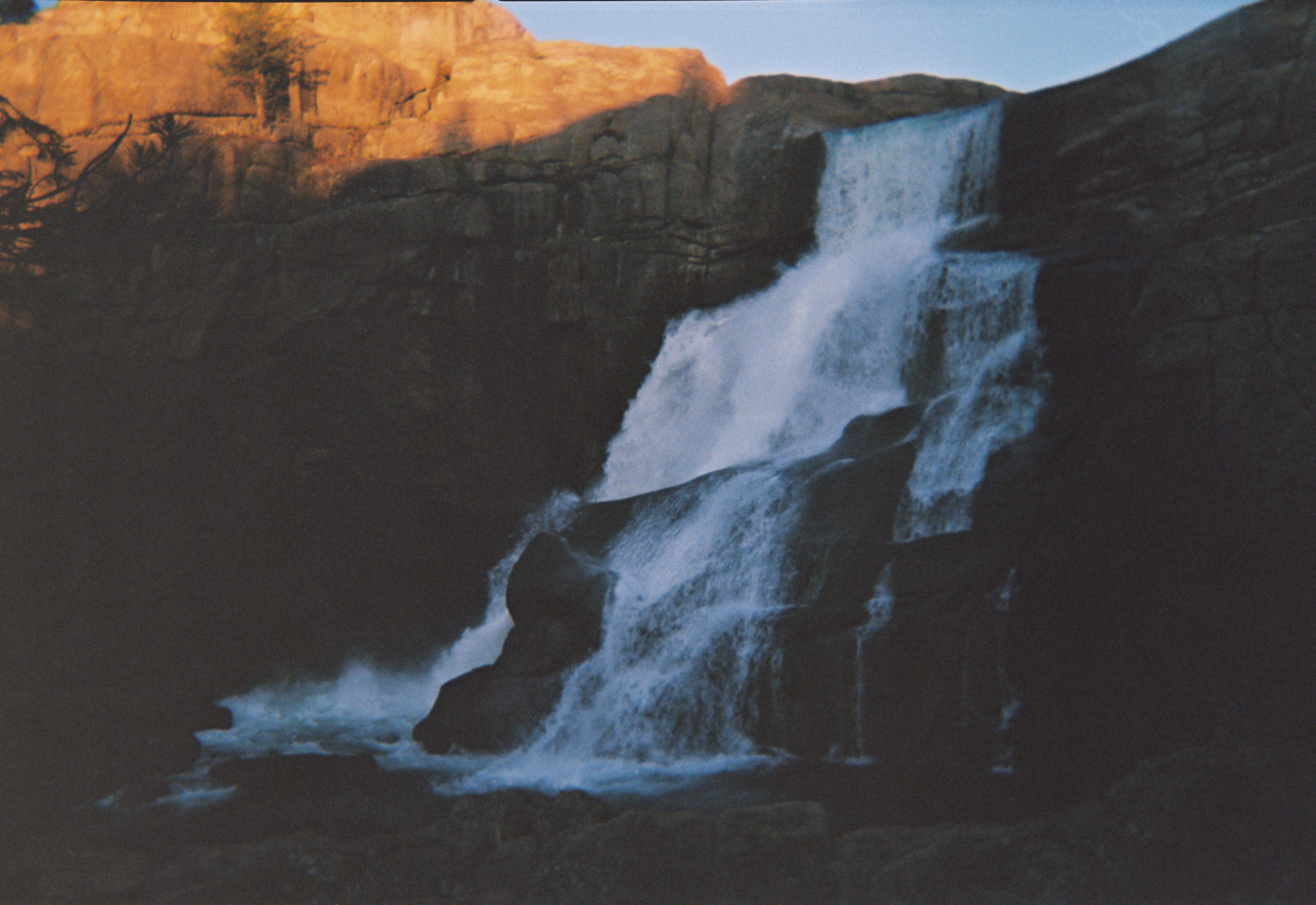
The detachment of the trail provided an environment of focused study that eludes most of us in the chaos of today. In a shining example of symbiosis, music heightened the experience of almost any vista. In combination, music allowed me to go deeper into my own emotions, surfacing feelings as a drug-like catalyst. It also provided a new forum for discovery and a study of history, connecting me back to people and places I will never know. It was often this combination of set and setting that produced epiphanies of my own. I have shared some in previous chapters, but to the outside, they may not feel quite so revelatory. While listening to a book that touched on early clinical studies of LSD in the 1960s, one of the psychologists elaborated on his patient observations. He noticed, and the patients reported, a deep and thoughtful appreciation of the banal during their sessions. Participants were brought to tears when they reflected on the importance of family, the beauty of a flower, or the fragility of life. They describe such revelations of things they previously knew, but really came to understand as life-changing, and most had, in fact, made lasting changes after a single session. I’m sure from the outside, some of my observations received eye rolls and little scoffs at presenting the blatantly obvious as so profound. But coming to terms with your own values with such rawness really does provide an entirely new outlook - no acid required.
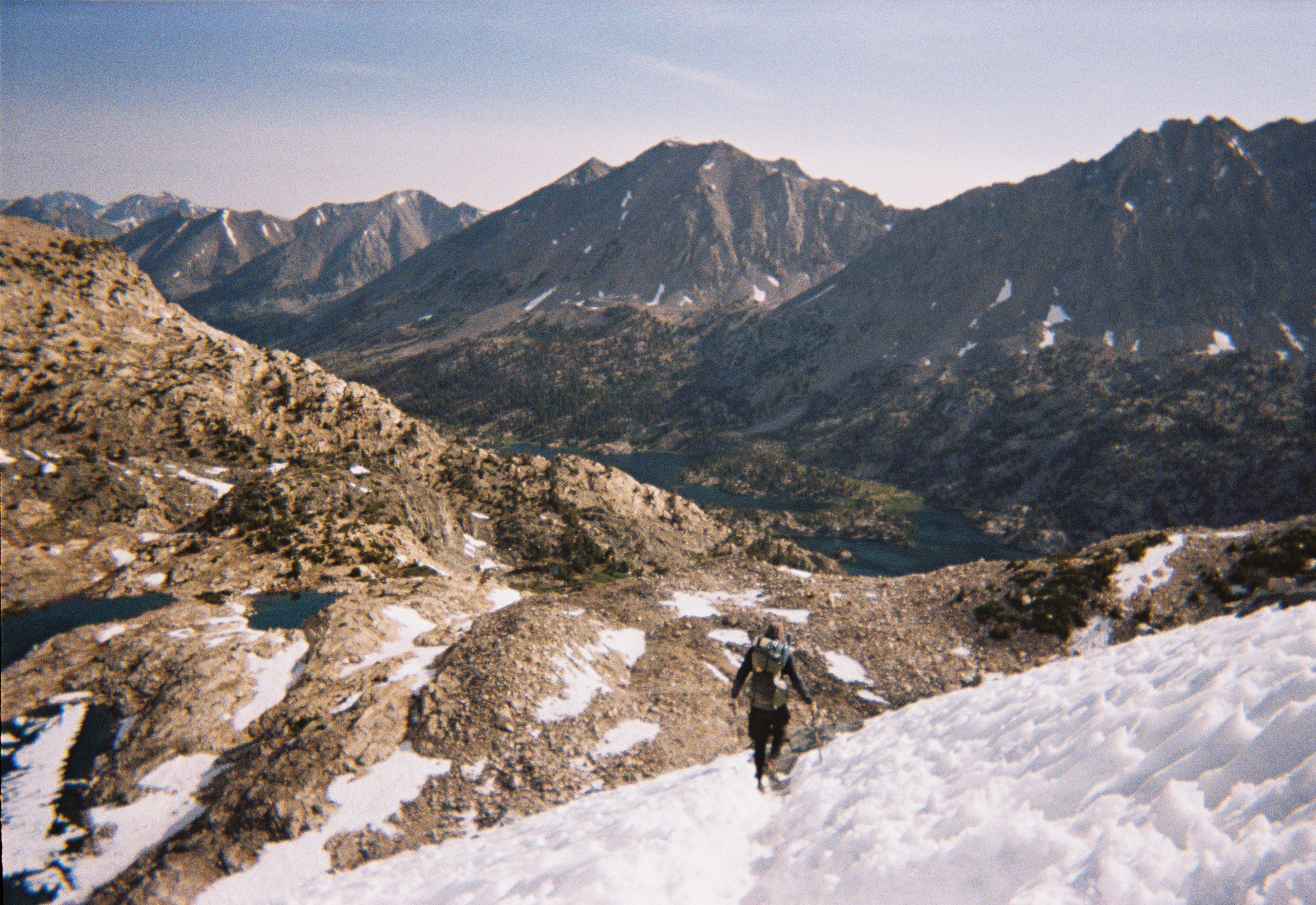
Visual design was not something I expected to see much of at all, having left behind human intervention in favor of the untamed. But it was a departure from anthropocentric life that made the ordinary feel so powerful. To visit small towns and appreciate their art and architecture. Not because it was world-renowned or considered the finest example of its style, but because it was there and held significance for those around it. I think back to Etna’s perfectly maintained workforce housing from the 1960s and the tenebrist portrait above the lunch counter in Ashland that our server admitted was her own and had been hanging there since 1995. There was so much beauty in the authenticity of what is otherwise considered ordinary and glossed over. Among the most emotional sights of the entire trip was man-made: seeing the Bridge of the Gods spanning the Columbia River, signaling the start of our final challenge. Seeing hints of humanity against the backdrop of the wilderness represented an ethos of equilibrium that was generally lost centuries ago.
Ironically, it wasn’t through the direct consumption of all world religious texts that sparked a sense of spirituality within me (although that did get me thinking about the topic), but rather a reframing of the concept itself. One of my favorite authors, Michael Pollan, argues that, instead of using materialism as the antithesis of spirituality, egoism should take its place. When thrust into the unfamiliar, where man is not king but just another participant, our sense of superiority falters. No longer is our own power the ultimate source of inspiration, but rather something that no human could create over generations, and in stark contrast, can only take away from. Awe is the antidote for egotism. It creates a sense of smallness that breeds, not resentment, but deep appreciation for our role in this world.
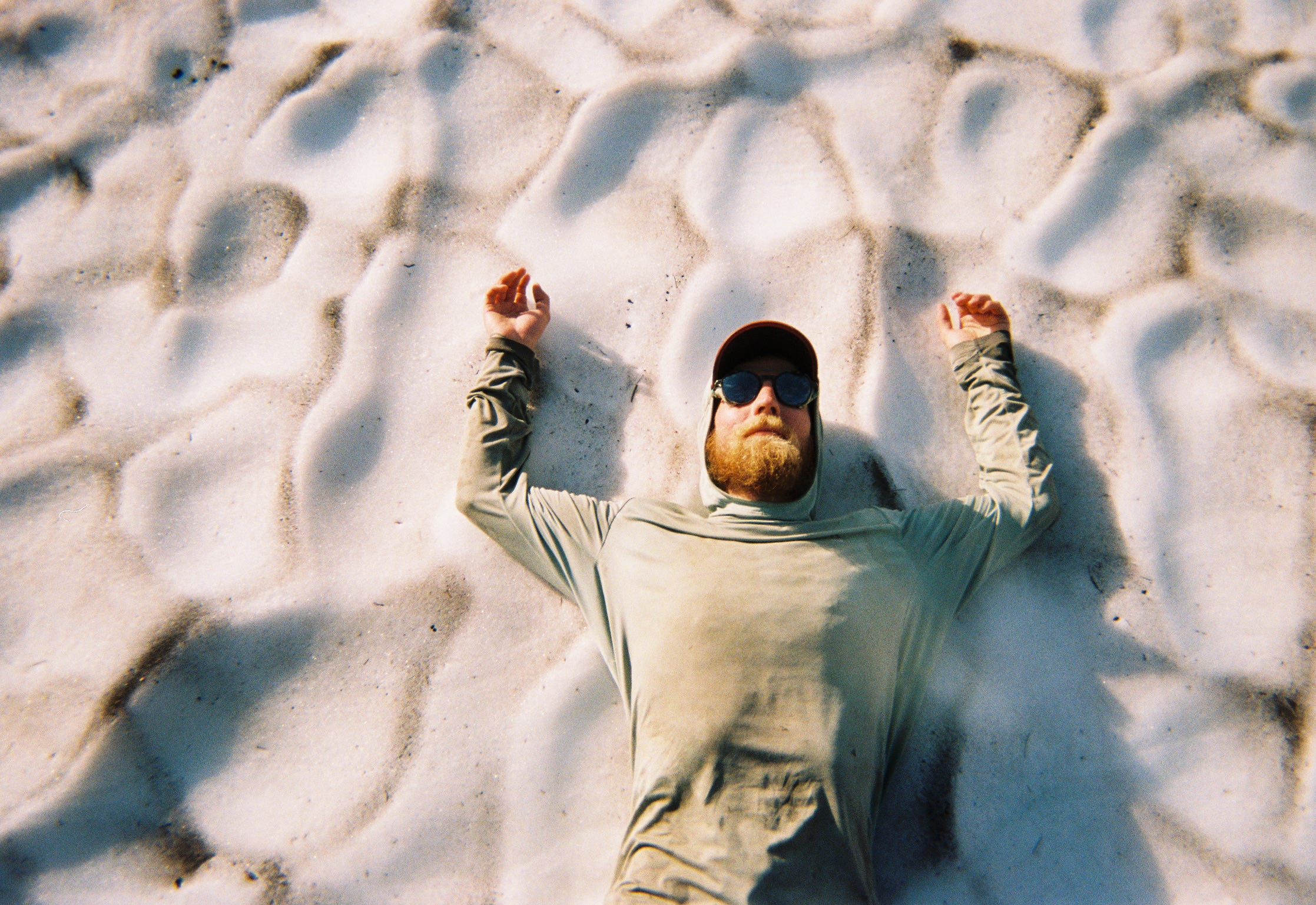
Despite what we are led to believe about the state of the world, there is an undeniable goodness that persists. Moral beauty is visible, but I have come to believe that we unintentionally don’t invite it as we once did. Through a mandate of self-reliance and an exponential increase in the size of our communities, we seem to have lost sight of the mutualism and reciprocity that defined the pre-modern human experience. By putting myself out into the world, vulnerable and in need of support, I was rewarded beyond what I could have imagined. We were welcomed into the cars and homes of strangers, anonymous supporters picked up our checks at the diner, and strangers carried postcards into the woods to ensure we could keep in contact with our families. But of all the gestures, it was those who would stop whatever they were doing to just sit and chat for a while that meant the most. It was those who took the time to understand who we were as people and what had brought us on this journey, and then shared their own stories in turn. In a world where many walk heads bowed, avoiding eye contact, a simple hello and soft smile from a passerby can make your day or turn into so much more.
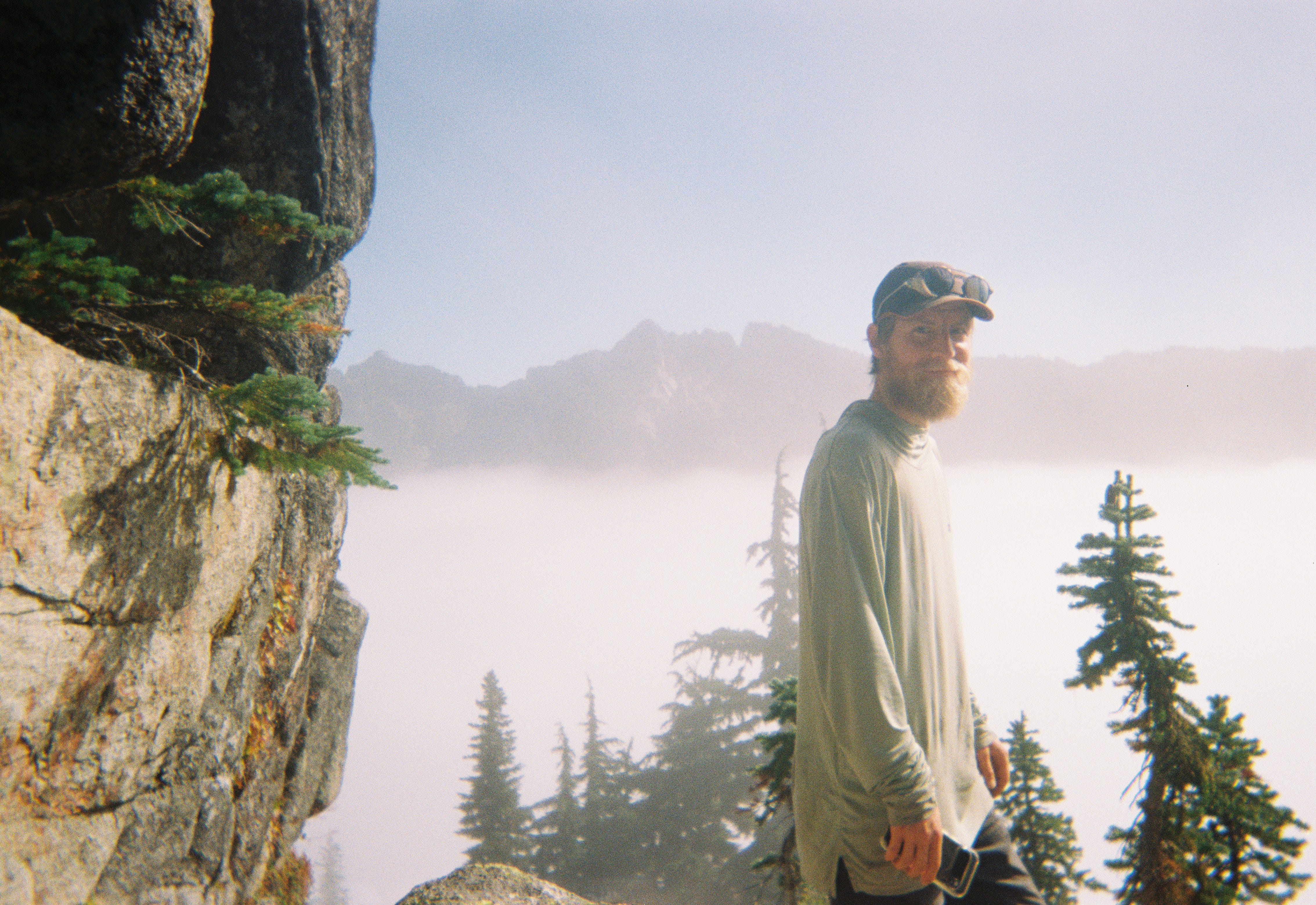
On the other side of the coin, collective effervescence is defined as “the feeling of shared experience and connection that arises from being in a group that is focused on the same thing.” But this hit on one of the most important distinctions from the outside world. On the trail, we don’t exist in a zero-sum; when one person succeeds, it represents a triumph of our entire culture. No counterparty needs to suffer to achieve such heights. Success enriches conversation through cultural exchange, it stimulates the economies for those reliant on the PCT (the sole store in Seiad Valley generates 60% of its annual revenue over the 12-week hiker season), and it creates an acute awareness of the beauty in this great nation and the importance of its preservation. There is an unspoken kinship amongst hikers and the supporting community, one that should have broader applicability.
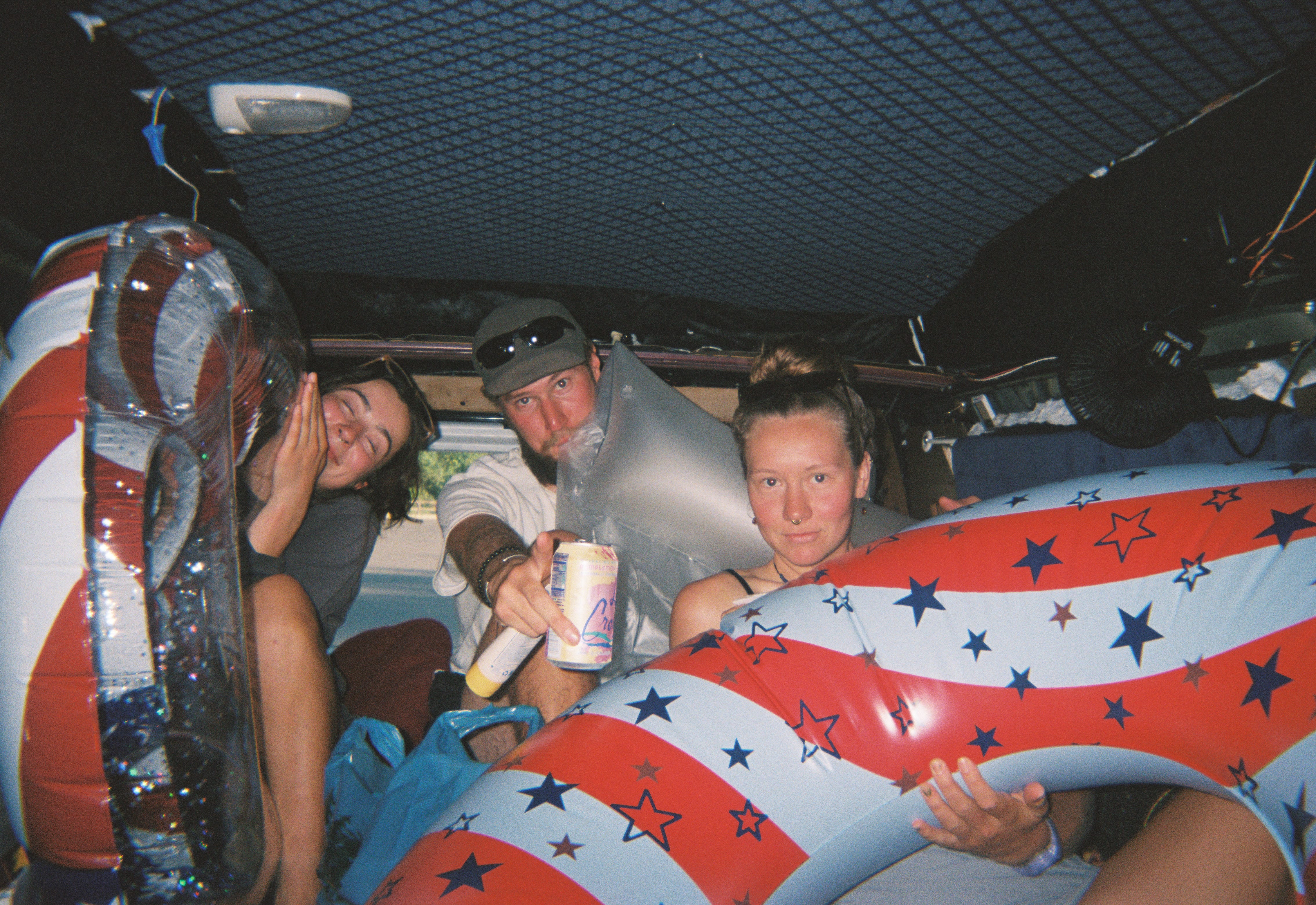
Yet the beauty of the trail was not reserved for awe alone, and there is so much more I am leaving behind. I’ll miss the opportunity to wake up every single day and do something individually simple and collectively extraordinary. I'll miss touching the Pacific Crest Trail signs as we walk by, feeling like you’re contributing to something much greater than yourself. I’ll miss the sense of pride felt in the depths of my self-reflection. I’ll miss double ramen dinners with the boys at night and the sights, sounds, and smells that came with it. I’ll miss the giddiness of spotting a shooting star and the bewilderment of a distant sunrise. I will miss looking up and seeing an endless horizon, the silhouette of dozens of mountains over hundreds of miles, that changes ever so slightly with every turn. I will miss the ability to get up every day with a blank slate and for the absolute freedom to make it my own.
I will miss all the experiential learning, particularly guided by so many of my expert peers on the trail. I will miss saying “I’ve got nowhere to be” with absolute honesty, allowing life to take me where I need to go.
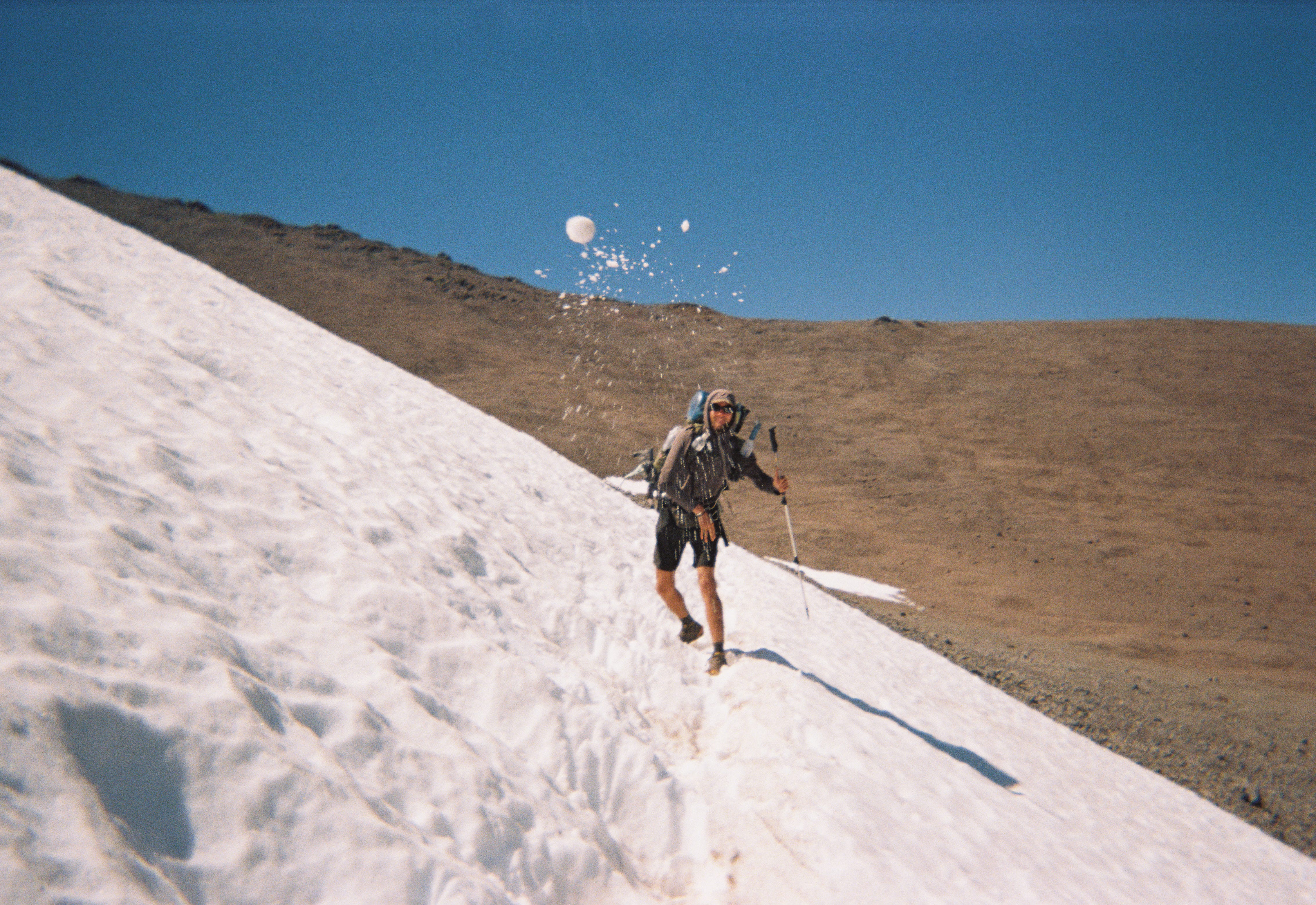
I will miss the minimalism: digital, possessional, vocational, social, and otherwise. I will miss existing outside of the confines of organized society, undertaking a task deemed so different that business owners, authorities, and other powerful figures just choose not to enforce the rules. I will miss the simplicity, where it does not matter how you slept, how much you enjoyed your meals, who was around, whether you woke up sick or angry. A world where no matter what, you just put one foot in front of the other, no thought required.
I already miss the trail every day, and am comfortable admitting that I and most of those who walked alongside me are struggling right now. After stripping so much away and experiencing a newfound purity, it’s difficult to have it all added back so quickly. I wish I could say that I can transcend the shallow desires that haunt us all, but it’s not that simple. What I can say is having found it, I know to seek it out and even a pathway to getting it back. And for all that I miss, I am extraordinarily grateful to be taking that with me forever.
Hiker Profile
For the final Hiker Profile, I turned the pen over to those who have come to know me best: Mo, Dylan, Margot, and Bella; to understand more about the person they first met and the one they came to know over 5 months in the wilderness.
Dylan: Connor “The Green Machine” Space, 28, grew up in Miami but has more recently called Oakland and Manhattan home. A traveler with a wide lens on the world, he’s wandered through dozens of countries—Sri Lanka and Chile among them—immersing himself in each with the rare form of curiosity that makes his interests feel both eclectic and intentional.
At 5’11” with blonde hair, pale skin, and a muscular build, Connor looks every bit the part of a hiker, though his signature style makes him impossible to miss: a straw hat patched with the retro PCT logo, bright orange Oakleys flashing Miami flair, and the now-iconic green sun hoodie that helped inspire his trail name. The full ensemble has such an unmistakable presence that, along the John Muir Trail, more than a few hikers mistook him for a park ranger patrolling the Sierra.
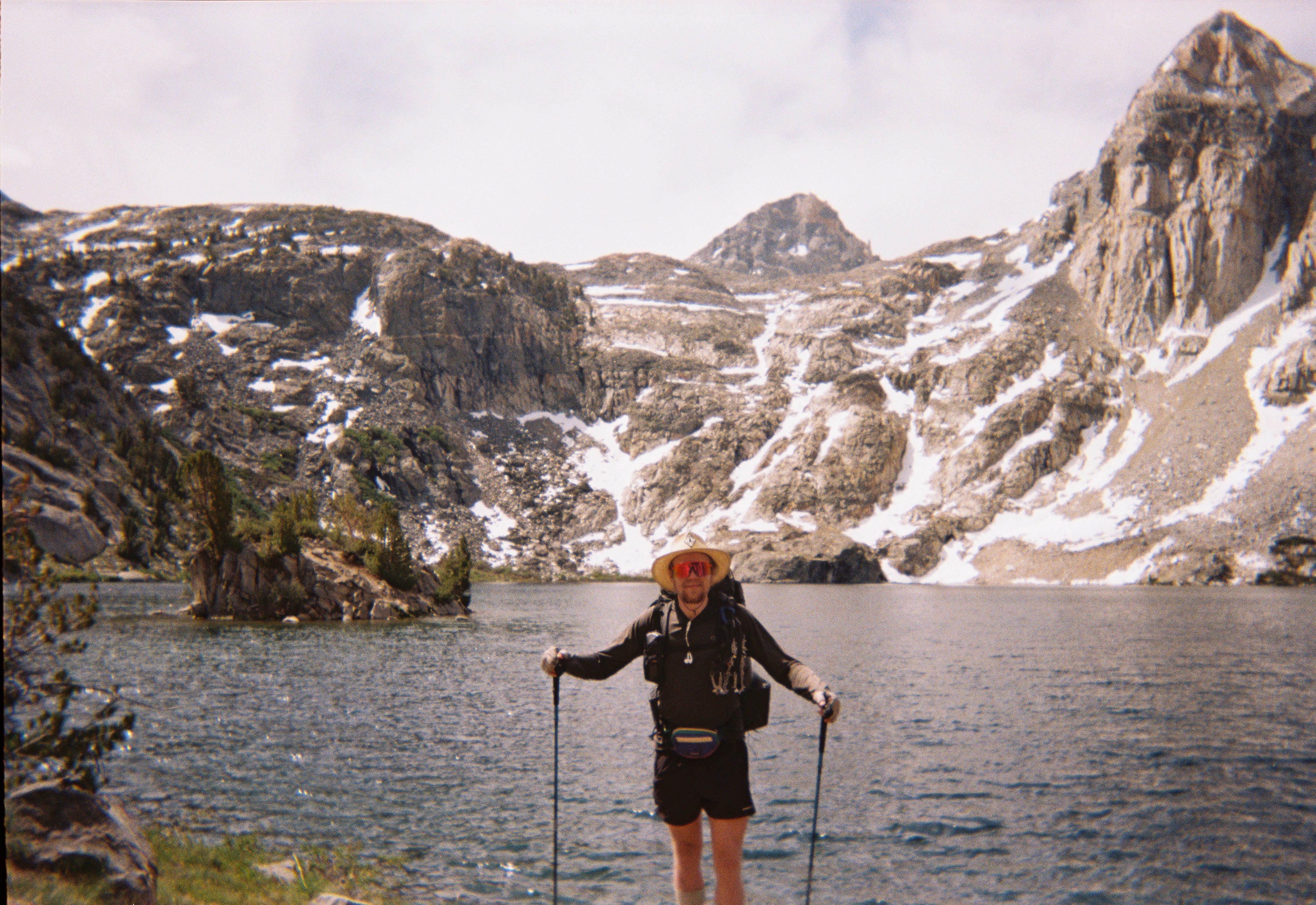
Margot & Bella: We first met Connor as he stomped chaotically (politely made his way) into camp on our second night on the trail. We thought, “Could this be a bear?” as no human could possibly make such a ruckus. Certainly, a fellow hiker wouldn’t dare interrupt “tent time,” nor, we reasoned, would they have the audacity to camp right on top of us.
Little did we know this LOUD and OBNOXIOUS dirtbag would become one of our most treasured loud (lovingly) and obnoxious (not really obnoxious) friends.
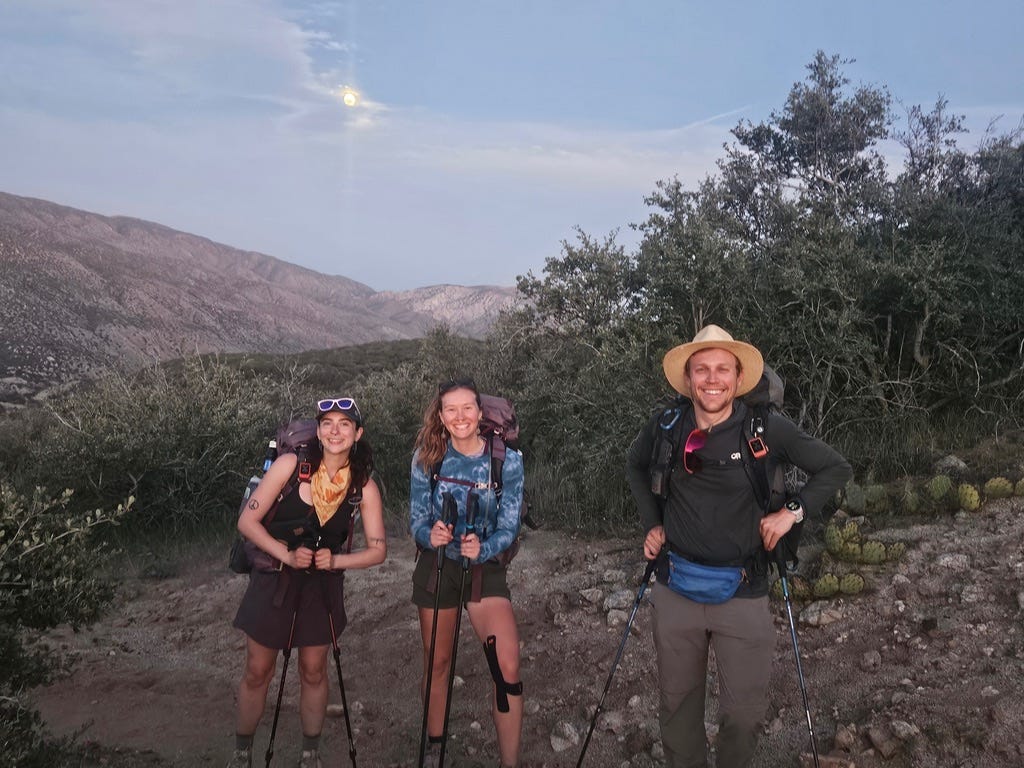
Mo: Connor met me when I was struggling, weighed down by knee pain and doubt. Yet from our very first talk back in Warner Springs, when I asked, “Are you German?” there was a spark of connection. And in Idyllwild, just a few days later, he greeted me as if we were already old friends, and something just clicked. That night, he handed me my very first buffalo wing (this is so American!). His kindness, warmth, and that disarming smile showed me the size of his heart.
Margot & Bella: Early favorite memories include watching in wholesome disbelief as Connor spotted the Big Dipper on his own for the first time, or the giggles and caloric joy of the four of us having breakfast at Paradise Valley Cafe (something sweet for the table??).
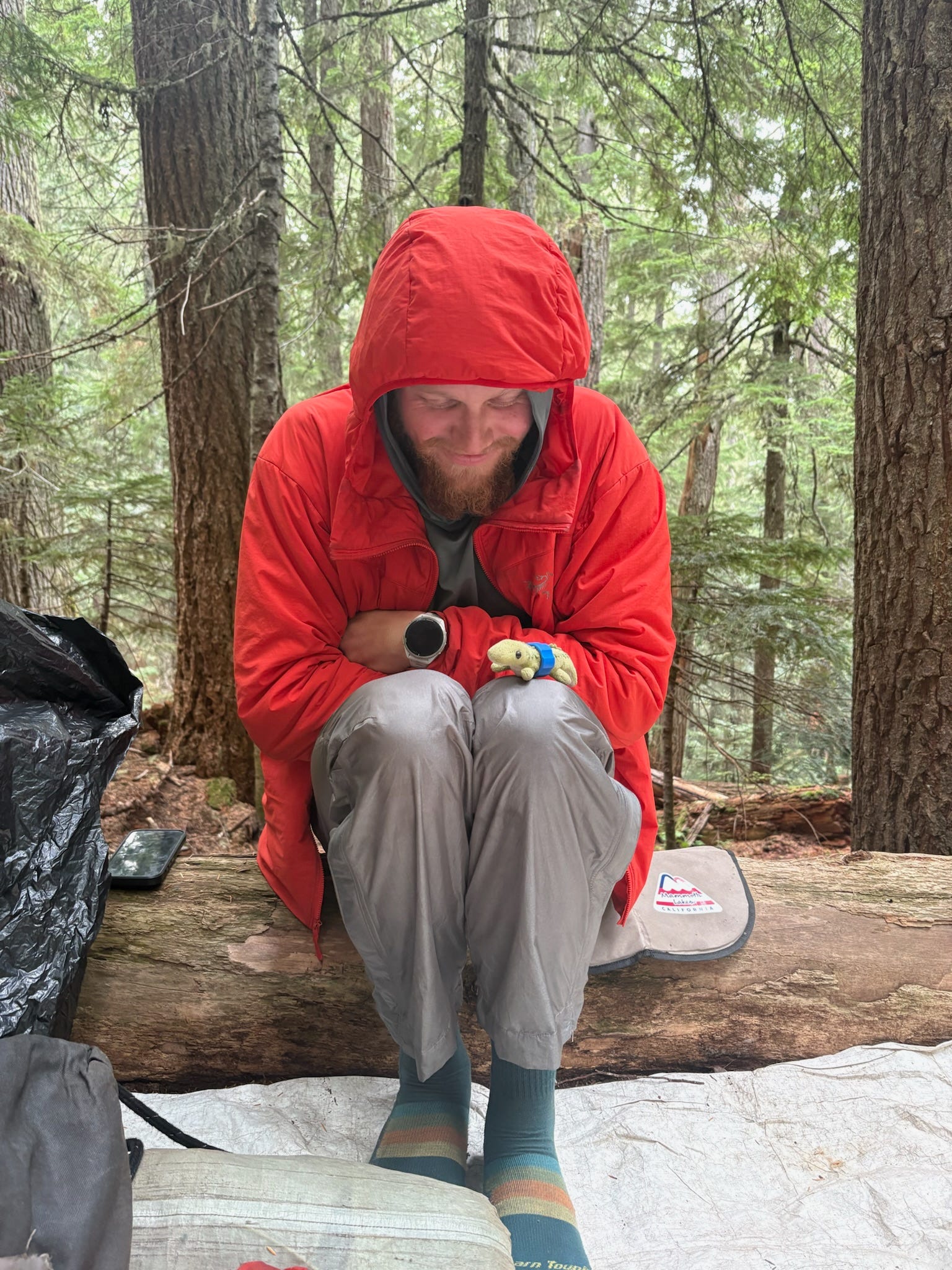
Mo: I often think back to our German lessons together - endless hours of spelling and counting. And now I can proudly say that you can count from zero to ten and even rap the German ABCs! Our first night out together, under the most beautiful starry sky with Mount San Jacinto in full view, felt like a promise: no matter how far the trail would take us, we would walk it together. Thinking back on it now, it feels like two brothers had finally found each other again after a long time - from the first Buffalo Wing to the last mile.
Dylan: Despite having only a couple of backpacking trips under his belt before the PCT, he quickly established himself as one of the strongest hikers out here—disciplined, determined, and tough in every sense. Even more defining are his humor, his thoughtfulness, and the countless moments where he lifted me up when I needed it most. He’s saved me campsites, shared in vulnerable conversations, and carried himself with a selflessness that makes him the kind of trail family you dream of finding.
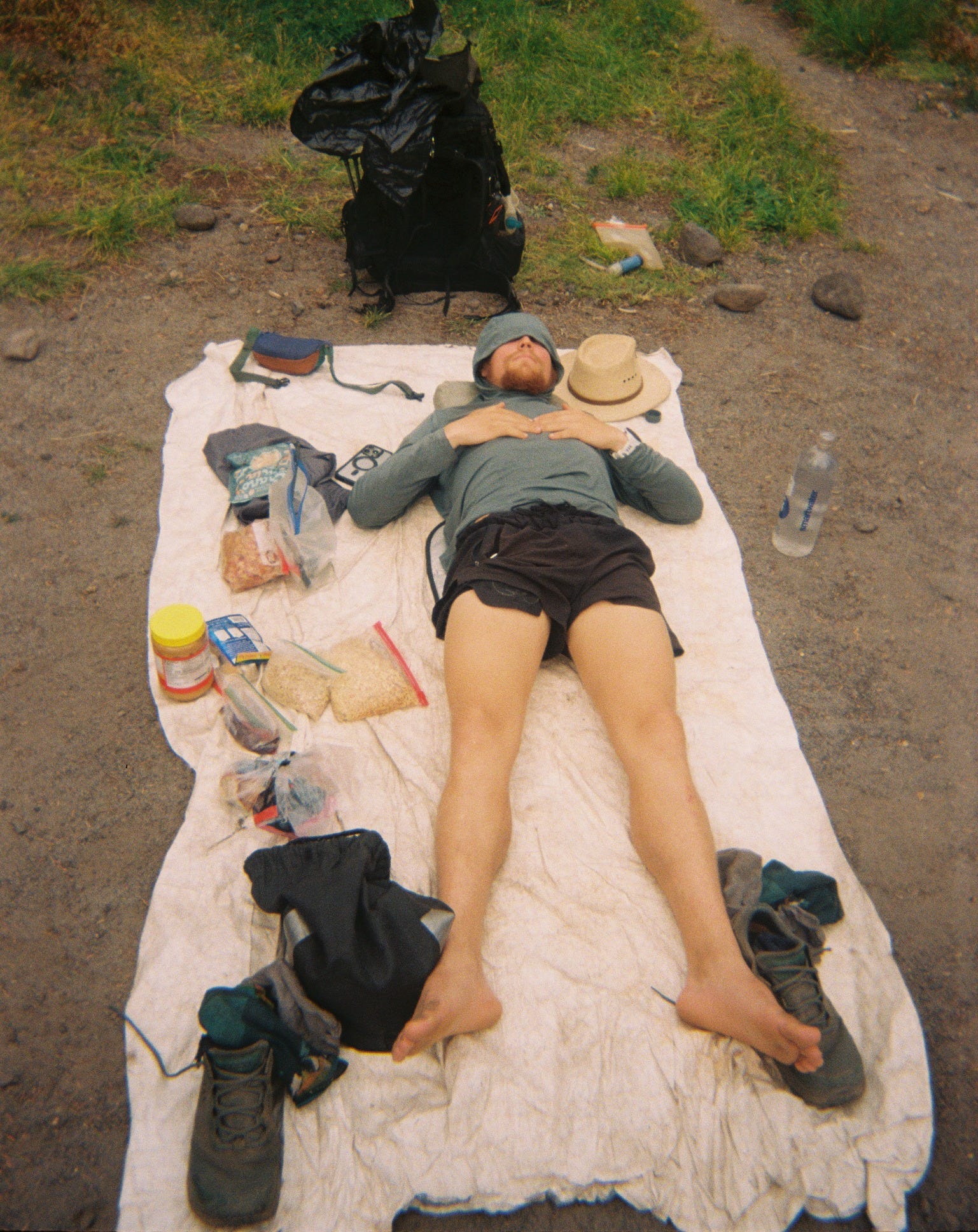
Margot & Bella: From pizza in Idyllwild to (free) pizza in Tahoe to pizza in Trout Lake to pizza in Stehekin, ConDog has cemented itself as someone we intend to stay connected to for all the years (and pizzas) to come. Vibrantly kind, inspiringly motivated, and deeply silly, Connor is the type of friend and adventure buddy that defines the PCT. He’s the type of friend who makes you breathe more slowly and experience life more fully. We’ve had the pleasure of watching him cultivate deep and thoughtful connections on the trail. This expressive human has no shortage of love and care to give to those around him, with unmatched loyalty to boot.
Mo: We often do not need words to know how the other is feeling. That trust, that quiet certainty that we can rely on one another no matter what – it’s something rare. It feels like home, like happiness, like deep appreciation.
We have spent nearly every day of the past five months together. I have shared things with him that I’ve never even told my closest friends back home. And in the same way, he’s opened up to me about his life in a very vulnerable way. That shows me just how strong our mutual trust has grown.
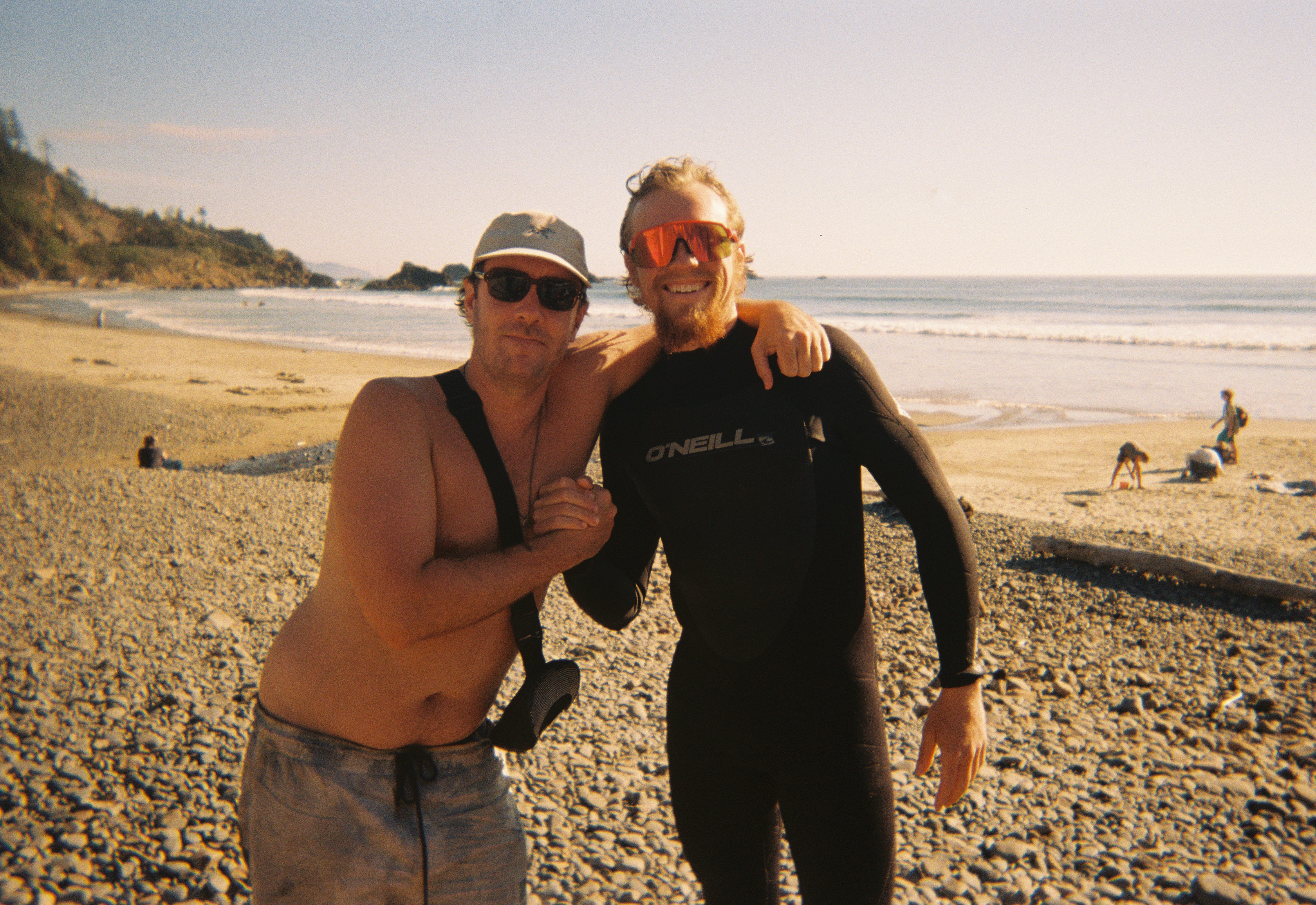
Margot & Bella: Green Machine is a frequent and unknowing inspiration for us, looking at each other and saying, “How lucky are we!?” Because, really, how lucky are we!? Here’s to a continuation of deep friendship with the one and only, Connor, Green Machine, TB, Mr. Space, Co(r)n Dog.
Mo: Connor is an unbelievably inspiring person that I admire – whether it’s planning the next stretch or the resupply (planning really is his thing!), or when he shares his stories, memories, and experiences. He has this way of bringing people along with words, which is simply captivating. His way of seeing the world is extraordinary, inspiring, and opens people’s eyes. The enthusiasm and passion for all he encounters are contagious.
Connor is so much more to me than a hiking buddy or my trail family. He has become like a brother to me. I am incredibly grateful that we walked this trail together – from Mile 200 to the end: 2,600 miles and five months, every single day.
Dylan: I walked nearly 2,000 miles with Connor, and saying goodbye was harder than I ever expected. To me, he defines what it means to be a thru-hiker—not just in strength or miles, but in the generosity and authenticity he brings to every step. My hike would have been far less without him, and I know our Denglish banter with him and Mo will stay with me long after the trail. I’ll miss my newfound brother every day. If I’m lucky, I’ll get the chance to hike a mile—or two thousand—with him again.
Acknowledgements & Farewell
The irony of my “self-supported” thru-hike is that it was the most supported I’ve ever felt. First and foremost, I’d like to thank my father, Keith, for being the behind-the-scenes engine that made this journey possible. He was constantly coordinating bi-weekly shipments of food, medication, and contacts to ever-changing locations, often staying up late after his demanding job preparing my boxes, only to wake up early and get them out first thing. He kept me moving and, beyond that, was an emotional rock who was there for me whenever I needed him, dropping everything to take my calls. I feel so incredibly proud to call such an extraordinary man my father.
Next, my mom, Beth, for her constant unwavering support of me. Her love and dedication go so far beyond the confines of this trip, and I can trace back a lifetime of encouragement and inspiration to follow my heart, knowing she will always be there to back me along the way. While others were constantly navigating the neuroses of their mothers, mine gave me the space I needed, once again putting aside her needs so I could work through my own. I love you, Mom.
To both of my step-parents, for keeping my biological parents at bay, as I know there were plenty of restless nights spent worrying about me. Each of you also enriched this journey in your own right. John, for nurturing my love of the outdoors as a child. Without our camping trips, this would never have been possible. Lili, for instilling a love of both literature and sewing, both of which ended up being vital along the way.
To my sisters, for always providing comedic relief and love from afar, and for keeping everyone occupied at home. Oh, and to the dogs, I know they kept the family sane and happy while I was gone as well.
To my friend Aaron, who, on a gloomy Tuesday in mid-March, saved me from what was among the lowest points in my life. If it weren’t for your guidance and insistence that I seek something better for myself, I have no idea where I would be today. You continue to show me what true friendship means. To my cousin Lexi, who kept her trip to come visit even though I could no longer offer a place to stay, and made me laugh and remember all the joy life has to offer. In a similar vein, my cousin Henry and his wife Diana, who took me in for the next few weeks without notice or a departure date and served as my sounding board when sharing the crazy idea to forgo a startup accelerator and spend the majority of the year hiking instead. I have learned so much from each of you and cannot wait to be a part of your future children’s lives.
To all those who provided support in the form of a care package, a visit on the trail, z ride, a place to stay, or a warm meal: Jacqueline, Alex & Mery, Erin & Tyler, Alex & Aaron, Walker, Jeff & Rachel, Scott, Josh & Annika, Mila, Crazy John, Mark & Deb, Eli, and Mark & Linda. I never expected this outpouring of support from friends, family, and former coworkers, and I’m so incredibly grateful for you having enriched this journey, not just for me, but for those I was hiking with.
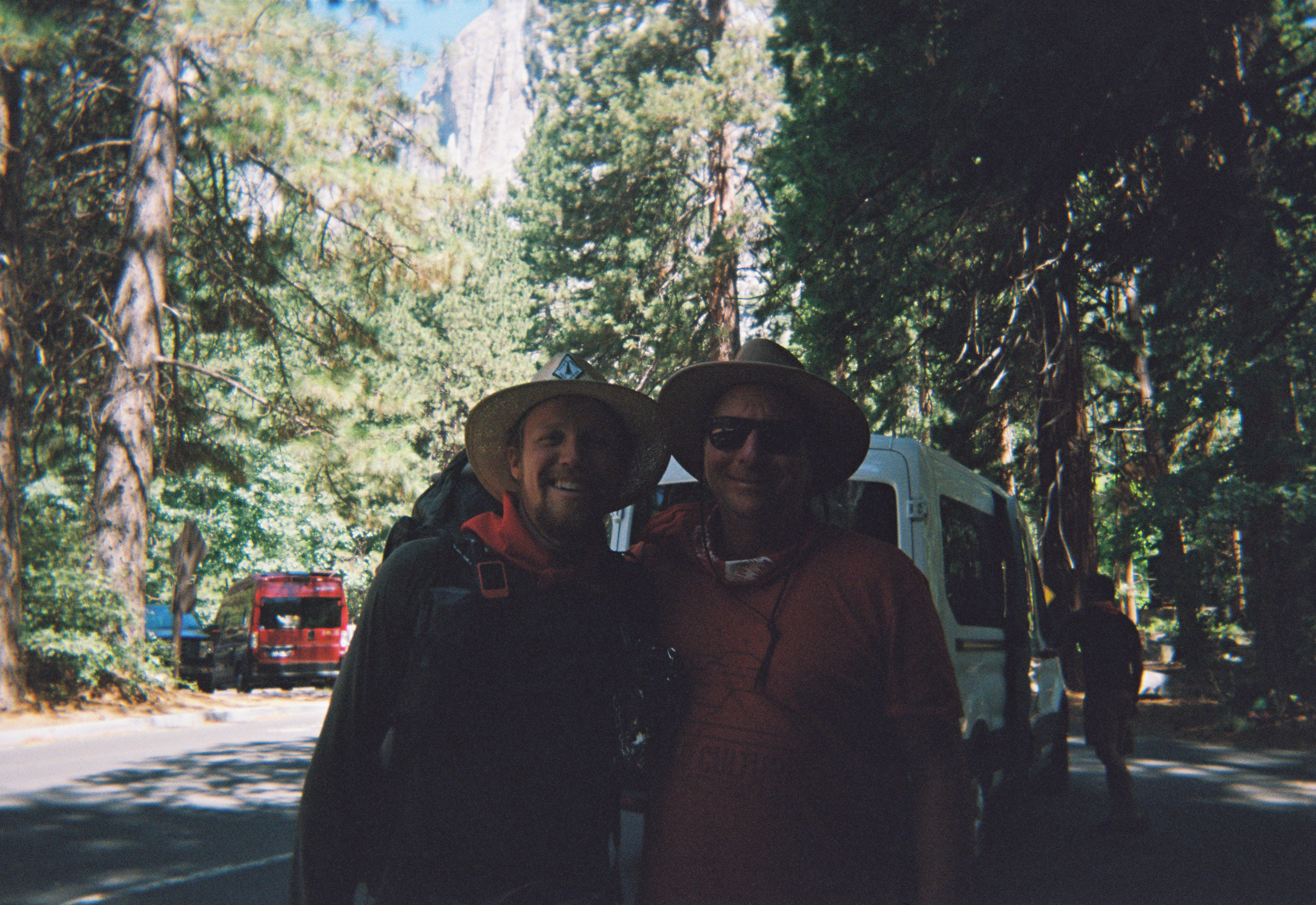
I also have to thank the many strangers who turned into new friends and extended such kindness to me. The more than 50 drivers who picked up a hitchhiker on the side of the road, I thank you for helping me get back to food. To the trail angels that opened their homes to me and dozens of other hikers this year, treating us all like family: Liz, Abel, Joe, Pounder, and Steph. For those who shared their stories and, in turn, became part of mine and eventually readers along my journey. First, Sean, who was just a few months removed from losing his home of 30+ years in January’s LA fires, shared with me the hard-earned lessons that crystallized what’s really important. I will always think about our afternoon together at Walker Pass. To the Bogan Brigade, particularly Mark & Linda, who took me in like their son and showed limitless kindness to me and all those around me, punctuated by a box of homemade baked goods to power our final stretch.
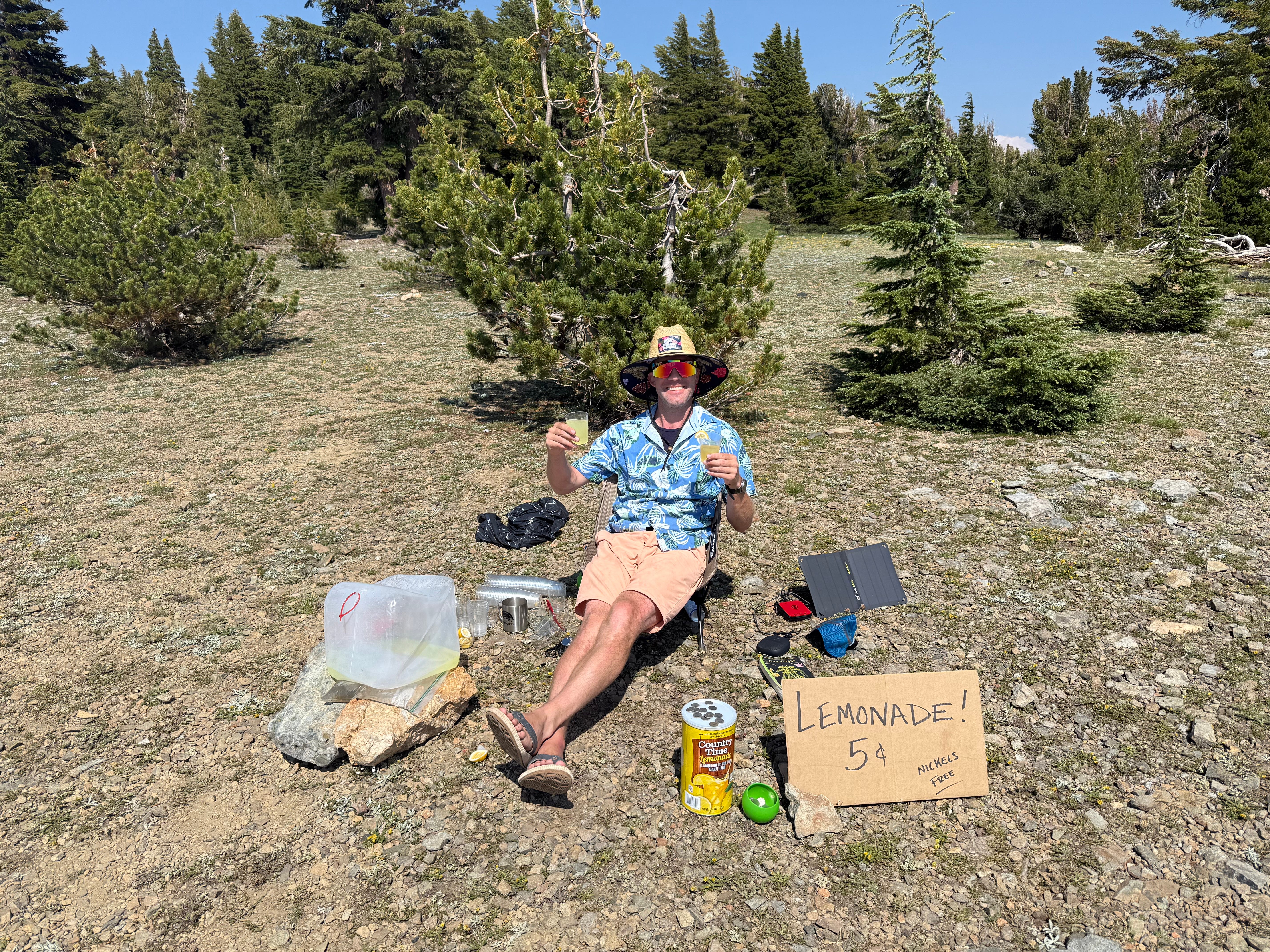
Finally, to the fellow hikers who made this journey what it was. I can say confidently that I could not have done this without them, nor would I have wanted to. Those that I shared at least ten miles with include Fred, Ari, Bean, Alejandro, Gene, Nacho, Jimmy, Wayward, Rocks, Sunshine, and so many more. Of course, those who had the greatest impact were my trail family: Margot, Bella, Dylan, and Mo.
Margot & Bella, you embody the concept of seeing the glass half full. You are both teeming with life, love, and laughter; your cup runneth over in support of others. You helped me do something that has eluded me almost my entire life: to slow down, to see beauty in the ordinary, and to relish in the opportunity to take it all in. Most of all, you showed me how I want to be loved by those around me, and that may be the greatest gift I have ever received.
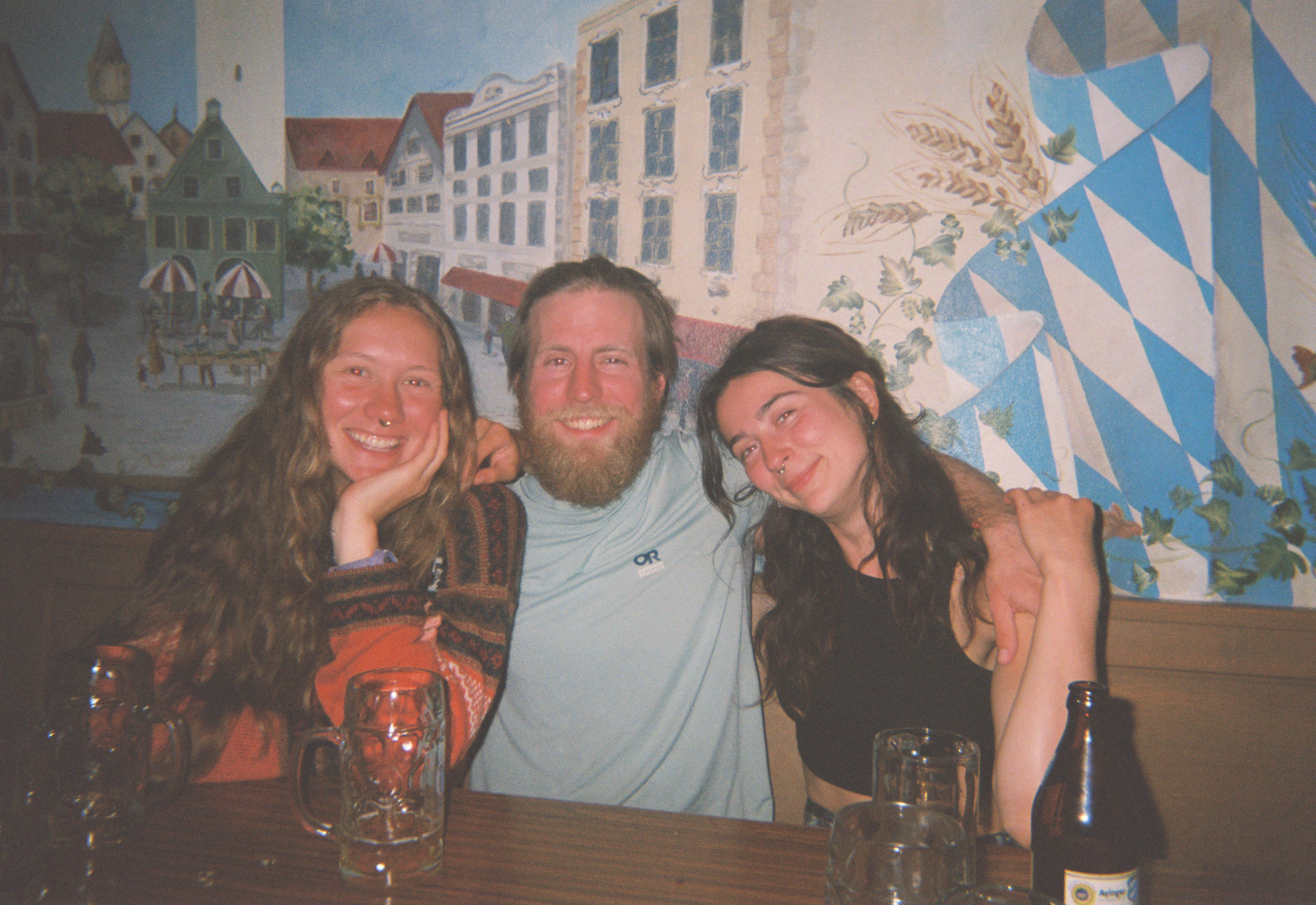
Dylan, your Midwestern charm and often unnecessary gratitude made every interaction a pleasant one. You’re a hell of a chef and an even better hiker. Your selflessness through injury, mental breakdowns, and needed rest kept me in the race. I could not have asked for a better hiking companion and outdoor veteran. You made me feel safe in times of danger and so grateful in times of doubt. You stimulated my mind with your deeply introspective thoughts and nurtured my soul with unconditional love. You’re one of the most incredible human beings I have ever known, and I cannot wait to cheer you on in all that you do.
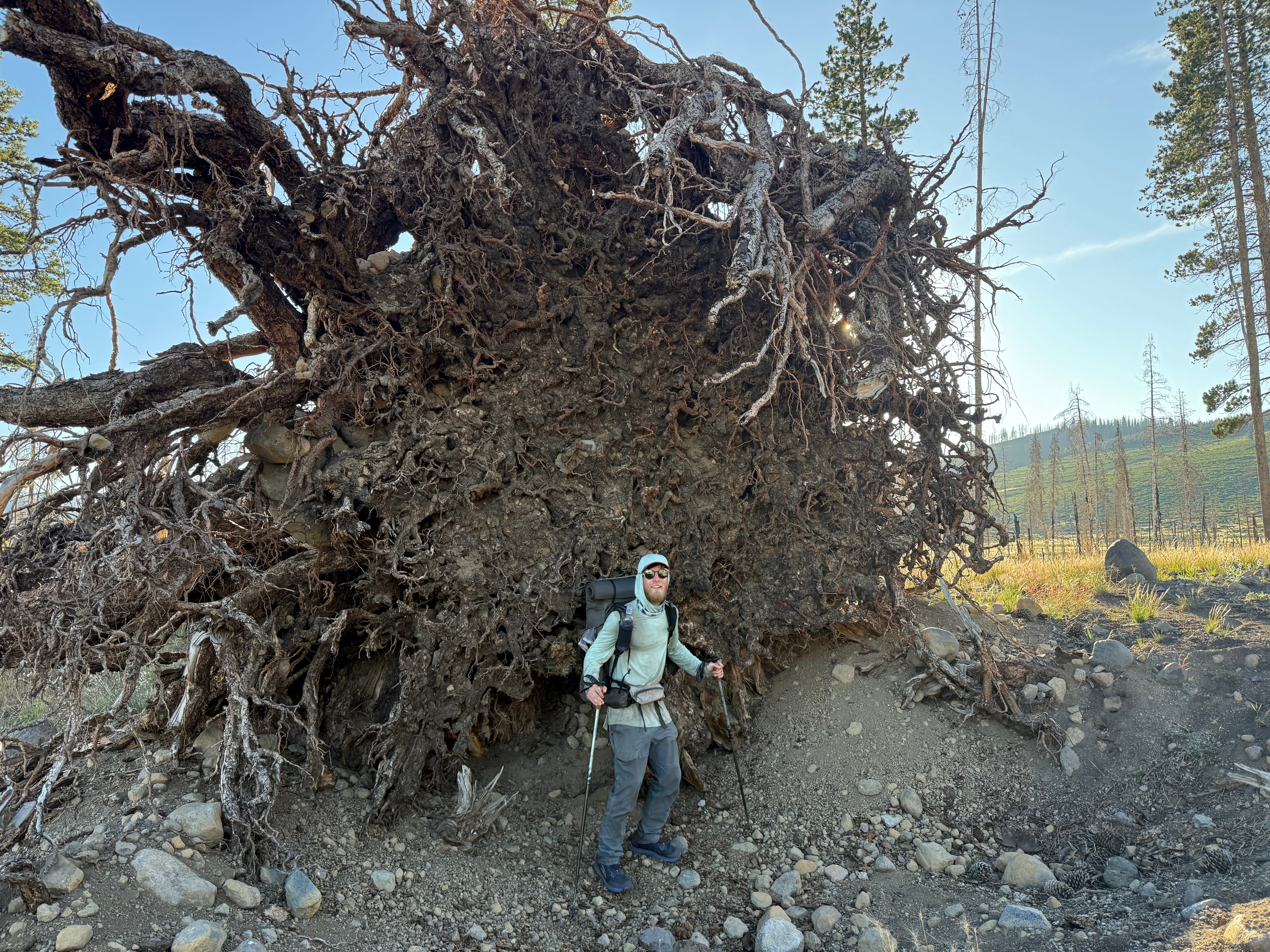
And of course, Mo, my MoGi, the big little brother I never had but was worth the wait to come to know. Your smile is infectious, and your sense of humor and laughter have released so much baggage. Your kindness and sense of curiosity towards others make me a better person. The purity of your soul is beyond what this world deserves; you’re a much better person than I. Without trying, you showed me how to be a better man, and your dedication to my well-being and the sacrifices you made to stay by my side the entire trip make you a one of one. I would not have wanted to do this without you, and I’m so very glad that I never had to try.
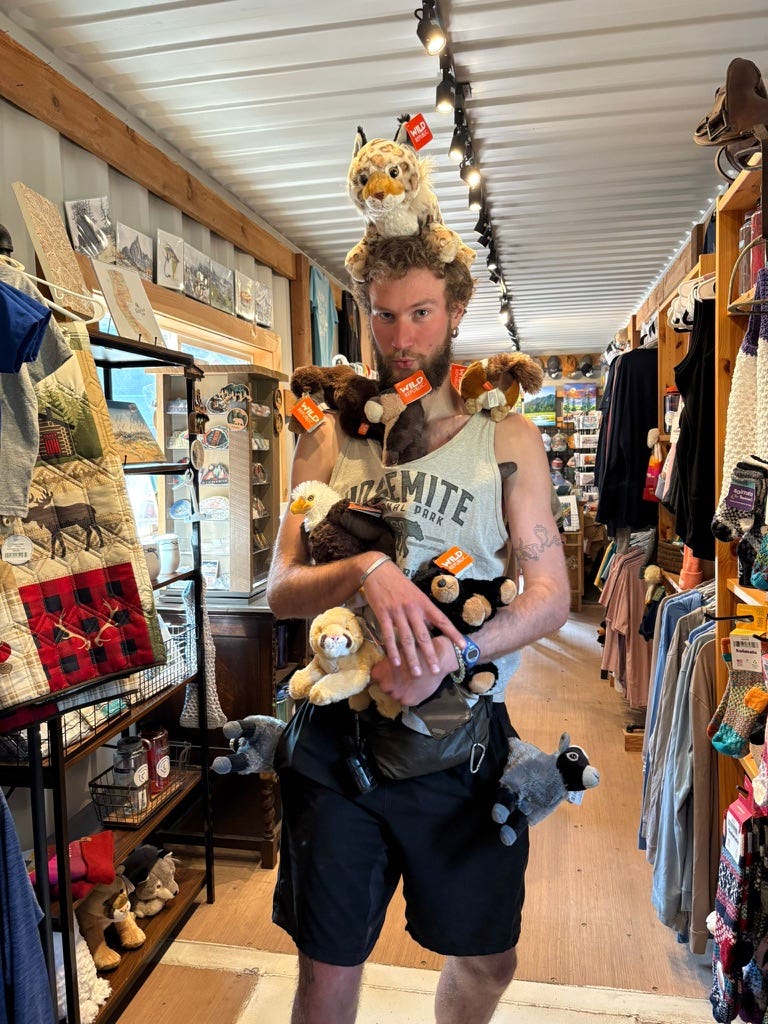
As a final note, I’d like to thank everyone who kept up with my writing and was a part of the adventure as a result. When I started this newsletter, I saw it as a way to keep everybody at bay and informed with photographic evidence, as I rebuffed repeated requests to create an Instagram. But what I quickly realized was that as a man disenchanted with the world around him, I had something to say, and whether anybody cared or not, I needed to let it out. So, what started as a harmless update became a cathartic exercise that facilitated my own growth. For all those who stuck through my rants, I thank you.
My hope isn’t that I’ve changed anyone’s mind or convinced them of any of my views, but rather that this has inspired others to begin thinking for themselves in a way they hadn’t before. To reject simply learned ideals and develop their own. I hope this opens up a dialogue between anyone who's reading so that we can maintain a lifetime of debate and engaging conversation.
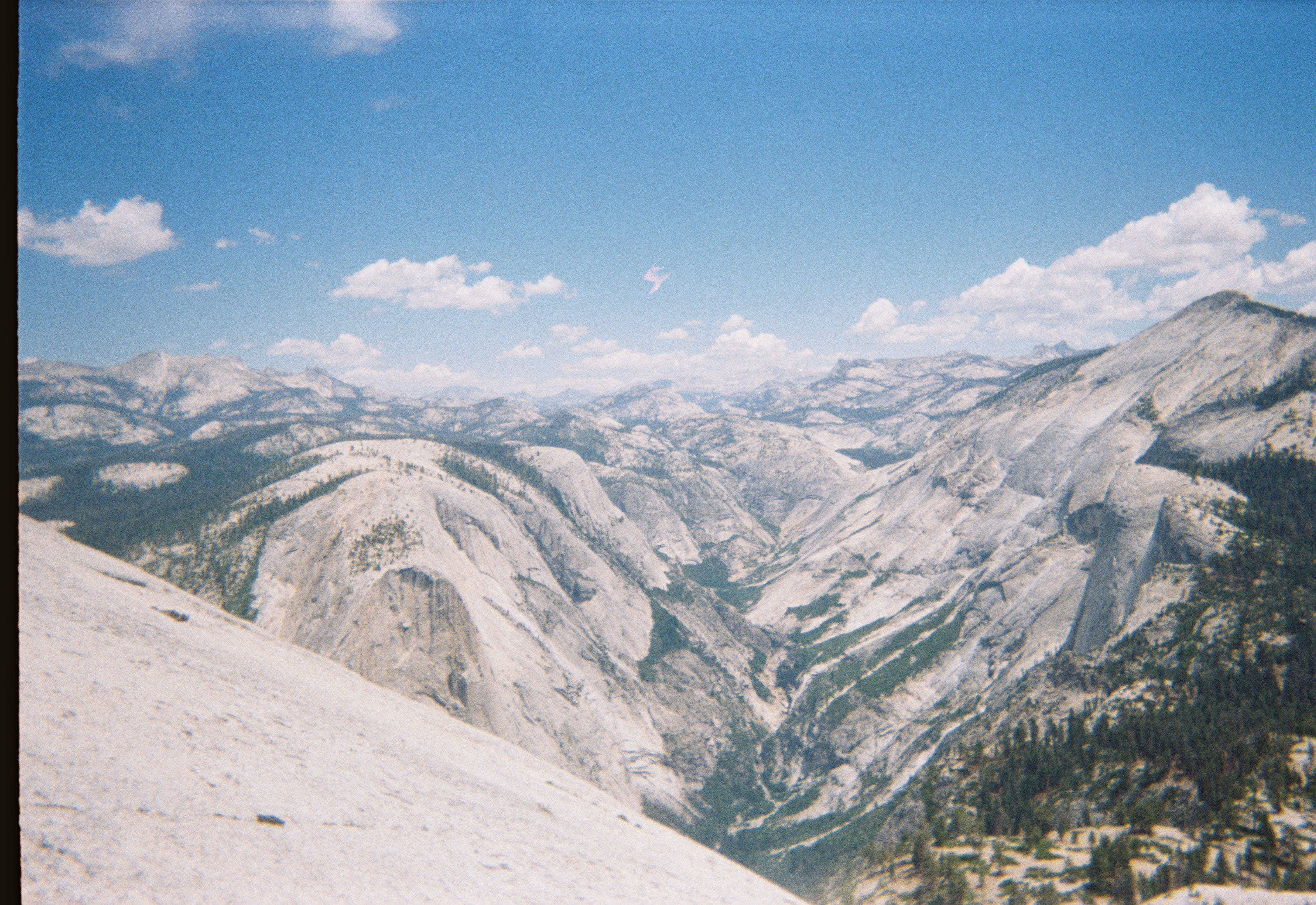
As for what’s next for me, the honest answer is that I don’t really know. I didn’t come into this experience seeking answers, which was a good thing, because if anything, it only posed more questions. But what I can say is I feel like I am better equipped to navigate an ambiguous world, knowing who I am in the face of so much uncertainty; holding my own definitions of what is important, extreme, and fulfilling in pursuit of an existence I can be proud of.
So as I close the final chapter of a life-defining journey, I have two requests of those who have been along for the ride. First, consider joining me in donating to one of the many organizations that make the hiking PCT possible: The Pacific Crest Trail Association, The Conservation Alliance, and all of the groups supporting wilderness firefighters. It is not hyperbolic to suggest that the fate of the trail is in serious doubt, even in the immediate future. Contributions to these organizations will ensure that no matter how badly we fuck up the “real world,” wilderness will be there to heal for generations to come.
The second is to ask yourself a simple question: “If I die tomorrow, will I be at peace with what I’ve done?” Regardless of the answer, you should follow with another: “Do I have concrete plans to seek out real fulfillment in the next year? Three years? Or even five?” If the answer is no to both, I think there’s some serious soul searching to do. Because there will always be reasons why we put ourselves second: people to be cared for, jobs to do, and bills to be paid. There are unique obstacles to every stage of life. But for my sake, really think about taking that job in Singapore, studying Spanish in Costa Rica, enrolling in that cooking intensive in Tuscany, or moving to an ashram in the Himalayas. Maybe it’s something even less exotic: making a move to be closer to family, reviving your artistic passions, trying out for the local musical, or starting the small business you’ve always dreamed of. If you’re really a glutton for punishment, maybe a really long walk in the woods will do.
If this adventure has reminded me of one thing, it’s that no matter what kind of hand we’re dealt, we alone are responsible for how the game is played. So if I may offer one piece of encouragement for those wondering how to reconcile their existence on this futile planet: remember that we are all guaranteed just one life, and it’s time to go live it.
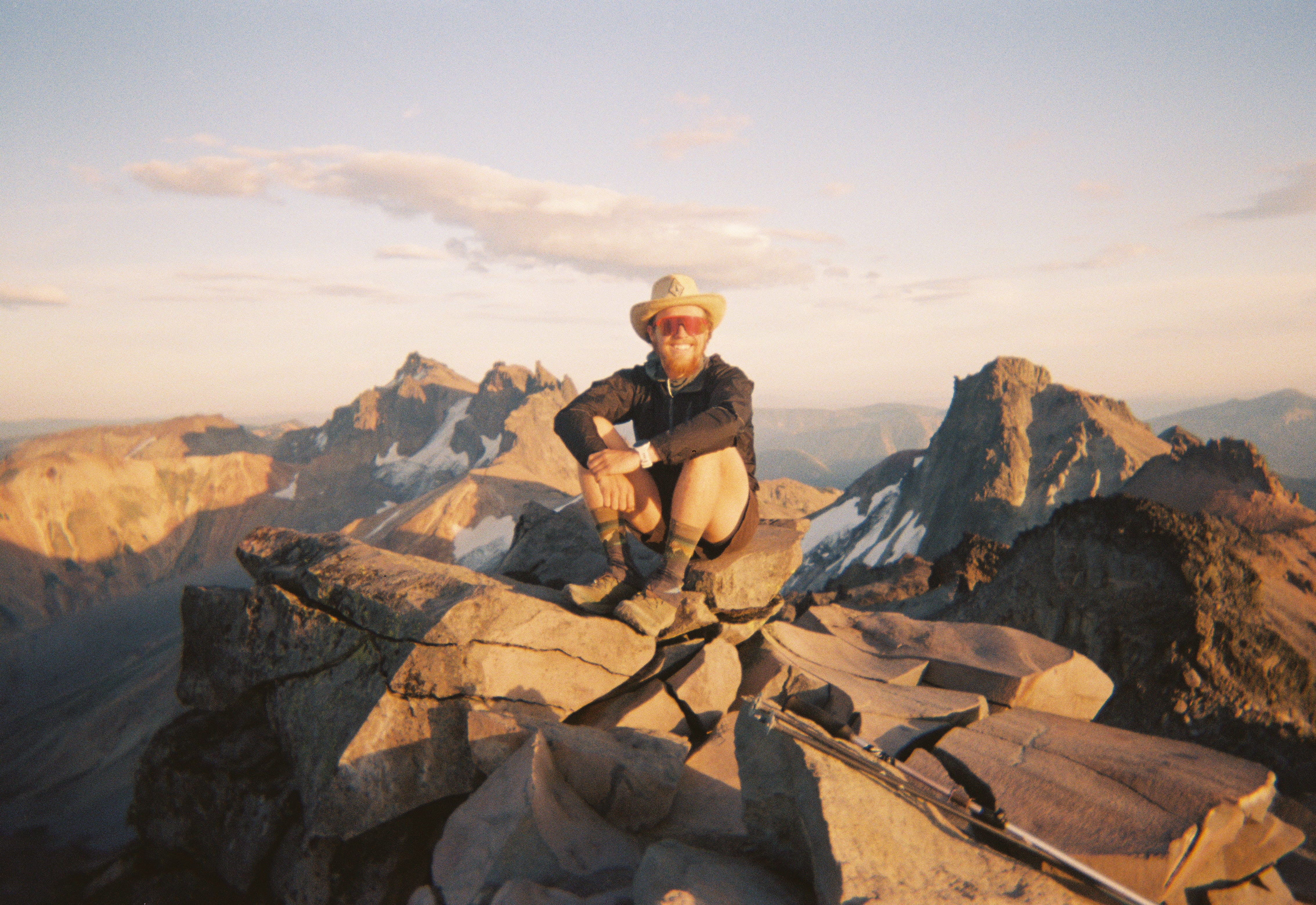
Much love always,
Connor “The Green Machine” Space
PCT Class of 2025
Donation Links
Lost In Space Archives
Oh Connor. What a privilege it has been to “join you” on this hike. You have left me with no words - which as you know is an unusual condition to find myself in. But I can say that we are so immensely proud of you and grateful for you. (And, selfishly, so glad to have you back with us). We love you and promise to love and support you as you begin the next leg of your journey. Un abrazote, mi cielo!
Change is an inevitable part of every life, but the conviction to leap into the unknown and change your life for the better is rare and worthy of celebration and admiration. It's been amazing watching this journey shape you for the better and set you up for the next amazing chapter of your life. Wherever you go next, the lessons and experiences you had on the trail will continue to guide you. Congratulations on a truly remarkable feat, I can't wait to see where this next adventure brings you!